
 90 Day’s To Better Zzz’s Guarantee T&C apply
Grounding Sheets for EMF Protection: What They Can and Cannot Do
Could a sheet connect you to the earth without shielding you from the EMFs around you? Yes. The two functions are easy to confuse when product claims use “grounding” and “protection” as though they mean the same thing. If you’re considering grounding sheets for emf protection, start with this distinction: an electrical connection to earth doesn’t, by itself, block or reflect signals from Wi-Fi, phones or other sources.
Grounding, or earthing, describes a connection to earth through a conductive sheet and a suitable setup. EMF shielding is intended to reduce exposure to external electromagnetic fields. These are different functions, and evidence for health benefits from grounding sheets remains preliminary rather than conclusive. This guide explains what each approach does, what the evidence can and can’t support, and how to assess product claims. It also explains what Sleep Earthed sheets are designed to do: provide an earthing connection, not EMF shielding.
Key Takeaways
- Separate an earthing connection from EMF shielding: they serve different purposes and need different kinds of evidence.
- Assess claims about grounding sheets for emf protection carefully. A conductive connection doesn’t, on its own, show that external EMFs are reduced.
- Before choosing a sheet, clarify your goal, check what the product is designed to do and look for evidence supporting any specific claim.
- Sleep Earthed UK-sized fitted earthing sheets use organic cotton and conductive silver threads. They are intended for earthing, not EMF shielding.
- If your main aim is EMF shielding, don’t treat grounding bedding as a substitute without suitable product-specific evidence.
Grounding sheets for EMF protection: what are people actually asking?
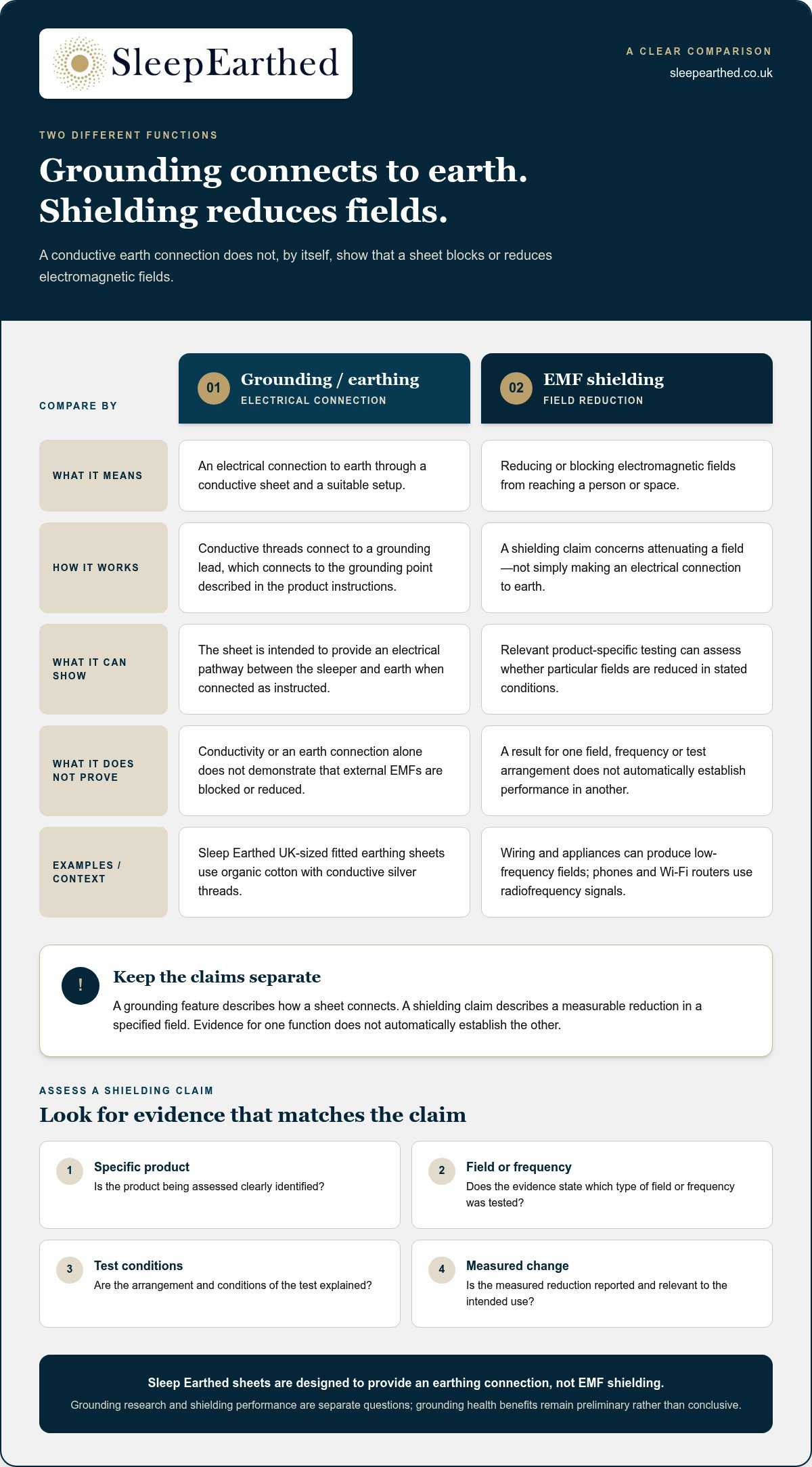
Does a grounding sheet block EMFs, or does it connect the sleeper to earth? These are different functions. Grounding, also called earthing, means creating an electrical connection to earth through a conductive sheet and a suitable grounding setup. EMF shielding, by contrast, means reducing or blocking electromagnetic fields from reaching a person or space.
The distinction matters when assessing claims about grounding sheets for emf protection. An earth connection alone doesn’t show that a sheet shields against EMFs. EMF also covers different kinds of fields, so a claim about one source or frequency shouldn’t be taken to apply to every other one.
The product comparison video below presents its own claims. As you watch, note what is being measured, how the test is arranged and whether the results support the specific claim being made.
What does a grounding sheet do?
A grounding sheet has a conductive surface connected to earth through its grounding lead and the setup described in the product instructions. Its intended function is to provide an electrical pathway between the sleeper and earth. That makes it grounding bedding, not automatically a barrier against external fields.
Sleep Earthed UK-sized fitted earthing sheets use organic cotton with conductive silver threads. These materials support the sheet’s intended grounding function. Their presence alone doesn’t demonstrate that the sheet blocks external EMFs or establish a health benefit.
What does EMF protection mean?
A shielding claim is about reducing exposure by blocking or attenuating a field, rather than making an electrical connection to earth. A conductive enclosure, such as a Faraday cage, illustrates the basic shielding principle. Bedding would need evidence of its own to show that it reduces particular fields in a particular arrangement.
Sources vary. Electrical wiring and appliances can produce low-frequency fields; mobile phones, Wi-Fi routers and other wireless devices use radiofrequency signals. These examples aren’t interchangeable. Naming a source doesn’t establish that it poses a health risk or that a sheet protects against it.
When assessing a shielding claim, look for product-specific testing that identifies the field or frequency, the test conditions and the measured change. Without relevant evidence, an earth connection may support grounding, but it doesn’t prove EMF shielding.
How grounding sheets connect to earth, and why that is not the same as shielding
A grounding sheet works through a conductive pathway. In Sleep Earthed sheets, conductive silver threads in the fabric connect to the grounding lead. The lead then connects to the grounding point specified in the product instructions. The intended result is an electrical connection between the sheet and earth. That connection doesn’t, by itself, create a layer that blocks fields from a phone, router or other source.
Grounding describes an electrical connection, not proof of EMF reduction. An earth connection and an EMF-blocking layer are different functions, so evidence for one doesn’t automatically establish the other.
What happens in a grounding setup?
The conductive threads provide a route through the sheet to its connection lead. To use the sheet as intended, follow the supplied instructions for making that connection. Simply placing conductive bedding on a mattress doesn’t establish an earth connection.
For a practical walkthrough of Sleep Earthed bedding, follow the grounding sheet setup guide. It explains the connection being made, which is separate from evidence that a product provides shielding.
What evidence would an EMF-shielding claim need?
A useful shielding claim should identify the specific product tested, the test conditions and the type of field assessed. It should also report what was measured and explain how the result relates to the sheet’s intended use. Saying that a product is conductive, grounding or supportive of wellbeing doesn’t answer whether it reduces a particular field.
This is why claims about grounding sheets for emf protection deserve careful scrutiny. A test of one field type or arrangement can’t automatically establish performance in another. Look for evidence that directly assesses the shielding effect being claimed, rather than relying on descriptions of the grounding connection or broad wellness language.
The linked research into the effects of grounding discusses grounding and proposed effects. That is separate from whether bedding shields against EMFs. Research about grounding doesn’t, on its own, demonstrate reduced exposure. Keeping these questions separate helps you judge what the evidence can support.
Do earthing sheets reduce EMFs? How to judge the claims
Don’t assume a grounding sheet reduces EMFs unless suitable evidence supports that specific product claim. A sheet may be designed to create an electrical connection to earth, but that description alone doesn’t show that it blocks or reduces a particular electromagnetic field.
A grounding feature alone cannot demonstrate that a product blocks EMFs. Keep the claims separate: one describes how the sheet connects, while the other describes a measurable reduction in a specified field. Evidence supporting one function doesn’t automatically prove the other.
Grounding claims versus EMF-shielding claims
Details such as conductive threads and a grounding connection describe the sheet’s construction and intended setup. An EMF-shielding claim goes further: it says the product reduces exposure to a particular field under stated conditions. Without relevant testing, there isn’t enough evidence to judge that claim.
When considering grounding sheets for emf protection, ask whether evidence tests the exact shielding effect being claimed. Conductivity alone doesn’t answer that question.
| What’s being claimed | Evidence to look for | What you can conclude |
|---|---|---|
| Grounding function | Product information explaining the conductive surface, connection and setup | The sheet is intended to make an electrical connection to earth when set up as instructed. |
| EMF shielding | Testing of the exact product, identifying the field type, test conditions, method and results | Only the reported findings can support a conclusion about that product and tested situation. |
| General wellbeing or broad “protection” wording | Clear evidence tied to the specific outcome or field being claimed | Vague language alone doesn’t establish shielding performance or a health effect. |
Questions to ask when reading protection claims
Before relying on a protection statement, check whether the information tells you:
- Which product was tested? Results for a different item may not apply to the sheet you’re considering.
- Which field was assessed? A claim should identify the field or frequency, rather than promise protection from “all EMFs”.
- How was it tested? Look for the method, arrangement and conditions, along with the measured results.
- What do the results actually show? A clear finding about a tested setup is more useful than broad statements about conductivity, grounding or wellbeing.
If those details aren’t provided, there isn’t enough information to judge an EMF-shielding claim. That doesn’t settle what a sheet might do in every possible setup; it means you need product-specific evidence before relying on the claim.
How to choose a grounding sheet when EMF is your concern
Start with the outcome you want. “EMF concern” can mean different things, so work through these steps before choosing:
- Define the concern. Are you looking for an earthing connection, or for a product shown to reduce a particular electromagnetic field?
- Identify the product’s function. Check whether it’s described as grounding bedding, shielding material or both.
- Review the evidence. For a shielding claim, look for testing of the specific product and field, with the method and results clearly explained.
- Match the product to your goal. Don’t treat grounding bedding as a substitute for EMF shielding unless relevant evidence supports that use.
When the priority is EMF shielding
Be specific about the source or field you’re concerned about. A claim relating to one field doesn’t automatically apply to another, and broad wording such as “protection from all EMFs” doesn’t tell you what was tested. Look for product-specific evidence that names the field, explains the test conditions and reports what was measured. Without those details, you can’t reliably judge whether a product offers the shielding function you’re seeking.
For a broader look at how grounding research is discussed, read Sleep Earthed’s earthing sheet science guide. Keep evidence about earthing separate from evidence that a product reduces a particular field.
When the priority is an earthing sheet
If you’re interested in an earth connection, assess practical fit as well as the stated function. Check that the sheet suits your bed size, review its materials and read the setup instructions before use. Sleep Earthed UK-sized fitted earthing sheets use organic cotton and conductive silver threads. Their stated purpose is earthing through a suitable setup, not a promise of EMF protection.
For more context on the fabric, see the organic cotton grounding sheet guide. If an earthing sheet fits what you’re looking for, explore Sleep Earthed fitted earthing sheets and consider whether their intended use and setup match your needs.
What Sleep Earthed earthing sheets are designed to do
Sleep Earthed UK-sized fitted earthing sheets are designed for people interested in an earthing connection as part of their bedding. They use organic cotton and conductive silver threads. With a suitable setup, the conductive material forms part of the sheet’s grounding function.
The purpose is specific: earthing, not EMF shielding. The sheet shouldn’t be understood as equipment that blocks wireless signals or reduces exposure to electromagnetic fields. If you’re comparing grounding sheets for emf protection, keep your intended outcome in view. An interest in earthing is different from needing evidence of a shielding effect.
A grounding bedding option for sleep
The fitted-sheet format is designed to sit on the bed as bedding, while its conductive threads provide the pathway for the grounding connection. Correct setup matters, so follow the instructions provided for the sheet rather than assuming that placing it on the mattress is enough.
Sleep Earthed offers a 90-day better-sleep guarantee. This applies to the stated better-sleep guarantee only; it isn’t a guarantee of EMF protection or a claim that the sheet shields against external fields. It’s useful to distinguish what the product is designed for from outcomes that would need separate evidence.
Make an informed next step
Choose according to the function you want. If you’re interested in earthing bedding, consider whether a fitted sheet suits your bed and whether you’re comfortable following its setup instructions. If your main aim is EMF shielding, don’t treat grounding bedding as a substitute without relevant evidence for that specific use.
Grounding and shielding may appear together in product discussions, but they describe different functions. Keeping that distinction clear helps you make a calmer, better-informed choice without relying on broad protection language. If an earthing connection is what you’re looking for, you can Explore Sleep Earthed grounding sheets.
Choose the function that fits your needs
The key distinction is simple: grounding describes an electrical connection to earth, while EMF shielding means reducing a particular field. One doesn’t prove the other. If you’re considering grounding sheets for emf protection, look for product-specific evidence before treating an earthing sheet as a shield.
If you’re interested in earthing bedding, Sleep Earthed UK-sized fitted sheets use organic cotton and conductive silver threads and are intended for use with a suitable grounding setup. Follow the product instructions. The 90-day better-sleep guarantee is not a guarantee of EMF protection.
Knowing what you want the sheet to do makes the choice clearer. If an earthing connection is your aim, Explore Sleep Earthed grounding sheets and consider whether the fitted-sheet format and setup suit your routine. Choose according to the product’s stated purpose and the evidence behind any claims.
Frequently Asked Questions
Do grounding sheets protect you from EMFs?
Not simply because they connect to earth. Grounding and EMF shielding are different functions, so an earthing connection doesn’t establish that a sheet reduces exposure to electromagnetic fields. For grounding sheets for emf protection, look for evidence that tests the specific product for the specific shielding effect claimed. Without that, treat the sheet as grounding bedding, not proven EMF protection.
Can an earthing sheet block Wi-Fi or mobile phone signals?
Don’t assume it can. Wi-Fi and mobile phones use radiofrequency signals, and a sheet’s grounding connection doesn’t show that it blocks or reduces those signals. A claim about Wi-Fi or phone signal reduction would need relevant measurements on the product in clearly described conditions. Without product-specific evidence, an earthing sheet shouldn’t be relied on as a signal-blocking barrier.
What is the difference between grounding and EMF shielding?
Grounding, or earthing, describes an electrical connection between a conductive sheet and earth through a suitable setup. EMF shielding means reducing or blocking a specified electromagnetic field. They describe different actions and are assessed differently: information about a sheet’s conductive construction may explain its grounding function, but it doesn’t prove that the sheet shields against a field.
Are silver-thread grounding sheets EMF protective?
Silver threads can form part of a sheet’s conductive construction, but their presence alone doesn’t demonstrate EMF shielding. Sleep Earthed UK-sized fitted earthing sheets use organic cotton and conductive silver threads and are intended for grounding, not as EMF-shielding equipment. A protection claim needs evidence that tests the specific sheet for the field and effect being claimed.
How can I tell whether an EMF protection claim is reliable?
Look for a test that identifies the exact product and the field or frequency assessed. The information should explain the method and conditions, then report the results clearly enough to judge what was measured. Broad phrases such as “protects from all EMFs” aren’t specific evidence. A test of a different product or field may not support the claim you’re assessing.
Is a grounding sheet the same as an EMF shielding sheet?
No. A grounding sheet is designed to connect to earth through a conductive surface and suitable setup. A shielding sheet would need to reduce or block a particular electromagnetic field, which requires relevant evidence. A product can have conductive materials without demonstrated shielding performance, so check what it is designed to do and what testing supports any protection claim.
How should I choose a grounding sheet if I am worried about EMFs?
First decide whether you want an earthing connection or shielding from a particular field. If shielding is your priority, look for product-specific evidence and don’t treat grounding bedding as a substitute without it. If you’re interested in earthing, check the sheet’s size, materials and setup instructions. Sleep Earthed sheets are intended for grounding; the 90-day better-sleep guarantee isn’t an EMF-protection guarantee.