
 90 Day’s To Better Zzz’s Guarantee T&C apply
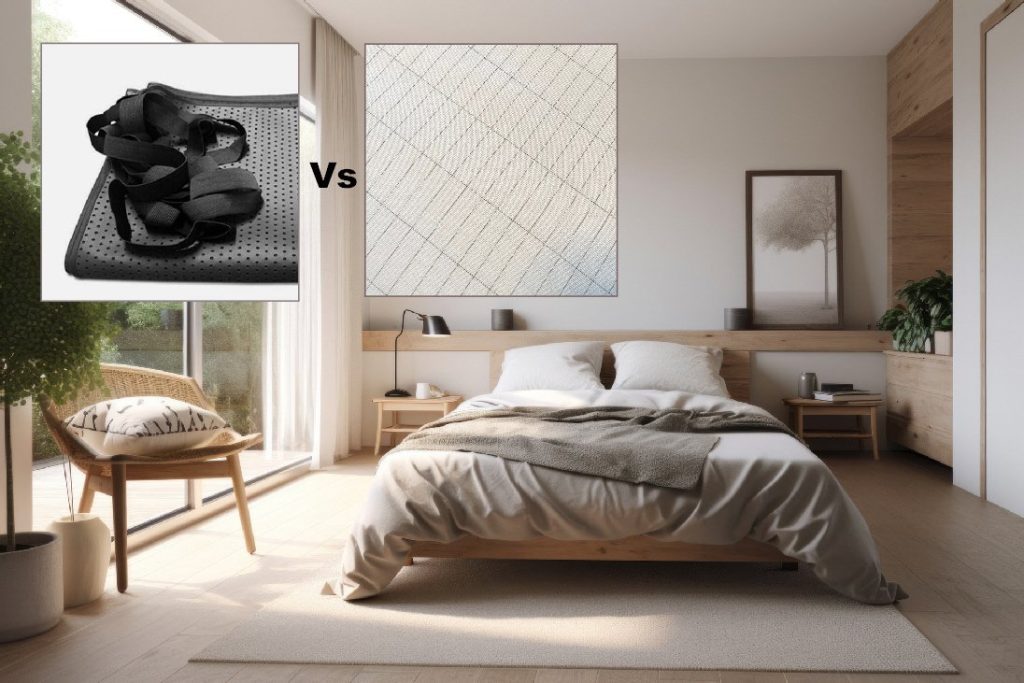
Silver vs Carbon Fibre Grounding Sheets: Which Material Should You Choose?
The more conductive material on paper isn’t automatically the better choice for your bed. With silver-thread grounding sheets and carbon-infused earthing mats, the material name tells you only part of the story. How the conductive element is built into the bedding can affect its feel, use and care requirements.
Product descriptions can make the comparison confusing. Silver threads may be woven into cotton, while carbon can be used in a different kind of conductive mat. Comparing the materials alone doesn’t give you a like-for-like picture: comfort, construction and how performance holds up with regular use matter too.
In this guide, we compare how silver threads and carbon-infused earthing mats are used, what to look for in the finished product, and the practical trade-offs around comfort, upkeep and longevity. We also explain why clear construction details are more useful than broad conductivity or wellbeing claims. Sleep Earthed’s bedding, which combines conductive silver threads with organic cotton, is one option to consider as you weigh up what suits your preferences.
Key Takeaways
- When comparing silver-thread grounding sheets with carbon-infused earthing mats, assess the finished product, not just the conductive material named on the label.
- Check how the conductive materials are incorporated, how much of the product they cover and what information is provided about the finished product’s conductivity.
- Compare like with like: a conductive mat and a fitted sheet may be constructed and used differently.
- Review fit, comfort information and care instructions to decide whether a sheet suits your routine. For washing, use Green Sheets.
- Sleep Earthed fitted earthing sheets combine conductive silver threads with organic cotton, offering a silver-thread option to compare against the practical details that matter to you.
Silver-thread grounding sheets and carbon-infused earthing mats: what are the materials?
Both silver threads and carbon-infused earthing mats are described as conductive, but the label alone can’t tell you how well a finished grounding product performs. The conductive material is one part of the picture. Its arrangement in the textile or mat, how much of the product it covers and how it connects to earth also matter.
In simple terms, conductive grounding bedding is bedding designed to provide an electrical pathway between the user and an earth connection through conductive material in or on the textile. That describes its intended function, not a proven health outcome. Choosing silver-thread bedding or a carbon-infused earthing mat doesn’t, by itself, establish that grounding will improve sleep or health.
The video below compares silver with stainless steel, rather than carbon-infused earthing mats. It offers context about material comparisons, but isn’t a direct answer to this question.
What does silver-thread grounding bedding mean?
Silver-thread bedding contains conductive threads incorporated into a textile. The whole sheet isn’t made of silver: the threads are combined with a fabric that forms the bedding. Sleep Earthed sheets use conductive silver threads in organic cotton. Other silver-thread products may differ in thread arrangement, coverage and textile construction, so the material name alone doesn’t make them equivalent.
What does a carbon-infused earthing mat mean?
A carbon-infused earthing mat is a conductive mat that incorporates carbon material into its construction. The carbon is one component, not a complete description of the mat. Products can vary in how the carbon is incorporated and distributed, and in how the conductive layer connects to earth. Carbon-infused earthing mats rely on sweat to connect the user to the earth. The conductivity of a raw material doesn’t automatically tell you the measured conductivity of a finished mat in use.
Conductive textiles explains how fabrics can incorporate conductive materials, including metallic fibres and carbon-based materials. It’s a useful starting point, but product-level details help you compare actual bedding. Look for information about the construction and electrical connection instead of assuming one material always performs better.
Keep material performance separate from health claims. Whether a grounding product works as intended depends on its construction and connection; claims about health effects require their own evidence. Neither silver threads nor a carbon-infused earthing mat alone proves a particular benefit.
How construction affects silver-thread sheets and carbon-infused earthing mats
A conductive material’s properties don’t tell the whole story. For silver-thread grounding sheets and carbon-infused earthing mats, compare finished products: how the conductive material is arranged, how it sits within the textile or mat and how the product connects to earth.
A fair comparison depends on both construction and measurement conditions. A reading from one material or test set-up can’t automatically predict how a different finished sheet will perform.
Why thread coverage and textile construction matter
Conductive elements can be incorporated into a textile in different ways. Their layout, spacing and coverage may affect the pathway across the sheet. The fabric structure and the area in contact with the user are also relevant details to investigate. These features don’t guarantee a particular result, but they help explain why two products made with the same broad material can differ.
Look for a clear description of the conductive layer and how it is integrated with the fabric or mat. Don’t assume all silver-thread bedding or carbon-infused earthing mats have the same construction. For more on what to look for in silver bedding, read this guide to conductive silver thread sheets.
How to interpret conductivity and test claims
A material’s electrical properties are not the same as a measurement taken from a complete sheet. The finished result can depend on the conductive element’s layout, the area tested, where the measurement is taken and whether the product is properly connected to earth. A single number is difficult to compare with another product’s result if these details aren’t provided.
When a seller provides a test claim, check whether it explains:
- the method or equipment used to take the measurement;
- the conditions during testing, including how the sheet was connected;
- the area tested and whether readings were taken in more than one place.
For a meaningful comparison, both products should be tested using comparable methods and conditions. Otherwise, a difference in readings may reflect the test set-up rather than a clear advantage of silver-thread bedding or a carbon-infused earthing mat. If a sheet doesn’t seem to be working as expected, the earthing sheet troubleshooting guide offers practical points to review.
An electrical reading only addresses the product’s conductive function under the conditions tested. It doesn’t demonstrate improved sleep, recovery or other health outcomes. Keep those claims separate, and compare construction and measurements on their own terms.
Silver-thread grounding sheets and carbon-infused earthing mats: a practical comparison
To compare silver-thread grounding sheets and carbon-infused earthing mats fairly, look at the complete product and the information provided about it, not just the name of its conductive material. The table highlights details you can assess from product descriptions. When details aren’t comparable or aren’t supplied, the answer is simply “varies by product”.
| What to compare | Silver-thread sheet | Carbon-infused earthing mat |
|---|---|---|
| Material description | Conductive silver threads combined with a base textile. | Conductive carbon material used within a mat’s construction. |
| Construction transparency | Varies by product. Look for thread placement, coverage and fabric details. | Varies by product. Look for how the carbon material is incorporated and distributed. |
| Conductivity evidence | Product-level results and test conditions vary; a material label isn’t a measurement. | Product-level results and test conditions vary; a material label isn’t a measurement. |
| Connection | Check how the sheet is designed to connect to earth. | Carbon-infused earthing mats rely on sweat to connect the user to the earth; check the product guidance. |
| Comfort information | Check the full fabric composition and any product-specific feel information. | Check the mat’s surface and any product-specific feel information. |
| Care guidance | Follow the sheet’s instructions; care guidance varies by product. | Follow the mat’s instructions; care guidance varies by product. |
This compares product information, not medical outcomes or guaranteed performance. The practical takeaway is simple: choose the better-documented finished sheet, not simply the more persuasive material label.
Which material is more conductive in a finished sheet?
A raw material’s electrical properties don’t automatically tell you how conductive a finished textile or mat will be. The result can depend on its construction, the area tested, the connection and the testing method. Without product-level measurements taken under comparable conditions, you can’t reliably say that one product performs better than another based on silver threads or carbon-infused earthing mats alone.
Which option may suit your comfort and care preferences?
Compare the full fabric composition, how the sheet is described to feel and the care instructions. Neither silver threads nor a carbon-infused earthing mat alone guarantees softness, breathability or lifespan. For context on one part of the fabric choice, see this organic cotton versus regular cotton comparison.
Follow the product’s washing instructions and avoid bleach and fabric softeners. Green Sheets are a fragrance-free detergent option. Sleep Earthed fitted sheets combine conductive silver threads with organic cotton, giving you specific fabric details to consider as you weigh up the choice between silver-thread sheets and carbon-infused earthing mats.
To explore that construction further, read the guide to conductive silver thread sheets.
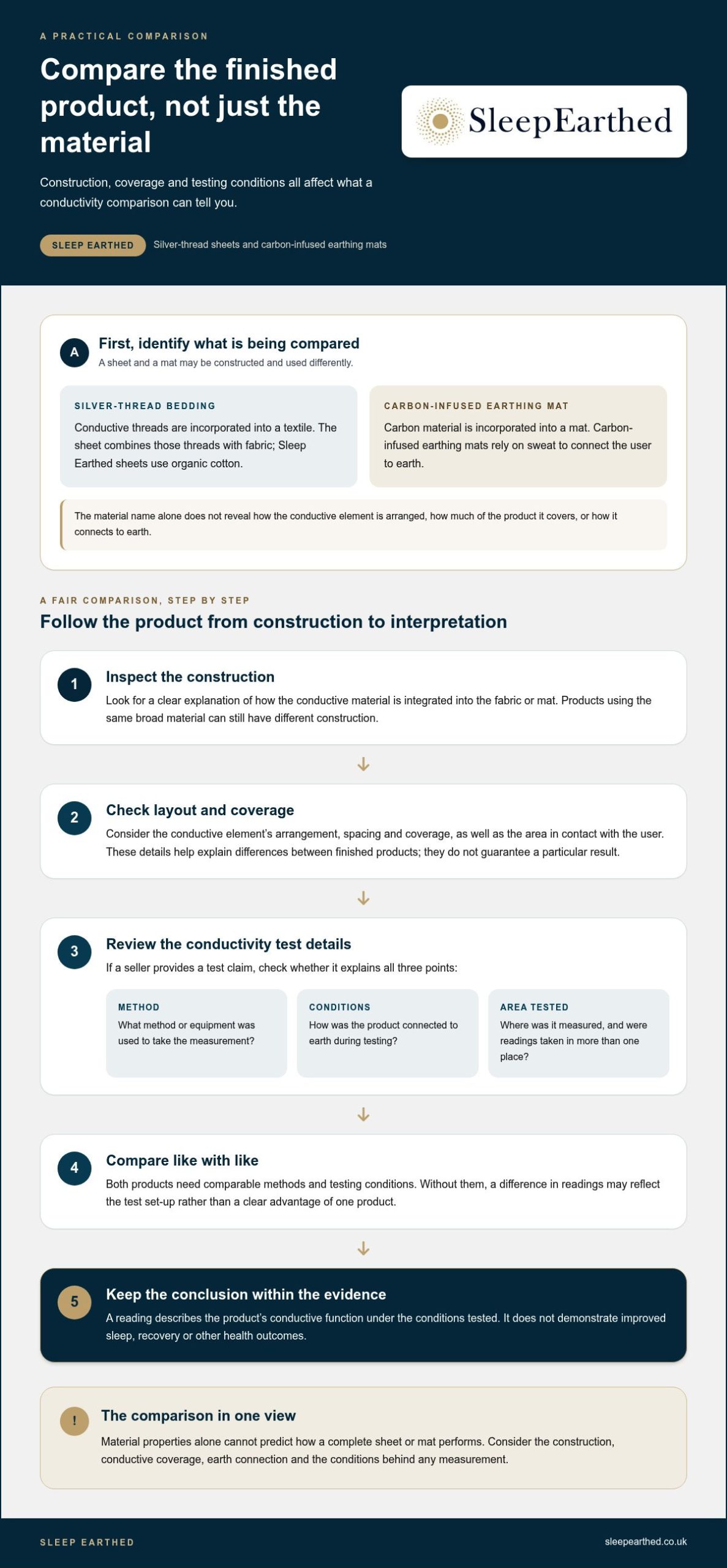
How to choose a grounding sheet without relying on material claims
A clear shortlist can make the choice between silver-thread grounding sheets and carbon-infused earthing mats easier. Start with what you need from the bedding day to day, then compare details you can check. Keep comfort and practical fit separate from claims about grounding effects.
- Identify your intended use. Decide whether you want a fitted sheet for regular bed use or are considering a different format. Compare like with like: a sheet and a mat may have different constructions and ways of being used.
- Inspect the construction. Look for the base fabric, the conductive material, how it is incorporated and any information about its coverage. Check what connection the product is designed to use instead of assuming the material name explains the full set-up.
- Review the testing information. Prefer product-level measurements that state the method, conditions and area tested. A broad promise or an isolated reading is harder to assess without that context.
- Check the fit. Match the stated sheet size to your mattress and consider whether the design suits how you make the bed and sleep.
- Read the care instructions. Make sure the recommended care fits your routine. Don’t assume two sheets with similar conductive materials can be washed or maintained in the same way.
These checks help you compare the finished bedding rather than treating silver threads or a carbon-infused earthing mat as a guarantee of comfort or performance. Sleep Earthed fitted sheets combine conductive silver threads with organic cotton. Compare the full construction, fit and product information with your own fabric preferences.
How should you judge grounding and sleep claims?
A conductivity test can provide information about an electrical property under specified conditions. It doesn’t show that a sheet will improve sleep, recovery or health. Those are separate claims and need separate evidence. Research into health effects of grounding remains limited, so be cautious with promises that go beyond what a product-level test can establish. Grounding bedding shouldn’t be treated as a substitute for medical advice or care.
For a balanced discussion of the evidence, read the science of whether earthing sheets work. For practical context on making the electrical connection and setting up bedding, use the grounding sheet setup guide.
Ready to explore a silver-thread option? Browse Sleep Earthed fitted earthing sheets and review their fabric and construction details.
When silver-thread bedding could be the right fit for your routine
There isn’t a universal winner when comparing silver-thread grounding sheets with carbon-infused earthing mats. A material name alone can’t guarantee how comfortable a sheet or mat will feel, how conductive the finished product is or whether you’ll notice a change in sleep. The best fit is the option whose construction, evidence and everyday details make sense for your bed and preferences.
What Sleep Earthed silver-thread sheets offer
Sleep Earthed fitted earthing sheets combine conductive silver threads with organic cotton. The threads are part of the textile, while the cotton forms the fabric of the bedding. This gives you clear material information to consider if you prefer an organic cotton fabric with a conductive element.
This describes the sheet’s construction, not a claim that it performs better than a carbon-infused earthing mat. For a balanced choice, consider the complete product: how it is constructed, how conductivity is assessed, whether the fit suits your mattress and what care the fabric requires. Sleep Earthed also offers a Sleep Earthed Test Meter as a separate product.
A straightforward next step for comparing options
Before deciding, compare like-for-like bedding. A fitted sheet is best compared with another fitted sheet, rather than with a mat or a different textile. Then weigh the details that matter in your routine:
- Construction: Is the conductive material and base fabric clearly described?
- Evidence: Are product-level conductivity results explained with their testing conditions?
- Fit: Does the sheet size suit your bed?
- Care: Can you follow the care instructions as part of your usual laundry routine?
For washing, follow the sheet’s care instructions and avoid bleach and fabric softeners. Consider Green Sheets fragrance-free detergent strips.
Keep practical preferences separate from health expectations. A conductive material or a test result doesn’t, on its own, establish a sleep or health benefit. If silver-thread bedding and organic cotton sound suitable for your routine, explore Sleep Earthed fitted earthing sheets and review the product details at your own pace.
Choose the sheet that fits your needs
The clearest lesson from comparing silver-thread grounding sheets with carbon-infused earthing mats is that a material label can’t tell you everything. Look at the finished product’s construction, product-level conductivity evidence, fit and care guidance, and compare like with like. Comfort is personal, while claims about sleep or health need evidence beyond a material description or electrical reading.
If organic cotton and conductive silver threads suit your preferences, Sleep Earthed offers UK-sized fitted earthing bed sheets made with that combination. Review the product details and consider how they fit your bedding routine before deciding.
Explore Sleep Earthed fitted earthing sheets and take the time to choose with confidence.
Frequently Asked Questions
Are silver-thread grounding sheets or carbon-infused earthing mats more conductive?
You can’t reliably tell which finished product is more conductive from the material name alone. Silver threads and carbon-infused earthing mats have different constructions, while coverage, connection and testing conditions all affect product-level results. For a fair comparison, look for measurements taken on each complete product using comparable methods. A claim about the raw material doesn’t automatically establish how well the bedding or mat performs in use.
Do silver grounding sheets work better than carbon-infused earthing mats?
There’s no sound basis for saying all silver sheets work better than all carbon-infused earthing mats. This is a material comparison, not a consistent test result across every product. Look at construction, connection and product-level conductivity evidence instead. Also separate electrical performance from claims about sleep or wellbeing: a conductive reading by itself doesn’t prove a health benefit or tell you how you’ll feel.
Are carbon-infused earthing mats safe to use?
A carbon-infused earthing mat incorporates carbon into a conductive product, but the material name alone can’t establish whether a particular finished mat is suitable for you. Carbon-infused earthing mats rely on sweat to connect the user to the earth. Read the product instructions, check how it is intended to connect to earth and use it as directed. Don’t use damaged bedding or connections. If you have a medical device or a specific safety concern, seek advice from a suitably qualified health professional before use.
How can I test whether a grounding sheet is conductive?
Use a suitable meter and follow its instructions for the sheet and its connection. A reading can help assess electrical continuity under the conditions tested, but it doesn’t establish sleep or health benefits. Sleep Earthed offers a Sleep Earthed Test Meter for this purpose. Make sure you understand the test method and what the result represents, rather than treating a single reading as proof of every performance claim.
Can a grounding sheet improve sleep because it contains silver?
Silver content alone can’t show that a sheet will improve your sleep. It may form part of a conductive textile, but that is separate from evidence about sleep outcomes. Research into grounding-related health claims remains limited, and benefits haven’t been established by large-scale, independent clinical trials. Consider comfort, fit and construction on their own merits, and don’t treat grounding bedding as a substitute for medical advice or care.
What should I compare when choosing silver-thread grounding sheets versus carbon-infused earthing mats?
Compare like-for-like finished products. Check the base fabric or mat surface, how the conductive material is incorporated, its coverage, the connection and any product-level test results with their method and conditions. Carbon-infused earthing mats rely on sweat to connect the user to the earth. Then consider fit, comfort information and care instructions. A sheet and a mat may have different construction and use, so they aren’t direct comparisons. Choose based on clear product details and your routine, not a material label or an unqualified promise.
Do silver-thread grounding sheets need special care?
Follow the care instructions supplied for the specific sheet, as construction and guidance can vary. Avoid bleach and fabric softeners, which can damage conductive fibres. For washing, Sleep Earthed recommends Green Sheets fragrance-free laundry detergent strips. Careful washing helps protect the textile, but it can’t guarantee that conductivity will remain unchanged indefinitely. Check the product guidance before laundering.