
 90 Day’s To Better Zzz’s Guarantee T&C apply


A grounding sheet can go in the washing machine, but the wrong laundry routine can affect its conductive threads. Some of the mistakes that ruin grounding sheets are easy to avoid: use warm water and liquid detergent without additives, and keep lotions or oils from forming a layer between your skin and the fabric.
It’s reasonable to wonder whether a sheet with conductive threads needs special care. It still needs regular washing, but harsh products and unsuitable laundry routines can leave residue or damage the threads that help maintain skin contact.
This guide explains how often to wash a grounding sheet, the right temperature and how to dry it carefully. You’ll also learn how to maintain direct skin contact and which laundry products, lotions and oils to avoid, so care stays practical and gentle.
Key Takeaways
- Machine washing can be suitable for grounding sheets when you use a gentle routine and avoid products that may leave residue.
- Choose a detergent without additives, such as Green Sheets, and follow the care guidance for your sheet.
- Take care when drying: line drying or a low tumble-dryer setting can help protect the conductive threads.
- Keep skin contact in mind, as lotions and oils may form a coating between your skin and the fabric.
- Learn how to assess the sheet’s connection and spot care habits that could affect its use.
Can You Machine Wash Grounding Sheets?
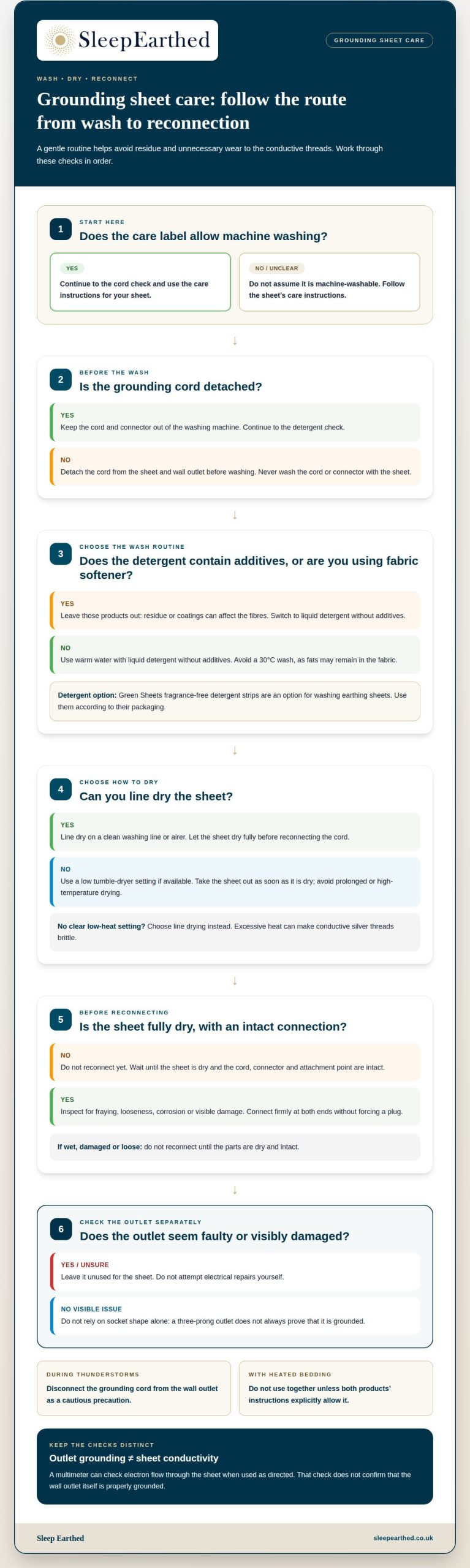
Yes, a grounding sheet can be machine washed if its care instructions allow it. Disconnect the grounding cord first, then use warm water and liquid detergent without additives. A three-prong socket does not always prove that an outlet is grounded. During thunderstorms, disconnect the sheet from the outlet as a cautious precaution.
Avoid using a grounding sheet with an electric blanket, heated mattress pad or other electrical bedding unless both products’ instructions explicitly allow it. If wiring looks damaged or an outlet seems faulty, stop using it and disconnect the sheet.
- Read the care label and disconnect the cord. Before washing, detach the grounding cord from the sheet and wall outlet. Keep the connector out of the washing machine. Follow the sheet’s care instructions, since washing requirements can differ between fabrics. Machine washing is not a reason to wash the cord or connector. If either part is wet, damaged or loose, don’t reconnect it until it is dry and intact.
- Use a suitable wash routine. Choose warm water and liquid detergent without additives. Avoid washing at 30 degrees Celsius, as fats may remain in the fabric. Detergent residue can also leave a film, so skip fabric softener and products that coat fibres. Green Sheets fragrance-free detergent strips are an option designed for washing earthing sheets. Use them according to their packaging.
- Check the outlet rather than relying on its shape. A three-prong outlet in a home built before the 1960s may not actually be grounded. A socket tester can help identify some wiring problems, but it does not make damaged wiring safe. Don’t remove the socket cover or attempt electrical repairs yourself. If the result is unclear or the outlet is visibly damaged, leave it unused for the sheet.
- Check the sheet-to-outlet connection. Once the sheet is dry, inspect the connector, cord and attachment point. Look for fraying, looseness, corrosion or visible damage. Connect the cord firmly at both ends, without forcing a plug. A secure connection matters: a loose clip or damaged cord can interrupt conductivity even when the outlet is grounded.
- Assess conductivity without altering the wiring. A multimeter can be used to check whether electron flow through the sheet is intact. Follow the meter’s instructions and use it only as directed. This check does not confirm that the wall outlet itself is properly grounded. Treat outlet grounding and sheet conductivity as separate checks, not interchangeable results.
- Keep electrical bedding and storms separate. Don’t assume a grounding sheet is compatible with heated bedding; follow both products’ instructions before using them together. During a thunderstorm, unplug the grounding cord from the wall outlet. Never use a sheet connected to an outlet with suspected faulty wiring. These simple precautions help avoid connection problems and reduce avoidable electrical risks.
How to maintain a grounding sheet for optimal performance?
A grounding sheet’s estimated lifespan is about 2 years, as its silver can eventually oxidise. Replace it if the fabric or connection is damaged, or conductivity checks show electron flow is no longer intact.
- Make washing part of a consistent care routine. Wash the sheet when it needs cleaning, rather than leaving sweat and everyday residue to build up. Before washing, detach the grounding cord and keep it out of the drum. Check the care label each time, especially if the sheet has recently been repaired or its construction differs from your usual bedding.
- Choose detergent that won’t leave a coating. Residue from additives or fabric softener can cling to the fibres and affect conductivity. Use a suitable liquid detergent without additives, following its pack instructions. Green Sheets fragrance-free detergent strips are another option for washing earthing sheets. Don’t add extra products simply to make the fabric smell fresher.
- Line dry when you have space. Spread the sheet over a clean washing line or airer so it can dry without being twisted or bunched. Make sure the connector area is not left folded against damp fabric. Let the sheet dry fully before reconnecting its cord or placing it back on the bed. Damp material can make it harder to assess whether the connection is working as intended.
- Use a low tumble-dryer setting if needed. Choose low heat rather than a prolonged, high-temperature cycle. Excessive heat can make the conductive silver threads brittle, which may shorten the sheet’s useful life. If your dryer has no clear low-temperature option, line drying is the gentler choice. Avoid assuming that a short high-heat cycle is harmless.
- Remove the sheet as soon as it is dry. Don’t leave it tumbling after drying is complete. Prolonged exposure to high temperatures can stress the silver threads, even when the sheet has already lost its moisture. Check the fabric before making another cycle: if it is dry, take it out and allow it to cool before reconnecting the cord.
- Inspect the fabric and connector after each wash. Look for fraying, weakened stitching, dark discolouration or a loose connection. Dark marks may indicate oxidation from skin acids or sulphur-containing cosmetics. Discolouration alone doesn’t prove that conductivity has failed, so assess the sheet’s electrical performance separately rather than replacing it based only on appearance.
- Handle and store the sheet gently between washes. Keep the connector from catching on zips or other sharp hardware when making the bed. After drying, fold the sheet without pulling on its connection point. These small habits help limit wear between washes and make it easier to spot changes in the fabric or cord.
How lotions and oils may affect conductivity
- Keep conductive fabric clear of product residue. Lotions and oils can coat the sheet’s silver fibres, creating a layer between the fabric and your skin. That layer may interrupt conductivity, even if the sheet looks clean. For example, body butter applied before bed can transfer from your arms or legs onto the area you touch.
- Apply moisturiser after getting up. If your evening routine includes body lotion, use it after you’ve finished sleeping on the sheet. This reduces the chance of fresh product transferring onto the fabric. It also gives you time to wash your hands before making the bed, especially after applying hand cream or a thick balm.
- Let skincare absorb before bed. If you prefer applying lotion in the evening, give it time to absorb fully before lying down. There isn’t a single waiting time that suits every cream, so use the product’s directions and check whether your skin still feels oily or tacky. A greasy surface can transfer more readily onto bedding.
- Pay attention to where products are applied. Face oils can transfer from your cheek or forehead to a pillowcase, while foot cream can reach the sheet when your feet rest against it. Keep treated areas away from conductive fabric until the product has absorbed. Consider your usual sleeping position, not just where you applied skincare.
- Check the sheet if contact feels different. A coating may not be visible, so don’t rely on appearance alone. If you’ve used oil or lotion before bed and the sheet seems less effective, review your skincare routine and wash the fabric according to its care instructions. A multimeter can help assess whether electron flow remains intact.
- Use a gentle wash after product build-up. Follow the sheet’s care label and choose a detergent without additives. Avoid fabric softener, which can leave another coating on the fibres. Washing removes everyday residue, but it isn’t a reason to scrub, bleach or use harsh products that may damage the material.
- Keep hands clean before making the bed. After applying facial oil, hand cream or hair serum, wash your hands before handling the sheet. This simple step limits transfer around the connector and fabric. It’s particularly useful if you adjust bedding after completing your evening skincare routine.
- Build a routine that protects skin contact. Conductivity depends on contact between your skin and the sheet, so avoid placing an oily layer between them. If you use several products, apply them after sleep or let them absorb fully first. Small adjustments can help the sheet work effectively without giving up your usual skincare.
Washing frequency and temperature
- Set the washing frequency by use and soiling. There isn’t one interval that suits every grounding sheet. Consider how often you sleep on it, whether you perspire heavily, and whether skincare or other residue reaches the fabric. Wash it when it needs cleaning, and follow its care label. A fixed, frequent wash schedule can mean unnecessary laundering.
- Choose warm water, not a 30-degree wash. A 30-degree Celsius cycle may leave fats in the fabric, so it isn’t the recommended setting for this routine. Use warm water instead, following the sheet’s care instructions. Avoid guessing that the coldest cycle is gentlest: an unsuitable temperature can leave body oils behind, even when the sheet comes out looking clean.
- Match the detergent to the conductive fabric. Choose liquid detergent without additives, and skip fabric softener or other products that can leave a coating. Residue may affect conductivity by sitting around the conductive threads. If you believe a detergent leaves a strong scent or film on other laundry, don’t use it for the sheet. Measure the product according to its own instructions.
- Keep the wash load simple. Wash the sheet with similar, light bedding rather than items with zips, hooks or rough surfaces. These can catch on fabric during a cycle and cause avoidable wear. Don’t overload the drum, either: the sheet needs room to move through the water and rinse. Always detach the grounding cord before putting the sheet in the machine.
- Rinse away detergent rather than adding more products. Use the machine’s normal rinse programme, and don’t add scent boosters to mask detergent smells. A fragrance-free option such as Green Sheets detergent strips can keep the wash routine straightforward. Follow the packaging and the sheet’s care label, rather than adding extra strips for a small load.
- Adjust the routine when conditions change. A sheet used nightly may need washing sooner than one used occasionally. If lotion, oil, sweat or a spill reaches the fabric, wash it when practical instead of waiting for a calendar date. Equally, don’t wash it repeatedly just to maintain conductivity. Cleanliness and electrical performance are related, but they aren’t the same test.
- Check the sheet after washing. Before making the bed, look for detergent residue, stains or damage. If the fabric still feels coated, review the detergent and rinse settings next time. Let the sheet dry fully before reconnecting it. This final check helps you separate a washing issue from a connection or conductivity problem.
How can you check whether a grounding sheet is properly grounded?
- Test the sheet and outlet as separate parts. A sheet’s conductivity and the outlet’s earth connection are different checks. A multimeter can assess whether electron flow through the sheet is intact, but that result alone doesn’t prove the wall outlet is grounded. Treating one reading as proof of both can hide the source of a problem.
- Start with a visual inspection. With the cord disconnected, check the sheet’s connector, cord and attachment point. Look for loose fittings, fraying, corrosion or visible damage. A secure-looking connection is useful, but appearance cannot confirm electrical continuity. Don’t use damaged components, and don’t attempt to repair a plug or wall socket yourself.
- Follow the multimeter’s instructions. Use the meter only as its manufacturer directs, and select the appropriate setting for the test. Avoid guessing at a range or interpreting an unfamiliar reading. The purpose is to assess whether electron flow through the connected sheet is intact, not to improvise an electrical test or alter the wiring.
- Check the sheet connection methodically. Attach the cord to the dry sheet as intended, then carry out the meter check according to its instructions. If the reading suggests interrupted flow, disconnect the cord and inspect the connector again. A loose clip, damaged cord or poor attachment can interrupt the path, even if the conductive fabric itself looks undamaged.
- Assess the outlet’s earth connection separately. A socket tester can help identify some outlet wiring issues. However, a three-prong outlet in a home built before the 1960s may not actually be grounded. Don’t remove the faceplate or attempt a repair to investigate further. Leave a visibly damaged or suspect outlet unused for grounding.
- Use the results to narrow down the fault. If the sheet check indicates intact electron flow but the outlet check raises concerns, the issue may lie with the socket rather than the fabric. If the outlet appears properly grounded but the sheet check fails, inspect the cord and connector. These checks help distinguish a connection issue from a conductivity problem.
- Repeat the check after a change. Reassess the sheet if you have replaced its cord, changed its connection point or noticed damage after washing. Keep the sheet dry during testing, and disconnect it before inspecting its fittings. Record what you checked, such as the outlet, cord or fabric, so you can compare results without relying on memory.
If you need a practical next step, explore ways to check sheet conductivity with a suitable meter.
Sleep Earthed
Sleep Earthed offers earthing sheets and related bedding for people looking to build grounding into their sleep routine. Its range includes UK Sized Fitted Earthing Bed Sheets, Earthing Pillow Cases, Earthing Half Sheet and Earthing Recovery Bag. Choosing a suitable option is only part of caring for it: gentle washing, careful drying and skin contact all help you look after its use.
If you’re deciding which sheet may suit your bed or want guidance on its care, get in touch with Sleep Earthed. You can ask about choosing between a fitted sheet and a half sheet, or how to check the sheet’s conductivity with a test meter.
Make your care routine work for you
Think of sheet care as a small part of your bedtime routine, not a complicated extra task. Choose habits you can keep up: handle the fabric gently, keep skincare residue in mind and investigate changes in connection or conductivity rather than guessing at the cause. Avoiding the mistakes that ruin grounding sheets is less about doing everything perfectly and more about treating the material thoughtfully.
If you’re choosing bedding, Sleep Earthed offers UK Sized Fitted Earthing Bed Sheets, Earthing Pillow Cases and an Earthing Half Sheet. The right format depends on how you prefer to use it and what suits your bed. If you’d like help with a question about care or choosing an option, contact Sleep Earthed.
Take the next step at your own pace and choose a care routine that works for your home.
Frequently Asked Questions
What are the most common mistakes when using grounding sheets?
Common mistakes that ruin grounding sheets include using unsuitable laundry products, drying with excessive heat and allowing skincare residue to build up. A poor fit can also reduce skin contact with the conductive threads. For example, a sheet that shifts during sleep may leave less fabric against your skin. Follow the care instructions, keep the connection secure and arrange the bedding so the conductive surface touches your skin directly.
How should grounding sheets be washed and dried without damaging them?
Wash the sheet at 40°C weekly, or at most every two weeks, using non-bio eco detergent. Avoid fabric conditioner, bleach, Oxi-based products, strong fragrances and whitening powders. Green Sheets fragrance-free detergent strips are one suitable option. Detach the cord before washing, then tumble dry on medium heat or line dry. Reconnect only once the sheet is fully dry.
Can fabric softener, bleach, or detergent affect a grounding sheet’s conductivity?
Yes. Fabric conditioner, bleach, Oxi-based products, strong fragrances and powders with whitening agents can affect the conductive threads or leave unwanted residue. Choose non-bio eco detergent instead, and use the amount stated on its packaging. If you accidentally wash the sheet with an unsuitable product, wash it again using an appropriate detergent, then dry it fully before reconnecting it.
Does a grounding sheet need to connect to a properly earthed UK socket?
Yes. The sheet connects to the earth through a standard three-pin UK plug and does not need electricity. The socket switch can be on or off. Each product also has a safety resistor to help prevent electric shock if a mains fault occurs. Use an extension lead only if both the lead and socket have an earth connection.
How can you test whether a UK wall socket is safely earthed before using a grounding sheet?
Use a UK Earth Socket Tester according to its instructions to check the socket’s wiring and earth connection. A tester can help identify an issue, but it cannot repair faulty wiring or make a suspect socket safe. If the result indicates a fault or the socket is damaged, don’t connect the sheet there. Checking the socket is separate from testing the sheet’s conductivity.
How should grounding sheets fit and make contact with the skin to work as intended?
The conductive threads need direct contact with your skin. Don’t place a regular sheet over the grounding sheet if you want the full benefit. Position a half sheet across the bottom half of the bed, and adjust it if it shifts or rucks up. If it won’t stay in place, a full fitted sheet may suit your bed better. Keep the conductive area in direct contact with your skin while you rest.