
 90 Day’s To Better Zzz’s Guarantee T&C apply

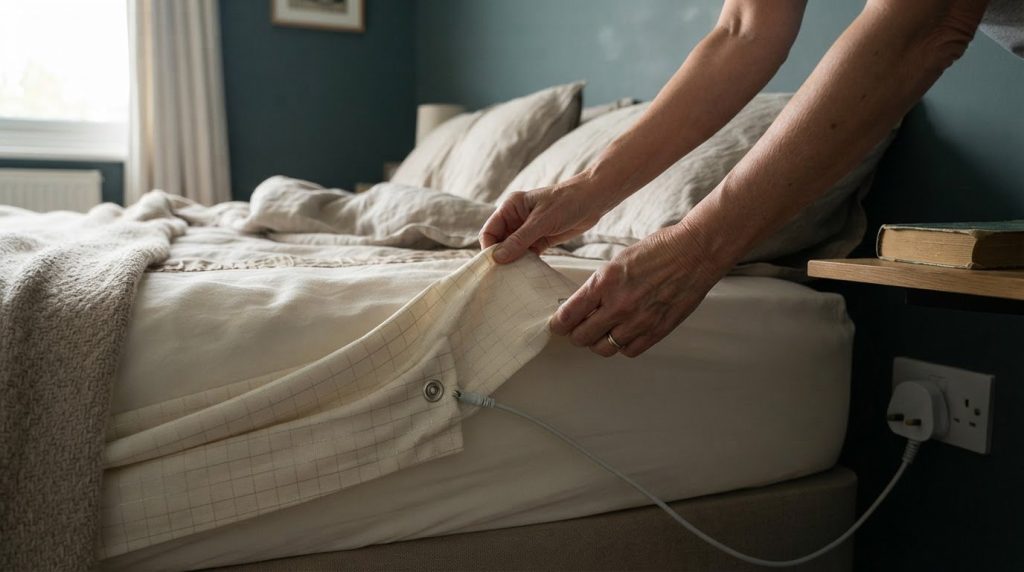
There isn’t one universally best material for grounding sheets: the best material for grounding sheets depends on the balance of conductive fibres and the fabric they’re woven into. Common options include silver or stainless-steel fibres in a cotton or polyester base, with stainless steel offering a distinct alternative to silver. Whatever the material, a grounding sheet also needs a properly grounded connection to work.
It’s understandable to focus on the fabric when choosing bedding, but material alone doesn’t show that a sheet will improve sleep. Small studies have suggested possible benefits, but the evidence remains limited, and some trials have been funded by advocates of grounding.
This guide explains how grounding sheets connect to earth, what research does and doesn’t suggest about sleep, and why material choice matters. It compares stainless steel with silver, covers practical safety points and outlines what to consider before choosing a sheet.
Key Takeaways
- Compare the sheet’s base fabric with its conductive fibres; the material description alone doesn’t tell you how the sheet connects to earth.
- Learn what limited research suggests about sleep, and why possible benefits should be viewed in context.
- Understand why a grounding sheet needs a properly grounded connection, whether it connects through a socket or a grounding rod.
- Consider practical safety points, including what to keep in mind during a thunderstorm and how to position the connecting cord.
- Explore how stainless-steel fibres differ from silver threads before deciding which material suits your priorities.
What Is the Science Behind Grounding Sheets?
A grounding sheet combines a fabric base with conductive fibres and connects those fibres to earth. The conductive threads need to form a usable path while the sheet remains comfortable to sleep on.
Base Fabrics and Conductive Fibres
The base fabric holds the conductive fibres in place, with cotton and polyester among the common options. These materials have different roles: the base provides the textile surface, while the conductive fibres create a path through the sheet.
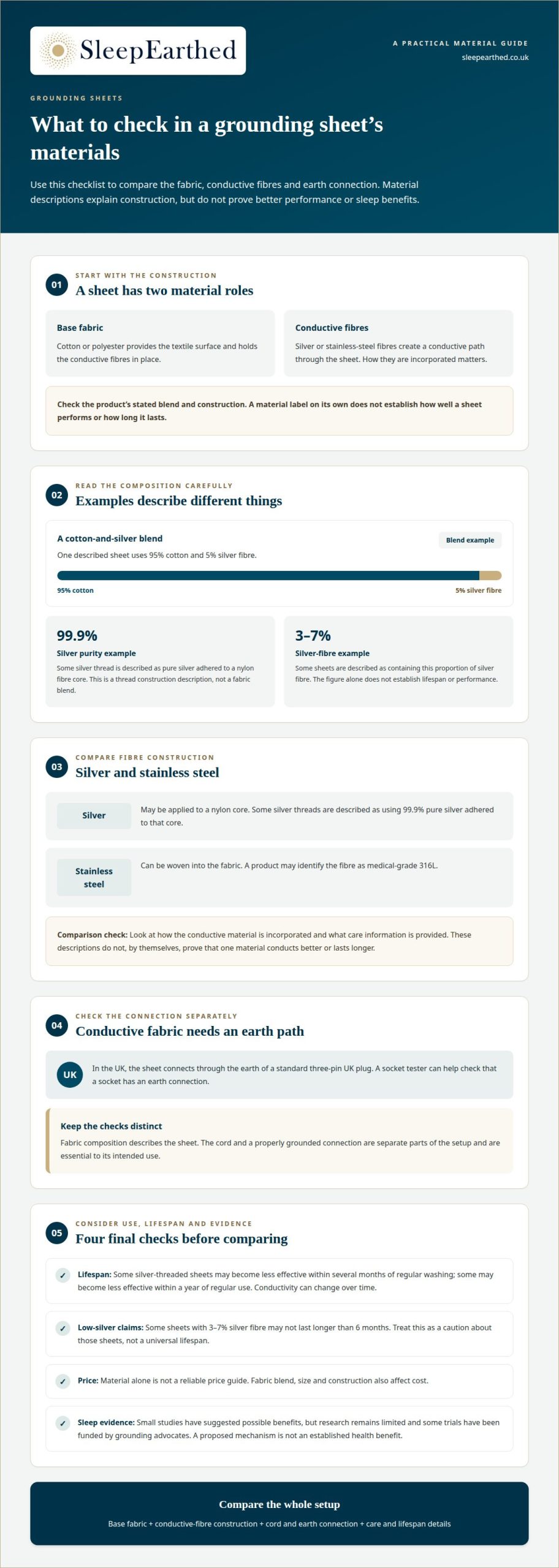
Conductive fibres can include silver, carbon or stainless steel, woven or incorporated into the base. Some sheets use a blend described as 95% cotton and 5% silver fibre. The proportions and construction affect how much conductive material is present, but those figures alone don’t establish performance or lifespan.
Conductive fabric alone doesn’t complete the path: a grounding sheet also needs an earth connection. In the UK, the sheet connects through the earth of a standard three-pin UK plug. A socket tester can help check that a socket has an earth connection. This is separate from fabric choice and is essential to the intended setup.
Silver and Stainless Steel Threads
Silver and stainless steel are both conductive materials used in bedding, but they’re made into fabric differently. Silver may be applied to a nylon core, while stainless-steel fibres can be woven into the fabric. When comparing sheets, look at how the conductive material is incorporated and how the product should be cared for.
Some silver-thread sheets are described as using 99.9% pure silver adhered to a nylon fibre core. Stainless-steel fabric may instead identify its fibre as medical-grade 316L. These descriptions help explain material composition, but don’t by themselves prove that one sheet conducts better or lasts longer than another.
How do silver-thread grounding sheets compare with stainless-steel-thread sheets? Both use conductive fibres, but silver-coated nylon and stainless-steel fibre are different constructions. Low-silver sheets can lose conductivity within months, and some sheets with 3-7% silver fibre may not last longer than 6 months.
What do grounding sheets cost in the UK, and how do prices vary by material? Material alone isn’t a reliable way to compare prices: fabric blend, size and construction also affect cost. Compare those details alongside the stated conductive fibre instead of treating silver or stainless steel as a price guide.
Conductivity can change as a sheet is used, so material descriptions should be read alongside care and lifespan information. Some silver-threaded sheets may become less effective within a year of regular use. A warranty and a conductivity lifespan are separate measures: a warranty describes the seller’s stated cover, while conductivity describes how well the fibres continue to provide a path.
What Are Grounding Sheets and How Do They Improve Sleep?
A grounding sheet is bedding with conductive fibres incorporated into the fabric. A cord connects the sheet to earth. Grounding advocates propose that this connection may influence the body’s electrical charge, but that proposed mechanism isn’t the same as an established health benefit.
The proposed mechanism isn’t the same as a proven sleep treatment. Small studies have suggested possible sleep benefits, but the trials are limited, and some have been funded by grounding advocates.
Organic Cotton and Silver-Fibre Construction
In a silver-fibre sheet, the fabric provides the sleeping surface and silver-bearing threads provide conductive paths. The cotton is the textile you lie on; the silver threads connect with the sheet’s grounding point and cord.
One described construction uses 95% cotton and 5% silver fibre. Silver-coated fibre may also consist of 99.9% pure silver adhered to a nylon core. Those figures describe different constructions, so check the material description rather than assuming every silver sheet uses the same blend or thread.
Some sheets arrange conductive threads in a grid, distributing conductive paths across the fabric. That layout can help explain how the sheet is designed to connect, but a grid alone doesn’t establish sleep benefits. The cord and its earth connection are also essential parts of the setup.
Standard and High-Silver Fabrics
Sheets described as having standard or high silver content can differ in the proportion or construction of their silver-bearing fibres. A higher stated silver content doesn’t, by itself, prove better performance or a longer useful life.
Some silver grounding bedding is described as containing 3-7% silver fibre, while another example uses 5% silver fibre with cotton. Compare the stated composition and construction, not just labels such as “high-silver”. Regular use and care also affect how well conductive threads continue to work.
Silver can react with sulphur compounds in the air and chemicals in laundry detergents. These reactions may tarnish silver and affect conductive performance; silver-threaded sheets can become less effective within several months of regular washing.
How should grounding sheets be washed and maintained without damaging conductive fibres? Follow the sheet’s care instructions, avoid harsh laundry products, and use Green Sheets detergent strips as the recommended detergent. A washing machine cycle that is too rough or unsuitable detergents can put extra strain on delicate conductive threads.
Whether a grounding sheet improves sleep remains an open question. Its construction explains how it connects to earth, but doesn’t show that the connection will resolve an individual’s sleep difficulties.
Are There Negative Effects of Grounding Sheets?
Grounding sheets add a cord and electrical connection to ordinary bedding, so safety includes the setup as well as the fabric. The key practical precautions concern thunderstorms, cable placement and the limits of claims about sleep quality.
Safety and Possible Negative Effects
Sleep Earthed products contain a safety resistor designed to prevent electric shock if a mains fault occurs. Follow the product instructions and disconnect the sheet’s wired connection during a thunderstorm, when lightning could travel through wiring.
A cord can become a trip hazard, especially beside a double bed shared with a partner or where pets move around at night. Keep the cable routed away from walking paths and places where it could catch on bedding. This is a straightforward household precaution, not a claim that the fabric itself causes harm.
A resistor is a component that limits current in an electrical circuit. Sleep Earthed products contain a safety resistor designed to prevent electric shock if a mains fault occurs. Follow the instructions supplied with the product and keep the cord and connection in good condition.
Conductive fibres provide a path for electrons, but they don’t make a sheet a medical treatment. Don’t assume the material alone will change your sleep. If the sheet is uncomfortable or disrupts your sleep, stop using it and reassess its fit and cable position.
Overnight Grounding Safety
Overnight use means the cable stays near the bed for hours, including when someone gets up in darkness. Before sleeping, make sure it cannot cross the route from the bed to the door. A partner turning over or a pet moving beside the bed can otherwise pull or catch a loose cord.
Keep the connection arranged as directed, rather than leaving cables stretched tightly across the floor or underfoot. This matters particularly in a shared room, where one person may not know the other has connected a sheet. A tidy route helps reduce accidental snags without changing how the conductive surface is intended to work.
During a thunderstorm, disconnect the sheet’s wired connection, since lightning could travel through wiring. The safety resistor doesn’t replace this precaution. Grounding sheets shouldn’t replace ordinary care for sleep difficulties: claims about better sleep don’t establish them as a treatment.
Finally, distinguish sheets from carbon infused earthing mats. Such mats rely on sweat to connect to the earth, so their contact conditions differ from bedding. Avoid assuming the same setup or overnight precautions apply to every conductive product. Read the product-specific directions and keep each item’s cord clear of the sleeping area.
How grounding sheets connect to an earth socket or grounding rod
A grounding sheet needs a conductive path from its fabric to earth. With Sleep Earthed sheets, the supplied cord connects the sheet to the earth connection in a standard three-pin UK plug.
For a UK setup, the practical check is whether the socket has an earth connection. A UK socket tester can help check this; the shape of a plug alone doesn’t confirm that the socket is earthed. Don’t infer a specific grounding-sheet regulation or standard simply from the use of a UK plug.
“Grounding” and “earthing” are commonly used to describe the same connection. An earthing sheet isn’t a different type of product simply because its name uses “earthing”. Conductive threads form a path through the sheet, while a cord connects the fabric to earth. The cotton or polyester base alone doesn’t provide that connection.
With a socket connection, a cord attaches to the sheet and connects to the earth pin of a standard three-pin UK plug. The intended route is the earth connection, not the socket’s live supply. The sheet must connect to an earthed socket: conductive fabric and a cord can’t make an unearthed socket suitable.
A grounding rod offers another route. Its rod is placed outside and connected to the sheet by its cord, creating a direct connection with the earth rather than using the socket’s earth pin. The cord needs to reach the rod without being stretched across a walkway or creating a trip hazard beside the bed.
The options have different practical requirements. A socket connection depends on an earthed socket; a rod connection needs a suitable route for the cord. In either case, follow the instructions supplied with the sheet and connection equipment. Don’t alter a socket or household wiring to connect a sheet.
The sheet’s base fabric and conductive material still matter, but they don’t determine whether the connection itself is correct. For example, silver threads in cotton need the same kind of grounded route as stainless-steel fibres in another fabric. A polyester base doesn’t replace the cord, earth pin or rod.
Once connected, arrange the cord neatly around the bed and away from feet, pets and moving bedding. During a thunderstorm, disconnect the wired connection, since lightning could travel through wiring. The connection links conductive fabric to earth; the sheet doesn’t need electricity.
Stainless steel grounding-sheet material
Stainless-steel fibres are an alternative to silver threads in conductive bedding. When comparing sheets, consider how the fibres are incorporated and whether the construction suits your mattress and sleeping habits.
One described stainless-steel sheet fabric uses medical-grade 316L solid stainless-steel fibre. The grade identifies the material, but doesn’t tell you how densely the fibres are woven, how they feel against the skin, or how long conductivity will last. Those details depend on the fabric construction and its care.
Look for a clear distinction between the sheet’s base textile and its conductive element. Cotton or another fabric forms the sleeping surface, while stainless-steel fibres provide conductive paths. Check that a fitted sheet matches your mattress dimensions and depth so it stays in place during sleep.
Silver-thread and stainless-steel-thread sheets use different conductive materials. Silver-bearing fibres may be silver-coated nylon, while stainless-steel fibres are incorporated as steel. This helps distinguish their construction, but the material name alone doesn’t establish which sheet conducts better or lasts longer.
There’s no sound basis for assigning stainless-steel sheets a fixed conductivity lifespan. Use, laundering and the weave can all matter. Treat a stated material grade as one piece of product information, alongside care guidance and information about continued conductivity.
Read claims about inflammation or recovery carefully. A conductive material in bedding doesn’t prove that it reduces inflammation, and limited grounding research doesn’t establish a reliable recovery effect. Consider the sheet as bedding with a conductive connection, not as a medical treatment.
For a practical comparison, examine the fabric description, conductive-fibre type, sheet dimensions and connection method together. For example, a 316L label identifies stainless-steel fibre, while a fitted design addresses how the sheet sits on a mattress. Neither detail alone demonstrates an effect on sleep quality.
The best material for grounding sheets isn’t decided by a label alone. Stainless steel may be worth considering as an alternative to silver, but construction and fit matter too. Compare the stated textile, how the sheet fits your bed and its care instructions. No fibre alone guarantees greater durability or better sleep.
Sleep Earthed: UK Sized Fitted Earthing Bed Sheets
Sleep Earthed offers UK Sized Fitted Earthing Bed Sheets in UK bed sizes. Made with certified organic cotton and silver threads, they combine a familiar textile with a conductive element. The sheets have elasticated corners and a safety resistor designed to prevent electric shock if a mains fault occurs.
The range also includes an Earthing Half Sheet, Earthing Pillow Cases and an Earthing Recovery Bag. Consider which format fits your bed and routine, rather than choosing on the fibre description alone. Sleep Earthed sheets and pillowcases require direct skin contact with their silver threads for the intended benefits.
Material, fit and connection all matter when choosing a grounding sheet. To find the Sleep Earthed option that suits your needs, contact Sleep Earthed for support.
Make your next choice with confidence
Choosing the best material for grounding sheets is only part of making a considered decision. Think about what matters most in everyday use: the feel of the fabric, how it fits your bed and how to care for it. Compare construction details rather than relying on a material label alone. A fibre name won’t tell you how a sheet feels or whether its setup suits your routine.
Keep your priorities practical. Consider the bedding you already use and what you want to know before choosing. Research into grounding remains limited, so separate the sheet’s material and connection from expectations about sleep outcomes.
If you’re still weighing up your options, you can contact Sleep Earthed with your questions. A clear question about fabric, fit or use can help you take the next step with confidence.
Frequently Asked Questions
What’s the difference between a grounding sheet and an earthing sheet?
“Grounding” and “earthing” are generally alternative labels, not ways to distinguish one sheet design from another. A product name alone won’t tell you its fabric blend, thread layout or care requirements. For a useful comparison, look at those details in the product description. That helps distinguish the label from the practical features that affect how the bedding suits your needs.
Do grounding sheets help with inflammation?
Grounding sheets shouldn’t be relied on to treat inflammation. A conductive material or proposed mechanism isn’t enough to prove health effects. If inflammation is persistent, worsening or affecting daily life, speak with a healthcare professional about its cause and suitable care. A sheet can be considered as bedding, but it shouldn’t replace medical advice or an established treatment plan.
Is it safe?
Safety depends on using the particular product as directed and keeping its electrical connection in good order. Sleep Earthed products have a safety resistor designed to prevent electric shock if a mains fault occurs. That feature is specific to those products, so don’t assume every sheet includes one. Read the product instructions before use, and stop using a sheet if its cord or connector appears damaged.
What materials are grounding sheets made from, such as silver, stainless steel, or conductive carbon?
Product descriptions may identify a textile base and a separate conductive component. Silver and stainless steel are used as conductive threads in sheet fabrics, while carbon is associated with conductive mats. Look for a clear description of the materials and how they’re incorporated, especially when comparing products with similar labels.
Which grounding sheet material offers the best conductivity and durability?
No single material label establishes the best balance of conductivity and durability. Compare how the conductive element is incorporated and distributed, along with the fabric’s care requirements. A sheet that fits your bed and can be cared for according to its instructions may be more practical than one chosen by fibre name alone. Consider performance claims separately from material descriptions.
What percentage of conductive fibres should a grounding sheet contain?
Don’t treat a fibre percentage as a universal pass-or-fail threshold. It describes the blend, but not the thread layout, continuity across the fabric or how the conductive material meets the sleeper. Two sheets with similar percentages can have different constructions. Compare the blend alongside the fabric description and care guidance.
Are grounding sheets made with silver safe for sensitive skin and people with metal allergies?
No general statement can guarantee that silver-thread bedding suits everyone with sensitive skin or a metal allergy. If you’ve previously reacted to silver or another metal, discuss the material with a healthcare professional before use. Review the fabric description to understand what will contact your skin, and stop using the sheet if you develop a new or worsening reaction.
How do grounding sheets connect to an electrical outlet, and how can the ground connection be tested?
Sleep Earthed sheets connect through a cord to the earth connection in a standard three-pin UK plug. A UK socket tester can help check the socket’s earth connection. If you use an extension lead, both the lead and the socket must have an earth connection. Follow the product instructions and don’t modify household wiring to accommodate the sheet.