
 90 Day’s To Better Zzz’s Guarantee T&C apply

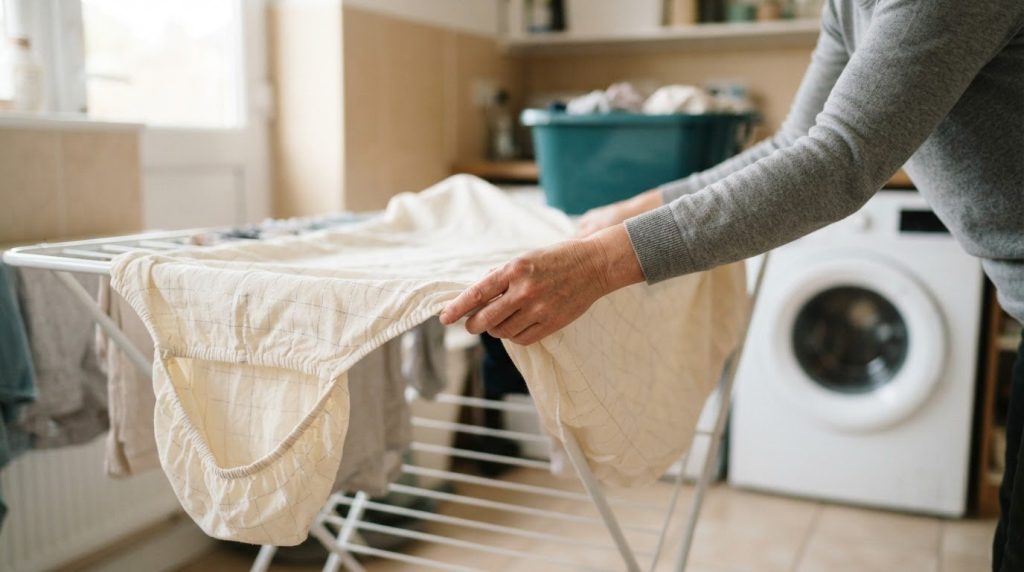
Fabric softener can make ordinary bedding feel smoother, but it may leave a coating on a grounding sheet’s conductive threads. For grounding sheet care and maintenance, wash the sheet every 1 to 2 weeks on a regular cotton cycle at 40 degrees Celsius, using gentle detergent without bleach or fabric softener. Line drying is preferred; if you tumble-dry it, keep the temperature at or below 65 degrees and take it out as soon as it’s dry.
It’s understandable to wonder whether conductive fabric needs special care. With a few simple laundry choices, grounding sheet care and maintenance can be straightforward.
Learn how to wash and dry a grounding sheet, which products to avoid, and how to care for its connection. We’ll also explain why fabric softener is unsuitable and how cleaning an earthing mat differs from washing a sheet.
Key Takeaways
- Wash grounding sheets at 40 degrees Celsius on a regular cotton cycle, following the care instructions for your sheet.
- Line drying is preferred; if you use a tumble dryer, keep the temperature at or below 65 degrees and remove the sheet as soon as it’s dry.
- Skip fabric softener, bleach and harsh cleaners, which can leave residue or affect conductive threads.
- Handle the sheet gently and keep its connection hardware dry to help protect the conductive fabric and connections.
- Learn how to spot signs of wear and when to check that the sheet’s connection is still working.
How to maintain a grounding sheet for optimal performance?
Drying matters because excess heat can damage conductive threads. Line drying is the gentlest option for a grounding sheet, while careful temperature control matters if you use a tumble dryer.
Air and Low-Heat Drying
Air drying means hanging a sheet to dry naturally, away from direct heat. It helps limit heat-related wear on the conductive surface and threads. Line drying is recommended; indoors, keep the sheet clear of a hot radiator. If using a tumble dryer, set it no higher than 65 degrees Celsius and remove the sheet as soon as it’s dry. Don’t leave it tumbling after drying.
Mats need different care from sheets. Clean an earthing mat with a damp cloth and mild soap, keeping its connection point dry. Do not machine wash or tumble dry carbon-infused mats or covers. Air dry them instead.
Care for Cotton and Silver-Thread Sheets
Cotton and silver-thread sheets need care that protects both the fabric and conductive threads. Follow the specific care label, and use gentle handling rather than pulling or stretching the sheet. The presence of silver threads makes heat control particularly relevant: use line drying where possible, or keep tumble drying at or below 65 degrees Celsius. These precautions help limit avoidable wear.
Are instructions different for cotton and silver-thread sheets? The fabric blend may vary, so follow the sheet’s own care label; don’t assume cotton-only bedding instructions cover its conductive threads. The same practical approach applies: handle it gently, avoid excessive heat, and remove it from the dryer as soon as it’s dry.
Keep the cord and connection hardware dry during washing and drying. Inspect the cord, snap and sheet surface periodically for visible damage or wear. How do you test conductivity? A multimeter can be used to check whether electron flow remains intact. Test periodically, particularly after repeated washing or extended use, and follow the meter’s instructions.
Storing a Grounding Sheet
Store a grounding sheet only when it’s fully dry, so damp fabric isn’t folded away. Choose a clean, dry storage place, and fold the sheet without pulling hard on its conductive surface. Keep the cord and connection hardware dry, and avoid placing heavy bedding or sharp objects on top. This reduces unnecessary strain while the sheet is out of use.
Before using the sheet again, unfold it gently and inspect the fabric, connection and cord. If any part has become damp, let it dry fully. Follow the care instructions for washing and drying, and use a multimeter according to its instructions if you want to check conductivity.
Can I Use Fabric Softener on a Conductive Throw or Sheet?
Do not use fabric conditioner on conductive bedding. It can leave residue on the fabric and affect conductivity. Choose a non-bio eco detergent instead.
Fabric softener, bleach and harsh stain removers may affect conductive threads or leave residues that interfere with the sheet’s connection. Choose mild detergent instead, and follow the washing instructions supplied with your sheet.
Choosing a Gentle Detergent
A gentle detergent cleans the fabric without relying on harsh additives. This matters because residue can build up on conductive threads and affect their electrical contact. Use the amount directed on the detergent packaging, rather than adding extra for a heavily soiled load. For a small mark, apply mild detergent carefully and rinse it away thoroughly before the sheet dries.
Choose a detergent without bleach or fabric-softening ingredients. A fragrance-free option can also help avoid unnecessary residues from added products. Sleep Earthed’s Green Sheets fragrance-free detergent strips are one option for washing grounding bedding.
Fabric Softener and Cleaning Products
Fabric conditioner can leave a film on the sheet, while bleach and other unsuitable cleaners can damage conductive fabric. Avoid them altogether. If a spot needs attention, clean it gently with non-bio eco detergent rather than applying a concentrated stain treatment.
Keep skincare products in mind, too. Oils, creams and other residue-producing products can transfer from skin to bedding. If you notice a mark, treat it gently and rinse the area well. Dark discolouration may indicate oxidation from skin acids or sulphur-containing cosmetics, rather than ordinary dirt.
For routine washing, use a regular cotton cycle rather than an intensive programme. Avoid an eco-setting that uses too little water for rinsing, since detergent residue may remain on the fabric. A wash at 30 degrees Celsius may leave body fats behind, so follow the sheet’s care instructions when choosing a temperature. Don’t mix bleach or softener into the wash, even in a small amount.
What safety precautions apply in the UK? A grounding sheet connects to the earth port of a properly wired socket, not its current-carrying slots. Use a socket tester to confirm the outlet is grounded before use; a safety-resistor cord doesn’t correct faulty household wiring. Keep the cord and connection hardware dry during cleaning, and disconnect them before washing the fabric.
After washing, check the sheet, cord and connection for visible wear. A multimeter can be used to test conductivity, particularly after repeated washing. Do not reconnect the sheet until it is fully dry, and do not use it if connection parts are visibly damaged.
Avoiding bleach and harsh cleaners
Bleach and harsh cleaners can shorten the useful life of conductive fibres. They may also leave residue on the material, interfering with its electrical connection. Keep bleach, concentrated stain removers and abrasive cleaning products away from the sheet. A small mark doesn’t call for a stronger chemical. Use mild detergent and gentle handling instead, then rinse thoroughly so detergent doesn’t remain on the fabric.
Fabric softener needs avoiding for a different reason. It can leave a coating across the fabric’s surface, which may impair conductivity. That coating can build up through repeated washing, even when each dose seems small. Skip softener in the machine and avoid combination detergents that include softening agents. Check the product label, rather than relying on packaging words such as “fresh” or “soft”.
For routine washing, choose a gentle detergent without bleach or softener. Green Sheets are a fragrance-free detergent option for grounding bedding. Use detergent according to its packaging, not an extra dose to tackle one visible mark. A regular cotton cycle gives the rinse water room to carry detergent away; intensive programmes and eco settings with too little rinse water can leave residue.
For a local spot, apply a small amount of mild detergent with a damp cloth, then wipe away the remaining soap. Avoid scrubbing the same area hard, as friction can strain the conductive threads. Treat a stain before putting the sheet in the machine, but don’t apply a strong stain remover directly to the conductive surface. Follow the sheet’s care instructions if they give a different cleaning method.
Dark marks do not necessarily mean a cleaner has damaged the sheet. Skin acids or sulphur-containing cosmetics can oxidise the material, and oils or creams can transfer onto bedding. Wash the sheet with non-bio eco detergent rather than using bleach. A colour change alone cannot confirm whether conductivity is affected.
Cleaning differs for fabric sheets and carbon-infused earthing mats. Clean a mat with a damp cloth and mild soap, keeping its connection point dry. Avoid harsh cleaners, and don’t put carbon-infused earthing mats or covers in the washing machine. For a sheet, machine washing should follow its care label, with bleach and fabric softener left out.
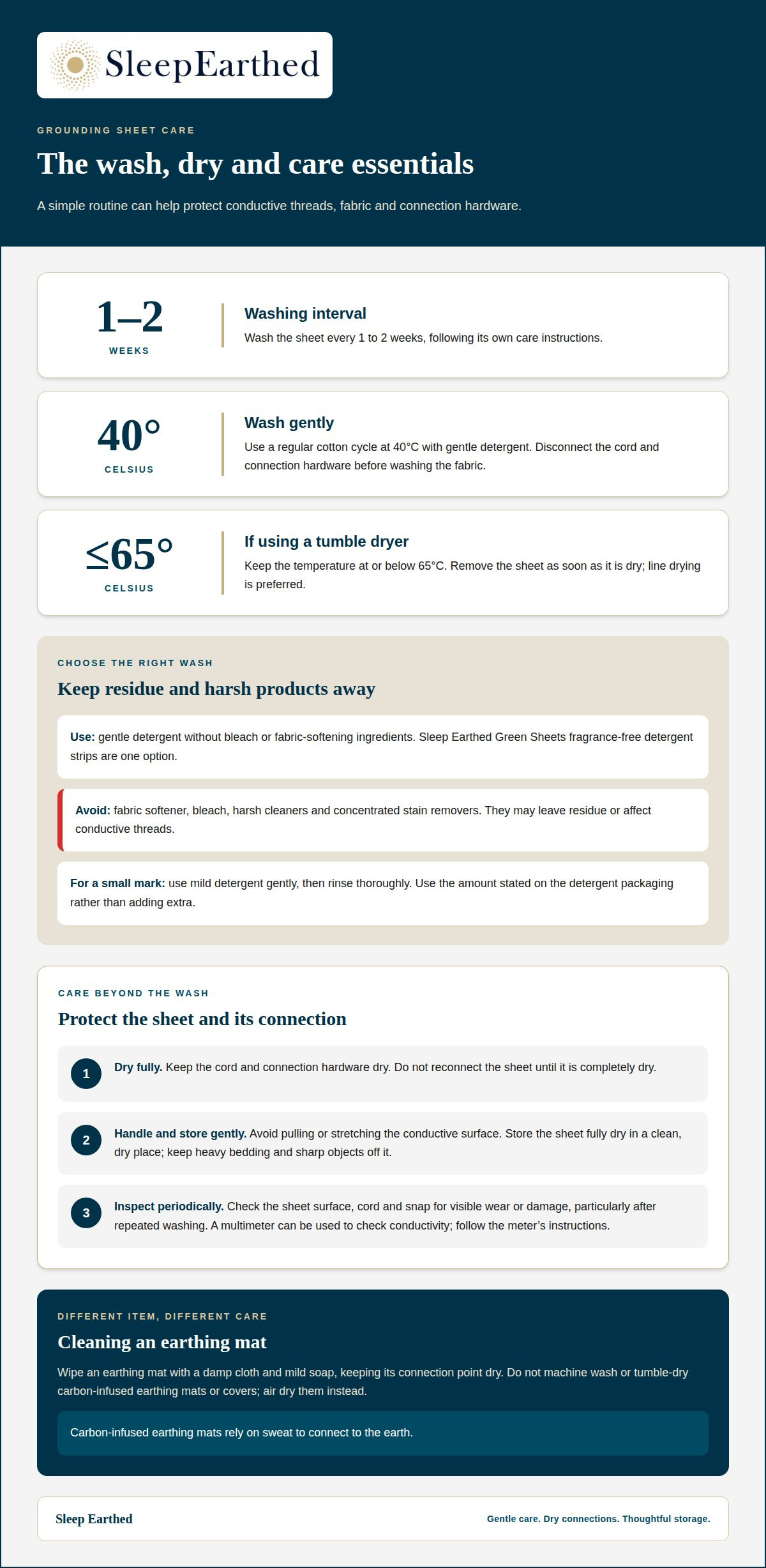
Cleaning and maintaining grounding sheets
A regular washing routine supports bedding hygiene and helps limit residue on conductive threads. Good grounding sheet care and maintenance starts with the care label, since the fabric and construction determine the suitable washing and drying method.
Washing and Drying Grounding Sheets
Washing and drying means cleaning the sheet without treating it like ordinary bedding in every respect. The right cycle and careful handling help preserve its conductive silver threads. Use a regular cotton cycle, rather than an intensive programme or an eco setting with too little rinse water. A 40 degrees Celsius wash is recommended, but follow the sheet’s own care instructions if they differ.
Handle the fabric gently after washing. Line drying is preferred; if using a tumble dryer, keep to the recommended temperature guidance and remove the sheet as soon as it’s dry. Check that the fabric and connection hardware are fully dry before reconnecting. Avoid pulling the sheet into shape while it is wet, as stretching can strain threads and seams.
Grounding Sheet Washing Frequency
Grounding sheets are generally washed every 1 to 2 weeks, while the best routine also depends on how they’re used. A sheet in direct contact with skin collects body oils and everyday soiling more quickly than one protected by another layer. Wash it as needed for normal bedding hygiene and follow its care label.
If the sheet sits directly on the mattress beneath a top sheet, it may not need washing as often. The upper layer takes more contact, so the grounding sheet can stay cleaner between washes. Don’t leave it unwashed indefinitely, though. Regular laundering helps manage skin oils and residue that accumulate on fabric over time. This is one practical part of grounding sheet care and maintenance.
Between washes, inspect the sheet’s surface, cord and snap for visible wear. Look for loose threads, fraying or a connection that no longer sits securely. These checks help distinguish a fabric issue from a connection problem. Dark marks can result from oxidation caused by skin acids or sulphur-containing cosmetics, so discolouration alone doesn’t mean the sheet needs replacing.
Conductivity can be checked periodically with a multimeter, particularly after repeated washing or extended use. Follow the meter’s instructions and assess the sheet and connection as a complete path. A damaged cord or snap may affect the reading even when the fabric appears sound. Keep connection hardware dry during cleaning, and don’t reconnect it until it has dried fully.
Grounding sheets and mats need different cleaning methods. Launder a sheet according to its label; clean carbon-infused earthing mats with a damp cloth and mild soap. Keep the mat’s connection point dry, and don’t put carbon-based mats or covers in a washing machine. Knowing which material you’re cleaning is an important part of grounding sheet care and maintenance, because machine washing can damage mats designed to be wiped clean.
How do you wash and dry an earthing grounding sheet?
Wash an earthing sheet gently, using its care label as the final guide. A regular cotton cycle, mild detergent and suitable rinsing help clean the fabric without unnecessary strain on its conductive threads.
Before washing, detach the connection cord so the plug and hardware stay out of the machine. Check the sheet for visible marks, loose threads or damage, then treat spots gently rather than scrubbing the conductive surface. This keeps cleaning focused on the fabric and helps avoid stressing the connection points.
- Prepare the sheet. Remove the cord and any detachable connection parts before placing the fabric in the drum.
- Select the wash. Use a regular cotton cycle at 40 degrees Celsius, unless the care label directs otherwise.
- Add mild detergent. Measure according to the detergent packaging, and leave out bleach and fabric softener.
- Rinse thoroughly. Choose a programme with enough water to remove detergent from the fabric.
- Dry with care. Line dry where possible, or tumble-dry at no more than 65 degrees Celsius.
A 40 degrees Celsius wash is recommended for grounding sheets. Avoid intensive programmes and eco settings that use too little water for rinsing. Detergent left in the weave can form residue around conductive threads. If a mark remains after washing, don’t automatically add bleach or a concentrated stain remover. Use a small amount of mild detergent for local cleaning, then rinse it away.
For detergent, choose a gentle option without fabric-softening ingredients. Fragrance-free detergent strips can make measuring straightforward, but follow the product’s own washing instructions. Sleep Earthed’s Green Sheets laundry detergent strips are one option for washing grounding bedding.
Line drying is preferred because it avoids prolonged tumble-dryer heat. If drying indoors, keep the sheet away from a hot radiator. When using a tumble dryer, use a setting no hotter than 65 degrees Celsius and remove the sheet as soon as it’s dry. Don’t leave it tumbling after drying, since excess heat may make silver threads brittle.
Once dry, check that the sheet and connection parts are fully dry before reconnecting them. Inspect the cord, snap and surface for visible wear. A multimeter can help test conductivity after repeated washing; use its instructions for the test. Keep the connection hardware dry throughout cleaning, and don’t machine wash carbon-infused earthing mats or covers as if they were sheets.
Sleep Earthed
Sleep Earthed offers earthing bedding for readers looking to make grounding part of their sleep routine. The range includes UK Sized Fitted Earthing Bed Sheets, Earthing Pillow Cases, an Earthing Half Sheet and an Earthing Recovery Bag. Choosing bedding that suits your sleep set-up makes it easier to follow the care instructions consistently, whether you’re washing a fitted sheet or maintaining another conductive item.
If you have a question about caring for Sleep Earthed bedding or choosing a product, contact Sleep Earthed. Our team can help with your questions.
Make your next step simple
A useful next step is to make care part of how you choose and use conductive bedding. Keep the care label with your laundry notes, and record any change in the sheet’s appearance or connection after washing. That gives you a clear reference if a question arises later, instead of relying on memory. A steady approach to grounding sheet care and maintenance can also help you decide which bedding suits your routine.
Sleep Earthed offers UK Sized Fitted Earthing Bed Sheets, Earthing Pillow Cases and an Earthing Half Sheet. Each option suits a different bed set-up, so consider how you prefer to use conductive bedding before choosing. If you’re weighing up the options or have a care question the label doesn’t answer, our team can help you think it through.
Contact Sleep Earthed with your care questions, and take the next step with confidence.
Frequently Asked Questions
Can I Machine Wash the Earthing Throw?
Machine wash an earthing throw only if its care label allows it. The label gives the suitable wash method for that particular fabric and construction. For drying, line drying is preferred; low-heat tumble drying is also an option. Remove the throw once dry rather than leaving it in the dryer. Keeping to the product’s own instructions helps avoid applying sheet-care assumptions to a different item.
Can I Put an Earthing Mattress Cover in the Dryer?
No. Current carbon-based earthing mattress covers should be air dried, not tumble dried. They also shouldn’t be machine washed, so don’t treat one like a fabric sheet when doing laundry. Keep the connection point dry during cleaning and drying. If the cover has its own care label, use it to guide the specific method, rather than applying the dryer settings used for ordinary bedding.
Can I Put an Earthing Sleep Mat in the Washing Machine?
No. Don’t put a carbon-infused earthing sleep mat in the washing machine. Clean its surface with a damp cloth and mild soap instead, keeping the connection point dry. Clean a carbon-infused earthing mat with a damp cloth and mild soap, keeping the connection point dry and avoiding harsh cleaners. Let the mat air dry before using it again.
Can I Use Bleach?
No, avoid bleach on a grounding sheet. It can be too harsh for conductive material and may affect the threads. If a mark needs attention, use mild detergent on the affected area and rinse it away, rather than escalating to a stronger cleaner. Check the care label for any fabric-specific instructions. Don’t use bleach as a way to remove dark discolouration, which can have other causes.
Can grounding sheets be machine washed, and what detergent should you use?
Yes, grounding sheets can be machine washed; use a 40°C wash and a non-bio eco detergent. Follow the sheet’s care label and measure detergent according to its packaging. Green Sheets fragrance-free eco laundry detergent strips are one suitable option. Rinse the sheet thoroughly so detergent residue doesn’t remain in the fabric.
What are common causes of grounding sheet losing conductivity?
Residue from unsuitable detergents, fabric conditioner or skincare products can affect the conductive surface. Avoid high heat and handle the sheet gently to protect its silver threads. A worn connection or cord may also affect conductivity, so inspect the sheet and connection and use a multimeter according to its instructions if you want to test them.