
 90 Day’s To Better Zzz’s Guarantee T&C apply

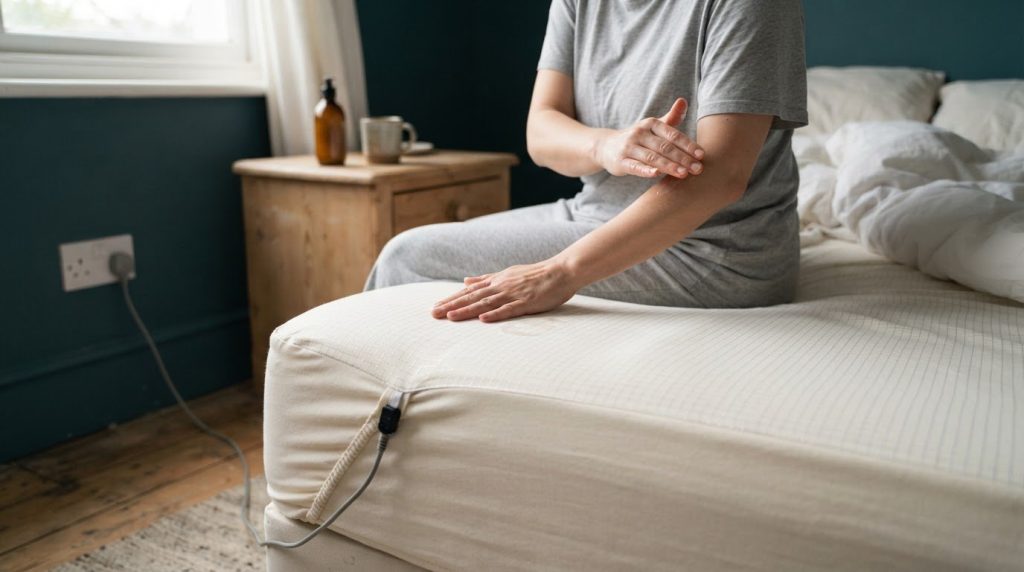
Moisturiser can feel harmless on your skin, yet leave residue on a grounding sheet. So, do body lotions affect grounding sheets? They can: creams and oils may build up on conductive fibres and affect their surface, although using lotion does not automatically mean the sheet will stop working.
Grounding sheets connect the body to the earth through conductive threads and an earth connection. To work as intended, the conductive surface needs to stay in good condition, so it is useful to understand how residue and suitable washing care affect it.
This guide explains how lotions, creams and body oils may affect a sheet, and why the product and how you use it matter. It also covers how grounding is intended to work, what the available evidence can and cannot tell you, and practical ways to care for your bedding without overhauling your skincare routine.
Key Takeaways
- Lotions, creams and body oils can leave residue on conductive fibres, so their effect depends partly on how much product reaches the sheet.
- Allow skincare to absorb before using an earthing product, and keep the conductive surface clean according to its care instructions.
- Grounding sheets are designed to connect to the earth through conductive material and an earth connection; the setup matters as well as skin contact.
- Research into grounding has limitations, so distinguish proposed mechanisms from established evidence when weighing claims about health benefits.
- Learn how fabric layers and skincare residue may affect contact, and what to consider when choosing between an earthing sheet, pillow case or half sheet.
Do Lotions Affect Grounding Products?
Lotions, creams and body oils can leave residue on a grounding surface and affect its conductive material. The effect depends on the product, how much you apply and whether it transfers to the fabric.
Lotions and Mat Conductivity
Conductivity is a material’s ability to carry an electrical connection. Skincare residue may interfere with the conductive surface. For example, a rich body butter or oily cream can transfer from your skin onto a mat during contact. Repeated use may build up residue and affect the surface. A thin layer of moisturiser is not the same as clean, residue-free contact.
Moisture and Skin Insulation
Moisture from body heat and perspiration can support conductivity through clothing and bedding. Cotton can hold moisture even when it feels dry, which may help maintain contact between skin and pyjamas. This differs from oil or cream left on the skin: moisture and skincare residue do not affect a surface in the same way. Moisture and contact conditions may affect conductivity, so the material and care instructions matter.
Conductive Fibres in Grounding Sheets
Grounding sheets typically combine a base fabric, such as cotton or polyester, with conductive fibres. Silver is one example; some grounding products use stainless steel. Since the conductive component is woven into the fabric, residue on the surface may affect contact with those threads. A cotton sheet with silver threads and a carbon-infused earthing mat use different conductive materials. Carbon-infused earthing mats rely on sweat to connect to the earth.
Fabric Softener and Conductive Textiles
Fabric softener can leave a coating on textiles rather than rinsing away cleanly. On a grounding blanket with silver threads, that build-up may affect conductivity. For example, regularly using softener on bedding could leave residue across the fabric, even if no lotion is applied directly to it. Follow the product’s care instructions and avoid adding softener unless those instructions permit it.
Residue, Surface Contact and Care
Body oils and creams may transfer to conductive fabric during contact, especially where skin rests against the same area repeatedly. Residue can tarnish silver threads and reduce their conductivity over time. However, a change in fabric conductivity does not demonstrate a health effect, such as an effect on inflammation, cortisol or chronic symptoms. Keeping skincare residue and laundry coatings in mind helps explain why product care matters.
Grounding Sheets: What They Are and Do They Work?
A grounding sheet uses conductive material and a cord to connect to earth. Its intended function depends on that connection and the condition of the fabric.
Lotion residue can leave greasy marks and may affect conductive fibres, particularly if oil builds up where your skin rests against the sheet. Washing according to the product’s care instructions helps remove residue without risking damage from unsuitable cleaning.
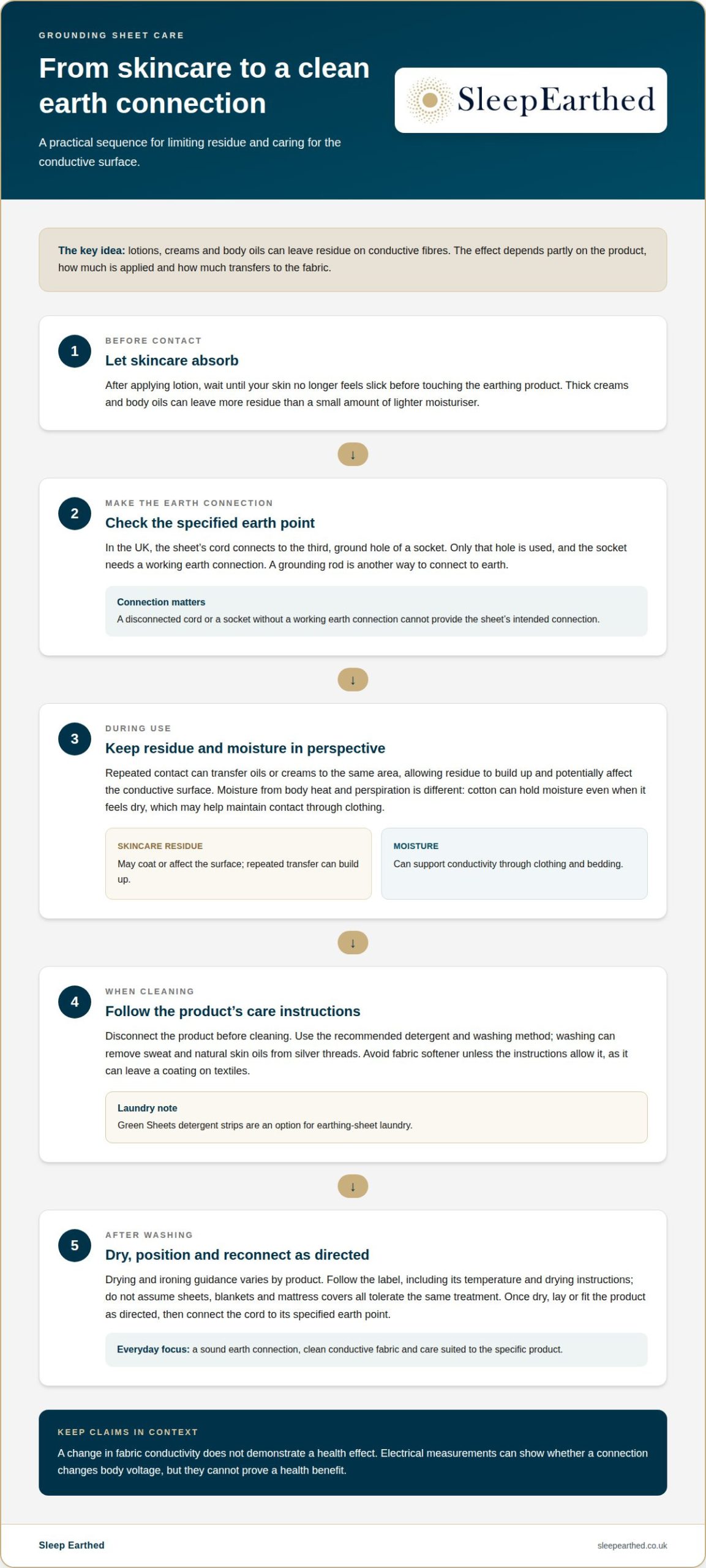
After applying lotion, let it absorb until your skin no longer feels slick before touching an earthing product. The aim is to limit transfer: thick cream or body oil can leave more residue than a small amount of lighter moisturiser.
In the UK, a grounding sheet connects by cord to the third, ground hole of a UK socket. Only that hole is used, and the socket must have a working earth connection for the sheet to connect as intended. A grounding rod is another way to connect to earth.
The earth connection is the basis of the sheet’s intended grounding function. It does not, by itself, show that a product provides healing or treats a health condition. A disconnected cord or a socket without a working earth connection cannot provide the intended connection.
For washing, follow the care instructions supplied with the specific sheet or blanket. Washing can remove sweat and natural skin oils from silver threads, helping to keep the conductive surface clean. Disconnect the product before cleaning, and use the recommended detergent and washing method. Fabric softener can leave a coating on textiles, so avoid it unless the instructions allow it. For earthing-sheet laundry, Green Sheets detergent strips are an option.
Drying and ironing instructions also vary by product. Some earthing blanket instructions favour line drying, while others allow low heat. Don’t assume that a mattress cover, blanket and fitted sheet all tolerate the same treatment. Use the label’s temperature and drying guidance, and avoid ironing unless the instructions permit it.
Once dry, lay the sheet flat or fit it as directed, then connect its cord to the specified earth point. Position the cord so it will not be pulled or become a trip hazard. For everyday use, focus on a sound earth connection, clean conductive fabric and care suited to the product.
Scientific evidence and limitations
Electrical measurements can show whether a conductive connection changes body voltage, but they cannot prove a health benefit. One set of tests found nearly identical reductions in electrical charge with direct skin contact and with ordinary cotton bedding between the person and grounding sheet. This suggests a light fabric layer need not prevent an electrical connection. It does not establish that grounding improves sleep or treats illness.
Health claims require a different standard of evidence. Some small studies have hinted at better sleep, changes in heart rate variability and shifts in cortisol, a hormone involved in the stress response. The available findings are described as unreliable, so they do not establish that grounding sheets cause those outcomes. For example, a reported association with inflammation is not proof that grounding treats chronic inflammation.
Individual study results also need context. One small study reported improved heart rate variability after 20 minutes of grounding. Another account described a participant feeling pain subside after 30 minutes. In a separate study, participants who practised yoga for an hour while using grounding mats had lower blood viscosity than participants without mats. These findings are specific to their study settings; they don’t show what every user will experience.
Grounding outdoors and using grounding bedding are also different. Barefoot contact with grass, soil or sand is direct contact with the earth. A sheet depends on its conductive fabric, connecting cord and a properly earthed outlet or grounding rod. If the electrical connection is not working, research about grounding cannot establish that the sheet itself is functioning.
A socket tester can check whether an outlet’s earth connection is working. That is a practical electrical check, not evidence that a health claim is true. Likewise, a voltage reading can indicate an electrical change without showing that cortisol, sleep or pain will change. Keep the questions separate: is there a connection, and what does the science show about health?
For lotions, evidence about electrical contact should not be confused with clinical evidence. A reading through cotton does not test every moisturiser, oil, fabric or amount of residue. Nor does it prove that residue has no effect on a sheet’s conductive surface. Research on grounding’s health effects remains limited, so treat claims about healing cautiously rather than as established outcomes.
Effects of lotions, creams, and body oils on grounding products
Skincare can reach a grounding product through ordinary contact, not just direct application to the fabric. For example, cream on your arms may transfer to the area of a sheet where you rest each night. Residue can spread as you move, so the affected patch may not match where the lotion first touched. Oils and thicker creams tend to leave a more noticeable film.
How much transfers depends on the formula, amount used and contact. A little lotion on your hands may leave little visible trace, while body oil applied across your legs can reach a larger area. Letting skincare absorb before bed helps reduce fresh transfer. You can also consider which parts of your body usually touch the sheet, rather than changing your whole skincare routine.
Grounding products use different conductive materials. Silver threads are used in conductive bedding, while carbon-infused earthing mats are another product type. Carbon-infused earthing mats rely on sweat to connect to the earth. Residue may affect their surfaces differently, so do not apply care instructions for a silver-thread sheet to a mat automatically. Identify the product’s material and follow the cleaning directions for it.
Repeated contact can cause gradual build-up, even if a single use leaves no obvious mark. For example, a moisturised hand resting in the same place each night may transfer residue to one section of fabric. Applying body oil more widely can affect more of the surface. Look for changes such as a greasy feel or visible marks, but remember that appearance alone does not measure conductivity.
For laundry, use the cleaning method recommended for the specific product. Fabric softener can leave a coating on conductive textiles, so avoid it unless the care instructions say otherwise. For earthing-sheet laundry, Green Sheets detergent strips are an option; follow the sheet’s own washing directions when using them.
Keep fabric care separate from health claims. A change to a conductive surface is a product-care concern; it does not show whether grounding affects sleep, inflammation or another health outcome. Likewise, an electrical charge reading can show an electrical change, but cannot establish a healing effect. Manage skincare residue to care for the fabric, not as evidence for or against broader claims about grounding.
Earthing Revolution says lotions, creams and body oils should not be applied before touching an earthing mat because they can oxidise and damage its conductivity. It also warns that body lotions and oils can tarnish silver thread in an earthing blanket, making it non-conductive.
It advises washing earthing products at least 2x a month or weekly and ironing them on low heat. Silver in grounding sheets may oxidise from washing and sweat, making them less effective over time. A grounding sheet needs a properly grounded connection to have an effect.
Do moisturisers, oils or creams insulate skin from grounding sheets?
Moisturiser does not automatically create a complete insulating barrier between skin and a grounding sheet. The practical question is whether cream or oil remains as a noticeable film where your skin touches the conductive surface. A light lotion that has absorbed is different from a greasy layer of balm on your hands or feet.
Grounding mattress-pad instructions sometimes recommend keeping no more than one layer between your body and the pad to maximise conductivity. That layer might be a normal cotton fitted sheet. Adding thick pyjamas and another blanket creates more fabric between your skin and the conductive material, so the contact conditions differ from direct skin contact.
Fabric and moisture matter too. Cotton can hold moisture even when it feels dry, and perspiration can support conductivity through bedding or clothing. This means a cotton layer is not necessarily an electrical barrier. However, not all fabrics behave alike: a synthetic layer or waterproof covering can limit contact compared with light cotton sleepwear.
Consider a practical example. If you apply body oil to your arms and lie on a grounding sheet straight away, oil can transfer to the fabric. If you let it absorb and wear light cotton pyjamas, less fresh residue is likely to reach the sheet. The fabric layer remains between skin and sheet, but there is less oily residue to transfer.
There is no single waiting period that suits every cream. A fast-absorbing lotion and a thick ointment behave differently, and the amount used affects how long your skin feels slick. Use the feel of your skin as a guide: wait until it no longer feels greasy before making contact. This limits transfer but does not prove a particular level of electrical conductivity.
For a useful comparison, separate three factors: skin contact, fabric layers and residue on the product. A cotton sheet between you and the conductive layer is not the same as oil coating its threads. Nor does an electrical reading alone establish a health benefit. The intended connection depends on the conductive surface and its earth connection, while skincare mainly affects cleanliness and contact.
If you prefer a sheet designed for use across a bed, explore grounding sheet options and consider how your usual sleepwear and skincare fit into your routine.
Sleep Earthed
Sleep Earthed makes earthing bedding for people considering how skincare, fabric and conductive contact fit into their routine. UK-Sized Fitted Earthing Bed Sheets, Earthing Pillow Cases, Earthing Half Sheets and Earthing Recovery Bags offer different ways to use earthing products at home. Choose based on where you want the conductive fabric, such as across the mattress or beneath your upper body.
If you are considering earthing bedding or have questions about caring for it around lotions and oils, contact Sleep Earthed for guidance.
Make grounding part of a routine that works for you
Understanding whether body lotions affect grounding sheets can help you make a considered choice about skincare and bedtime without feeling you have to give up either. Think about how you use moisturiser: where you apply it, whether your skin still feels slick at bedtime and which areas touch your bedding. These details can guide simple choices that suit your routine.
Keep the evidence in perspective too. An electrical connection and a claimed health benefit are separate questions, so choose products and habits based on what you can assess clearly. If you are unsure which type of earthing bedding may suit your sleep setup, Sleep Earthed can help you consider the available options without making skincare complicated.
Share your question with Sleep Earthed and take the next step with confidence.
Frequently Asked Questions
How do body lotions affect conductivity between skin and grounding sheets?
Lotions can leave a film between skin and conductive threads, while oils may transfer directly onto the fabric. The practical effect depends on how much product remains and where it touches the sheet. For example, applying thick cream to your hands before resting them on one area can leave local residue. That build-up is different from using moisturiser elsewhere on your body.
Does lotion need to be fully absorbed before using a grounding sheet?
Wait until your skin no longer feels slick before making contact. There is no single waiting time for every product: a light lotion and a thick ointment absorb differently, and the amount used matters too. For example, if your arms still feel oily after applying body cream, give it more time before lying against the conductive surface. This helps limit transfer without requiring you to stop using skincare.
How do grounding sheets work and how is their electrical connection tested?
A grounding sheet uses conductive threads and a cord connected to earth through a suitable socket earth connection or a grounding rod. In the UK, a socket tester can indicate whether the outlet’s earth connection is working. That checks the electrical path, not whether the sheet provides a health benefit. A separate conductivity check concerns the sheet’s conductive surface, so do not treat the two checks as interchangeable.
Does grounding sheet conductivity depend on skin contact, clothing or humidity?
Contact conditions matter. Skin touching the conductive threads differs from having several layers of clothing between your body and the sheet. Sleep Earthed’s product guidance says your body must contact the silver threads for full earthing benefit. Cotton may retain moisture from perspiration even when it feels dry, but this does not mean every fabric or room condition behaves identically. A damp room is not a substitute for the intended earth connection.
How can you clean grounding sheets to remove lotion residue without damaging conductive fibres?
Follow the sheet’s care label and use a non-bio eco detergent; Sleep Earthed recommends washing its sheets separately at 40°C, weekly or at least every two weeks. Avoid fabric conditioner, bleach, Oxi-based products and strong fragrances. Green Sheets detergent strips are an option for earthing-sheet laundry. Don’t apply stain treatments or ironing heat unless the product instructions allow them.
Do grounding sheet manufacturers recommend avoiding lotion or following particular care instructions?
Care advice varies by product, so follow the instructions supplied with your sheet rather than assuming every manufacturer has the same lotion rule. Sleep Earthed’s care guidance focuses on washing methods and avoiding products that leave unwanted deposits, such as fabric conditioner. If you use a rich ointment, limiting direct transfer to the sheet is a sensible precaution. Let skincare absorb and follow the fabric’s stated care directions.