
 90 Day’s To Better Zzz’s Guarantee T&C apply

Trouble Sleeping? Practical Solutions for Better Sleep in the UK
What if better sleep starts with spotting a pattern, rather than trying every tip you’ve heard? When you’re lying awake or waking repeatedly, it’s understandable to feel frustrated, especially when tiredness affects your mood, concentration or daily routine. Practical trouble sleeping solutions UK readers can try don’t need to be complicated, but they should fit what’s disrupting your rest.
Stress, an irregular routine, evening habits and an uncomfortable sleep environment can all play a part. Start by noticing what tends to happen before a difficult night, then test one manageable change consistently rather than overhauling everything at once. This guide covers common sleep disruptors, practical adjustments and ways to make your bedroom more restful. It also explains when ongoing sleep problems may be a reason to speak with your GP or seek further support.
Key Takeaways
- Restless nights can have different causes. Notice patterns in your routine and sleep environment before choosing what to change.
- Explore trouble sleeping solutions UK readers can try, from keeping a steady wake time to building a realistic wind-down routine.
- Learn how occasional disruption differs from ongoing insomnia, and why CBT-I may be worth discussing with a clinician.
- Use a simple one-week plan to track sleep, test one change consistently and review how you feel during the day.
- Make your bedroom comfortable, dark and quiet. Treat bedding as an optional comfort choice, not an insomnia treatment.
Trouble sleeping in the UK: what might be behind a restless night?
A few poor nights can leave you feeling drained, and it isn’t always obvious why your sleep has changed. Sleep difficulty can mean trouble falling asleep, staying asleep or feeling rested afterwards. It doesn’t, by itself, mean you have insomnia or identify a particular cause. For a general overview of insomnia, including its different patterns, see Wikipedia.
A practical starting point for trouble sleeping solutions UK adults can try is to note what difficult nights have in common. Look for a pattern over time rather than judging yourself by one restless night.
The video below offers one perspective on insomnia. Treat it as general information, not a diagnosis or a guaranteed solution.
Which sleep pattern are you experiencing?
Sleep difficulties can show up in different ways:
- Trouble falling asleep: you’re in bed but remain awake for a long time.
- Repeated waking: you wake during the night, perhaps more than once, and may struggle to settle again.
- Early waking: you wake earlier than intended and can’t get back to sleep.
- Unrefreshing sleep: you seem to have slept, but don’t feel rested when you get up.
Notice how often this happens, how long the pattern has lasted and whether it affects your energy, mood or concentration during the day. A sleep diary can help you describe the pattern, but it can’t identify a medical cause on its own.
Common factors that can affect sleep
Several factors can affect sleep at once. Stress or a busy mind may make it harder to wind down, while changing bedtimes or wake times can disrupt routine. Caffeine later in the day may affect some people. Alcohol can disturb sleep, even if it initially makes you feel drowsy. Noise, light, an uncomfortable room or feeling too hot can also interrupt rest.
Pain, medicines and other health concerns may play a part too. If you think a medicine is affecting your sleep, don’t stop or change it without professional guidance. Consider speaking with your GP if sleep problems persist, noticeably affect daily life, or occur alongside pain or other health symptoms.
Identifying a repeated pattern is more useful than guessing at a cause. It gives you a clearer starting point for deciding what to try or discuss.
Trouble sleeping solutions: evidence-informed habits to try first
There isn’t one routine that suits everyone, and no habit is a guaranteed cure. Treat these ideas as small experiments: choose one or two that fit your life, try them consistently and notice whether your sleep or daytime energy changes. The NHS advice on sleep also offers practical guidance on rest and tiredness.
Build a wind-down routine you can keep
A regular wake time can help give your day a steadier rhythm. You don’t have to force an exact bedtime. Instead, make the transition towards bed predictable and manageable. You might read, listen to something calming or take a warm shower. Choose an activity you’re likely to repeat, rather than an elaborate ritual that feels like another task.
If work, scrolling or stimulating entertainment seems to leave you feeling alert, try moving it earlier or reducing bright-screen use before bed. Notice what makes a difference for you. If you’re still awake, don’t turn the routine into a test you have to pass. The aim is to create a calmer opportunity for sleep, not to demand it.
Adjust daytime habits without making sleep another chore
Daylight and regular movement, where suitable for you, can be useful parts of a steady daily routine. Keep changes realistic: a walk or time outdoors may be easier to maintain than a complete schedule overhaul. Review caffeine, alcohol and naps in context. If you suspect late coffee, an evening drink or a long nap is affecting your night, change one variable and observe what follows.
Late or heavy meals may feel uncomfortable for some people, but there’s no need to impose a strict rule if they aren’t troubling your sleep. A brief sleep diary can help you connect habits with nights that feel better or worse. Note relevant choices alongside bedtime, waking and how you feel the next day.
- Keep your wake time as consistent as your routine allows.
- Choose one calming activity to mark the shift towards bed.
- Notice how caffeine, alcohol, meals and naps relate to your sleep rather than cutting everything out at once.
- Make one change at a time so you can tell what may be helping.
Helpful routines can support sleep, but persistent insomnia may need more than habit changes. If sleep problems continue or affect daily life, seek professional advice rather than treating these experiments as a substitute for care.
If comfort is one part of your sleep environment you’d like to review, explore earthing bedding options from Sleep Earthed as an optional personal choice, not an established treatment for insomnia.
Which sleep solutions suit occasional disruption versus ongoing insomnia?
The right next step depends partly on how long sleep has been difficult and how much it affects your day. A restless night now and then may settle as a temporary stressor or routine change passes. If poor sleep keeps returning, simple habit changes may not be enough, and it’s reasonable to look beyond self-help.
For occasional disruption, start with one or two manageable routine adjustments and observe what happens. Changing several things at once makes it harder to tell what’s useful. Results vary, and a tip that suits one person may not suit another. Treat practical trouble sleeping solutions UK adults try as experiments, not guaranteed fixes or a reason to blame yourself if sleep doesn’t improve.
When might self-help be a reasonable first step?
Self-guided changes can be a reasonable starting point when sleep problems are occasional and aren’t having a serious effect on everyday life. A steadier wake time, a calmer wind-down or adjusting a habit you suspect is disruptive may help you build a clearer picture. Keep the approach simple and give changes time to show a pattern, without turning bedtime into a performance.
Guided behavioural support offers more structure, helping you work through sleep-related habits and thoughts with support. Cognitive behavioural therapy for insomnia, or CBT-I, is an approach to discuss if difficulties are ongoing. It focuses on patterns linked with sleep rather than relying only on products or quick fixes. NHS guidance identifies CBT-I as a key treatment approach for insomnia. Read the NHS advice on insomnia for information on self-help and when to seek care.
When should you seek professional advice in the UK?
Consider speaking with your GP if sleep problems persist, affect your daily life or occur alongside other health concerns. A clinician can help assess what may be contributing, including whether pain, medicines or another health issue could be relevant, and discuss suitable next steps. You don’t need to work out the cause before asking for advice.
Buying a sleep product may change your comfort or the feel of your bedroom, but it doesn’t automatically address an underlying reason for disrupted sleep. Bedding can be a personal sleep-environment choice, not a proven treatment for insomnia. Keep the question of comfort separate from the question of health support.
Ongoing sleep difficulty deserves support, not blame. If routine changes haven’t helped or tiredness is making everyday tasks harder, seeking professional advice is a sensible next step.
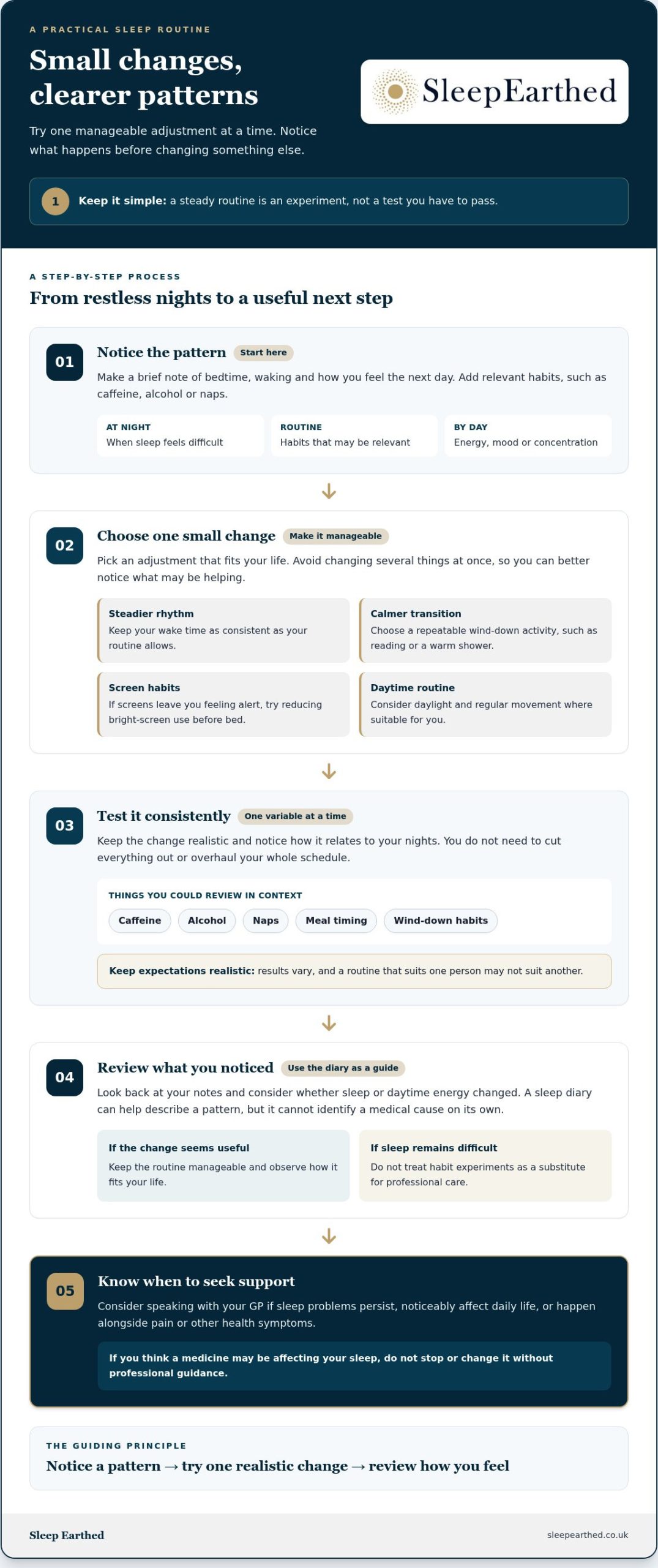
A simple plan for testing trouble sleeping solutions over the next week
A brief sleep diary can turn a vague sense of “I’m not sleeping well” into a clearer picture. It isn’t a diagnostic tool, and there’s no need to watch the clock or record every detail. The aim is to notice what tends to happen, then choose one reasonable change to try.
Use a simple sleep diary to spot patterns
Each morning, make a quick note of roughly when you went to bed and got up, whether you remember waking during the night, and how you felt during the day. Approximate times are enough. Add details such as caffeine, alcohol, naps, stress or changes in your bedroom only when they seem relevant. Keep the notes brief so tracking doesn’t become another source of pressure.
After several days, look for a possible pattern rather than drawing conclusions from a single night. A diary can help you describe what you’ve noticed, but it can’t establish the cause of a sleep problem.
Choose one realistic change and review it
Use what you’ve noticed to choose one habit to test. For example, if your wake time varies considerably, aim for a steadier one. Keep other routines as stable as practical so you can see whether anything seems different. These observations won’t prove that one change caused an improvement, but they can guide your next step.
Try this simple plan over the next week:
- Note the pattern. Record approximate bedtime and wake time, night waking and daytime effects.
- Choose one change. Pick a realistic habit linked to what you’ve observed.
- Try it consistently. Keep the rest of your routine as steady as you reasonably can.
- Review your notes. Consider whether sleep or daytime functioning seemed different across several days.
Be kind to yourself if the week doesn’t bring a clear answer. Sleep varies, and a short test can’t account for every influence. The purpose is to learn what may be worth continuing, adjusting or discussing, not to grade your success.
Pause self-experimentation and consider speaking with your GP if sleep problems persist, affect everyday life or come with other health concerns. You don’t need a completed diary or a definite explanation before asking for advice. If you’re also considering a change to your sleep environment, explore Sleep Earthed earthing bedding as an optional comfort choice, not a treatment for insomnia.
Create a more restful bedroom and consider optional comfort choices
Your bedroom doesn’t need a complete makeover to feel more suitable for sleep. Start with what you can notice: is light getting in, is noise interrupting you, does your bedding feel comfortable, or is the room too warm or cool for your preference? Try small, practical changes before buying anything. The best setup is personal, so focus on what seems to disturb your rest.
Make the sleep environment comfortable and low-distraction
Try straightforward adjustments first. Block a bothersome light, reduce an avoidable source of noise or change bedding that feels uncomfortable. For those reviewing duvet or pillow fillings, guides such as harborhouseliving.com provide useful breakdowns of different materials and breathability. If interruptions are part of the problem, consider whether a simple change to your usual arrangement might help. Aim for a room that feels dark, quiet and comfortable to you, rather than following a strict formula or chasing a supposedly perfect bedroom.
These steps can make the room more inviting, but they aren’t a guaranteed fix for persistent sleep difficulty. Treat them as part of a broader approach, and notice whether a change makes the space more comfortable or less distracting.
Where optional earthing bedding fits in a sleep routine
Sleep Earthed offers fitted earthing sheets and pillowcases as bedding options. The fitted sheets use organic cotton and conductive silver threads. These material details describe the bedding; they don’t establish that it treats insomnia or reliably improves sleep. As with any bedding choice, its relevance may come down to personal comfort and preference.
If you’re weighing up whether earthing sheets work, distinguish between how a product is made or intended to be used and what evidence can establish about clinical effects. Sleep products aren’t all treatments, and buying something new doesn’t automatically address what may be behind disrupted sleep. You can read Sleep Earthed’s grounding and earthing guide for more background, whilst keeping any bedding choice separate from seeking help for ongoing difficulties.
For trouble sleeping solutions UK readers are considering, a useful order is simple: first address obvious comfort or environmental issues, then consider optional purchases if they suit your preferences. If sleep problems persist or affect daily life, speak with your GP rather than relying on bedroom changes or bedding alone.
Take the next step towards more restful nights
Better sleep often begins with noticing what may be disrupting your nights, then testing one manageable change rather than overhauling everything at once. A brief sleep diary can help you spot patterns, whilst persistent difficulties or tiredness affecting daily life are good reasons to seek advice from your GP.
There’s no single fix that suits everyone. Practical trouble sleeping solutions UK adults try, from a steadier routine to a more comfortable bedroom, can support healthier sleep habits, but they aren’t a substitute for professional help when problems continue. Bedding is a personal comfort choice, not an established treatment for insomnia.
Sleep Earthed offers UK-sized fitted earthing bed sheets and related bedding options, with a 90-day better-sleep guarantee. This does not mean the bedding is a proven treatment for sleep problems.
If you’d like to explore bedding as one optional part of your sleep environment, explore Sleep Earthed bedding options. Choose a realistic next step, and remember that ongoing sleep difficulty deserves support, not blame.
Frequently Asked Questions
Why am I having trouble sleeping even when I feel tired?
Feeling tired doesn’t always mean your mind and body are ready to fall asleep. Stress, a changing routine, noise, light, discomfort, caffeine or alcohol may be relevant, and sometimes the reason isn’t immediately obvious. Notice whether the difficulty is falling asleep, waking during the night or waking too early. If it keeps happening or affects your day, consider discussing it with your GP rather than trying to diagnose the cause yourself.
What can I do tonight if I cannot fall asleep?
Try to keep the pressure low. If you’re lying awake and becoming frustrated, get up for a quiet, relaxing activity in dim light, then return to bed when you feel sleepier. Avoid repeatedly checking the time or turning sleep into a task you must complete. A calmer setting may help, but one night’s routine can’t guarantee sleep. If sleeplessness becomes persistent or affects daily life, seek professional advice.
Can changing my bedtime routine help me sleep better?
A realistic routine may support sleep by creating a steadier transition from daytime activity to bed. Try keeping a consistent wake time and choosing a calming activity you can repeat, such as reading or listening to something relaxing. If bright screens or stimulating tasks seem to keep you alert, experiment with reducing them before bed. Make one change at a time. Routines can help, but they don’t guarantee improvement or treat every cause of insomnia.
When should I speak to a GP about trouble sleeping in the UK?
Consider speaking to your GP if sleep problems persist, interfere with everyday life or come with other health concerns, such as pain. You don’t need to know what’s causing the difficulty before asking for support. Brief notes about when you sleep, night waking and daytime tiredness may help you describe what’s been happening. If you think a medicine affects your sleep, speak to a health professional before changing or stopping it.
Is CBT-I available in the UK for insomnia?
Yes. Cognitive behavioural therapy for insomnia, known as CBT-I, is a recommended approach in UK guidance. It focuses on thoughts and behaviours linked with sleep, rather than relying only on sleep products. Digital CBT-I options are also recommended, though access routes and availability can vary. If insomnia is ongoing, speak with your GP about suitable support and whether CBT-I may be appropriate for you.
Do earthing sheets help with trouble sleeping?
Earthing sheets are bedding, not an established treatment for insomnia. Sleep Earthed offers UK-sized fitted earthing bed sheets and earthing pillowcases as optional sleep-environment choices. Whether a particular sheet feels comfortable is a personal matter, but product materials or intended use don’t establish clinical effectiveness. If sleep difficulty continues or affects your daily life, don’t rely on bedding alone; consider speaking with your GP.
Can caffeine or alcohol affect sleep even if I have them earlier?
They can affect sleep for some people, but individual responses vary. Caffeine may leave you feeling alert, while alcohol can make you feel drowsy at first yet disturb sleep later. Rather than assuming either is the cause, note what you have and when alongside your sleep and daytime energy. If you suspect a link, try adjusting one habit and observe whether a pattern emerges over several nights.