
 90 Day’s To Better Zzz’s Guarantee T&C apply

How to Lower Cortisol Levels for Sleep: Practical, Evidence-Aware Steps
What if the aim isn’t to force cortisol down, but to help your body settle into its natural sleep rhythm? If you’re searching for how to lower cortisol levels for sleep, it’s understandable to want a clear answer, especially when your mind is still racing at bedtime. Cortisol isn’t a problem in itself: levels normally rise towards morning and fall through the day. A restless night on its own doesn’t mean you have a hormone problem.
Online advice can make it hard to tell which habits are sensible and which supplements promise more than they can deliver. You don’t need to chase a particular cortisol number to start supporting better sleep. This guide explains cortisol’s daily rhythm, suggests realistic evening habits that may help you wind down and puts supplement claims into perspective. It also covers why a steady wake-up time and morning light matter, and when ongoing sleep difficulties are worth discussing with your GP or another qualified clinician.
Key Takeaways
- Cortisol has a natural daily rhythm, and feeling wired at bedtime doesn’t tell you whether your levels are high.
- Learn how to lower cortisol levels for sleep by supporting a steadier sleep routine, rather than trying to drive cortisol as low as possible.
- Review everyday factors such as sleep timing, evening light, caffeine and alcohol to spot habits that may be keeping you alert.
- Compare supplement claims with their potential risks, and be cautious of quick fixes that promise too much.
- Make your bedroom comfortable, track patterns and seek advice from a GP or qualified clinician if sleep problems persist. Bedding isn’t a proven cortisol treatment.
How cortisol and sleep are connected: what ‘high cortisol’ really means
It can feel deeply frustrating when you’re exhausted but your body still won’t settle. It’s tempting to blame “high cortisol”, but one restless night can’t tell you what your hormone levels are. Cortisol helps regulate essential functions, including the body’s response to stress. It isn’t a toxin to eliminate, and a normal rise in response to a challenge isn’t the same as having an endocrine condition.
In brief: Everyday stress can temporarily affect alertness and sleep, whereas an endocrine condition involves a persistent hormone imbalance diagnosed through appropriate clinical assessment and tests. Symptoms at bedtime alone can’t confirm one.
For another perspective on the topic, this video discusses cortisol, sleep and body-clock timing:
What does cortisol normally do across the day?
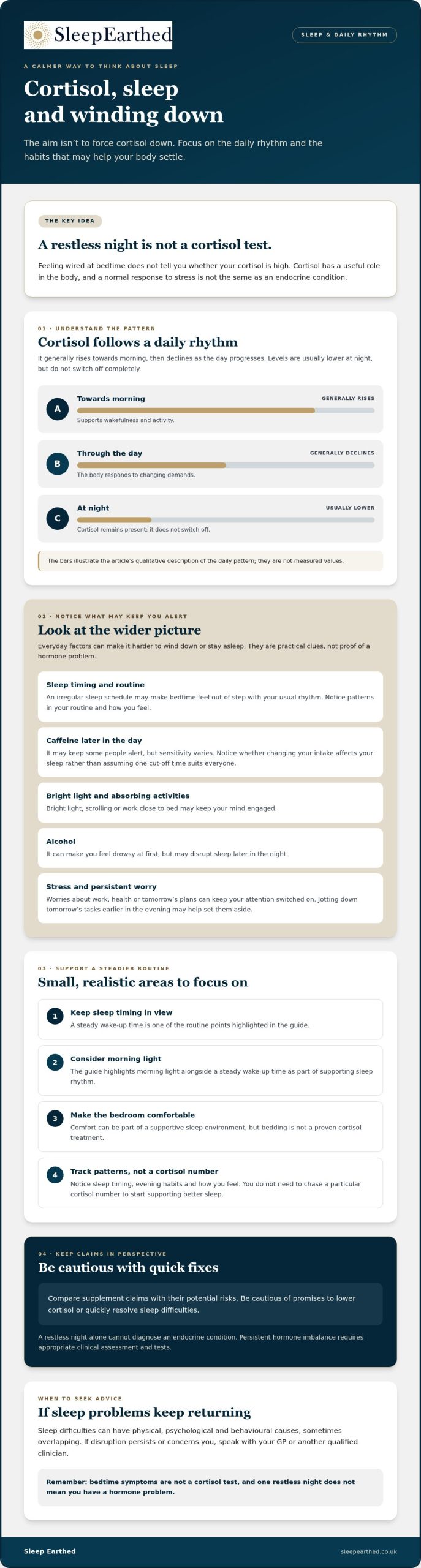
Cortisol follows a daily rhythm, generally rising towards morning to support wakefulness and activity, then declining as the day progresses. Levels are usually lower at night, but they don’t switch off completely. This pattern helps the body respond to changing demands. Cortisol has a useful role, rather than being inherently harmful.
That rhythm is one reason sleep and stress can influence each other. The overview How cortisol and sleep are connected describes links between stress, the system that regulates cortisol and sleep patterns. But feeling alert or restless at bedtime isn’t a cortisol test result. If you’re wondering how to lower cortisol levels for sleep, consider your overall routine and wellbeing rather than diagnosing yourself from one difficult night.
Can stress make it harder to fall or stay asleep?
It can. Worry about work, health or tomorrow’s plans may keep your attention switched on just when you want to wind down. A stressful period can also disrupt routines, which may make sleep less settled. These are plausible links, not proof that stress hormones alone explain what’s happening.
Sleep difficulties can have physical, psychological and behavioural causes, sometimes overlapping. Pain, anxiety, changes in routine or habits that affect sleep may all play a part. If poor sleep keeps returning, don’t assume you have a hormone problem or that you simply need to lower cortisol. Look at the wider picture, and seek advice from a GP or qualified clinician if the disruption persists or concerns you.
Why cortisol may feel high at bedtime: sleep timing, stress and daily habits
Feeling wired at night can make cortisol seem like the obvious explanation, but it’s a symptom, not a test result. Alertness may come from stress or a disrupted routine, and it doesn’t show whether your cortisol is unusually high. For a medical overview of what cortisol is and its role in the body, Cleveland Clinic offers a useful starting point.
Sleep timing, late caffeine, bright evening light, stimulating activities, alcohol and persistent worry can all make it harder to wind down or stay asleep. These factors may affect sleep without indicating a hormone disorder, and people can respond to them differently.
Which everyday factors can disrupt winding down?
An irregular sleep schedule can make bedtime feel out of step with your usual rhythm. Caffeine later in the day may keep some people alert, though sensitivity varies. Notice whether changing your intake affects your sleep instead of relying on one cut-off time for everyone.
Bright light and absorbing activities close to bed, such as scrolling or work, may also keep your mind engaged. Alcohol can make you feel drowsy at first, but it may disrupt sleep later in the night. If worries tend to surface once the room is quiet, jot down tomorrow’s tasks earlier in the evening to help set them aside.
These are practical clues, not a cortisol checklist. If you’re exploring how to lower cortisol levels for sleep, start by noticing patterns in your routine and how you feel, rather than trying to infer hormone levels from a restless night.
When might a medical issue need consideration?
Occasional poor sleep is common, but ongoing disruption deserves attention, particularly if it affects daily life or comes with other symptoms that concern you. Medicines, mental health and physical conditions can all influence sleep. Don’t stop or change prescribed medicine on your own. Ask a GP or pharmacist whether it could be a factor.
A GP can discuss persistent problems and advise whether further assessment is appropriate. Sleep symptoms alone can’t diagnose a cortisol disorder, and testing or treatment should be guided by a qualified clinician. If you’re also reviewing your bedroom for comfort, Sleep Earthed offers earthing bedding options as one possible part of a sleep setup, not as a proven cortisol treatment.
How to lower cortisol levels for sleep: habits that may help you feel calmer at night
A steady routine can support sleep without turning bedtime into another task to get perfect. These steps aren’t a promise to lower a measured cortisol level. Think of them as simple ways to give your body regular cues for waking, activity and winding down. Start with one or two that feel manageable. Supplements aren’t required.
Cleveland Clinic’s advice on lifestyle changes to lower cortisol includes sleep, activity and stress-management habits. For sleep, consistency is often a more useful starting point than an elaborate routine.
- 1. Choose a steady wake-up time. Try to get up at roughly the same time each day, including days off. A regular morning anchor can help keep your sleep schedule more predictable. Allow enough time in your usual routine for sleep, rather than repeatedly cutting it short to meet other demands.
- 2. Get some daylight and movement during the day. Step outside in natural light when practical, perhaps during a walk or a break. Morning daylight can be an easy way to build this into your routine. Regular daytime activity can support general wellbeing and a more settled routine, though it doesn’t need to be strenuous. If you’re new to exercise, begin at a comfortable level.
- 3. Notice how caffeine affects you. Sensitivity varies, so there’s no single cut-off that suits everyone. If you suspect coffee, tea, cola or energy drinks are keeping you alert, note when you have them and consider reducing your intake or moving it earlier. Observe how your sleep responds.
- 4. Make a gentle transition to bed. Pick a repeatable wind-down activity, such as quiet reading, a warm bath or a few minutes of gentle relaxation. Where feasible, set aside work and other stimulating tasks and dim bright screens before bed. Aim for a bedroom that feels comfortable and calm, rather than trying to create a perfect sleep setup.
- 5. Keep a brief, low-pressure record. For a short period, note your wake time, caffeine, evening routine and how rested you feel. Look for broad patterns, not a score or proof of what your hormones are doing. Stop tracking if it makes you more anxious.
There’s no need to adopt all five steps at once. Pick a manageable starting point, then adjust according to what you notice. These habits may support a calmer routine, but they can’t diagnose or treat a medical condition. Seek advice from a GP if sleep problems persist or affect daily life.
Comfort matters too. Bedding is one part of the sleep environment, not a proven cortisol treatment. If you’re reviewing your bedroom setup, Sleep Earthed earthing bedding is one option to consider for comfort.
Do cortisol-lowering supplements and quick fixes improve sleep?
Lowering cortisol as much as possible isn’t a safe or useful sleep target. Cortisol has essential jobs, and feeling restless at night doesn’t show that your level is too high. If you’re weighing up how to lower cortisol levels for sleep, be wary of products promising a fast hormone reset. A claim about changing cortisol doesn’t automatically mean a product has been shown to improve sleep.
Supplements aren’t all alike. Evidence depends on the specific ingredient and what researchers have measured, such as stress symptoms, cortisol levels or sleep quality. These outcomes aren’t interchangeable. Testimonials and marketing claims can’t establish that a supplement treats insomnia or an endocrine condition.
Are cortisol supplements proven to help you sleep?
Some ingredients are being studied for stress or sleep, but evidence for one ingredient or outcome doesn’t prove that every product containing it will help you sleep. Supplements may also have side effects or interact with medicines. Before trying one, speak with a pharmacist or GP, especially if you take medication or have a health condition. Don’t stop prescribed treatment or choose a dose based on online claims.
Use this comparison to separate reasonable starting points from claims that deserve scrutiny:
| Option | A sensible way to think about it |
|---|---|
| Regular sleep and wake times, a calming routine and a comfortable room | Practical habits that may support sleep. Results vary, and they don’t diagnose or treat a hormone condition. |
| Supplements marketed for cortisol or sleep | Evidence depends on the ingredient and outcome. Check potential risks and interactions with a pharmacist or GP. |
| “Cortisol detox” or instant hormone-reset claims | Be sceptical of promises of a quick fix or guaranteed sleep improvement. Look for reliable evidence, not testimonials alone. |
What if a sleep routine is not enough?
If insomnia continues or starts affecting your daily life, speak with your GP rather than assuming cortisol is the cause. They can consider possible contributing factors and discuss appropriate support. Cognitive behavioural therapy for insomnia, or CBT-I, is a structured approach that may be considered for ongoing insomnia. A GP can advise whether it’s suitable and what options are available locally. Relaxation can be helpful, but it isn’t a replacement for assessment or treatment when these are needed.
A comfortable bedroom can be part of a broader sleep routine, but earthing bedding isn’t an established cortisol treatment. If you’d like to explore bedding as a comfort choice, view Sleep Earthed earthing bedding.
A realistic next step for better sleep: where Sleep Earthed fits
You don’t need to solve every sleep habit at once or prove that cortisol is involved. Choose one practical change, such as keeping a steadier wake-up time or making your pre-bed routine calmer, and notice how you feel over time. The aim is to find a routine that suits your life, not to monitor every night for signs of a hormone problem.
How can you tell whether your sleep plan is helping?
Pay attention to broad patterns: are you finding it easier to settle, waking less often or feeling more able to manage the day? A simple note of your routine and daytime energy can help, but there’s no need to track every detail or expect a fixed timeline for change. Where practical, adjust one manageable habit at a time so you can tell what feels useful.
If sleep difficulties persist, worsen or affect daily life, speak with your GP or another qualified healthcare professional. A routine can support wellbeing, but it isn’t a substitute for assessment when you’re concerned. Sleep symptoms alone can’t establish that your cortisol is high.
Can bedroom comfort and bedding be part of the plan?
Yes. Comfort can help make your bedroom a more inviting place to rest, alongside the wider habits you’re building. Consider practical details such as whether your bedding feels comfortable and your room suits your needs. Sleep Earthed offers UK-sized fitted earthing bed sheets and earthing pillowcases, made with conductive silver threads in organic cotton, as optional bedding choices.
It’s important to be clear about what bedding can and can’t do: earthing bedding isn’t an established treatment for high cortisol or insomnia. You can consider it for comfort, but it shouldn’t replace medical advice or be treated as a way to manage a hormone condition.
What is a sensible next step with Sleep Earthed?
Keep your plan simple: practise a routine that feels realistic, notice general patterns without putting pressure on yourself, and seek professional advice if sleep problems continue. If you’re considering bedding as one part of a comfortable sleep environment, you can Explore Sleep Earthed bedding.
Take a steady, reassuring next step
Cortisol has a natural daily rhythm, and feeling alert at bedtime doesn’t prove that your levels are high. Rather than chasing a lower number, focus on practical habits that support a steadier sleep routine, and notice how you feel over time. If sleep problems persist, worsen or affect daily life, speak with your GP.
If you’re considering how to lower cortisol levels for sleep, remember that bedding may be part of a comfortable bedroom setup, but it isn’t an established treatment for cortisol or insomnia. Sleep Earthed offers UK-sized fitted earthing bed sheets as one bedding option. Phone and email support are available for product questions.
Explore Sleep Earthed bedding if you’d like to consider comfort as one part of your sleep environment. Start with manageable changes, give yourself room to see what suits you, and seek professional advice when you need it. Better rest doesn’t have to begin with a perfect plan.
Frequently Asked Questions
Can lowering cortisol help you sleep better?
It may help if a clinician identifies an underlying cortisol-related condition, but trying to lower cortisol in general isn’t a reliable sleep strategy. Cortisol has important functions and naturally changes across the day. A restless night doesn’t show that your levels are high. Focus first on practical sleep habits, and ask a GP for advice if sleep problems continue or you’re concerned about other symptoms.
What can I do before bed to feel less stressed and sleep?
Choose a quiet activity that helps you shift out of the day, such as reading, gentle breathing or writing down tomorrow’s tasks. If practical, dim bright lights and put away work or stimulating screens before bed. Keep the routine simple enough to repeat, rather than treating it as a test you must pass. If a strategy makes you more alert or anxious, try a different approach.
Does high cortisol cause insomnia?
Not necessarily. Stress and alertness can make it harder to fall or stay asleep, but insomnia has many possible contributors, including health, psychological and behavioural factors. Sleep difficulty alone can’t establish that cortisol is high or identify its cause. If you’re concerned, consider how long the problem has been going on and how it affects your day, then discuss persistent difficulties with your GP.
How do I know if my cortisol is too high?
You can’t tell from feeling wired at bedtime, waking during the night or having one poor night’s sleep. Cortisol levels vary naturally, and assessing a suspected hormone problem requires clinical judgement rather than symptom-matching online. If you have persistent or concerning symptoms, speak with a GP, who can decide whether assessment or testing is appropriate. Don’t start treatment or supplements based on an assumed cortisol imbalance.
Do cortisol supplements work for sleep?
There isn’t one answer for every supplement: evidence depends on the ingredient and the outcome studied, and a cortisol-related claim doesn’t prove better sleep. Supplements can also have side effects or interact with medicines. Before trying one, ask a pharmacist or GP, particularly if you take prescribed medicines or have a health condition. Don’t replace prescribed treatment or rely on testimonials as proof that a product works.
When should I speak to a GP about sleep problems?
Speak to your GP if sleep difficulties persist, worsen, affect your daily life or come with symptoms that concern you. Sleep problems can have several possible causes, and a clinician can help consider what support may be appropriate. It may help to note your sleep pattern, daytime effects and any medicines you take. Seek advice rather than assuming cortisol is responsible or trying to diagnose yourself.
Explore Sleep Earthed bedding to browse UK-sized fitted earthing bed sheets and other bedding options for your sleep environment.