
 90 Day’s To Better Zzz’s Guarantee T&C apply

Earthing Sheets for Autoimmune Conditions: What the Evidence Says
Can an earthing sheet genuinely help with an autoimmune condition, or are online claims running ahead of the evidence? It’s an understandable question, especially when conflicting advice makes it hard to judge whether earthing sheets for autoimmune conditions could be useful or are simply another unproven wellbeing trend.
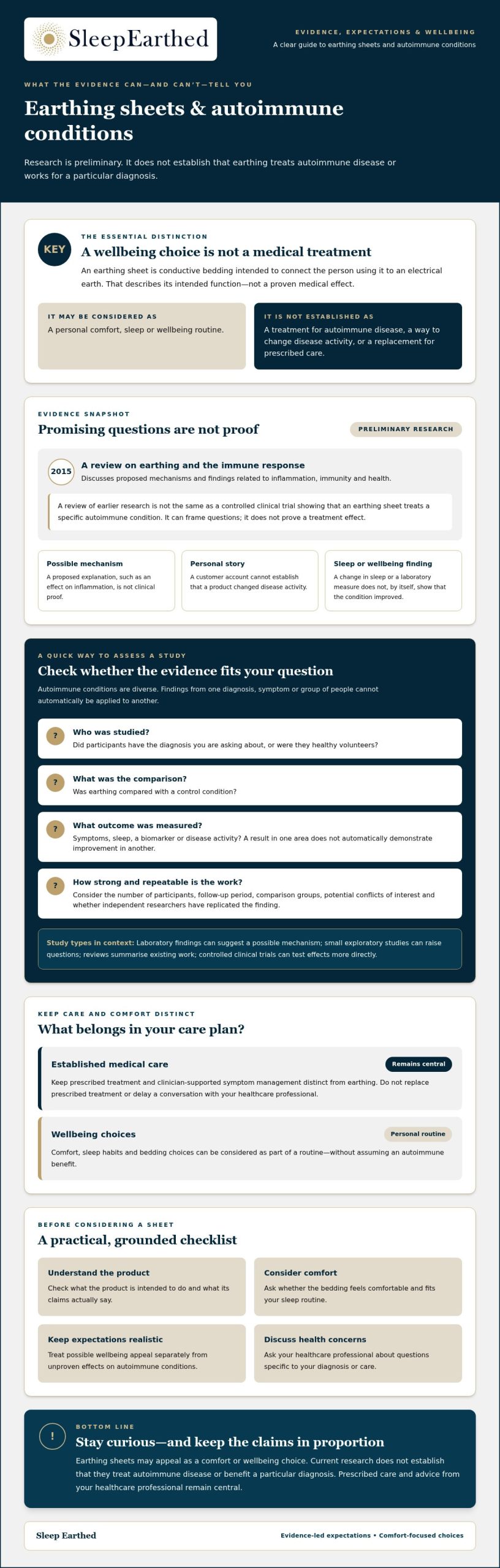
If you’re weighing up an earthing sheet, you don’t have to dismiss your curiosity or accept big health promises at face value. Research is preliminary, often based on small studies, and doesn’t establish that earthing treats autoimmune disease or works for a particular diagnosis. Established medical care remains central. An earthing sheet shouldn’t replace prescribed treatment or delay a conversation with your healthcare professional.
This guide looks at what the evidence can and can’t tell us, why findings may not apply to your condition, and what practical questions to ask before trying a sheet. It also considers how to assess one as a possible wellbeing addition, with comfort and routine in mind rather than promises of treatment.
Key Takeaways
- Understand what an earthing sheet is and how it is intended to connect bedding to an electrical earth.
- When assessing claims about earthing sheets for autoimmune conditions, check whether studies included people with your diagnosis and measured relevant health outcomes.
- Keep prescribed treatment, clinician-supported symptom management and sleep habits distinct from earthing. Discuss concerns with your healthcare professional before changing your care.
- Use a practical checklist to assess product information, comfort and how an earthing sheet might fit your routine, without assuming an autoimmune benefit.
- Weigh the possible appeal of bedding as a wellbeing choice against the uncertainty of the evidence for autoimmune conditions.
Earthing sheets for autoimmune conditions: what is the question really asking?
Living with a long-term condition can mean looking for practical ways to feel more comfortable, rest better or build a wellbeing routine that works for you. It’s understandable to ask whether earthing sheets for autoimmune conditions might help. The important distinction is between exploring a personal comfort choice and claiming that a product can treat disease or change how an autoimmune condition behaves.
An earthing sheet is conductive bedding intended to connect the person using it to an electrical earth. That describes the product’s intended function, not a proven medical effect. Someone may choose to try one as part of a sleep or comfort routine. That is different from evidence that it reduces autoimmune symptoms, changes disease activity or manages a condition.
A product’s proposed purpose is not the same as a proven clinical treatment. Earthing sheets shouldn’t be presented as established treatment or disease management, and this guide doesn’t suggest replacing prescribed care with one.
What does autoimmune condition mean in this context?
Autoimmune conditions are a diverse group, not one diagnosis with a single pattern or course. Evidence relating to one condition, symptom or group of people can’t automatically be applied to someone with a different diagnosis. If you’re wondering whether a claim applies to your health, your healthcare professional is best placed to discuss that diagnosis-specific question.
What do earthing sheet claims mean?
Earthing claims generally refer to the proposed electrical connection between conductive bedding and an earth connection. Explanations of possible effects on the body are hypotheses, not established clinical facts. Claims about sleep or general wellbeing should also be kept separate from claims about autoimmune symptoms. Feeling more comfortable at night wouldn’t, by itself, show that a condition has changed.
It may help to place earthing alongside broader wellbeing practices rather than treating it as a medical intervention. The ideas of nature therapy and ecotherapy offer a wider context for nature-related wellbeing, but they don’t establish that earthing sheets treat autoimmune disease. For a general introduction to the terms grounding and earthing, see our guide to grounding and earthing.
As you read on, the useful question isn’t simply whether “grounding works”. Ask what kind of evidence exists, what it measured and whether it applies to the health question you have.
What does research say about earthing and autoimmune conditions?
Start by asking whether researchers studied people with the autoimmune diagnosis you’re interested in and measured an outcome that matters to that condition. Broad claims about inflammation or wellbeing can sound relevant, but they don’t automatically show that earthing sheets help manage autoimmune disease.
One example is the 2015 review article research on earthing and the immune response. It discusses proposed mechanisms and findings related to inflammation, immunity and health. But a review bringing together earlier research is not the same as a controlled clinical trial showing that an earthing sheet treats a particular autoimmune condition. It can help frame questions, but shouldn’t be read as proof of a treatment effect.
How to judge whether a study applies to your condition
Check the study population, comparison and outcome. Did participants have the diagnosis in question, or were they healthy volunteers? Was earthing compared with a control condition? Did researchers assess symptoms, sleep, a biomarker or disease activity? A change in sleep or a laboratory measure may be interesting, but it doesn’t establish that the underlying condition improved.
Study design matters too. Laboratory findings can suggest a possible mechanism, while small exploratory studies can raise questions. Reviews summarise existing work, and controlled clinical trials can test effects more directly. For any study, look at the number of participants, follow-up period, comparison groups, potential conflicts of interest and whether independent researchers have replicated the finding.
What evidence gaps should readers recognise?
A plausible explanation, such as a proposed effect on inflammation, is not clinical proof. Customer stories can’t establish that a product changed someone’s disease activity either. Before concluding that condition-specific evidence is absent, a current literature search is needed. The evidence cited here does not, by itself, establish that earthing sheets are an effective treatment for any autoimmune diagnosis.
For a wider overview, Sleep Earthed also has an evidence review titled Do Earthing Sheets Work? Read it with the same questions in mind: who was studied, what was measured and what conclusions the research can reasonably support. If, after weighing the limits, you’re curious about the bedding as a comfort or routine choice, you can explore Sleep Earthed earthing sheets without treating them as a substitute for clinical care.
Earthing sheets compared with established autoimmune care and other wellbeing choices
Compare options by what they’re for, what evidence would support them and who can guide their use. These approaches aren’t interchangeable. Earthing sheets for autoimmune conditions are bedding products, not a way to diagnose, monitor or treat disease.
| Approach | Purpose | Evidence to consider | Oversight and realistic expectations |
|---|---|---|---|
| Prescribed care | To manage a diagnosed condition according to an agreed care plan. | Ask your healthcare team about the evidence and goals relevant to your diagnosis and treatment. | Decisions belong with you and your qualified healthcare team. Don’t stop, delay or change prescribed treatment because of a bedding product. |
| Clinician-supported symptom management | To address specific symptoms or day-to-day difficulties. | Consider whether an approach has evidence for the symptom and circumstances in question. | A clinician can help assess whether it’s appropriate for you. What helps one person may not suit another. |
| Sleep routines | To support consistent habits around rest and bedtime. | Look at whether a routine is practical and whether you notice a change in your own sleep. | Small, manageable adjustments may support wellbeing, but they aren’t a treatment for autoimmune disease. |
| Earthing bedding | To provide conductive bedding intended to connect the user to an electrical earth. | Look for relevant, well-designed research, especially studies involving the diagnosis and outcome being discussed. | It may be considered as a personal comfort or routine choice. Autoimmune-specific benefit shouldn’t be assumed. |
How an earthing sheet differs from medical treatment
A sheet can’t identify a condition, track its progress or guide treatment decisions. Those roles sit with you and your qualified healthcare team. If you’re considering a product, keep it separate from your care plan. Don’t replace medicines, postpone appointments or alter treatment on the basis of claims about earthing.
How to compare optional wellbeing approaches
For any optional approach, ask: Is it comfortable? Does it fit my routine? What evidence supports the outcome I’m interested in? Do I need professional advice before trying it? These questions are more useful than ranking options by broad health promises. Diet changes, supplements and other interventions aren’t automatically suitable for every autoimmune condition, so discuss relevant changes with a healthcare professional.
Sleep Earthed’s guide to inflammation and chronic pain may offer related context, but claims about general symptoms still need to be considered separately from evidence for a particular diagnosis. A grounded decision starts with your priorities and the limits of what’s known.
How to consider an earthing sheet safely and set realistic expectations
If you’re considering an earthing sheet, start with a clear, modest aim. You might want to assess whether the bedding feels comfortable or whether your sleep routine seems different. That’s a personal observation, not evidence that a sheet has changed your diagnosis or disease activity.
Questions to ask before trying a sheet
Use this checklist to assess the product and your expectations, without treating it as a health intervention:
- 1. Decide what you want to assess. Is your interest comfort, ease of use or your sleep experience? Choose an outcome you can describe realistically, rather than expecting a change in your condition.
- 2. Read the product information. Check the materials, care instructions and details about the electrical connection with the supplier.
- 3. Check setup instructions. Follow the product’s own guidance and don’t assume all earthing sheets connect in the same way. Sleep Earthed provides a grounding sheet setup guide; refer to the supplier’s current instructions for the product you’re considering.
- 4. Review the terms before buying. Check the supplier’s current returns information and any applicable terms yourself.
- 5. Raise individual concerns with a qualified healthcare professional. This matters especially if you’re considering changing treatment or have questions about your diagnosis or other health circumstances.
A bedding product can’t diagnose, monitor or treat an autoimmune condition. Don’t stop, delay or alter prescribed treatment or appointments because of a sheet. If you have new, worsening or concerning symptoms, seek appropriate clinical care rather than trying to manage them by changing your bedding.
How to keep expectations and observations grounded
If you decide to try a sheet, keep notes on comfort or sleep separately from clinical measures, treatment decisions and disease activity. You could record how comfortable the bedding feels and how rested you feel, while recognising that these impressions aren’t medical assessments.
Other factors, such as changes in routine or symptoms, may also affect how you feel. Avoid assuming every difference is caused by the sheet, and don’t use personal observations as a reason to change care without speaking to your healthcare professional. For a practical look at Sleep Earthed bedding, explore Sleep Earthed earthing sheets and review the relevant product information before deciding whether one fits your routine.
Choosing whether Sleep Earthed bedding fits your wellbeing routine
Sleep Earthed bedding may interest someone looking for a different kind of sleep surface or a product to explore as part of a personal wellbeing routine. That’s a decision about comfort, fit and preference, not medical suitability. The evidence does not establish that earthing sheets for autoimmune conditions treat disease or change its activity.
There’s a practical distinction: a sheet can be assessed as bedding, while any possible autoimmune-specific benefit remains uncertain. If you like the idea of trying one, consider whether its feel and care requirements suit your routine, and keep healthcare decisions separate from a purchasing decision.
What to check when comparing earthing bedding
Compare the details that affect everyday use, rather than relying on broad health claims:
- Fit: Check the product’s stated size and whether it matches your bed or intended use.
- Materials: Read the individual product information. Sleep Earthed describes conductive silver threads in organic cotton, but don’t assume every product has identical materials or specifications.
- Connection: Read the instructions for the specific product so you understand what setup involves.
- Care: Check the product’s care information before deciding whether it suits your household routine.
- Terms: Review the seller’s current terms directly before buying. If a guarantee is mentioned, check its current scope and conditions rather than assuming it relates to autoimmune outcomes.
If material choice is a priority, compare the details provided for each item and consider how organic cotton fits your preferences. Focus on confirmed material information, feel and care instructions, not an assumed therapeutic effect.
A balanced next step with Sleep Earthed
Sleep Earthed offers fitted earthing bed sheets, earthing pillowcases and an earthing half sheet, among other earthing products. Consider them for their practical features and how they might fit your sleep routine. They shouldn’t be viewed as a way to manage an autoimmune condition, and choosing bedding shouldn’t affect prescribed care or discussions with your healthcare professional.
If the product details suit what you’re looking for, take time to review them and decide whether the bedding feels like a worthwhile personal choice. Explore Sleep Earthed earthing bedding, keeping any decision to purchase separate from decisions about your healthcare.
Make your next step an informed one
The evidence on earthing sheets for autoimmune conditions doesn’t establish them as a treatment or show that they change disease activity. Research needs to be relevant to the specific diagnosis and outcomes in question. Any interest in comfort or sleep should be kept separate from medical claims.
If you’re considering a sheet, weigh practical factors such as fit, materials and whether it suits your routine. Keep prescribed care and treatment decisions with you and your healthcare team. A bedding choice shouldn’t lead you to delay appointments or change your care plan.
Sleep Earthed offers fitted earthing sheets and related bedding. The company offers a 90-day better-sleep guarantee. Check the current terms directly before relying on them, and don’t take the guarantee as a promise of autoimmune benefit.
If you’d like to review practical product details, explore Sleep Earthed earthing bedding. Take your time, ask your healthcare professional about personal concerns, and choose what feels right for your wellbeing routine.
Frequently Asked Questions
Can earthing sheets treat autoimmune conditions?
No. The available information doesn’t establish earthing sheets as a treatment for autoimmune conditions. Product claims or personal stories aren’t proof that a sheet changes disease activity. If you’re considering earthing sheets for autoimmune conditions, assess them separately from medical care and discuss treatment questions with a qualified healthcare professional. Don’t stop, delay or alter prescribed care because of a bedding product.
Is it safe to use an earthing sheet if I have an autoimmune condition?
There isn’t enough information to confirm that an earthing sheet is suitable for everyone with an autoimmune condition. Read the instructions for the specific product and raise personal medical concerns with your healthcare professional, particularly if you’re unsure about using electrically connected bedding. A sheet isn’t a substitute for clinical advice, monitoring or prescribed treatment. If you have doubts, seek advice before using it.
Can grounding reduce inflammation caused by an autoimmune disease?
It hasn’t been established here that grounding reduces inflammation caused by autoimmune disease. Broad claims about inflammation don’t show that a particular condition improves. Check what researchers studied, how the study was designed and whether it measured a meaningful clinical outcome. A change in a general marker alone wouldn’t prove a health benefit. For questions about inflammation or your diagnosis, speak with your healthcare professional.
What does the research say about grounding and autoimmune disease?
The information reviewed for this guide doesn’t establish a reliable autoimmune-specific treatment effect. General grounding research, proposed biological mechanisms and testimonials aren’t equivalent to replicated clinical evidence for a particular diagnosis. To assess a claim, check whether human participants had the relevant condition and whether researchers measured symptoms or disease activity. If those details aren’t established, the sensible conclusion is uncertainty, not proof of benefit.
Can I use an earthing sheet alongside my usual treatment?
An earthing sheet shouldn’t replace prescribed treatment or professional care. If you’re considering one as a comfort or sleep-related addition, read its instructions and ask your healthcare professional about any personal concerns. Keep decisions about medicines, appointments and your treatment plan within your care team. If symptoms change, don’t assume the sheet caused the change or adjust treatment without appropriate clinical advice.
How can I tell whether an earthing sheet is helping me?
Choose a modest, personal measure, such as whether the bedding feels comfortable or fits your routine. Keep those observations separate from clinical measures, treatment outcomes and disease activity. Sleep and symptoms can change for many reasons, so a change after using a sheet doesn’t show that the sheet caused it. Don’t use a self-test to judge treatment effectiveness. Contact your healthcare professional about symptoms that concern you.
Should I buy an earthing sheet for an autoimmune condition?
Make the decision based on practical details, comfort, budget and realistic expectations, not a promise to treat disease. Check the specific product’s materials, sizing, setup guidance and the seller’s current terms before buying. If you’re looking for help with symptoms or treatment decisions, speak with your healthcare professional. You can consider bedding as a personal wellbeing choice while keeping it separate from medical care.