
 90 Day’s To Better Zzz’s Guarantee T&C apply

Waking Up Tired: What to Do for More Restful Mornings
What if a tired morning isn’t simply a sign you need an earlier bedtime? If you’re waking up tired, what to do next can feel unclear, especially when you’ve spent plenty of time in bed. The question of waking up tired what to do rarely has one quick answer: your routine, interrupted sleep, stress or a health issue could all be relevant.
Rather than trying every sleep tip you come across, start by noticing what your nights and mornings have in common. Your usual sleep and wake times, caffeine habits and any night-time awakenings can help you spot patterns worth paying attention to.
In this guide, we’ll look at common reasons for unrefreshing sleep and practical changes you can try without attempting to diagnose yourself. You’ll also learn when persistent tiredness is a reason to speak with your GP. NHS guidance advises seeking medical advice if tiredness lasts several weeks without a clear cause, affects daily life or comes with other symptoms. A steadier morning starts with careful attention, not a miracle cure.
Key Takeaways
- Waking tired is a symptom, not a diagnosis. Noticing whether you feel sleepy or low on energy can help you describe it more clearly.
- If you’re wondering waking up tired what to do, start with steady daytime habits and a calming wind-down routine rather than chasing quick fixes.
- A simple record of sleep and daytime symptoms can help you spot patterns, but it can’t identify or rule out a health condition.
- On a tired morning, follow your usual routine, get up at a consistent time and allow yourself time to feel alert before judging how you’re doing.
- Comfortable bedding is one part of the sleep environment. Sleep Earthed fitted sheets combine organic cotton with conductive silver threads and are designed for earthing.
Waking up tired: what the feeling can tell you
You open your eyes after what seemed like a full night, yet getting out of bed feels like a job in itself. One tired morning can’t tell you why you feel unrefreshed. Sleep duration, interruptions during the night, a changed routine, stress and health factors may all be relevant. Treat the feeling as a signal to notice, not a conclusion about its cause.
It may help to describe what “tired” means for you. Are you struggling to stay awake, or do you feel short of energy even once you’re up? If you’re asking, “Waking up tired, what to do?”, begin by noticing that difference rather than settling on a diagnosis.
For a short overview of habits and surroundings that can affect sleep, see these sleep hygiene practices. First, watch this video for a discussion of common mistakes people make when managing fatigue:
Persistent tiredness has several possible causes and cannot be diagnosed from one symptom. Look at what happens over time rather than treating one difficult morning as proof of a particular problem.
Is it sleepiness, fatigue or simply a slow start?
Sleepiness is a tendency to doze or struggle to stay awake. Fatigue feels more like reduced energy or motivation, even if you aren’t about to nod off. Morning grogginess may ease as you become fully awake and start your day. These everyday descriptions can help you explain how you feel, but they don’t diagnose a sleep or medical condition.
Why one tired morning may not tell the whole story
An occasional poor night is different from a repeated pattern that makes everyday activities harder. Sleep may be interrupted without you remembering every waking, and changing bedtimes or wake times can affect how rested you feel. Stress may coincide with unsettled sleep or low energy, but noticing it alongside tiredness doesn’t confirm that it is the cause.
Consider the whole day, not just the first few minutes after waking. Does the grogginess lift as you get ready, or do sleepiness or low energy continue? Does it happen after nights with different routines? Note when you went to bed, whether you remember waking and how you felt later. These observations won’t identify a condition, but they can help you describe a pattern clearly.
Waking up tired: practical habits to try first
If you’re looking for waking up tired what to do, start with manageable habits you can repeat instead of changing your whole routine overnight. Sleep needs and responses vary, so a habit that helps one person may not make a noticeable difference for another. Try one or two adjustments at a time, then observe how you feel.
Separate daytime choices from what happens just before bed. Notice whether late caffeine, long or late naps, heavy evening meals or alcohol seem to affect your sleep. You don’t need to change everything at once. If you suspect a particular habit is getting in the way, adjust that one first and pay attention to whether your nights or mornings change.
A consistent sleep schedule and a comfortable bedroom support healthier sleep habits, but neither can guarantee that persistent tiredness will go away.
Build a steadier sleep and wake routine
Try keeping your bedtime and wake time reasonably consistent across the week, including days off. A predictable rhythm can make it easier to settle at night and get going in the morning. Before bed, leave time for a calming routine, such as washing up, reading or choosing a quiet activity away from work and stressful tasks. Keep it simple enough to repeat.
Notice what happens in the hours before sleep. If an afternoon coffee seems to leave you alert at bedtime, try having it earlier. If scrolling keeps your mind busy, set your phone aside for a while before bed. These are practical experiments, not rules that suit everyone. The National Sleep Foundation guidelines offer further information on sleep routines and the sleep environment.
Make the bedroom more conducive to sleep
Take a practical look around your bedroom. Is light from a window, screen or hallway disturbing you? Are noise, an uncomfortable temperature or bedding that doesn’t feel right making it harder to rest? Adjust what you can: use curtains to reduce unwanted light, move a noisy device or make the bed feel more comfortable. A cooler, darker, quieter space may suit some people, but personal comfort matters too.
Think about interruptions you can reasonably reduce. Prepare what you need for the morning before bed, keep distracting devices out of reach or agree on a quieter routine with others in the household. Bedding is another part of the sleep environment. If you’re curious about earthing, Sleep Earthed earthing bedding includes fitted sheets made with organic cotton and conductive silver threads. Earthing bedding isn’t a treatment for persistent tiredness, and no single room change can explain or resolve every difficult morning.
Keep a brief note of the one or two changes you’ve tried and how you feel the next day. A steady, comfortable routine gives you a clearer basis for judging what may help, without expecting an instant fix.
How to investigate persistent tired mornings without guessing
A rough night now and then is different from tiredness that keeps returning or starts to interfere with everyday life. If you’re wondering “waking up tired what to do”, keep a short, factual record. It may show whether tiredness follows a change in routine, occurs after disrupted sleep or continues regardless of how your nights go. It won’t provide a diagnosis, but it can make the pattern easier to explain.
Use this table to organise observations, not as a test. It cannot identify or rule out a medical condition, and the categories may overlap.
| What you notice | What to do with that observation |
|---|---|
| Occasional tiredness after a single unsettled night | Note what was different and see how you feel over the following days. |
| Recurring poor sleep or repeated tired mornings | Keep a simple sleep diary and look for patterns in timing, awakenings and routines. |
| Tiredness affecting daily life, getting worse or persisting without a clear reason | Arrange to speak with your GP and explain how the symptoms affect you. |
What to record in a simple sleep diary
Keep the notes brief and approximate. Record when you went to bed and got up, any night-time interruptions you noticed, and how sleepy or low in energy you felt during the day. Add relevant changes, such as a different work schedule, late caffeine or unusual stress. Write down what happened, not what you think it proves. For example, “woke twice and felt tired at lunch” is more useful than concluding that one event caused the other.
- Bedtime and wake time, including notable changes.
- Awakenings you remember and anything that disrupted the night.
- How you felt on waking and later in the day.
- Changes in routine or other factors you think may be relevant.
There’s no need to record every detail or turn sleep into a nightly performance review. A clear account of recurring patterns is more helpful than trying to track everything perfectly.
When tiredness needs professional attention
Contact your GP if tiredness lasts for several weeks without a clear reason, affects your daily life, worsens or comes with other symptoms. Explain what you’ve noticed, how long it has been happening and which activities it makes harder. Sleep notes can support that conversation, but you don’t need a complete diary before seeking advice. Avoid trying to diagnose yourself from online symptom lists.
If you’re unsure what to do about a symptom that needs urgent advice, contact NHS 111. For a life-threatening emergency, call 999. Getting appropriate help is a sensible next step when persistent tiredness is concerning, rather than something you need to work out on your own.
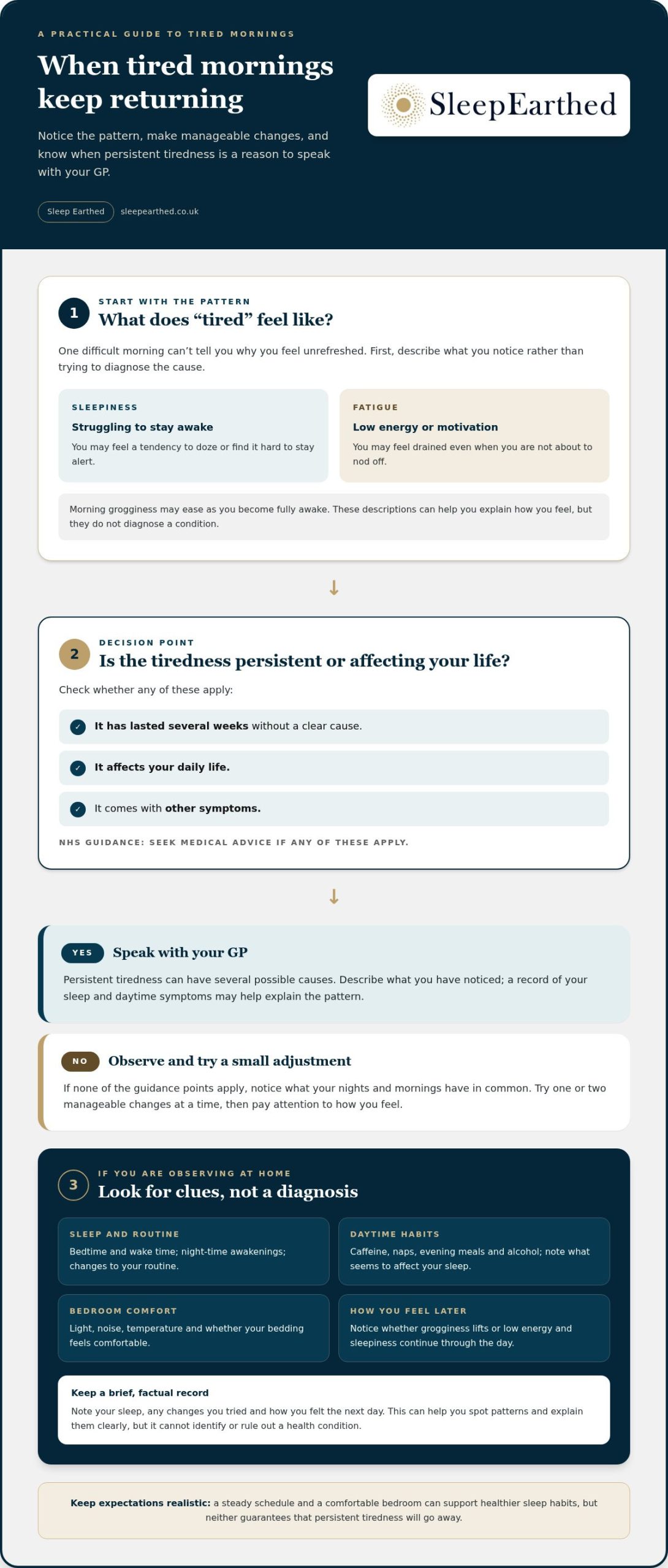
A step-by-step reset for mornings when you wake tired
A difficult morning can make it tempting to overhaul your routine or reach for a quick fix. Instead, follow a few simple steps and review how things go over time. If you’re wondering waking up tired what to do, use this reset to gather useful observations without treating one morning as proof of what’s causing the tiredness.
What to do on the morning itself
Keep the immediate plan modest. You don’t need to feel fully refreshed before you begin the day, and one change won’t guarantee a quick improvement.
- Notice how you feel. Are you sleepy and struggling to stay awake, or low in energy? Make a brief note without trying to label the cause.
- Follow your usual wake routine. Get up at a reasonably consistent time and move through familiar tasks at a manageable pace. If repeatedly snoozing leaves you feeling rushed, try getting up when your alarm goes off instead.
- Allow time to become alert. Notice whether your grogginess eases as the morning unfolds. Avoid judging the whole day by the first few moments after waking.
- Record the night. Later, note your approximate bedtime, wake time and any interruptions you remember, along with how you felt during the day.
- Review the pattern. Compare your notes across several mornings, rather than drawing conclusions from one night.
There’s no need to add stimulants or supplements as though they’re guaranteed solutions. A steady wake time and a workable morning routine are more useful starting points than chasing an instant lift.
How to review whether your changes are helping
Use your notes to compare nights and mornings over time. Did tiredness tend to follow a later bedtime, a disrupted night or a change in your schedule? Did it ease as the day went on, or continue to affect work, household tasks or other activities? These observations may help you describe what’s happening, but they don’t establish a cause.
If you’re trying a routine change, keep it practical and avoid changing several things at once. Continue with adjustments that feel manageable and appear to support a steadier routine. If tiredness remains troublesome, worsens or disrupts daily life, speak with your GP rather than extending your own experiments. You don’t have to wait for a perfect record before asking for advice.
If you’re also reviewing your sleep environment, you can explore Sleep Earthed earthing bedding as one optional consideration. It isn’t a remedy for persistent tiredness, but bedding may be one part of making your sleep space feel comfortable.
Waking up tired and your sleep environment: where earthing bedding fits
Your bed and bedroom can affect how comfortable it feels to settle and rest, but they’re only part of the picture. Noise, light, temperature and routines may also matter, while ongoing tiredness can have other possible explanations. If you’re weighing up waking up tired what to do, consider bedding as one optional sleep-environment choice, not a stand-alone answer or substitute for healthcare advice.
Sleep Earthed fitted earthing sheets combine organic cotton with conductive silver threads and are designed to connect the sleeper to the earth. This describes their intended function, not a proven treatment for persistent tiredness, fatigue, sleep disorders or other health conditions. It’s useful to distinguish what a product is designed to do from what can be established about its effects.
What an earthing sheet is designed to do
An earthing sheet is intended to create a connection between the sleeper and the earth through its conductive material and setup. This is a product description, not a medical claim. Research and discussion about earthing are topics readers may wish to explore, but they shouldn’t be taken as proof that a sheet will resolve unrefreshing sleep or persistent tiredness. Sleep Earthed explains what the evidence says about earthing sheets, so you can consider the claims and context before deciding whether this bedding suits you.
How to consider bedding without overlooking other causes
Start with the basics: does your bedding feel comfortable, and does your sleep space support the routine you’re trying to establish? If an earthing sheet interests you, treat it as an optional bedding choice alongside sensible sleep habits, not instead of them. You can also follow the grounding sheet setup guide to understand the practical arrangement.
Sleep Earthed offers a 90-day better-sleep guarantee. It relates to better sleep, not a promise to diagnose or treat the cause of tiredness, and shouldn’t be read as a medical outcome. If your tiredness persists or affects daily life, speak with your GP rather than relying on a bedding change to explain or resolve it.
A measured next step is to learn about the evidence and setup, then decide whether the sheet fits your preferences and sleep environment. Whatever you choose, keep noticing how you feel over time and seek appropriate medical advice if persistent tiredness remains a concern.
Take one steady step towards better mornings
Better mornings rarely come from changing everything at once. Choose one practical adjustment, give it time and notice whether your days feel different. If you’re still wondering about waking up tired what to do, pay attention to the pattern rather than relying on a single night or a quick-fix promise.
If tiredness persists, worsens or makes everyday life harder, speak with your GP. You don’t need to work out the cause before asking for advice. If you’re considering a change to your sleep environment, explore whether earthing bedding feels suitable for you. Explore Sleep Earthed earthing bedding as one possible part of a comfortable sleep space, not a substitute for healthcare advice.
Start with what feels manageable, keep expectations realistic and take the next step that makes sense for you. A more restful morning begins with a thoughtful approach, and you can build from there.
Frequently Asked Questions
Why do I wake up tired even after eight hours of sleep?
Time in bed doesn’t always mean restful sleep. Brief awakenings, changes in your usual schedule, stress, bedroom conditions and health factors may all play a part. Eight hours on the clock can’t show whether your sleep was restorative. If you’re asking waking up tired what to do, keep a short note of bedtime, wake-up time and daytime energy. Take it to your GP if the pattern recurs or affects daily life.
Is it normal to feel tired when I first wake up?
A short spell of grogginess can happen as you become fully awake, particularly after a disrupted or shorter night. Notice whether it lifts once you’ve washed, dressed and started your usual activities. An occasional slow start may be different from tiredness that lingers or makes it hard to manage your day. If it keeps happening, gets worse or makes everyday tasks difficult, speak with your GP rather than trying to label the cause yourself.
Can changing my alarm or stopping the snooze button help me wake less tired?
It may help to keep your wake-up time steady and give yourself enough time to get ready without rushing. If repeated snoozing means you keep drifting back to sleep and then feel pressed for time, try placing the alarm where you have to get up to turn it off. Notice how you feel over several mornings. An alarm adjustment won’t address every possible cause, so seek advice if tiredness continues to affect your day.
How long should I try sleep-routine changes before speaking to a GP?
There isn’t one waiting period that fits everyone. You can try a manageable routine change and note what happens, but don’t put off advice if tiredness is persistent, worsening or interfering with normal activities. A GP can consider your symptoms alongside other relevant health factors. If you’re uncertain about what help is appropriate for a particular symptom, NHS 111 can guide you. You don’t need a complete sleep diary before asking for support.
Could snoring mean that my sleep is being disrupted?
Snoring can have different explanations, so it doesn’t confirm a sleep disorder by itself. If someone who shares your room notices pauses in your breathing, make a note of what they observed and when. Also mention it if you regularly wake unrefreshed or feel very sleepy during the day. A GP can assess the wider picture and advise on next steps. Avoid using snoring alone to diagnose the reason for tiredness.
Does an earthing sheet stop you waking up tired?
An earthing sheet is designed to connect the sleeper to the earth through conductive material, but it shouldn’t be presented as a proven cure for tiredness. Sleep can be affected by several influences, so a bedding choice can’t establish or address every possible cause. You might consider it as one optional part of your sleep environment, alongside your usual routines. If unrefreshing sleep continues or affects daily life, discuss it with your GP.
When should I call NHS 111 or 999 about feeling tired?
Tiredness alone doesn’t show whether a problem is urgent. If you’re unsure what to do about a symptom, contact NHS 111 for advice on where to seek help. Call 999 for a life-threatening emergency. For tiredness that persists, worsens or disrupts everyday activities, arrange an appointment with your GP. This information can’t assess your individual symptoms, so use professional services if you’re concerned about your health.