
 90 Day’s To Better Zzz’s Guarantee T&C apply

Non-Pharmacological Sleep Aids: What Helps You Sleep Better?
What if the best sleep aid isn’t a product, but a different approach to the reason you’re awake? If you’ve tried bedtime routines, relaxation tips or sleep products and still aren’t sure what’s worth your time, you’re not alone. Non-pharmacological sleep aids range from established therapies to options with much less certain evidence.
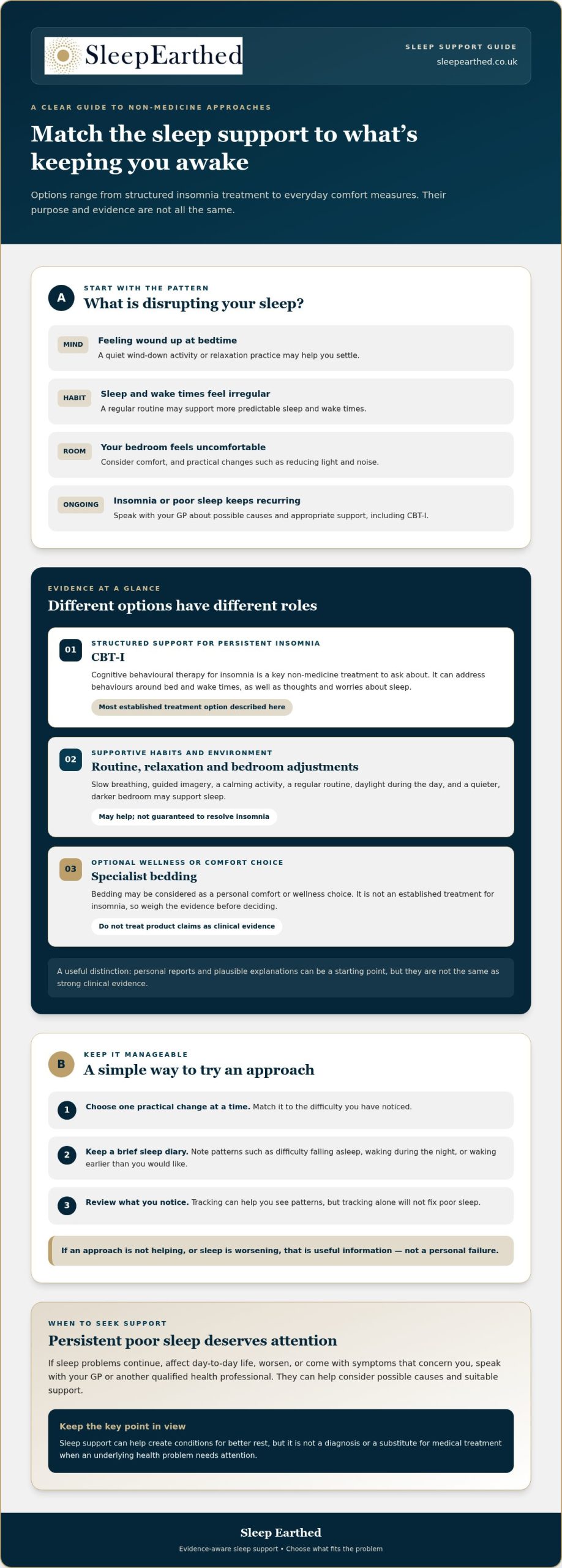
The key is to match the approach to the problem. Cognitive behavioural therapy for insomnia (CBT-I) is a key non-medicine treatment to ask about for ongoing insomnia. A steady routine and relaxation practices may also support sleep. Specialist bedding is an optional wellness choice, not a proven treatment for insomnia, so weigh the evidence before deciding what to try.
This guide compares practical approaches, explains where the evidence is stronger or more limited, and helps you choose a manageable next step. It also covers when persistent poor sleep, or its effect on your day-to-day life, is a reason to speak with your GP or a qualified sleep professional.
Key Takeaways
- Match non-pharmacological sleep aids to your main difficulty. Trouble falling asleep, waking during the night and an uncomfortable sleep environment may call for different approaches.
- Compare options by their purpose, evidence, effort and suitability before deciding what to try.
- Choose one practical change at a time and use a brief sleep diary to notice patterns. Tracking alone won’t fix poor sleep.
- Consider Sleep Earthed bedding as an optional wellness product, not an established treatment for insomnia.
- If sleep problems persist or affect daily life, speak with your GP about appropriate support.
Non-pharmacological sleep aids: what they are and when they may help
Non-pharmacological sleep aids are approaches intended to support sleep without medicine. They can be behavioural, psychological, environmental or lifestyle-based, from adjusting the bedroom to practising relaxation or changing habits around bedtime. Broad examples of sleep induction techniques include reducing light and noise and choosing a calming activity.
Sleep support may help create conditions for better rest, but it isn’t a diagnosis or a substitute for medical treatment when an underlying health problem needs attention. The right response depends on what’s disrupting your sleep. A calmer bedtime routine may be useful when your mind is busy, for example, but it may not address sleep problems linked to pain or a medicine’s side effects.
Occasional poor sleep or a persistent sleep problem?
A restless night now and then can follow a stressful day, a change in routine or an unfamiliar sleeping environment. Notice what happens: do you struggle to fall asleep, wake repeatedly, or wake earlier than you’d like and find it hard to get back to sleep? A brief note of these patterns can help you see whether the difficulty is occasional or keeps recurring.
Ongoing sleep problems can have different contributors, including stress, pain, medicines and health conditions. This guide can’t diagnose insomnia, and there’s no need to judge your experience against a set threshold. If poor sleep continues, affects your daily life or comes with symptoms that concern you, speak to your GP or another qualified health professional. They can help consider possible causes and appropriate support.
What non-medicine approaches can and cannot promise
Non-pharmacological sleep aids are options to consider, not guaranteed cures. Some focus on habits or thoughts around sleep; others aim to make the bedroom more comfortable or support relaxation. Whether an approach helps depends on the person, the cause of the disruption and whether it is suitable and used consistently.
It’s reasonable to try a manageable change, but don’t assume that a routine, relaxation exercise or sleep product will resolve persistent insomnia. If an approach isn’t helping, or your sleep is worsening, that’s useful information rather than a personal failure. Review what you’ve tried and seek qualified advice if you’re worried or need help deciding what to do next.
Which non-pharmacological sleep aids have the strongest support?
Evidence isn’t equally strong for every option. Some non-pharmacological sleep aids have been studied as treatments for insomnia, while others are better understood as helpful habits or comfort measures with less certain effects. This distinction can help you decide what to explore first, rather than treating every tip or product as equally proven.
CBT-I and structured behavioural support
Cognitive behavioural therapy for insomnia (CBT-I) is a structured approach that helps people change patterns that can keep sleep difficulties going. It may address behaviours around bed and wake times, as well as thoughts and worries about sleep. It isn’t simply a list of bedtime tips, and a qualified practitioner can tailor the approach to the person.
For persistent insomnia, CBT-I is a key option to ask about. A review of the research describes its evidence base and role in insomnia care in Non-Pharmacological Treatment of Insomnia. In the UK, speak with your GP about ongoing sleep problems and ask what support, including CBT-I, may be suitable. Access routes can vary, so don’t assume a particular service is available everywhere.
Relaxation, light, and everyday sleep habits
Relaxation practices such as slow breathing, guided imagery or a quiet wind-down activity may help you settle before bed. They aren’t instant fixes, and an exercise that feels calming to one person may not suit another. A regular routine can also make sleep and wake times more predictable. Daylight during the day and a quieter, darker bedroom at night are practical environmental considerations, though they won’t necessarily resolve insomnia on their own.
Consider what you want each approach to do. CBT-I offers structured support for persistent insomnia; relaxation may help when you feel wound up; routines and bedroom adjustments aim to support regularity and comfort. Personal reports and plausible explanations can be useful starting points, but they aren’t the same as strong clinical evidence. Consider marketing claims separately from research findings.
If you’re exploring bedding as a comfort or wellness choice alongside established approaches, you can learn about Sleep Earthed earthing bedding. It’s an optional product, not a proven treatment for insomnia.
How to compare sleep aids and choose what fits your situation
A useful choice starts with the problem you want to address, not the most popular tip. Are you struggling to wind down, keeping an irregular schedule, or dealing with a persistent pattern of poor sleep? Pick an approach that fits the concern, then consider the quality of its evidence and whether it feels manageable enough to try consistently.
Match the approach to your sleep difficulty
If you feel tense at bedtime, a relaxation practice may be a reasonable first experiment. If your sleep and wake times vary, consider whether a steadier routine is realistic for your daily life. Persistent insomnia calls for a different level of support: ask your GP about appropriate options, including CBT-I. If pain, a health condition or medicines could be affecting sleep, seek advice from a clinician rather than trying to address the cause with a sleep aid alone.
Assess evidence, effort and realistic expectations
Before trying an approach, ask what kind of support it has. Is it recommended in clinical guidance, explored in studies, or mainly described through personal experience and marketing? A government health overview of treatments for sleep disorders outlines approaches including CBT-I, light therapy and healthy sleep habits. It offers useful background, though UK readers should discuss personal care with a local health professional.
Effort matters, too. A simple bedroom adjustment may be easy to maintain; structured therapy takes more commitment but may better suit ongoing insomnia. Trying several changes at once makes it difficult to tell what, if anything, is helping. Choose one manageable approach and observe how your sleep responds before adding another.
| Approach | Intended use | Evidence confidence | Effort and suitability |
|---|---|---|---|
| CBT-I | Persistent insomnia | Stronger clinical support | Structured; ask a GP about suitable support |
| Relaxation practice | Settling before bed | Can vary; not a guaranteed fix | Often simple to try if it feels calming |
| Regular sleep routine | Irregular sleep habits | Helpful habit, but not a standalone cure | Needs consistency and a routine that fits daily life |
| Wellness products | Personal comfort or interest | Depends on the product and quality of research | Optional; shouldn’t replace appropriate care |
Earthing sheets are an emerging wellness option, not an established insomnia treatment. For a closer look at the claims and evidence, read about earthing sheets and the evidence behind them. If you’re curious about this type of bedding, Sleep Earthed offers further information, but keep clinical advice central when making decisions about ongoing sleep problems.
How to try a non-pharmacological sleep aid safely and consistently
A small, steady experiment is often easier to learn from than a complete bedtime overhaul. Start by describing the difficulty you want to address, such as taking a long time to settle or waking during the night. Then choose one approach that fits and review what happens over time.
Build a realistic routine you can maintain
Keep the plan workable around your job, caring responsibilities and changing schedule. You might choose one or two manageable adjustments, such as setting aside a quiet wind-down period or making your bedroom darker. Avoid changing several habits at once, as that makes it harder to tell which change may be helping.
- Note the concern: Write down what you notice about your sleep and how you feel during the day.
- Choose one approach: Pick a practical change that matches the difficulty you’re experiencing.
- Review the pattern: Keep a brief sleep diary, noting bedtime, waking and anything relevant to your routine. Look for patterns rather than judging the plan by one difficult night.
A diary can help you describe your experience and notice changes, but tracking alone isn’t a treatment or a guarantee of better sleep. If your circumstances vary, such as with shift work or caring duties, record that too. The aim is to understand your pattern, not to follow a perfect routine.
If you choose to explore earthing bedding as an optional wellness product, read the grounding sheet setup guide for information on setting it up. It shouldn’t replace clinical care or be treated as a proven insomnia treatment.
When self-help is not enough
Speak with your GP if sleep problems persist, affect your day-to-day life or cause significant concern. A GP can help consider possible causes and discuss suitable next steps. This is particularly important if you think pain, a health condition or medicines may be involved.
Don’t stop prescribed medicine or change how you take it without advice from the clinician who prescribed it or another qualified health professional. Non-pharmacological sleep aids can be part of a sensible routine, but they aren’t a substitute for reviewing ongoing symptoms or treatment with a professional. If you’re considering earthing bedding, explore Sleep Earthed’s earthing bedding as an optional wellness choice alongside, not instead of, appropriate care.
Where Sleep Earthed bedding fits among optional sleep aids
Earthing bedding is best viewed as an optional wellness product, rather than a proven treatment for insomnia. Sleep Earthed offers fitted sheets, pillowcases and a half sheet made with conductive silver threads in organic cotton. These details describe the materials and product types, but don’t establish that the bedding will improve sleep or treat a health condition.
That distinction matters when comparing non-pharmacological sleep aids. Approaches such as CBT-I for persistent insomnia have a different role from products chosen for personal interest or comfort. Before considering a wellness product, ask what evidence supports its sleep-related claims, whether that evidence applies to the product itself, and whether it fits your needs and expectations.
What to know before considering earthing bedding
Research and claims about earthing-related sleep benefits should be approached cautiously. A proposed mechanism, individual account or marketing statement isn’t the same as established clinical evidence that a product treats insomnia. Earthing bedding may interest people exploring wellness options, but it shouldn’t replace clinical advice or approaches recommended for ongoing sleep difficulties.
For more background on the subject, read Sleep Earthed’s guide to earthing and grounding. As you read, separate explanations of how a product is intended to work from evidence showing whether it improves sleep for people with persistent insomnia.
A low-pressure next step with Sleep Earthed
If you’re interested, take time to compare the available bedding types with your priorities. Consider practical questions such as which type might suit your bed and what setup involves. Sleep Earthed offers fitted earthing sheets in UK sizes, as well as pillowcases, a half sheet and other accessories. For product-specific questions, use the contact options listed by Sleep Earthed. Check the current product information and terms before making a decision.
Sleep Earthed offers a 90-day better-sleep guarantee. Check the current terms directly before relying on it. A guarantee is a purchasing term, not proof that bedding treats insomnia or will deliver a particular health outcome.
Choose bedding only if it makes sense to you as an optional wellness purchase. If sleep problems persist, affect your daily life or cause concern, speak with your GP or another qualified health professional. A product shouldn’t delay appropriate advice.
Choose a sensible next step for better sleep
The most useful non-pharmacological sleep aids are the ones that fit the difficulty you’re facing and have evidence appropriate to their claims. For persistent insomnia, ask your GP about structured support such as CBT-I. For less persistent disruption, a manageable routine or relaxation practice may be a practical place to start. Try one change at a time and review your sleep pattern without expecting every night to go perfectly.
Sleep Earthed bedding is an optional wellness choice, not a proven insomnia treatment. The company designs and manufactures earthing bedding and accessories in the United Kingdom, with products available to customers nationally. It offers a 90-day better-sleep guarantee, so check the current terms before relying on it.
If you’re curious about earthing bedding or accessories, explore Sleep Earthed bedding and accessories and consider whether they suit your needs. If poor sleep continues, affects your daily life or worries you, speak with your GP. Take a considered next step, and seek appropriate support when you need it.
Frequently Asked Questions
What are the most effective non-pharmacological sleep aids?
For persistent insomnia, cognitive behavioural therapy for insomnia (CBT-I) is a key non-medicine approach to discuss with a health professional. It uses structured strategies to address behaviours and thoughts that can keep sleep difficulties going. Relaxation, consistent routines and a comfortable sleep environment may also support better rest, but their usefulness varies. The best option depends on what’s disrupting your sleep, so match the approach to your main concern.
Can CBT-I help with long-term insomnia?
CBT-I can help people experiencing ongoing insomnia. It’s a structured therapy that works on patterns around sleep, including habits and unhelpful thoughts or worries, rather than relying only on general bedtime tips. It can be delivered with support from a qualified practitioner, though access options may vary. If sleep problems persist, speak with your GP and ask whether CBT-I or another suitable form of support may be available.
Is sleep hygiene enough to treat insomnia?
Sleep hygiene, such as keeping a regular routine and making the bedroom comfortable, can support sleep, but it may not be enough to address persistent insomnia on its own. Ongoing difficulty sleeping can have different causes and may need a more tailored response, such as CBT-I or assessment by a health professional. If poor sleep continues or affects daily life, speak with your GP rather than assuming you’ve failed to follow the right routine.
How can I improve my sleep naturally without medication?
Start with one manageable change that fits your sleep difficulty, such as a calming wind-down activity or a more consistent sleep and wake routine. Keep a brief sleep diary to note patterns and anything that may be affecting rest, but remember that tracking alone won’t resolve every problem. These non-pharmacological sleep aids aren’t guaranteed cures. If poor sleep persists, ask your GP about possible causes and appropriate support.
Can relaxation techniques help you fall asleep?
Relaxation techniques may help you feel calmer before bed, which can make it easier to settle, but they don’t work equally well for everyone and aren’t instant fixes. You could try slow breathing, guided imagery or another quiet activity that feels comfortable. If a technique makes you more alert or frustrated, it’s fine to stop and try something else. Persistent sleep difficulty may need support beyond relaxation practice.
Are earthing sheets proven to improve sleep?
Earthing sheets aren’t established as a proven treatment for insomnia. Sleep Earthed bedding uses conductive silver threads in organic cotton, but material details or personal experiences don’t by themselves prove a clinical sleep benefit. Consider claims carefully and weigh them against the available evidence and your own needs. If you choose to explore earthing bedding, treat it as an optional wellness product, not a replacement for appropriate medical advice.
When should I speak to a GP about poor sleep?
Speak to your GP if poor sleep persists, affects your daily life or causes you significant concern. It’s also sensible to seek advice if you think pain, a health condition or a medicine may be contributing. A GP can help consider possible causes and discuss suitable next steps. Don’t stop prescribed medicine or change how you take it without first talking to the prescribing clinician or another qualified health professional.