
 90 Day’s To Better Zzz’s Guarantee T&C apply
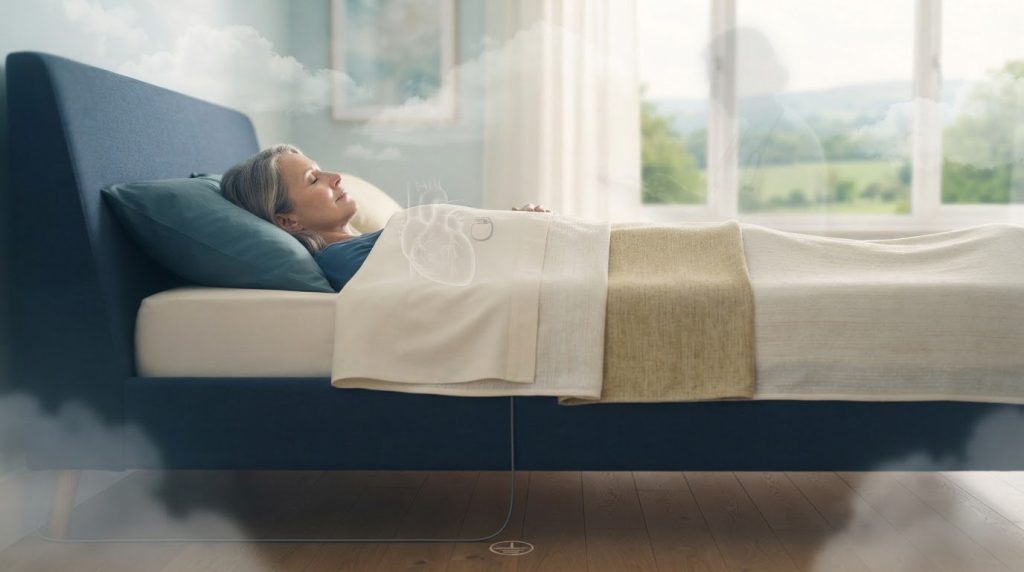
Earthing Sheets & Pacemakers: Safety Guide for UK Sleepers
Could a sheet connected to the earth pose the same concern as an electrical appliance beside your bed? If you have a pacemaker, it’s understandable to feel cautious about grounding sheets and pacemakers, especially when advice about household electricity and earthing can seem confusing. Grounding sheets make a passive connection to earth; they don’t work like powered electric blankets. But that difference doesn’t prove they’re suitable for everyone with an implanted heart device.
There are no published clinical studies specifically examining how grounding sheets interact with pacemakers or other implanted cardiac devices. The sensible first step is to speak with your cardiologist before trying one. That’s a precaution, not evidence that grounding sheets are known to disrupt pacemakers.
In this guide, we explain what the connection does, how it differs from an active electrical source and what remains uncertain. We also cover practical checks for a UK setup, including how to use the Sleep Earthed Test Meter, so you can ask informed questions and make a careful decision without compromising your heart health.
Key Takeaways
- Understand what is known, and what remains uncertain, about grounding sheets and pacemakers before deciding whether to use one.
- Learn how a passive earth connection differs from a mains-powered appliance, and why that distinction matters when considering electrical interference.
- Speak with your cardiologist before starting, and use their advice to guide a decision that takes your specific heart device into account.
- Find out how the Sleep Earthed Test Meter can help you check your setup before using an earthing sheet.
- When comparing UK-sized fitted earthing bedding, check the mattress dimensions, fit and fabric, as well as the product’s connection instructions.
Grounding Sheets and Pacemakers: Understanding the Connection
Earthing, also called grounding, means making a conductive connection between your body and the Earth. A grounding sheet is designed to provide that connection while you sleep, allowing contact with the Earth’s natural electrical potential. The idea is often discussed as a wellness practice; Energy medicine and earthing offers an encyclopaedic overview of the concept and its context.
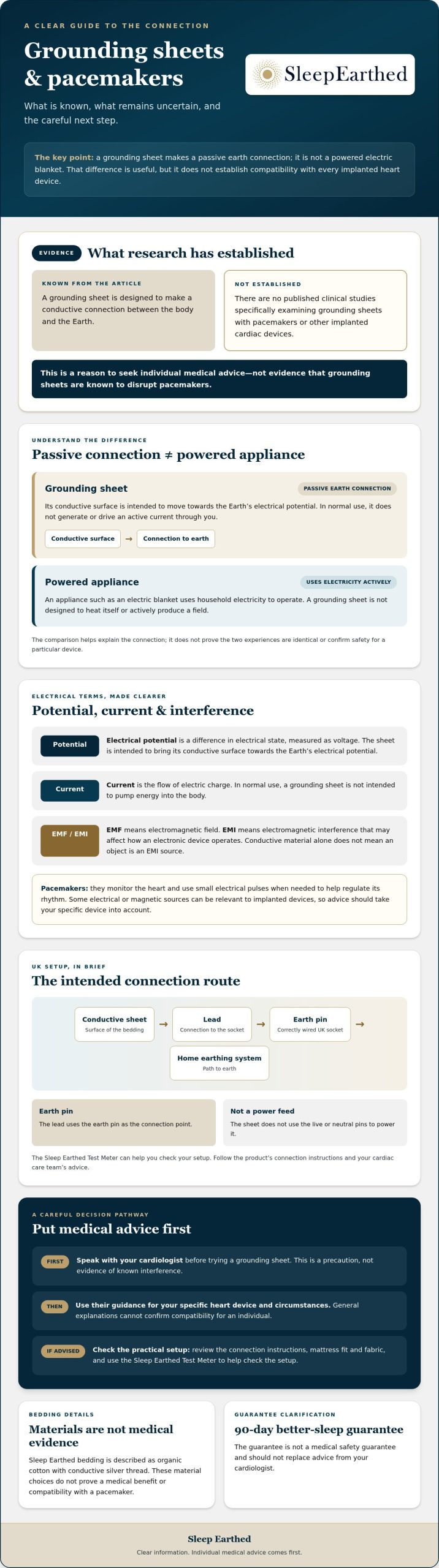
If you have a pacemaker, a natural question follows: could a grounding sheet interfere with the device’s electrical signals? Sleep Earthed bedding makes a passive connection. It isn’t a powered device that generates an active current. That distinction is useful, but it doesn’t establish that using a sheet is safe for every person with a pacemaker. There are no published clinical studies specifically examining this interaction, so speak with your cardiologist before trying one.
What is a Pacemaker and How Does it Work?
A pacemaker monitors the heart and uses small electrical pulses when needed to help regulate its rhythm. Some electrical or magnetic sources can cause electromagnetic interference (EMI), which is why people with implanted cardiac devices may receive advice about particular equipment. A powered appliance actively uses electricity; conductive fabric provides a route for a connection but doesn’t itself generate electrical pulses. The two aren’t the same, though individual medical advice still matters.
Grounding, EMF and EMI: What’s the Difference?
EMF means electromagnetic field, while EMI describes interference that may affect how an electronic device operates. These terms are related, but they don’t mean every object containing conductive material is an EMI source. A grounding sheet isn’t an electric blanket: it doesn’t heat itself or actively produce a field. However, the possibility of an effect on an implanted device hasn’t been tested in clinical studies, so it would be misleading to promise there’s no risk.
The Sleep Earthed Perspective on Safety
At Sleep Earthed, we want customers across the UK to have clear information rather than blanket reassurance. Our grounding bedding is made with organic cotton and conductive silver thread, combining a natural-feeling fabric with a conductive element. These material choices describe the bedding. They aren’t evidence of a medical benefit or proof of compatibility with a pacemaker.
Sleep Earthed offers a 90-day better-sleep guarantee. It may provide reassurance when considering the bedding, but it isn’t a medical safety guarantee and shouldn’t replace advice from your cardiologist. If you’re considering grounding sheets and pacemakers together, check with your cardiac care team first and follow their guidance for your specific device and circumstances.
The Physics of Earthing: Passive Connection vs Active Current
A grounding sheet isn’t powered by your home’s electricity supply. When connected to a correctly wired UK socket, its lead uses the earth pin, which connects to the home’s earthing system. It doesn’t use the live or neutral pins to power the sheet. The connection is intended to provide a path to earth, not to deliver household electricity to your bed.
It helps to separate potential from current. Electrical potential is a difference in electrical state, measured as voltage; current is the flow of electric charge. A grounding sheet is intended to bring its conductive surface towards the Earth’s electrical potential, rather than pump energy into your body. In normal use, unlike a powered appliance, it doesn’t generate or drive an active current through you.
Potential vs. Current: Why it Matters for Your Heart
A pacemaker monitors and supports heart rhythm, and certain electrical devices or strong magnetic fields can be relevant to its operation. The concern is electromagnetic interference, not simply the presence of conductive material. Guidance from the US National Heart, Lung, and Blood Institute on Living With a Pacemaker discusses precautions around electrical devices and strong magnetic fields. It doesn’t specifically assess grounding sheets, so it can’t confirm their compatibility with your device.
The intended earth connection is often compared with standing barefoot on grass: in both cases, the body is in contact with the ground rather than connected to a powered source. This is a useful way to picture the difference, not proof that the experiences or safety considerations are identical. A socket is used as the connection point, but the grounding effect doesn’t rely on household power being supplied to the sheet.
Silver Threads and Conductivity
Sleep Earthed sheets use conductive silver threads within the fabric to create a surface that can connect to the earthing lead. The condition of the conductive material and its connections matters. If a connection is damaged or the fabric is worn, the intended electrical contact may not be maintained. For more background on the principles, read Sleep Earthed’s science of grounding and earthing.
This distinction can help make sense of the discussion about grounding sheets and pacemakers, but it doesn’t replace individual medical advice. There are no published clinical studies specifically testing this combination. If you have a pacemaker, ask your cardiologist before use and follow their advice about your particular device. If you’re comparing bedding, Sleep Earthed’s information on UK-sized earthing sheets can help you understand the available sheet option.
Grounding vs Electromagnetic Interference (EMI)
Conductive doesn’t automatically mean electrically active. A grounding sheet provides a passive path to earth; it isn’t a radio transmitter and doesn’t generate the radio-frequency signals used by mobile phones. That distinction helps explain why the idea of a sheet acting like an antenna can be misleading. A conductive sheet connected to earth isn’t designed to collect and broadcast EMFs around the bed.
Still, this doesn’t prove that grounding sheets and pacemakers are compatible in every case. There are no published clinical studies specifically testing their interaction, so don’t treat comparisons with ordinary household items as medical clearance. Check with your cardiologist before use and follow the advice for your particular pacemaker.
Common Sources of EMI for Pacemaker Users
Pacemaker guidance commonly focuses on strong magnetic fields and equipment that produces powerful electrical interference. Industrial welding equipment is one example; mobile phones are another item for which device-specific advice may include keeping a suitable distance. A microwave oven is different: don’t assume that every household microwave poses a pacemaker risk. Follow your pacemaker provider’s guidance and the appliance instructions rather than relying on a blanket list.
An earthing sheet doesn’t operate like a welder or a phone. It doesn’t actively generate radio-frequency energy. Its connection is intended to link the conductive fabric to earth, not to power it. This is what “passive” means here, but it isn’t evidence that a sheet can’t affect a person’s implanted device.
Faraday Cages, Body Voltage and What’s Known
A Faraday cage is a conductive enclosure that can reduce the electric fields reaching the space inside it. A bed sheet isn’t an enclosure, so it shouldn’t be described as a Faraday cage or assumed to shield you from household EMFs. Nor should a grounding sheet be said to reliably reduce “electrical stress” on the body or benefit the nervous system: those are health claims that require suitable evidence.
“Body voltage” is sometimes used to describe electrical potential measured at the body in an environment with electrical fields. Some grounding explanations suggest an earth connection can change that measurement. But a change in a measurement doesn’t, by itself, show a health benefit or establish pacemaker safety. Sleep Earthed’s page on earthing sheets and inflammation discusses the topic; read health claims critically and ask your clinician how they apply to you.
The practical takeaway is simple: a passive earth connection is different from an active source of EMI, but that difference isn’t a substitute for personalised medical advice. If you have a pacemaker, get your cardiologist’s guidance before trying a grounding sheet.
Safety Steps: How to Organise Your Grounding Routine
If you’re considering grounding sheets and pacemakers, make your first step a conversation with your cardiac care team, not a night-time trial. There isn’t enough direct research to treat a general explanation of earthing as proof that a sheet is suitable for your specific device. A GP can help direct your question, but your cardiologist or pacemaker clinic is best placed to advise on your device and circumstances.
Talking to Your Doctor About Earthing
Keep the explanation plain and factual: “It is a conductive sheet that connects me to the earth via the plug’s earth pin.” Then ask whether passive grounding is specifically unsuitable for your pacemaker model and whether they recommend any precautions. Share the product information and explain how you plan to connect it. Mention any other equipment you use, and follow your clinician’s advice over general wellness guidance.
Check the Setup, Not Your Pacemaker
Once your clinician has advised you, the Sleep Earthed Test Meter can help check whether the sheet has a conductive connection when set up according to its instructions. Treat it as a conductivity check, not a medical device or a test of pacemaker safety. It also isn’t a professional inspection of your home’s wiring or earthing system.
Sleep Earthed also offers a Grounding Rod Kit for a direct connection to soil. If you’re considering that option, check its instructions and discuss the proposed setup with your clinician before use. Don’t alter electrical arrangements or assume that a different connection method is automatically more suitable for a pacemaker.
Introduce Changes Carefully
Don’t use changes in your heart rate or how you feel as a way to test whether a sheet is safe for your device. Follow the monitoring plan provided by your pacemaker team, and ask them what symptoms or changes should prompt you to contact them. If they approve trying the sheet, ask whether they recommend a gradual introduction and follow their specific guidance.
To help maintain the sheet’s conductive threads, follow its care instructions and avoid unsuitable laundry products. Sleep Earthed recommends Green Sheets detergent strips for washing. Care can help preserve the fabric, but it can’t confirm medical compatibility.
For product details and the Sleep Earthed Test Meter, explore Sleep Earthed earthing products. A meter reading can help you check the sheet’s connection; your cardiac team remains the right place for advice about using it with a pacemaker.
Choosing Quality Earthing Bedding with Sleep Earthed
Once you’ve considered the medical advice, practical details matter too. A fitted sheet should suit your UK mattress size and stay comfortably in place, so check the dimensions before choosing. Sleep Earthed offers UK-sized fitted earthing bed sheets made with organic cotton and conductive silver threads. If fabric feel is important to you, consider whether organic cotton suits your preferences for bedding.
The silver threads provide the conductive element in the sheet. Sleep Earthed focuses on silver thread density to support a consistent connection across the fabric. This is a product feature, not a promise of a health outcome or proof that the bedding is suitable for someone with a pacemaker. If you’re weighing up grounding sheets and pacemakers, follow your cardiologist’s guidance first.
Caring for Your Silver Thread Sheets
Care can help preserve the fabric and its conductive threads. Body oils and unsuitable detergents may affect silver over time, so follow the sheet’s care instructions and use a gentle detergent. Sleep Earthed recommends Green Sheets fragrance-free eco laundry detergent strips for washing its earthing sheets.
Use the washing temperature stated on the care label, and avoid fabric softeners or bleach if the instructions advise against them. Don’t guess at a temperature or washing routine: the product guidance is the best reference for your specific sheet. Handle the fabric with care, and check the sheet and its connection periodically for signs of wear.
Understanding the Sleep Earthed Guarantee
Sleep Earthed offers a 90-day better-sleep guarantee. It relates to the better-sleep promise, not pacemaker compatibility or medical safety, so it shouldn’t replace advice from your cardiac care team or be treated as a way to test whether grounding is suitable for you.
If you need help understanding a sheet’s setup or connection, the earthing sheet troubleshooting guide offers practical pointers. Good materials and sensible care can support the life of your bedding, while informed choices and your clinician’s advice keep health decisions in the right hands.
Make Your Next Step an Informed One
Earthing bedding offers a passive connection to earth, not the same thing as a powered appliance. But that distinction alone can’t confirm it’s suitable for someone with a pacemaker. There are no published clinical studies specifically examining grounding sheets and pacemakers, so your cardiologist’s advice should guide your decision.
If your cardiac care team agrees you can consider a sheet, check that your setup is suitable and follow the product’s care instructions. A meter can help assess the sheet’s conductive connection, but it can’t test medical compatibility. Keeping those two questions separate makes it easier to make a careful, informed choice.
Sleep Earthed offers UK-sized fitted earthing sheets and a 90-day better-sleep guarantee. If you’ve taken the appropriate medical advice and would like to explore the bedding, explore UK fitted earthing sheets.
Frequently Asked Questions
Can I use a grounding sheet with a pacemaker?
Ask your cardiologist before using a grounding sheet if you have a pacemaker. There are no published clinical studies specifically examining grounding sheets and pacemakers, so the sheet’s passive design cannot confirm it’s suitable for your device. Describe how it connects and ask whether they advise against it in your circumstances. Follow their guidance before setting up or trying the sheet.
Does a grounding sheet have an electric current?
A grounding sheet isn’t a powered appliance and doesn’t use household electricity to heat or operate. It’s designed to connect its conductive surface to earth, rather than actively drive current through your body. The connection is not a medical safety test, though, and there are no published clinical studies confirming how grounding sheets interact with pacemakers. If you have one, seek your cardiologist’s advice first.
What should I ask my cardiologist about earthing sheets?
Ask directly whether a passive grounding sheet is appropriate for your specific pacemaker. Explain that it connects conductive fabric to earth through a plug’s earth pin, and share the product information. If you’re unsure about advice you’ve already received, contact your cardiac care team to clarify it. Don’t rely on a general answer about electrical devices as confirmation that a grounding sheet is suitable for you.
Can I use a grounding mat instead of a sheet with a pacemaker?
Don’t assume a grounding mat is safer than a sheet if you have a pacemaker. The format may differ, but both are conductive products designed to connect to earth, and there are no published clinical studies establishing their compatibility with implanted cardiac devices. Sleep Earthed sells an Earthing Conductive Yoga Mat, but ask your cardiologist before using it and follow their advice about your device.
Is it safe to plug a grounding sheet into a UK wall socket?
A grounding sheet is designed to connect to the earth pin, not to use the live supply as a powered appliance does. That description doesn’t confirm that a particular socket or home earthing system is correctly wired or safe. Use the product only as its instructions direct, and don’t use a damaged socket or lead. If you have a pacemaker, ask your cardiologist before use.
What happens if there is a power surge whilst I am grounded?
There’s no published clinical evidence establishing what a power surge would mean for someone using a grounding sheet with a pacemaker. Don’t assume the sheet protects you from a surge or that a passive connection makes every electrical fault harmless. If you suspect a fault, stop using the setup and seek advice from a qualified electrician. Ask your cardiac team about any device-specific concerns.
How do I know if my grounding sheet is working safely?
The Sleep Earthed Test Meter can help check whether the sheet has a conductive connection when used according to its instructions. It can’t assess pacemaker compatibility, certify your home’s wiring or replace electrical safety advice. Check the sheet, lead and connections for visible damage, and follow the care guidance. If you have a pacemaker, get your clinician’s advice before using the setup.
Are there any side effects of grounding for heart patients?
There isn’t enough clinical research to identify specific side effects of grounding sheets for people with pacemakers or other implanted cardiac devices. That doesn’t prove there are none, or that a sheet is suitable for everyone. Speak with your cardiologist before trying one, and follow their advice about symptoms or changes that need attention. Don’t use the sheet as a substitute for prescribed cardiac care.