
 90 Day’s To Better Zzz’s Guarantee T&C apply
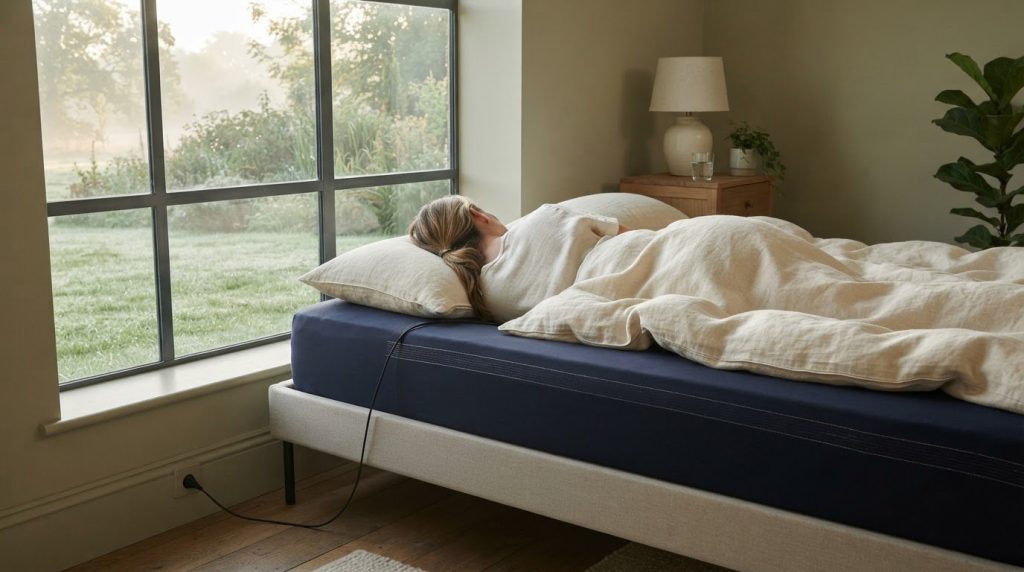
Using a Grounding Sheet Every Night: A Practical Guide
Can a sheet become part of your nightly routine without promising better sleep? If you’re considering using a grounding sheet every night, it’s reasonable to want a clear answer, especially when claims about sleep and recovery can sound more certain than the evidence allows. Approach nightly use as a practical choice: the sheet should feel comfortable, be set up as intended and fit the way you already make your bed.
This guide covers the everyday considerations, including fit, connection and routine, and what current evidence can and can’t tell you. Sleep Earthed’s fitted sheets combine organic cotton with conductive silver threads. Whether to try one is a personal decision, so focus on comfort and realistic expectations rather than assuming a particular health outcome. By the end, you’ll have a clearer idea of what to consider and whether a grounding sheet could suit your sleep routine.
Key Takeaways
- Understand what using a grounding sheet every night involves, and how regular use differs in practice from occasional outdoor earthing.
- Learn how conductive silver threads in organic cotton are intended to create a connection to the earth.
- Use a simple routine to prepare your bed and assess comfort, without treating personal observations as proof of a health benefit.
- Compare the practicalities of different grounding approaches, including where they’re used and how they fit into a routine.
- Weigh comfort, convenience and expectations to decide whether a Sleep Earthed fitted sheet suits your bedtime routine.
Using a Grounding Sheet Every Night: What the Routine Actually Means
Is nightly use really different from using a grounding sheet now and then? In practical terms, the main difference is frequency. A grounding sheet is conductive bedding intended to connect the person sleeping on it to the earth. Using a grounding sheet every night means making it part of your regular bedtime setup, rather than using it only for a rest or relaxation session.
There’s no single routine that suits everyone. You might use the sheet as your regular bedding, or choose to use it occasionally based on comfort, household arrangements or personal preference. Using it more often doesn’t prove a particular benefit. Using a product describes what you do; demonstrating an outcome requires evidence.
For a visual overview of how a grounding sheet is presented and tested, you can watch this review:
A product review can show someone else’s experience and how they use a sheet, but one person’s account can’t establish what will happen for you. Treat it as context, not as a substitute for reliable evidence or the product’s setup guidance.
What counts as using a grounding sheet every night?
In everyday terms, nightly use means choosing the sheet as part of your regular sleep setup, rather than using it only occasionally while reading, resting or relaxing. It doesn’t prescribe a particular number of hours or require a rigid routine. Your usual bedtime, bedding arrangement and comfort all matter.
If you’re trying a sheet, consider whether it fits naturally into your existing routine. Regular use may make it easier to notice how you feel over time, but it doesn’t guarantee a change. If the sheet feels distracting or uncomfortable, that’s useful practical feedback too.
What can nightly use reasonably tell you?
You can note personal observations, such as whether the bedding feels comfortable or whether your sleep seems different to you. Keep those notes in perspective: sleep varies for many reasons, and a change you notice while using a sheet doesn’t by itself show that the sheet caused it. Personal experience is not the same as clinical evidence.
Claims about better sleep or recovery shouldn’t be treated as assured outcomes. Research on earthing sheets remains limited, so conclusions need care. For a closer look at the evidence and its limitations, explore what research says about earthing sheets. Consider that context alongside your comfort and preferences when deciding whether regular use suits you.
How a Grounding Sheet Connects During Sleep
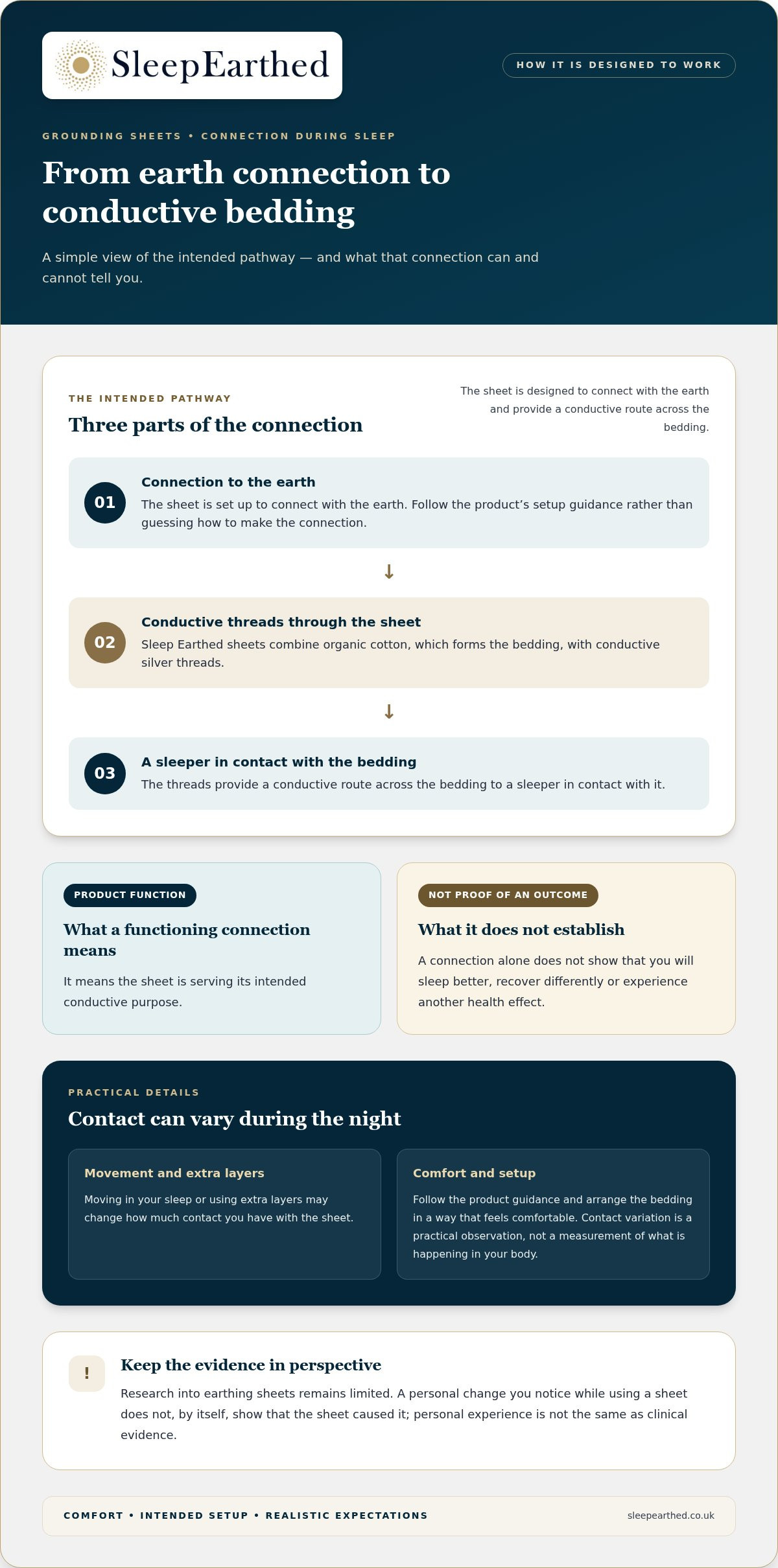
What makes an earthing sheet conductive? Sleep Earthed sheets combine organic cotton with conductive silver threads. The cotton forms the bedding, while the silver threads provide the conductive element. The sheet is designed to connect with the earth, giving it a different function from ordinary bedding.
The intended pathway is straightforward: the sheet connects to the earth, and its conductive silver threads provide a route across the bedding to a sleeper in contact with it. This describes how the product is designed to function; it doesn’t explain or prove a particular effect on the body.
Why conductive threads and contact matter
Conductive threads have a practical role when the sheet is set up as intended. Contact with the bedding is one consideration during use, but you shouldn’t assume a particular skin-contact rule. Follow the product guidance for setup and use, and arrange the bedding in a way that feels comfortable.
For example, if you move around in your sleep or use extra layers, the amount of contact with the sheet may vary. That’s a practical observation, not a measurement of what is happening in your body. The material description alone doesn’t tell you a specific electrical reading or bodily process.
What connection does, and doesn’t, establish
A functioning connection tells you that the sheet is serving its intended conductive purpose. It doesn’t establish that you’ll sleep better, recover differently or notice another health effect. Those are separate claims and require evidence beyond the presence of conductive material and a connection.
Research into earthing sheets is still developing, so it’s sensible to avoid both sweeping promises and blanket dismissals. A connection is a product function; whether it leads to a meaningful outcome for an individual is a different question. If you’re weighing up using a grounding sheet every night, keeping those questions separate helps set fair expectations.
Setup matters. The grounding sheet setup guide explains how to install Sleep Earthed bedding, so follow it rather than guessing how to make the connection. Once the sheet is set up, consider whether it sits comfortably within your usual bedding arrangement.
If you’re considering this style of bedding, explore Sleep Earthed fitted sheets and compare the materials with what you want from your regular sleep setup.
Grounding Sheet Every Night Compared with Other Ways to Ground
Choosing between a bed sheet, time outdoors or a mat comes down to how each option fits your day. A sheet is part of your bedtime setup; outdoor grounding is an activity outside the bedroom. Rather than assuming either approach will produce a particular sleep or health result, consider where you’d use it, how easily it fits your routine and what feels comfortable.
A sheet for bedtime versus occasional outdoor grounding
With a fitted sheet, the intended use becomes part of your normal sleep routine once the bedding is set up. Outdoor earthing means making time outside for an activity that suits the setting, such as sitting or walking. That may appeal if you enjoy being outdoors, but it might not fit your bedtime routine or every season.
Here’s a practical comparison. It’s about use, not a ranking of effectiveness.
| Option | Setting | Routine | Practical consideration |
|---|---|---|---|
| Fitted grounding sheet | Bedroom | Part of the usual bedtime setup | Consider how it fits your bedding and feels during sleep. |
| Outdoor earthing | Outside | Chosen for a suitable time outdoors | Depends on your preferences and when you want to spend time outside. |
| Carbon-infused earthing mat | Used where you choose to place it | A separate option from bedding | These mats rely on sweat to connect to the earth. |
How a nightly sheet differs from a grounding mat
A mat is a separate surface, while a fitted sheet forms part of the bed. That distinction may matter if you want something built into your usual sleep arrangement rather than a product you use separately. Carbon-infused earthing mats rely on sweat to connect to the earth, so their intended use differs from a conductive sheet. This is a practical distinction, not evidence that one option delivers a particular result.
To decide what might suit you, picture an ordinary week. Would you rather change your bedding and keep your usual routine, set aside time outdoors, or use a separate mat? Comfort and convenience are sensible starting points. If using a grounding sheet every night feels easy to fit in, consider it on those terms, without expecting a specific outcome.
Sleep Earthed offers UK-sized fitted earthing bed sheets made with organic cotton and conductive silver threads. Explore Sleep Earthed fitted sheets to see how this option could fit your bedtime setup.
How to Make Nightly Use Comfortable and Track Your Experience
A new sheet is easier to assess when you keep the rest of your bedtime routine familiar. Set up the bed according to the product guidance, then notice whether the bedding feels comfortable and works in everyday use. There’s no need to change several sleep habits at once or expect an immediate difference.
Follow the product’s setup instructions for installation. If you have a connection concern, the earthing sheet troubleshooting guidance can help you work through practical points without guessing at the setup.
Start with a simple, comfortable routine
Introduce the sheet as part of your usual bedtime arrangement. This straightforward sequence can help you assess the practical details:
- Prepare the bed. Arrange your usual bedding so the sheet sits comfortably and doesn’t disrupt how you like to sleep.
- Follow the setup guidance. Use the product instructions for connection and installation rather than relying on assumptions.
- Notice how it feels. Pay attention to comfort, movement and whether the sheet is easy to include in your routine.
These are practical checks, not a test of whether the product has produced a health effect. If the bedding feels unfamiliar, consider whether the fit or arrangement is the issue before drawing a conclusion about using a grounding sheet every night.
Record observations without assuming cause
A brief diary can make your impressions easier to review than relying on memory. Keep the notes simple and consistent. You might record your bedtime, how rested you felt on waking, whether the sheet was comfortable and any notable changes to your evening or bedroom.
Separate what you noticed from what else was happening. A later bedtime, a noisy night, a change in room temperature or a stressful day could all affect how you feel the next morning. You don’t need to control every variable; note relevant changes so your observations have context.
A personal sleep diary records experience, not causation. Feeling better after a night’s sleep is a genuine personal impression, but it can’t show by itself that the sheet caused the change or that someone else will have the same experience. Look for patterns cautiously and keep expectations grounded.
If you’re ready to make a fitted sheet part of your routine, explore Sleep Earthed fitted earthing sheets and consider how they could work with your usual bedding and bedtime habits.
Is a Sleep Earthed Sheet Right for Your Nightly Routine?
Picture an ordinary week, not an ideal one. Would the sheet fit your bed, feel comfortable beneath your usual bedding and be easy to keep in your routine? These practical details matter more than trying to match someone else’s experience. Using a grounding sheet every night may suit you if you like the idea of incorporating it into bedtime, but it won’t be right for everyone.
Who may find a fitted sheet practical?
A fitted sheet may be a straightforward option if you’d rather change your regular bedding than set aside a separate time or place for use. Sleep Earthed fitted sheets are UK-sized and made with organic cotton and conductive silver threads. These are product and material details, not a promise about how you’ll sleep or feel.
Before deciding, consider what matters to you in bedding. Do you like how the sheet feels? Does it work with the way you arrange your bed? Are you comfortable following the product setup guidance as part of your routine? If so, the format may be convenient. If not, personal preference is a good reason to choose a different approach or not to use one.
A grounding sheet isn’t a substitute for medical advice or care. If you have a health concern, speak with an appropriate healthcare professional rather than relying on bedding to address it.
Choose with realistic expectations
Separate what you can assess directly from what you can’t assume. You can judge whether the sheet feels comfortable, fits your routine and is practical for your bedroom. You can also note your impressions over time. These observations may help you decide whether to continue, but they don’t establish that the sheet caused a change or that another person will have the same experience.
Sleep Earthed includes a 90-day better-sleep guarantee with its sheets. A guarantee is a purchase policy, not evidence of a medical benefit, and it doesn’t promise a particular sleep outcome. Read the applicable guarantee terms so you understand how it works before deciding.
There’s no need to rush. Weigh comfort, convenience and expectations together. If the sheet feels like a practical addition and you’re comfortable with the limits of what personal experience can tell you, it may be worth considering. If it doesn’t suit your bedding or preferences, that’s a reasonable conclusion too.
Ready to look at the available options? Explore Sleep Earthed grounding sheets and consider how a fitted sheet could work in your nightly routine.
Make a Thoughtful Choice for Your Bedtime
Deciding whether to try a grounding sheet doesn’t need to be an all-or-nothing commitment. Consider the bedding you enjoy, the routine you can comfortably keep and what you’d count as a worthwhile personal experience, without expecting a guaranteed change in sleep or health. If using a grounding sheet every night feels practical, give yourself time to form your own view and keep other changes to your routine in mind.
Sleep Earthed’s UK-sized fitted sheets are made from organic cotton with conductive silver threads and come with a 90-day better-sleep guarantee. The guarantee isn’t a promise of a particular outcome, so review its terms as part of deciding whether the product suits you.
Ready to see whether this bedding could fit your routine? Explore Sleep Earthed grounding sheets and consider your next step at your own pace, with comfort and realistic expectations as your guide.
Frequently Asked Questions
Is it safe to use a grounding sheet every night?
Use it only as directed in the product’s setup guidance, since the intended connection depends on correct setup. Avoid using grounding products during thunderstorms. If you notice damage to the sheet or its connecting parts, stop using it until you can follow the manufacturer’s guidance on what to do. If you’re unsure about the condition of an electrical outlet, don’t attempt to modify it yourself.
Can I use a grounding sheet if I wear pyjamas?
Yes, you can wear pyjamas, but clothing may affect how much direct contact you have with the sheet. Don’t assume bare skin is essential unless the product instructions say so. If you sleep in several layers, keep your usual arrangement and follow the setup guidance. Comfort matters too: you shouldn’t need to change into clothing that makes you too warm or uncomfortable.
Can two people share the same grounding sheet?
Two people may share a sheet if it fits the bed and both can lie on it comfortably. Whether each sleeper has the intended contact can depend on the setup and how you both sleep. For example, one person may move away from the conductive area during the night. Check the product’s sizing and setup guidance rather than assuming one arrangement suits every shared bed.
Does a grounding sheet work with every type of mattress?
Don’t assume every mattress and bed arrangement will suit every fitted sheet. Check that the sheet’s stated UK bed size matches your mattress and that it sits securely without disturbing your usual bedding. If your mattress has an unusual shape or you use a topper, consider how those layers affect the fit and follow the product guidance for arranging the sheet.
How long should I try a grounding sheet before judging my experience?
There isn’t a set trial period that can prove whether a sheet caused a change in sleep. If you choose to try one, use it consistently enough to form a fair impression of comfort and convenience, while keeping other bedtime habits in mind. A short note each morning can help you compare your impressions, but a particular number of nights can’t guarantee results.
Can I use a grounding sheet all year round?
You can keep it in your routine throughout the year if it remains comfortable and you follow its setup guidance. In warmer weather, you might prefer lighter bedding; in colder months, you may add layers. Make sure your arrangement still follows the product instructions. Avoid using grounding products during thunderstorms, and resume use in line with the guidance once the storm has passed.
What should I do if I do not notice a difference?
Not noticing a difference is a valid outcome; you don’t need to keep using the sheet in the hope of a guaranteed change. First, consider whether it feels comfortable and fits your routine. If you have a practical concern, revisit the setup instructions. Keep any sleep concerns separate from the product trial, and speak with a healthcare professional if they persist or affect your wellbeing.