
 90 Day’s To Better Zzz’s Guarantee T&C apply

Earthing for Insomnia UK: What It Can and Cannot Do
Could earthing for insomnia uk be a sensible part of your bedtime routine, or is a grounding sheet being asked to do more than it can? When sleep is difficult, it’s understandable to look for a gentle, practical change. Claims about grounding can sound like a quick fix, so it helps to separate what a product is designed to do from what research has shown.
Earthing may be something you choose to try as part of a calmer sleep routine, but it isn’t an established treatment for insomnia. Research is still preliminary. If you sleep better after using a sheet, that change alone doesn’t prove earthing caused it.
This guide explains what earthing involves, what the evidence can and can’t tell us, and how to assess a grounding sheet safely as part of your routine. It also covers how to keep track of sleep without jumping to conclusions, and when ongoing sleep problems deserve professional support. NHS guidance points to cognitive behavioural therapy for insomnia (CBT-I) as an established option, so exploring earthing shouldn’t mean putting off appropriate help.
Key Takeaways
- Insomnia involves repeated difficulty falling asleep, staying asleep or getting restorative sleep, rather than the occasional restless night.
- Earthing means contact with a conductive surface intended to connect the body to the earth. A proposed explanation isn’t proof of an effect on insomnia.
- Assess earthing for insomnia uk as a personal sleep routine, not a cure. A diary of bedtimes, wake times, night-time waking and daytime effects can help you notice patterns.
- Sleep Earthed fitted earthing bed sheets combine organic cotton with conductive silver threads. They are an optional bedding choice, not a promise to treat insomnia.
- If sleep problems persist or affect daily life, seek established support rather than relying on a bedding change alone.
What does earthing for insomnia mean, and what is insomnia?
Insomnia involves ongoing difficulty falling asleep, staying asleep or waking at the time you want, particularly when it affects how you feel during the day. Earthing is a practice involving contact with a conductive surface intended to connect the body to the earth. These are different things: insomnia is a sleep problem, while earthing is a bedtime practice some people choose to try. A proposed sleep benefit doesn’t establish earthing as a treatment for insomnia.
The phrase earthing for insomnia uk can bring up confident claims as well as genuine questions. A sheet’s intended conductive function can be described, but that alone doesn’t show that it improves sleep or treats a health condition. It’s useful to keep the product’s design separate from claims about its effects.
How is insomnia different from a few bad nights?
An occasional restless night after a stressful day, a change in routine or sleeping in an unfamiliar bed is common. Insomnia generally refers to repeated sleep difficulties, such as taking a long time to fall asleep, waking several times during the night, or waking earlier than intended and being unable to get back to sleep.
There isn’t a single experience that lets you diagnose yourself. How long the problem has been happening and whether it affects your daytime life matter too. You might feel tired or irritable, or find it harder to concentrate. If poor sleep continues, troubles you or affects day-to-day activities, speak with a GP or another appropriate health professional. You don’t need to wait for a diagnosis before asking for advice.
What does an earthing sheet do during sleep?
Sleep Earthed fitted earthing bed sheets combine organic cotton with conductive silver threads. The threads are intended to make the sheet conductive, while a connection to earth is part of its intended use. The idea is that your body makes contact with the conductive surface as you lie in bed. This describes how the product is designed to function, not evidence that it will change your sleep.
A sheet can provide a different kind of contact from ordinary bedding, but its materials and design don’t prove a medical outcome. If you try one, treat it as an optional part of your sleep routine, not a replacement for professional advice or established care.
For a wider introduction to the terminology, What does earthing mean? offers a general overview and distinguishes uses of the word. Sleep Earthed’s guide, Grounding and Earthing: The Complete UK Guide to Better Sleep and Recovery, explores the practice in more detail. Keep the key question in view: what a product is intended to do is not the same as what research has demonstrated about insomnia.
What does the evidence say about earthing and insomnia?
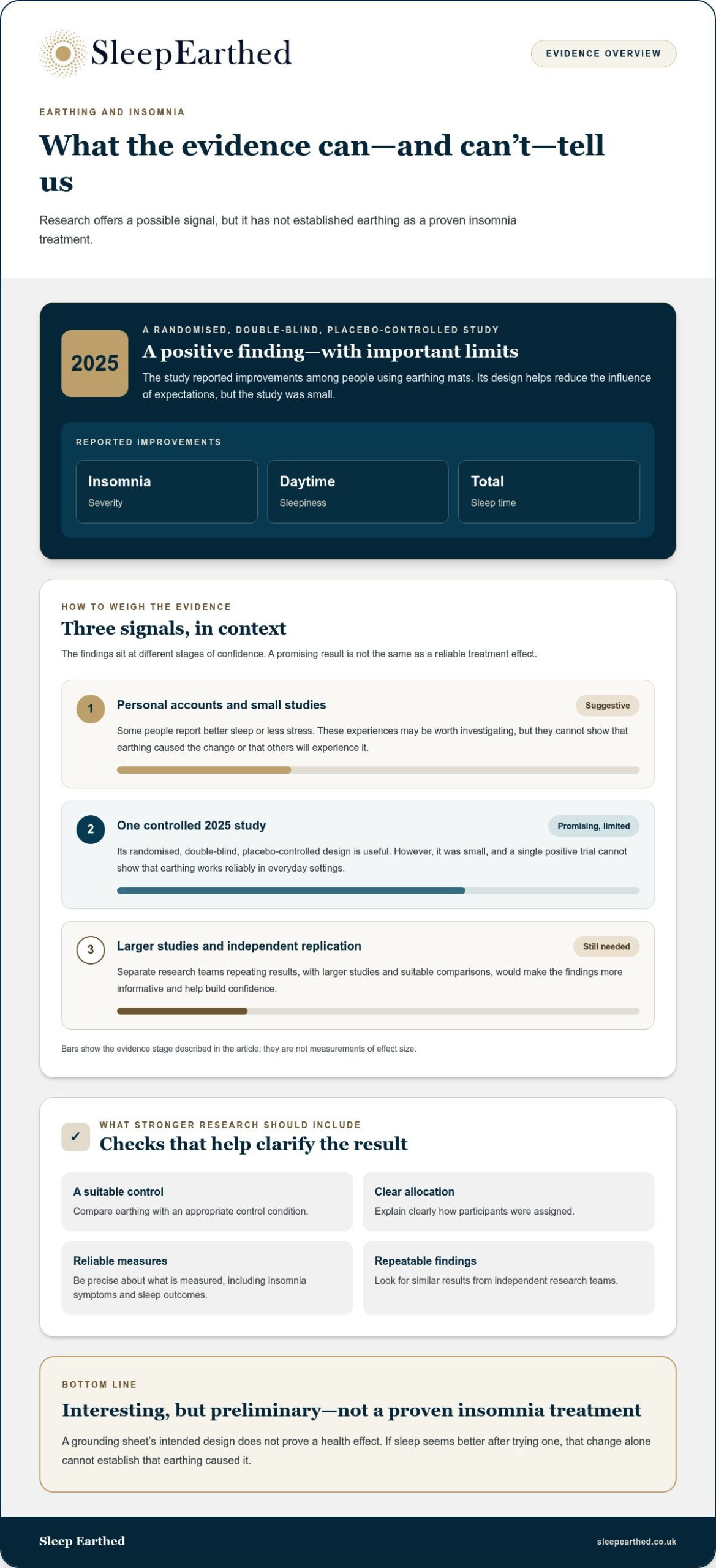
Claims about earthing and sleep can sound convincing, but the strength of a claim should match the quality of the evidence behind it. Some small studies and personal accounts report better sleep or less stress when people use earthing products. These findings may be worth investigating, but they don’t establish that earthing treats insomnia or that the same effects will happen for everyone.
A 2025 randomised, double-blind, placebo-controlled study reported improvements in insomnia severity, daytime sleepiness and total sleep time among people using earthing mats. That design is useful because it compares groups and aims to reduce the influence of expectations. However, the study was small, and one positive trial isn’t enough to show that a product reliably works in everyday settings. Independent replication and larger studies are needed.
Available research can suggest a possible link between earthing and sleep, but it cannot yet establish earthing as a proven insomnia treatment or confirm that grounding sheets improve sleep for the wider population. That’s the most useful way to interpret the evidence for earthing for insomnia uk: interesting, but preliminary.
Why do some people connect earthing with better sleep?
One proposed explanation is that contact with an earthed conductive surface may influence bodily processes linked to stress or sleep. These explanations remain hypotheses, not established proof of how earthing works or why sleep might change. A personal account can help researchers decide what to study, but it can’t separate the effect of a sheet from other changes, such as a steadier bedtime or different expectations.
Someone’s report of sleeping better is meaningful to them, but it doesn’t prove cause and effect. Sleep can vary from night to night, and several routine or environmental factors may change at once. Sleep Earthed’s guide, “Do Earthing Sheets Work? Science vs Fiction in 2026”, offers broader context for weighing claims against the available evidence.
What would stronger evidence need to show?
Well-designed research would compare earthing with a suitable control, explain clearly how participants were allocated, and use reliable measures. It would also need enough participants to make the findings more informative and independent research teams to repeat the results. Replication matters: if separate studies using sound methods reach similar conclusions, confidence can grow.
Researchers also need to be precise about what they measure. A study of people with diagnosed insomnia and validated insomnia symptoms answers a different question from one asking participants whether they feel they slept better. Total sleep time, night-time waking, daytime tiredness and perceived sleep quality are related, but they aren’t interchangeable outcomes.
The evidence described here doesn’t settle those questions. Positive findings should be read alongside their limitations, and a lack of strong evidence isn’t proof that nobody will notice a difference. It means we can’t confidently attribute a change to earthing or make a clinical recommendation on that basis. If you’re curious, Sleep Earthed bedding can be an optional part of your bedtime routine, with measured expectations.
To explore the bedding, Sleep Earthed earthing bed sheets are one option to consider as part of a wider approach to sleep.
Is earthing a substitute for insomnia care? Addressing the main misconception
No. Earthing isn’t a proven cure for insomnia and shouldn’t replace professional support or established care. A grounding sheet may be an optional part of a bedtime routine, but it isn’t a way to diagnose or manage a persistent sleep problem. You can be interested in complementary routines and still seek evidence-based help.
This distinction matters because insomnia can affect concentration, mood and everyday functioning. If you’re considering earthing for insomnia uk, treat it as a personal routine choice, not a treatment plan. Trying a product shouldn’t mean putting off advice, especially if sleep difficulties continue or disrupt daily life.
How should readers weigh claims about earthing and sleep?
Separate marketing claims, individual experiences and controlled research. Someone may genuinely feel they sleep better after trying a sheet, but that experience alone can’t show what caused the change. Research can offer stronger evidence, though its methods, size and limitations still matter.
Be cautious of claims that promise guaranteed results or say a product treats insomnia. The related Sleep Earthed article “How Does Earthing Work for Sleep Recovery?” explores the sleep-recovery topic, but recovery claims shouldn’t be taken as proof of an insomnia treatment.
When should someone seek help for ongoing insomnia?
If sleep problems persist, concern you or affect your daily life, speak with a GP or another appropriate health professional. You don’t need to work out the cause before asking for advice. A clinician can discuss your situation and possible next steps.
For insomnia, NHS Inform identifies cognitive behavioural therapy for insomnia (CBT-I) as a primary recommended treatment. CBT-I is a structured approach that addresses thoughts and behaviours affecting sleep. It is distinct from adding a bedding product to your routine, and an earthing sheet shouldn’t delay a conversation about suitable care.
Practical steps can sit alongside that support. You might keep a steady bedtime, note changes in your sleep routine and consider whether an optional product feels comfortable. These observations can help you describe what’s happening, but they can’t establish that earthing caused a change. Sleep Earthed earthing bedding is an option to explore as a routine choice, not medical care.
How to assess earthing for insomnia safely and realistically
If you decide to try earthing for insomnia uk, approach it as a personal observation, not a test that can prove a treatment works. Sleep naturally varies, and stress, illness, room temperature or a changed routine can affect a night’s rest too. A simple, consistent record can help you notice what changes without assuming the sheet caused them.
Use this practical sequence:
- Record your usual sleep first. Before changing your routine, note your bedtime, estimated time you fell asleep, wake time and any awakenings you remember. Include how you felt during the day.
- Follow the product instructions. Set up the bedding as directed. Don’t improvise electrical connections or use a setup that differs from the instructions.
- Keep other habits steady where practical. Try to maintain your usual sleep and wake times. Note changes such as late caffeine, travel, illness or unusual stress, rather than expecting every evening to be identical.
- Review the pattern, not one night. Keep recording consistently for as long as is useful to you. There’s no need to commit to a fixed trial period or expect a particular result. If sleep changes, treat that as an observation rather than proof of cause and effect.
How can a sleep diary make a trial more useful?
A diary makes comparison more concrete than relying on memory. Alongside bedtime, wake time and awakenings, jot down daytime tiredness or concentration, plus anything that may have disrupted your routine. Keep entries brief so the record remains manageable. A few notes can also help you describe an ongoing sleep concern to a health professional, if needed.
What safety points matter when using earthing bedding?
Use the bedding only as described in its supplied setup instructions. Don’t alter plugs, wiring or connections, and stop if anything appears damaged or you’re unsure whether your setup is safe. The “Grounding Sheet Setup Guide: How to Properly Install Your Sleep Earthed Bedding” explains the intended setup. Carbon-infused earthing mats are a different type of product and rely on sweat to connect the body to the earth. Don’t assume their use or setup is interchangeable with bedding.
Keep expectations measured, too. A diary can show a pattern in your own experience, but it can’t confirm that earthing caused it or establish a medical benefit. If sleep problems persist or affect daily life, seek appropriate health advice rather than relying on a bedding change.
If an earthing sheet feels like a suitable optional part of your routine, explore Sleep Earthed bedding and follow its setup instructions.
Choosing Sleep Earthed bedding as one part of a calmer sleep routine
A bedtime product should fit your routine, not become another source of pressure when sleep is already difficult. Sleep Earthed’s priority product is its UK-sized fitted earthing bed sheet, made with organic cotton and conductive silver threads. The threads are intended to provide a conductive connection as you sleep, but that function shouldn’t be mistaken for evidence that the sheet treats insomnia.
For someone curious about earthing for insomnia uk, the practical question is whether this kind of bedding feels like a comfortable addition to their sleep environment. It becomes part of the bed you already use, rather than requiring a separate activity before bedtime. Experiences differ, however, and a sheet isn’t a substitute for professional support if sleep problems persist or disrupt daily life.
Could an earthing sheet fit into your bedtime routine?
Start by considering what you want from a bedding change. If you’re interested in trying an earthing product, Sleep Earthed offers fitted earthing bed sheets and earthing pillowcases as options for the bed. Choose based on how you prefer to arrange your bedding and the product’s fit with your sleep setup, not an expectation that one option will deliver a particular result. Keep your expectations measured and continue any established care or advice relevant to ongoing insomnia.
What is a sensible next step if you are curious?
Consider your sleep needs and whether changing your bedding feels manageable. Review the setup guidance so you understand how to use the product as intended, and keep your observations separate from assumptions about cause. If you’re already seeking help for persistent or disruptive sleep difficulties, don’t put that conversation on hold while you try a new routine.
Sleep Earthed offers a 90-day better-sleep guarantee. Consider it alongside the product information, while remembering that a guarantee doesn’t establish earthing as an insomnia treatment or predict an individual result.
If the materials, intended function and place in your bedtime routine feel right for you, explore the options at your own pace. Explore Sleep Earthed bedding.
Choose a next step that feels right for you
Better sleep rarely comes from adding pressure to your evenings. If you’re considering earthing for insomnia uk, decide what you want to learn from trying it and keep the change simple enough to assess alongside your usual routine. There’s no need to treat a bedding choice as a test you must pass or a promise you must believe.
If sleep problems continue or make everyday life harder, make appropriate health advice your next step. Exploring a complementary routine can sit alongside that support, not take its place. If you’re curious about whether earthing bedding suits your preferences, take time to consider the options without rushing.
Explore Sleep Earthed bedding and decide whether it feels like a comfortable fit for your routine.
Frequently Asked Questions
Can earthing help with insomnia?
Some people say they sleep better after trying earthing, but personal experience can’t show that earthing caused the change. Sleep can shift for many reasons, including changes in routine or stress. If you’re curious about earthing for insomnia uk, consider it an optional bedtime experiment and keep track of your sleep rather than expecting a particular result. Don’t let trying a product delay advice if poor sleep continues or affects daily life.
Is earthing a proven treatment for insomnia?
No. Current evidence is not strong enough to establish earthing as a proven insomnia treatment. A study may report a promising result, but its methods, participant numbers and whether other researchers can reproduce the finding all matter. That’s different from evidence that a treatment reliably helps people with insomnia. If you’re weighing options, speak with a health professional about established support rather than replacing it with a bedding change.
How does an earthing sheet connect to the earth?
An earthing sheet uses conductive material, such as silver threads, and is intended to connect to earth through the setup specified for that product. The connection is part of how the sheet is designed to function, not proof of a health benefit. Follow the supplied instructions for your particular sheet, and don’t improvise plugs, wiring or other connections. If any part looks damaged, stop using it and refer to the product guidance before continuing.
Can I use an earthing sheet alongside other sleep support?
You can consider bedding as one part of your sleep environment while also using support recommended by a health professional. Keep taking prescribed medicines and following agreed care unless the professional responsible for your treatment advises otherwise. If you’re receiving support for insomnia, mention any new bedtime routine at your next appointment so changes can be considered in context. A sheet shouldn’t take the place of that support.
Is it safe to sleep on an earthing sheet every night?
Use the sheet as directed and check its condition as part of normal bedding care. Don’t use it if a connection or the sheet appears damaged, and never modify its electrical setup. Safety depends on following the instructions for the product you have, so don’t assume different earthing products connect in the same way. If you’re uncertain about your setup, pause use and refer to the product guidance before continuing.
What should I record when trying an earthing sheet for sleep?
Note when you went to bed, roughly how long it took to fall asleep, when you woke and any awakenings you remember. Add a brief note about daytime tiredness and anything unusual, such as a late shift, illness, travel or extra stress. Keep the record simple enough to maintain. Looking across several entries can help you describe patterns, but a diary can’t prove that a sheet caused a change.
When should I seek help for persistent insomnia in the UK?
Speak to your GP or another appropriate health professional if sleep problems continue, cause concern or make daily activities harder. You can explain what happens at night and how it affects you during the day; you don’t need to diagnose yourself first. NHS guidance recognises cognitive behavioural therapy for insomnia (CBT-I), a structured approach to sleep-related thoughts and behaviours. A professional can discuss what support may suit your circumstances.