
 90 Day’s To Better Zzz’s Guarantee T&C apply
Earthing Sheet Thread Count: Why Conductivity Matters More Than Luxury in 2026
What if the high-thread-count sheets you’ve been eyeing are actually acting as a barrier to the very grounding benefits you’re looking for? It’s a question we hear often at Sleep Earthed, as many people feel torn between the softest possible fabric and the functional health benefits of earthing. You might worry that a specific earthing sheet thread count will block the connection or that those precious silver threads will simply wear out after a few washes. It’s completely understandable to feel a bit confused by traditional marketing when you’re trying to prioritise your well-being.
We’re here to help you find that perfect balance. In this article, you’ll discover why a thread count of 200 to 400 is the sweet spot for both comfort and conductivity. We’ll explain how silver density works alongside the cotton weave to provide the ultimate grounding experience and better sleep. We’ll also share practical advice on maintenance, such as using Green Sheets fragrance-free eco laundry detergent strips to protect the silver’s integrity. By the end, you’ll feel confident in choosing a sheet that doesn’t just feel lovely, but actually works to support your body’s natural rhythms.
Key Takeaways
- Understand why a standard luxury 1000-thread count weave can actually hinder grounding by creating a physical barrier between your skin and the conductive silver.
- Learn how to prioritise silver density over traditional metrics to ensure your sheet maintains its effectiveness for the full functional lifespan.
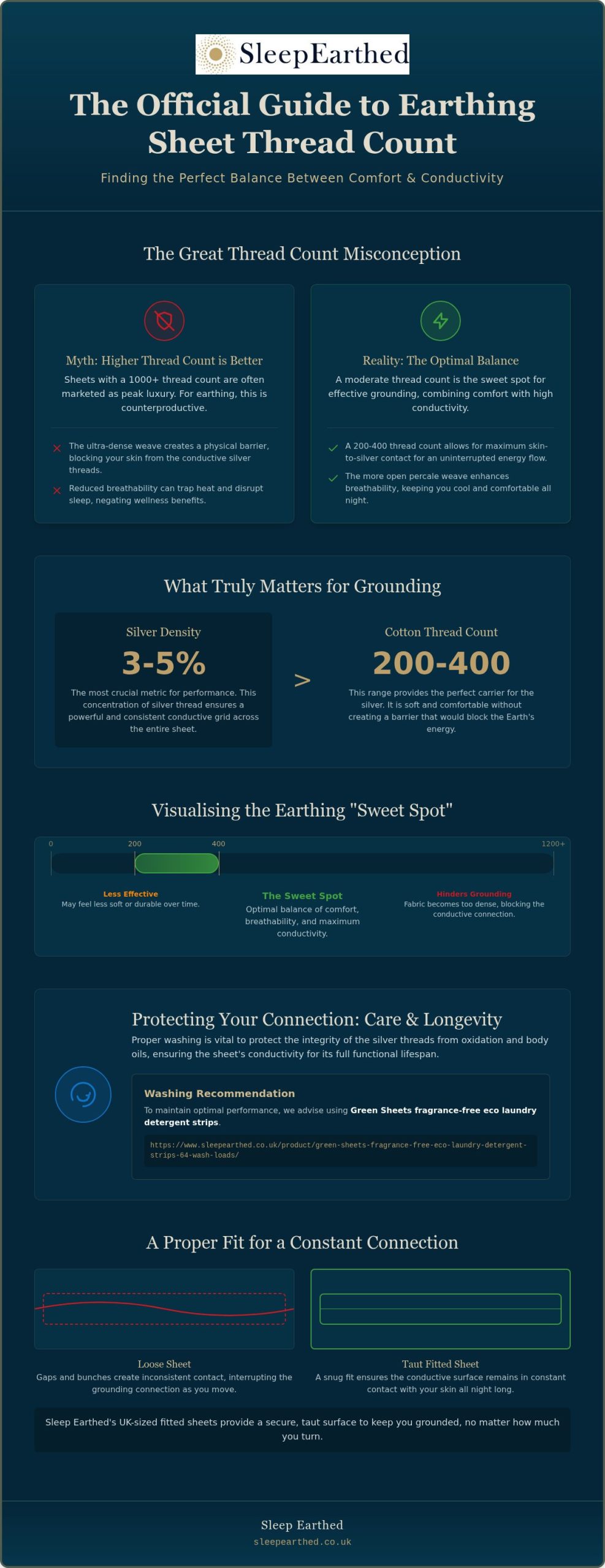
- Discover the sweet spot for earthing sheet thread count, which sits between 200 and 400 to balance breathability with maximum skin-to-silver contact.
- Find out why using the right care routine, specifically washing with Green Sheets eco detergent strips, is vital to prevent silver oxidation.
- See why choosing UK-sized fitted sheets from Sleep Earthed ensures a taut surface that keeps you grounded throughout the night, regardless of how much you move.
What is Earthing Sheet Thread Count and Why is it Different?
We’ve all been taught that a high thread count is the ultimate mark of quality when shopping for bed linen. In the world of standard bedding, thread count (TC) simply refers to the number of horizontal and vertical threads woven into a single square inch of fabric. However, when we talk about an earthing sheet thread count, the conversation shifts from pure luxury to functional health. It’s no longer just about the number of threads, but what those threads are actually doing for you while you sleep.
Unlike a standard set of sheets, earthing bedding incorporates a conductive silver lattice. This grid allows your body to connect with the earth’s natural energy by following electrical grounding principles. Whilst the cotton threads provide the soft surface you sleep on, the silver threads do the heavy lifting. In this context, TC dictates how the sheet feels against your skin, but silver density dictates how well it actually works. It’s a common mistake to assume that more cotton threads mean a better grounding experience. In reality, a very high cotton TC can sometimes create a barrier that makes it harder for those beneficial electrons to reach you. If you’re new to the concept of grounding while sleeping and want to understand the science behind how your body interacts with the Earth’s natural electric charge, our dedicated guide is an excellent starting point.
The Role of Cotton in Earthing Bedding
While many people choose to explore Bed Linen from high-quality specialists like King of Cotton for their traditional bedding, at Sleep Earthed, we use organic cotton because it’s the most reliable carrier for our conductive silver fibres. It’s a natural material that breathes well, which is essential for a restful night. The way these threads are woven matters. A crisp percale weave is often preferred for grounding because it’s less dense than a sateen weave. This openness allows for better airflow and ensures your skin can make consistent contact with the silver grid. If the weave is too tight, you might find the sheet feels stifling, which can disrupt your sleep recovery. We want you to stay cool and connected, not trapped in a dense fabric that blocks the flow.
If you’re looking for the best performance, silver density is a far more important metric than cotton thread count. Most effective earthing sheets contain between 3% and 5% silver thread by weight. This silver is woven directly into the cotton in a grid pattern to ensure that no matter how much you toss and turn, you’re always touching a conductive element. We focus on the quality of this silver integration. It isn’t just about having silver in the fabric; it’s about how accessible that silver is to your body. A well-designed earthing sheet thread count balances enough cotton for a soft feel with enough silver density to maintain a strong, reliable connection all night long.
Cotton Thread Count vs Silver Density: Finding the Balance
You might think that a 1000-thread count sheet is the ultimate goal for a good night’s sleep. Whilst that might be true for standard luxury bedding, it can actually be a hindrance for grounding. When we look at an earthing sheet thread count, we have to consider how the fabric density affects the flow of electrons from the earth to your body. A very dense weave acts like a physical shield, making it much harder for your skin to maintain the necessary contact with the silver fibres buried within the cotton.
At Sleep Earthed, we focus on a functional balance. We want your sheets to feel soft and inviting, but we never sacrifice conductivity for the sake of a higher number on the packaging. A mid-range thread count provides the perfect compromise. It allows the fabric to remain breathable and flexible, ensuring that the silver grid remains accessible to your skin throughout the night. If you’re curious about how our designs achieve this, you can explore our range of UK Sized Fitted Earthing Bed Sheets to see the difference for yourself.
Why ‘Luxury’ Thread Counts Can Be Misleading
The bedding industry has a bit of a secret: they often use ‘multi-ply’ yarns to inflate thread count numbers. This involves twisting several thin threads together and counting them individually. This process creates a much thicker, heavier fabric. For grounding, this is counterproductive. These overly thick fabrics create a bulky barrier between you and the silver lattice. By choosing a sensible, honest thread count, we ensure the sheet is light enough to allow for excellent conductivity whilst remaining durable enough for years of use.
The Science of Skin Contact and Conductivity
Grounding relies on direct skin contact. Without it, the electrons simply can’t move. Interestingly, your body’s natural moisture and light perspiration actually help this process by facilitating the connection between your skin and the silver threads. However, if the cotton weave is too tight, it can trap that moisture away from the conductive elements. Research into the effects of washing on conductive threads shows that maintaining the physical integrity of the silver is vital for long-term function. A high-quality silver grid density ensures there are no dead spots on the sheet, providing a consistent connection regardless of where you rest. To keep these threads in top condition, we always recommend washing with Green Sheets fragrance-free eco laundry detergent strips, which are specifically designed to be gentle on conductive materials.
Why High Thread Count Isn’t Always Better for Grounding
It’s a common belief that a higher number on the label always equates to a better product. When it comes to your earthing sheet thread count, this logic can often lead you astray. Many customers naturally assume that a denser weave must mean more silver or a more robust connection. In reality, an excessively high thread count creates a stiff, bulky fabric that doesn’t contour to your body as effectively as a more supple weave. If the sheet doesn’t make direct contact with your skin, it simply isn’t doing its job. We often talk to people who are surprised to learn that their 1000-TC luxury sheets might be getting in the way of their grounding goals. A lower thread count isn’t about cutting corners; it’s about prioritising the flow of electrons and ensuring the fabric can breathe. If you’re looking for a deeper dive into how these mechanics affect your health and recovery, our grounding and earthing pillar guide offers a comprehensive look at the science behind this process. It’s a great place to start if you’re new to the concept or want to understand why we do things a little differently.
Breathability and Thermoregulation
Sleep recovery isn’t just about grounding; it’s also about temperature. Your body needs to cool down to enter deep sleep cycles. High thread count sheets are woven so tightly that they trap heat. This lack of breathability is counterproductive for healing. We use organic cotton with a balanced earthing sheet thread count to encourage airflow. This ensures that whilst you’re receiving electrons, your body regulates its temperature naturally.
The Flexibility of the Silver Lattice
A sheet that is too stiff won’t drape over your curves. For grounding to work, you need consistent skin-to-silver contact. A more flexible weave allows the silver lattice to move with you as you turn. This is vital for our UK Sized Fitted Earthing Bed Sheets. If the cotton is too rigid, the tension can stress the silver fibres. A supple weave protects the conductive connection whilst ensuring the sheet contours to your shape perfectly.
Maintaining Conductive Threads: Washing and Longevity
A common concern we hear at Sleep Earthed is that frequent washing might wear out the silver threads in your bedding. It’s a logical worry, but the reality is quite the opposite. Regular laundering is actually the best thing you can do to maintain high performance. Over time, your skin naturally sheds oils and dead cells. These microscopic particles can become trapped amongst the fibres, particularly if you have a higher earthing sheet thread count where the weave is more compact. If these aren’t cleared away, they form a barrier that prevents the silver from doing its job.
The Dangers of Bio-Films on Silver Fibres
When body oils and skin cells accumulate, they create what we call a bio-film. Think of it as a thin, invisible coating that wraps around the conductive fibres. This bio-film is the #1 enemy of your earthing sheet because it acts as an insulator. In our experience, a tighter earthing sheet thread count can make it slightly more difficult for standard detergents to reach and lift these oils out of the weave. If the oils stay put, the conductivity drops significantly. Silver must remain ‘naked’ to transfer electrons effectively. By washing your sheets every week or two, you ensure that the silver surface stays clean and ready to connect with your skin.
Safe Washing Practices for UK Sleepers
Choosing the right detergent is just as vital as the frequency of the wash. Many standard UK supermarket brands contain bleach, fabric softeners, or essential oils. These are disastrous for silver. Bleach causes the silver to oxidise and turn black, which permanently destroys its conductivity. Softeners and oils, on the other hand, coat the threads in a greasy residue that is almost impossible to remove. We always recommend using Green Sheets Laundry Detergent strips. They are fragrance-free and specifically formulated to be gentle on conductive materials whilst still being effective at 40 degrees.
Washing at 40 degrees Celsius is the perfect temperature for our sheets. It’s warm enough to dissolve body fats and oils but cool enough to protect the delicate silver lattice from heat damage. If you’ve followed these steps and still feel your connection isn’t what it should be, take a look at our earthing sheet troubleshooting guide for a deeper dive into maintaining your kit. Keeping your bedding clean isn’t just about hygiene; it’s about ensuring you get the full recovery benefits every single night. To keep your conductivity at its peak, we suggest you always use Green Sheets eco detergent strips for every wash.
Choosing the Right UK Fitted Earthing Sheet for Your Bed
When you’re ready to invest in your sleep health, the final piece of the puzzle is ensuring the product actually fits your life, and your bed. At Sleep Earthed, we’ve seen how much frustration “one-size-fits-all” international bedding can cause. A sheet that’s too loose won’t just look untidy; it will actively hinder your grounding experience by sliding away from your skin. Choosing a UK-specific fitted sheet is about more than just aesthetics. It’s about maintaining that vital conductive connection all night long. Because we prioritise function over marketing fluff, our earthing sheet thread count is specifically chosen to provide a taut, reliable surface that stays in place even if you’re a restless sleeper.
Why UK Sizing Matters for Earthing
The problem with many earthing products found online is that they are designed for international mattress standards, which often differ significantly from UK dimensions. If you put a sheet designed for a US Queen on a UK King mattress, you’ll likely end up with excess fabric that bunches up. These folds create “dead zones” where your skin isn’t making direct contact with the silver lattice. We design our UK Sized Fitted Earthing Bed Sheets to match Single, Double, King, and Super King mattresses perfectly. We also include deep pockets to accommodate modern, thicker mattresses. This ensures the sheet remains snug and the earthing sheet thread count works exactly as intended, keeping the silver threads pressed gently against your body for maximum electron transfer.
Organic Cotton: The Perfect Carrier for Silver
We believe that if you’re trying to reduce inflammation and improve recovery, the materials you sleep on should be as natural as possible. Organic cotton is the gold standard for Sleep Earthed bedding because it’s free from the harsh pesticides and chemicals found in conventional cotton. These pure fibres are kinder to sensitive skin and provide a superior structure for holding the silver conductive threads. Unlike synthetic blends, organic cotton is highly breathable, which helps prevent the heat-trapping issues we discussed earlier. Much like the premium organic wellness essentials curated by RootBorn Rituals, these natural materials are chosen to support a cleaner, healthier lifestyle. If you’re curious about the technical differences, our organic cotton vs regular cotton guide provides a deeper analysis of why this choice matters for your long-term health.
We want you to feel completely confident in your choice. That’s why we offer a 90-day better sleep guarantee. It gives you a risk-free way to test the quality and conductivity of our sheets in your own home. To ensure your new sheet lasts for years, don’t forget to use Green Sheets fragrance-free eco laundry detergent strips, which protect the delicate silver fibres from oxidation and damage.
Choosing the right bedding is a personal decision, but it’s one that shouldn’t be clouded by misleading luxury marketing. We hope this guide has helped clarify why a sensible earthing sheet thread count is the key to balancing comfort with the health benefits you’re looking for. By prioritising silver density and a breathable organic cotton weave, you’re setting the stage for genuine sleep recovery. Don’t forget that regular maintenance with Green Sheets fragrance-free eco laundry detergent strips is the best way to protect your investment.
If you’re ready to start your journey towards better rest, we invite you to explore our range of UK Sized Fitted Earthing Bed Sheets. We stand by our craftsmanship with a 90-day better-sleep guarantee, and our friendly UK-based customer support team is always just a phone call or email away. We use only organic cotton and high-grade silver fibres to ensure you get the very best experience. We’re excited for you to feel the difference that a truly conductive night’s sleep can make to your well-being.
Frequently Asked Questions
Does a higher thread count mean better grounding?
No, a higher thread count does not mean better grounding. In fact, an excessively high cotton thread count can create a dense physical barrier that prevents your skin from making direct contact with the silver fibres. For earthing to be effective, electrons must flow freely from the sheet to your body. A tighter weave can trap these electrons or shield them, which is why we prioritise a balance between soft cotton and accessible silver.
What is the best thread count for an earthing sheet?
The best earthing sheet thread count typically falls between 200 and 400. This range is considered the sweet spot because it provides enough cotton for a soft, comfortable feel whilst remaining open enough to allow the silver lattice to do its job. If you go much higher, the sheet becomes too stiff and heavy, which can reduce the effectiveness of the grounding connection and lead to a less restful night’s sleep.
How many silver threads should be in a grounding sheet?
A high-quality grounding sheet should contain between 3% and 5% silver thread by weight to ensure consistent performance. This density creates a reliable grid across the entire surface of the sheet, meaning there are no dead spots where you aren’t grounded. When you look at the earthing sheet thread count, it’s this silver integration that matters most for recovery, as it maintains the electrical connection regardless of how much you move.
Why does Sleep Earthed use organic cotton for their threads?
Sleep Earthed uses organic cotton because it is a natural, breathable carrier that is free from the harsh pesticides found in conventional cotton. This is particularly important for sleepers with sensitive skin or those trying to reduce their chemical exposure. Organic fibres provide a superior structure for the silver threads to be woven into, ensuring the sheet remains durable and effective without the need for synthetic blends that can trap heat.
Can I use fabric softener on high thread count earthing sheets?
You should never use fabric softener on any earthing sheet. Softeners work by coating fibres in a waxy, greasy film that acts as an insulator, effectively switching off the sheet’s conductivity. To keep your silver threads in peak condition, we recommend washing with Green Sheets fragrance-free eco laundry detergent strips. These are specifically designed to clean the fabric without leaving behind residues that block the flow of electrons.
How do I test if the threads in my sheet are still conductive?
You can easily test the conductivity of your sheet using a Sleep Earthed Test Meter. This simple device allows you to verify that the silver lattice is still successfully connected to the earth. If you find the conductivity has dropped, it’s often due to a buildup of body oils or the use of the wrong detergent. Regular washing with the correct products usually restores the connection by stripping away any insulating bio-films from the silver surface.
Do fitted earthing sheets work better than flat sheets?
Fitted earthing sheets generally work better than flat sheets because they provide a taut, stable surface. A fitted sheet stays firmly in place on your mattress, ensuring that the silver threads remain in constant contact with your skin throughout the night. We offer UK-specific sizing for our fitted sheets, including King and Double, to ensure a perfect, snug fit that doesn’t bunch up or slide away whilst you are sleeping.
How long do the silver threads in an earthing sheet typically last?
Silver threads in a high-quality earthing sheet typically last between one and three years, depending on how well they are maintained. Proper care is the biggest factor in longevity. To prevent the silver from oxidising or breaking down, you must avoid bleach and harsh chemicals. Using Green Sheets eco detergent strips and washing at 40 degrees will help your sheet remain functional for as long as possible.