
 90 Day’s To Better Zzz’s Guarantee T&C apply


An earthing sheet isn’t a guaranteed cure for restless nights. It’s designed to connect the sleeper to the earth through conductive fibres and a properly earthed socket. If sleep is hard to get sometimes but you’ve found earthing bed sheets help, giving one as a Christmas gift may feel thoughtful, as long as you understand what the evidence can and can’t show.
It’s reasonable to look for something that could make bedtime more comfortable, especially when sleep feels elusive. This guide explains how earthing sheets are used, what research suggests about sleep and cortisol, and why the findings should be treated with care.
We’ll also cover practical safety considerations and bedroom habits that can support better rest, so you can decide whether an earthing sheet is a suitable gift or a simpler change to the sleep environment makes more sense.
Key Takeaways
- Understand how conductive fibres and an earth connection are intended to link a grounding sheet to the Earth.
- Weigh the limited research on sleep and cortisol carefully before treating a grounding sheet as a proven solution.
- Learn which electrical safety considerations matter before using an earthing product at home.
- Explore how bedding choices and bedroom habits can support more restful sleep alongside any product you try.
- See how Sleep Earthed’s earthing sheets, pillow cases and sleeping bags may suit someone interested in trying earthing at bedtime.
What Are Earthing Sheets and How Do They Improve Sleep?
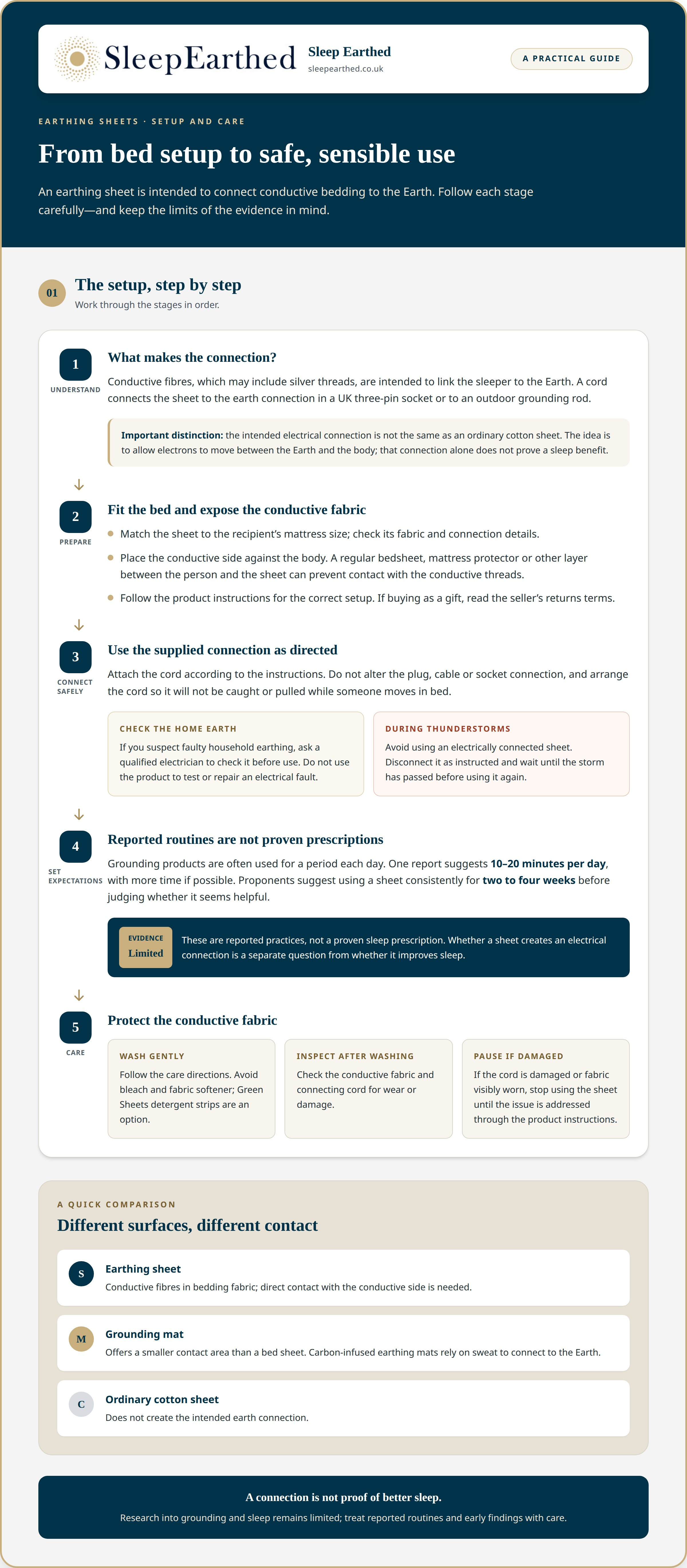
Earthing sheets, also called grounding sheets, are bedding made with conductive fibres intended to connect a sleeper with the Earth’s electrical charge. Silver threads may provide conductivity within the fabric. A cord links the sheet to the earth connection in a UK three-pin socket or to an outdoor grounding rod. The idea is that this connection allows electrons to move between the Earth and the body; it isn’t the same as an ordinary cotton sheet.
For an earthing sheet to work as intended, the sleeper needs direct contact with its conductive fabric, and the sheet needs an earth connection. Sleep Earthed sheets are used with the conductive side against the body, not covered by a regular bedsheet. A mattress protector or another layer between the sleeper and sheet can prevent contact with the silver threads. Follow the product instructions for the correct setup.
How do earthing sheets compare with grounding mats and ordinary cotton sheets? A grounding mat offers a smaller contact area than a bed sheet, while ordinary cotton fabric doesn’t create the intended earth connection. Carbon-infused earthing mats rely on sweat to connect to the Earth, whereas sheets use conductive fibres in bedding fabric.
Grounding products are often used for a period each day. One report suggests 10 to 20 minutes per day, with more time if possible; proponents suggest using a sheet consistently for two to four weeks before judging whether it seems helpful. These are reported practices, not a proven sleep prescription. The effect on sleep remains a separate question from whether a sheet has an electrical connection.
How do you use and maintain an earthing sheet safely? Follow its instructions for connecting the cord, keep the conductive surface accessible, and wash silver-thread bedding gently without bleach or fabric softener. For washing, Green Sheets detergent strips are an option.
What should you check when choosing an earthing sheet as a Christmas gift? Match the sheet to the recipient’s mattress size, check the stated fabric and connection details, and read the seller’s returns terms before buying. Those practical details help avoid a thoughtful gift that doesn’t fit the bed or suit its recipient.
Research evidence and limitations
Research into grounding and sleep is still limited, so promising findings aren’t the same as firm proof. The available studies are small, and some have received funding from grounding advocates. Study size, design and independence all affect how confidently results can be applied to people generally. A fitted sheet’s conductive fabric may create an electrical connection, but that alone doesn’t show that it improves sleep.
Some findings are interesting, but they answer narrow questions. One small study reported changes in heart rate variability after 20 minutes of grounding. A separate study reported that grounding better aligned cortisol with a natural 24-hour circadian rhythm. These results point to possible effects worth investigating; they don’t establish that using a grounding sheet will reliably improve someone’s sleep.
Other reports have looked at pain and activity rather than sleep. One participant reportedly felt pain begin to subside after 30 minutes of grounding. In another study, participants practised yoga for an hour while using grounding mats. Neither example proves that a mattress sheet improves sleep or speeds recovery. There’s no strong research proving grounding sheets help with recovery after exercise.
Animal findings need particular care. A 2025 South Korean study in rats suggested grounding may reduce inflammation. Rats aren’t people, and an animal result cannot establish the same effect in human sleepers. It may help shape future research, but it shouldn’t be treated as evidence that a person’s inflammation, pain or sleep will change.
To assess future claims, look at what researchers measured, how many people took part, and whether the results were compared with a suitable control group. A change in cortisol or heart rate variability isn’t automatically a meaningful improvement in sleep. Researchers would need to measure sleep directly, use sound methods and reproduce the results independently. Until then, grounding is best understood as an approach with early, limited evidence, not an established treatment for insomnia or poor sleep.
Potential risks and side effects
The main safety consideration with an earthing sheet is the household earth connection, not the bedding’s appearance. The sheet connects through the third, ground hole of a UK socket, so faulty wiring matters. If you suspect your home’s electrical earthing may be faulty, have a qualified electrician check it before use. Don’t use a grounding product to test or repair an electrical fault.
Avoid using an electrically connected sheet during thunderstorms, when lightning could travel through household wiring. Follow the product instructions for disconnecting it, and wait until the storm has passed before using it again. This precaution applies even when the connection appears to be working normally.
Connection and placement also affect safe, sensible use. Follow the sheet’s supplied instructions for attaching its cord; don’t alter the plug, cable or socket connection. Keep the cord arranged so it won’t become caught or pulled while someone is moving in bed. A mattress protector or extra layer can reduce conductive contact, so check the product instructions rather than changing the connection to compensate.
Silver-thread bedding needs careful washing to protect its conductive fabric. Wash it gently and avoid bleach and fabric softener, which can affect the conductive threads. Use the care directions for the particular sheet, and inspect the fabric and connecting cord after washing. If a cord is damaged or the fabric is visibly worn, stop using the sheet until the issue is addressed through the product’s instructions.
Claims about side effects deserve the same care as claims about benefits. Existing grounding studies don’t establish a reliable, predictable side-effect profile for every sleeper, and that doesn’t mean a sheet suits every person or situation. If the bedding causes discomfort, stop using it; don’t treat grounding as a replacement for medical advice or treatment. Studies may explore effects such as inflammation, but animal findings and small human studies cannot settle safety questions for all users.
For outdoor earthing, a grounding rod kit provides a connection option separate from a household socket. Follow the kit’s instructions, and don’t use it during thunderstorms. Keeping electrical safety, storm conditions and the care of silver bedding in mind makes practical risks easier to assess than broad claims that grounding is simply harmless or dangerous.
Possible effects on sleep and cortisol
Grounding is often described as connecting the body with the Earth’s electrical charge. Supporters suggest this connection may influence processes linked with rest, including cortisol patterns. However, creating an electrical connection and noticing an improvement in sleep are different things. The proposed benefits of grounding need stronger research before they can be treated as established outcomes.
Cortisol is associated with the body’s natural 24-hour rhythm. One grounding study reported that participants’ cortisol patterns became better aligned with this rhythm. That finding is relevant to sleep because the body’s daily timing and night-time rest are connected. It doesn’t establish that a grounding sheet will change cortisol in every sleeper, or that any change will improve sleep.
The distinction matters. A study can measure a change in cortisol without proving that participants slept better, woke less often or felt more rested. Those outcomes need to be measured directly. To show that grounding helps with sleep, research would need to compare sleep outcomes between suitable groups and reproduce the findings independently. The available evidence remains limited, so cortisol findings are a starting point for further investigation.
Grounding is also sometimes linked to heart rate variability. One small study reported changes after 20 minutes of grounding. Heart rate variability is a measurement, not a direct measure of sleep quality. A change in that reading doesn’t by itself show that a person fell asleep faster or experienced better rest. The science needs to connect measured changes with clear, meaningful sleep outcomes.
Walking barefoot outdoors is another practice associated with grounding, but it differs from using a sheet overnight. A walk may involve movement, daylight and time outside, while a sheet provides contact with conductive fabric during rest. These differences make it difficult to attribute any change in sleep to grounding alone. Someone who sleeps better after starting a new routine may also have changed their activity or bedtime habits.
For someone living with chronic sleep difficulties, grounding shouldn’t replace professional care or established sleep advice. Treating a sheet as a possible comfort or wellbeing choice is more measured than relying on it as a remedy. Keep track of practical changes, such as bedtime consistency and how rested you feel, rather than assuming a cortisol result predicts personal benefits.
The useful takeaway is to separate the proposed mechanism from the proven outcome. Grounding sheets are designed to connect the sleeper with the Earth’s electrical charge; current findings about cortisol and other measures don’t establish that they reliably improve sleep. That distinction helps keep expectations realistic while research continues.
Sleep habits and bedroom conditions
An earthing sheet is one possible part of a broader bedtime routine. A familiar wind-down activity, such as reading a few pages or listening to quiet music, can mark the shift from daytime to sleep. If sleep is hard to get sometimes but earthing bed sheets seem to help, gifting one at Christmas can be a thoughtful personal gesture.
Comfort is personal. Some people prefer a lighter duvet, while others want extra warmth; consider what the recipient already uses rather than guessing. Bedding that feels pleasant against the skin and suits their usual sleeping temperature is more likely to become part of their routine.
Think about how the bedroom is used in the evening. Moving work materials away from the bed, for example, can help separate bedtime from unfinished tasks. A book or a glass of water on the bedside table may also make the space feel ready for rest, without adding another complicated routine.
Small choices can make a room feel more restful. Soft lighting before bed, a comfortable pillow and a familiar place for personal items may suit someone who prefers a quieter evening. The useful change is the one that fits their habits, not a long list of rules.
Daytime routines can shape how someone feels at bedtime. Setting aside time to unwind after a busy day, rather than carrying chores into the bedroom, may make the transition feel less abrupt. For someone who says sleep is hard to get sometimes but earthing bed sheets help, a set could be a personal Christmas gift.
Choose bedding with the recipient’s comfort and preferences in mind. If you’re considering an earthing option, the earthing products from Sleep Earthed offer different formats to consider alongside familiar bedtime habits.
A thread count of 400 is recommended as a balance between softness and durability. Grounding sheets are commonly used with a top sheet made from a natural fibre such as 100% cotton, bamboo or silk.
Sleep Earthed: Earthing recover sleeping bags
Sleep Earthed offers Earthing Recovery Bags for people who prefer a wraparound option to bedding on a mattress. They sit alongside UK Sized Fitted Earthing Bed Sheets, Earthing Pillow Cases and Earthing Half Sheets, giving gift-givers a few formats to consider. Choose according to how the recipient likes to sleep and whether they’d find a sleeping bag or familiar bed linen more comfortable.
These products are designed for earthing, not as proven treatments for sleep difficulties. Research remains limited, so consider an earthing product as a personal wellbeing choice rather than a promise of better rest. Follow the product instructions for connection and care, and keep electrical safety in mind.
If you’d like help choosing between these options, contact Sleep Earthed.
Choose a thoughtful next step
If sleep is hard to get sometimes but earthing bed sheets have helped someone you love, giving one as a Christmas gift could be a thoughtful way to share something they already value. Choose a size and style that suit their usual bedtime setup, rather than presenting it as a promise of perfect sleep.
Sleep Earthed offers UK-sized fitted earthing bed sheets, earthing pillow cases and an earthing half sheet. These options provide different ways to include earthing in familiar bedding. Think about what the recipient would genuinely use, and let them decide whether it suits their routine.
A gift can open the door to a new bedtime habit, while the recipient stays in control of their expectations and choices. If you’d like help exploring the options, contact Sleep Earthed. A considered choice can make a warm, personal present this Christmas.
Frequently Asked Questions
How long before you notice an effect from a grounding sheet?
There’s no set time at which a grounding sheet should produce a noticeable effect. Some proponents suggest using one consistently for two to four weeks before judging whether anything feels different, but this isn’t a proven timetable. Keep other bedtime habits reasonably steady, such as your usual bedtime, so you can better distinguish a perceived change from shifts in your routine or sleep environment.
What Is Grounding?
Grounding, also called earthing, means making an electrical connection with the Earth. Outdoors, people may use the term for direct contact with the ground, such as standing barefoot on grass. In bedding, it describes a conductive sheet connected to an earth point. The idea is to create a pathway between the sleeper and the Earth, rather than simply choosing a different type of ordinary cotton bedding.
How Does It Work?
A grounding sheet uses conductive material and a connecting cord to reach an earth connection. Sleep Earthed’s bedding is made from organic cotton with silver threads woven throughout. Its sheets connect through the third, ground hole of a UK socket, and don’t run on electricity. A safety resistor is included to help prevent electric shock if the mains become faulty, but this doesn’t replace attention to electrical safety.
What Definitely Works for Better Sleep?
No single bedtime change works for everyone, but a consistent routine can give sleep a steadier setting. Try keeping a regular bedtime, making the bedroom dark and comfortable, and limiting distractions such as phone notifications. Choose bedding and a mattress that feel comfortable for the person using them. If sleep problems persist or affect daily life, speak with a healthcare professional rather than relying on a bedding product alone.
What are earthing or grounding bed sheets, and how are they supposed to work?
Earthing or grounding bed sheets are designed with conductive material and a cord that connects to an earth point. Sleep Earthed sheets are made from organic cotton with silver threads, intended to create a conductive connection while the sleeper is in contact with the fabric. Unlike ordinary cotton sheets, they’re designed to connect the sleeper to an electrical earth.
Is there scientific evidence that earthing sheets improve sleep or health?
Research into grounding sheets and sleep remains limited, so the evidence doesn’t establish them as a reliable way to improve sleep or health. Small studies have reported findings involving measures such as cortisol, but a change in a measurement doesn’t by itself prove better sleep or a health benefit. Treat claims carefully, and don’t use an earthing sheet instead of appropriate medical care or advice.
What risks or safety concerns are associated with earthing sheets?
Pay particular attention to the earth connection and household wiring. If you think your home’s earthing may be faulty, have a qualified electrician check it before using a grounding sheet. Don’t use one during thunderstorms, as lightning could travel through wiring. Follow the product’s connection and care instructions, and stop using it if the cord or fabric appears damaged. These precautions matter even when the product looks undamaged.
What are the best-rated earthing sheets available in the UK?
Rather than choosing by a “best-rated” label alone, consider whether the sheet fits the recipient’s mattress and bedding preferences. Sleep Earthed offers UK-sized fitted earthing bed sheets, earthing pillow cases and an earthing half sheet. Check the product details and customer feedback for the option you’re considering, and remember that ratings can’t establish that a grounding sheet will improve someone’s sleep.