
 90 Day’s To Better Zzz’s Guarantee T&C apply
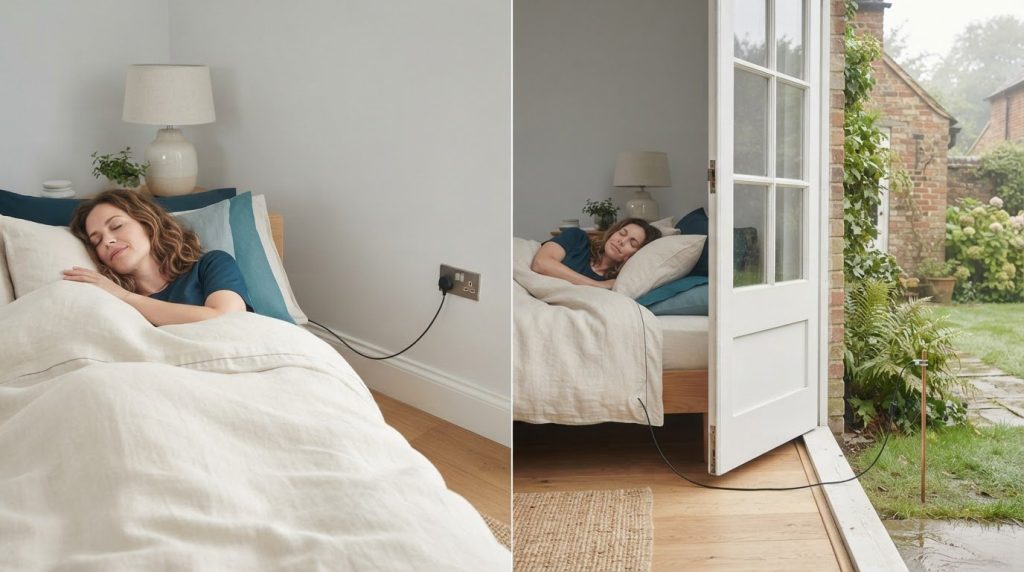
Using a Grounding Rod vs Wall Socket: Which Connection Suits Your Earthing Sheet?
The most direct-looking connection isn’t automatically the right one for your earthing sheet. If you’re weighing up using a grounding rod vs wall socket, the practical questions are whether your product supports the connection, whether it suits your home and whether you can set it up as instructed.
Both routes are intended to connect an earthing product to earth, but they take different paths. A wall socket uses the home’s earth connection; a grounding rod connects through a rod placed in the ground. That difference matters if you don’t have suitable outdoor space, the socket is not conveniently located, or you’re unsure about its earth connection.
You don’t need to alter household wiring to compare the options. This guide explains what each setup involves, how to assess the layout of your home and what to check in your product instructions. A three-pin socket’s appearance alone doesn’t show whether its earth connection is working, so don’t rely on appearance or improvise a setup. Use the instructions for your specific product to guide your choice.
Key Takeaways
- When comparing using a grounding rod vs wall socket, choose according to your home setup and your earthing product’s instructions, not an assumption that one route is better.
- Compare where each connection can be used, how far the connection point is from the product and what the setup involves.
- Use only a connection method specified for your product, and follow its directions.
- Check the connection as instructed; don’t modify household wiring as part of your setup.
- The Sleep Earthed Grounding Rod Kit is an option if a rod connection suits your space and routine.
Grounding rod vs wall socket: what is the difference?
Are you deciding whether to connect your earthing sheet through a wall socket’s earth contact or use a rod connected to the ground outside? When comparing using a grounding rod vs wall socket, the main difference is the route the connection takes, not the sheet itself. Your product’s instructions and the setup available at home determine which option is suitable.
A socket connection uses the home’s electrical earthing system. A rod connection runs separately to a rod placed in the ground. These are two ways of connecting an earthing product, not different types of sheet. This is a practical comparison of setup options, not evidence that either method produces better health outcomes.
For a broader explanation of how electrical earthing systems work, see this overview of the Earthing system. The video below introduces the role of ground rods in electrical systems. It provides general background, not instructions for connecting an earthing sheet.
In brief: A socket connection links the product’s cord to the earth contact in a suitable wall socket. A rod connection links the cord to a separate rod placed in the ground. In both cases, follow the instructions supplied for the specific product.
What does a wall-socket connection use?
For a product designed for socket connection, its plug uses the socket’s earth contact. It isn’t intended to connect the earthing product to the live supply. The earth contact is part of the building’s electrical earthing arrangement, which is designed for electrical safety. A socket’s appearance alone, however, can’t establish that its earth connection is correctly wired or working. Use only the connection method specified for your product. Don’t adapt plugs or alter household wiring.
What does a grounding rod connection use?
A grounding rod provides a separate route to earth: the product’s cord connects to the rod, which is placed in the ground, rather than to the home’s socket earth. It may suit a setup where the product instructions allow it and there is appropriate outdoor access. Sleep Earthed offers a Grounding Rod Kit for readers considering this route. A rod connection isn’t inherently stronger or more beneficial than a socket connection.
Keep the distinction simple: you’re comparing connection paths, not choosing between two kinds of earthing sheet. Before connecting anything, identify the product and check its instructions for compatible routes. If the directions don’t match the socket or rod setup you have in mind, don’t improvise or modify wiring. The following sections look at everyday differences and how to make a considered choice.
How grounding rods and wall sockets differ in everyday use
The practical difference is where the connection runs and how it fits into your room. A socket setup uses a suitable wall socket; a rod setup needs a route to a rod placed in the ground. Neither option is automatically more convenient for every home. Differences in the visible setup also don’t prove a difference in conductivity or bodily effects.
Connection method alone does not establish better health outcomes. Focus on what you can assess: whether your product supports the method, where the connection can be placed and how easily the setup fits your routine.
| Consideration | Wall socket | Grounding rod |
|---|---|---|
| Connection route | Through the socket’s earth contact. | Through a cord connected to a rod placed in the ground. |
| Practical setup | Needs a suitable socket within reach of the product cord. | Needs a suitable route between the product and the rod’s position outdoors. |
| What to consider | Check that the product instructions allow this method and consider socket location. | Consider access to an appropriate outdoor space and whether the instructions allow a rod connection. |
Which connection may suit different home setups?
A suitably located socket may be simpler in a room where the cord can reach without creating an awkward arrangement. A rod needs to be placed outdoors, so the distance from the room and the route for the cord can affect day-to-day convenience. These are layout considerations, not proof that one route works better.
In a flat, a private outdoor area may not be available or practical. In a rented home, you may also want to avoid changes to the property. A socket route may be easier to accommodate if the product supports it and the socket is suitable. A rod may fit better where there is appropriate outdoor access. Don’t open, rewire or modify a socket to make either option work. If your setup doesn’t match the product directions, don’t improvise.
Picture an ordinary evening: where will the sheet sit, how far away is the connection point, and can the cord be routed without getting in the way? Thinking through those details helps narrow down the practical choice without relying on assumptions about electrical performance.
Do mats change the comparison?
Not really. This comparison is about the connection route; a product’s material and instructions are separate considerations. Carbon-infused earthing mats rely on sweat to connect to earth. That detail doesn’t make a mat equivalent to a sheet or determine whether a socket or rod route suits your home.
If you’re weighing up using a grounding rod vs wall socket, let the product instructions and your room layout guide the decision. Sleep Earthed offers a Grounding Rod Kit for those considering a rod route, while its earthing products let you explore options for different uses. Next, consider how to choose a compatible connection and check your setup without altering household wiring.
Does a grounding rod or wall socket make a better connection?
Neither route is automatically better. A rod and a socket describe different ways an earthing product may connect to earth. They don’t, by themselves, show whether the connection is suitable for your product or prove that it will lead to a particular result.
For a practical comparison, check whether the connection method is compatible with the product, whether you can set it up as instructed and whether the arrangement works in your space. A setup that looks straightforward may still be unsuitable if it doesn’t match the product directions. A method that takes more planning isn’t necessarily less appropriate.
The connection route alone cannot prove a health benefit, including an improvement in sleep or recovery. It describes how the product connects to earth, not whether using it will change someone’s health. Keep those questions separate when weighing up using a grounding rod vs wall socket.
What can and cannot be inferred from the connection?
The route tells you how the setup is arranged: a socket connection uses the socket’s earth contact, while a rod connection runs to a rod placed in the ground. That information doesn’t establish a medical effect. Similarly, checking that a connection is present or that a product is conductive cannot, on its own, demonstrate an outcome for sleep, recovery or wellbeing. Readers looking at the broader evidence can consult Sleep Earthed’s Do Earthing Sheets Work? guide, which addresses that separate question.
This distinction helps keep claims in proportion. Electrical connection is a setup matter; evidence for a health outcome is separate and needs to be considered on its own. Don’t treat one as proof of the other.
How can readers assess their setup?
Start with the product’s instructions. Check which connection route it is designed to use, how its cord should be attached and whether your setup matches those directions. Keep the connection as supplied. Don’t adapt a plug, open a socket or change household wiring to make a method fit.
Sleep Earthed offers a Sleep Earthed Test Meter for checking an earthing setup. Use it only in line with its instructions, and don’t interpret a check as evidence of a health effect. If you’re troubleshooting, review the product directions and the Sleep Earthed earthing-sheet troubleshooting guide for setup-related issues.
Separate the decision into three questions: is this route compatible with the product, is it connected as directed, and does the arrangement work for your room and routine? Answering those questions gives you a practical basis for choosing a setup without assuming that a rod or socket is inherently superior.
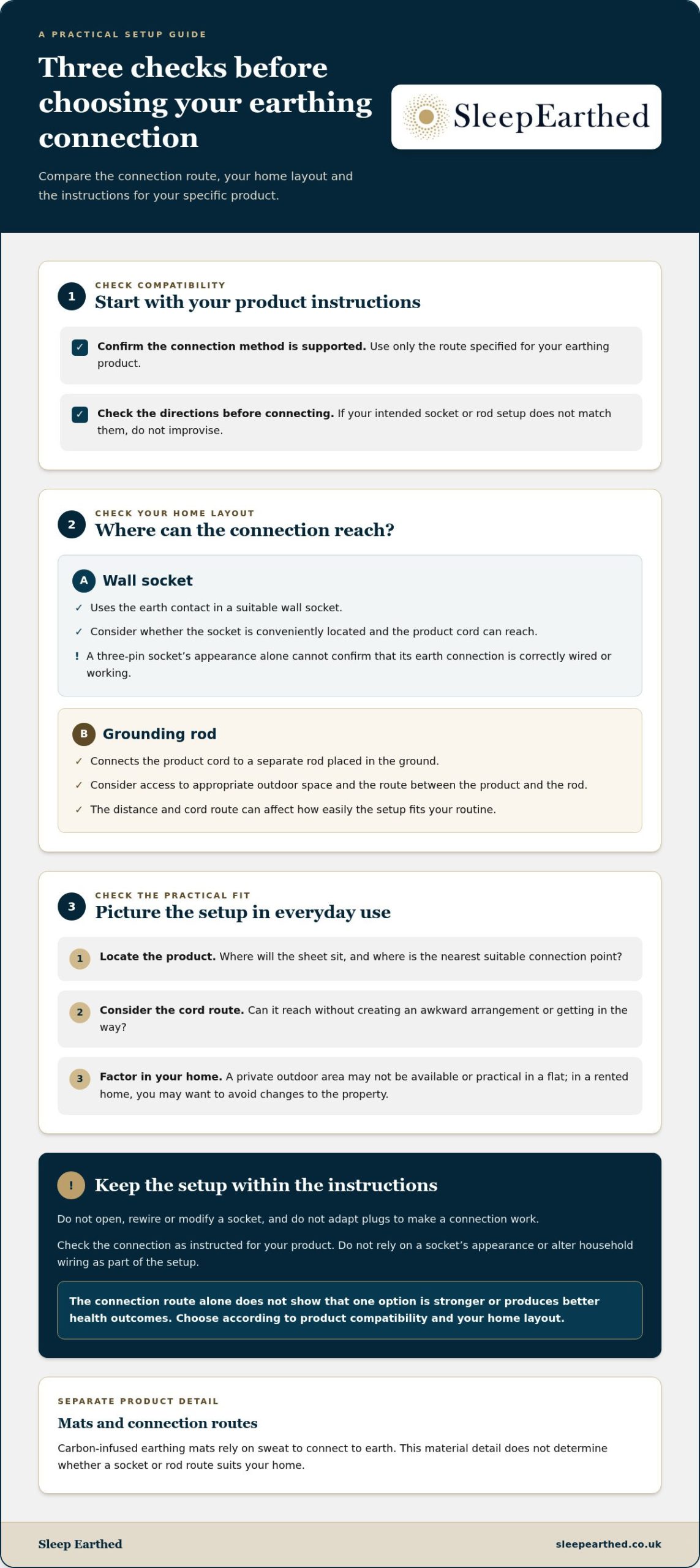
How to choose and set up the right connection for your earthing product
Begin with the product, not a preference for a rod or socket. Connection options can differ between products, so base each decision on the instructions supplied with yours. This sequence helps you choose a compatible route and recognise when a concern is outside routine setup.
- Identify the product. Check whether you’re setting up an earthing sheet, pillow case or another product, and locate the cord or connection supplied for it.
- Read the product instructions. Look for the connection methods specified for that particular item. Don’t assume a route intended for one product applies to another.
- Choose a compatible route. Use only an option described in the instructions. Consider whether the connection point fits your room and routine without stretching the cord or improvising the setup.
- Check the connection. Follow the product’s directions for attaching the lead and checking the setup. Don’t open a socket or alter household wiring.
A simple checklist before connecting
Pause for a quick visual check before use. Confirm that the product is designed for the route you’ve chosen, then look over the plug, lead and connection points for visible damage. Set up the product as directed, keeping the cord and its connections in the arrangement described in the instructions. If an item appears damaged, don’t use it.
This approach helps when comparing using a grounding rod vs wall socket without treating the options as interchangeable. The product instructions should guide the connection. Convenience alone isn’t a reason to adapt a plug, combine routes or change the setup. Sleep Earthed’s Grounding Sheet Setup Guide provides fuller product setup guidance; use it alongside the instructions for your specific item.
When to pause instead of troubleshooting the socket
If a socket looks damaged, a lead is frayed or a connection behaves unexpectedly, stop using that setup. Don’t open the socket, test its internal wiring yourself or attempt an electrical alteration to make the earthing product work. A loose or damaged connection is a reason to pause, not to try a workaround.
If you’re concerned about a socket or household wiring, leave electrical checks to a qualified electrician. Do the same if you’re unsure whether a socket is suitable or suspect a fault. Keep the earthing product disconnected until the concern has been addressed. A product check is not a substitute for advice about the household electrical system.
Once you’ve confirmed the product, followed its directions and ruled out visible damage, you’ll have a clearer basis for deciding whether the setup suits your home. If you’re choosing a product for your routine, explore Sleep Earthed earthing products and compare the options with your intended setup in mind.
Choosing a Sleep Earthed grounding rod or socket setup
There isn’t one connection route that suits every home. The practical choice depends on the earthing product’s instructions, the connection points available and how easily the setup fits your space. A rod isn’t a promise of better results, and a socket isn’t automatically suitable just because it’s nearby. Match the route to the product and your circumstances.
Sleep Earthed earthing sheets use conductive silver threads in organic cotton. That describes the sheet’s material; the connection route describes how the product is set up. Keep those details separate: first check the instructions, then consider which permitted option works with your room and routine.
When a grounding rod may be the practical option
A rod may be worth considering if your product instructions support that connection and you have a suitable place to position it. Think about the route from the sheet to the rod as part of everyday use: can the connection be arranged as directed and remain practical in your home? If not, a rod may not be the convenient choice for you.
Sleep Earthed offers a Grounding Rod Kit for readers considering this route. Explore the kit’s product details and compare them with the connection method and setup described in your product instructions. The kit is an option, not a recommendation that every home or earthing product should use a rod.
When a wall-socket connection may suit your routine
A socket route may feel simpler if your product allows it and a suitable socket is within reach of the connection lead. That can make the arrangement easier to fit around a bed or your usual routine. Still, don’t assume every UK socket is appropriate simply because it accepts a plug. Follow the product directions, and don’t alter or open a socket to make the connection work.
When weighing up using a grounding rod vs wall socket, consider the practical fit rather than expecting one method to deliver a better outcome. If a socket or lead appears damaged, or the connection behaves unexpectedly, pause use instead of attempting a repair yourself. A concern about household wiring is separate from routine product setup and should be handled by a qualified electrician.
A simple decision is often enough: choose a route only if your product instructions support it, the connection can be arranged as directed and it suits your home. If neither option seems to fit, don’t improvise; revisit the product guidance before proceeding.
For a rod option, explore the Sleep Earthed Grounding Rod Kit product details. For help with your sheet’s connection, visit Sleep Earthed’s setup information and follow the guidance for your specific product.
Make your next step a practical one
Choosing between these options doesn’t need to become a search for a perfect connection. Treat using a grounding rod vs wall socket as a decision about what fits your product and home, not as a promise about what you’ll feel. If you’re unsure, pause before connecting anything and return to the instructions for your specific product. Taking time to understand the setup is better than improvising.
Consider how you want the product to fit into your everyday routine: where you’ll use it, which connection you can accommodate and whether the arrangement feels straightforward to maintain. Let those practical details guide your next step, and keep any household electrical concerns separate from product setup.
When you’re ready to compare products and connection options, explore Sleep Earthed grounding options and find the product information relevant to your setup. Choose a route that follows the instructions and fits your home.
Frequently Asked Questions
Can I use a grounding rod instead of a wall socket?
You can use a grounding rod instead of a wall socket only if that route is supported by your earthing product’s instructions and suits your home setup. The methods use different connection paths, so don’t treat them as interchangeable by default. When comparing using a grounding rod vs wall socket, check the instructions for the exact product you own. Don’t adapt a plug or alter household wiring to make a connection fit.
Is using a wall socket for an earthing sheet safe?
Use a wall socket only if your earthing sheet’s instructions specify that connection method. Don’t assume every socket or household installation is suitable, even if a plug fits. Before setting up, look over the plug and lead; if either appears damaged, stop using them. Never open or modify an electrical fitting for an earthing product. If you’re unsure about the socket or household wiring, pause and seek advice from a qualified electrician.
Does a grounding rod provide a stronger connection than a wall socket?
A grounding rod isn’t automatically a stronger connection than a wall socket, and the route alone can’t show that either method produces better health outcomes. What you can assess is whether the connection suits your particular product and has been set up as directed. Follow the supplied instructions, and use an appropriate testing method if the product guidance calls for one. A connection check doesn’t establish a health effect.
Can I connect an earthing sheet to both a rod and a wall socket?
Don’t connect an earthing sheet to both routes unless its instructions specifically say this is permitted. Avoid improvised adaptors or combining leads to create a connection the product wasn’t designed for. Use the intended method and leave household wiring unchanged. If the instructions don’t make the setup clear, pause rather than guessing. The Sleep Earthed setup guide can help you follow product-specific directions for your sheet.
Do I need a grounding rod outside?
A grounding rod connection is intended to connect with earth, but the right arrangement depends on the rod kit instructions and your setting. Don’t assume a particular location or installation method is suitable for every property. Follow the guidance supplied for the rod and the earthing product you’re connecting. If you’re unsure how to position or use it, don’t improvise an installation or alter an electrical system; pause and read the instructions first.
How can I check whether my earthing sheet is connected properly?
Begin by checking that the sheet’s lead and connection points are attached exactly as its instructions show. Sleep Earthed offers a Sleep Earthed Test Meter for checking an earthing setup; use it only as directed, and don’t infer a health outcome from a check. If the connection still seems uncertain, consult the troubleshooting guide for your setup. Don’t open or modify a socket to investigate a problem.
Can I use an earthing sheet in a flat without a garden?
It depends on which connection options your particular sheet’s instructions support and what your flat can accommodate. Don’t assume a rod or socket route will suit every flat, and avoid altering communal or household wiring. If a rod setup isn’t practical in your space, check whether the product instructions allow another connection method. Choose only an option stated in the instructions, and pause if the guidance doesn’t fit your setup.