
 90 Day’s To Better Zzz’s Guarantee T&C apply
Washing Earthing Sheets Instructions: The Definitive UK Guide to Preserving Conductivity
Imagine you’ve finally found that deep, restorative sleep you’ve been craving, only to find yourself frozen at the washing machine door a week later. You’re holding your silver-threaded bedding, wondering if a standard cycle will strip away the very magic that helps you rest. It’s a genuine concern we hear from our UK customers every day. If you’re searching for clear washing earthing sheets instructions, you’ve likely seen enough conflicting advice to make your head spin.
We understand that the fear of oxidation or accidentally “switching off” your sheet’s benefits is enough to make anyone hesitant. The truth is that keeping your bedding clean is actually vital for maintaining that flow of electrons, as body oils can build up and insulate the silver over time. In this guide, we’ll show you how to expertly clean your earthing sheets so they remain effective for years of better sleep. We’ll cover the specific detergents to avoid, the ideal temperature for British machines, and how you can use a test meter to gain total peace of mind that your silver threads are still doing their job.
Key Takeaways
- Discover how following our expert washing earthing sheets instructions prevents silver oxidation and keeps your bedding conductive for years of restorative sleep.
- Identify the “No-Go” laundry products, such as fabric softeners and whitening agents, that can accidentally coat or destroy the silver threads in your sheet.
- Learn the correct machine settings, including why a 40°C warm wash is essential for removing body oils without damaging the organic cotton’s integrity.
- Explore the best ways to dry your bedding to minimise wear and tear, ensuring your grounding grid stays intact wash after wash.
- Find out how to verify your results with a conductivity test, providing the peace of mind that your equipment is still working perfectly.
Understanding Conductive Silver: Why Earthing Sheets Need Specific Care
When you first unbox your Sleep Earthed bedding, you aren’t just looking at a high-quality organic cotton sheet. You’re holding a functional wellness tool. Unlike standard bedding, which is designed purely for comfort, earthing sheets feature a sophisticated conductive textile grid. This grid is created by weaving fine silver threads directly into the fabric, allowing electrons to flow from the ground, through your lead, and into your body as you sleep. Because silver is the most conductive metal on the planet, it’s the perfect choice for this task, but it also requires a different approach to maintenance than your everyday laundry.
The goal of following specific washing earthing sheets instructions is to keep those silver threads “bright” and free from obstructions. If the silver becomes tarnished or coated in chemical residues, its ability to transfer electrons diminishes. We want to ensure your investment remains as effective on night 500 as it was on night one. This isn’t just about hygiene; it’s about preserving the technical integrity of the silver-threaded organic cotton.
The Science of Silver Oxidation
Oxidation is a natural process where silver reacts with substances in its environment, leading to a dull, dark tarnish. In the context of your bedding, the primary culprits are sulphur and body oils. Whilst many people assume that washing their sheets less frequently will “save” the silver, the opposite is actually true. When skin oils and sweat sit on the fabric for too long, they can begin to corrode the silver plating on the threads. Some mainstream advice from detergent brands suggests using biological powders for every wash, but these often contain enzymes that can aggressively degrade silver over time. Clean silver is conductive silver.
Frequency: How Often Should You Wash?
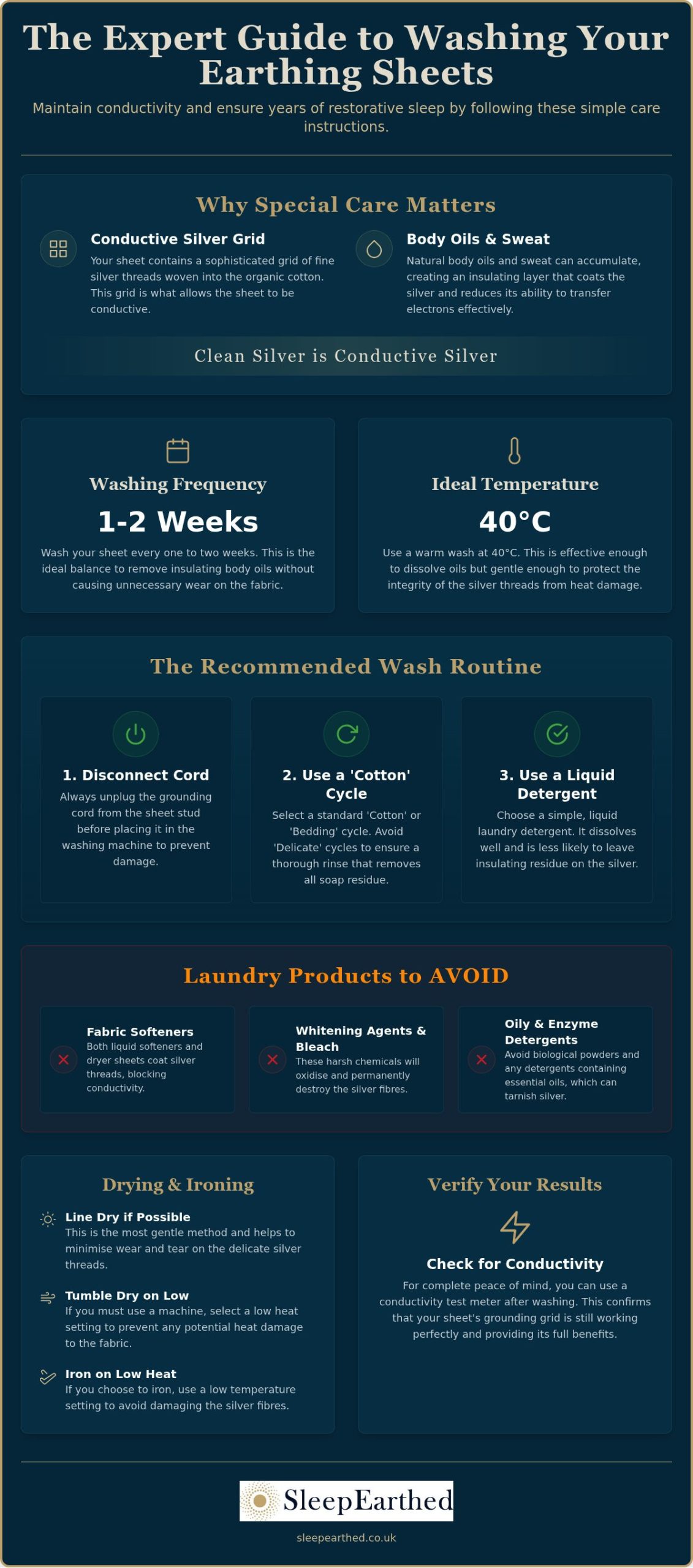
We generally recommend washing your earthing sheets every one to two weeks. This might seem frequent, but it’s the sweet spot for maintaining performance. Regular washing strips away the insulating layer of body oils, sweat, and dead skin cells that naturally accumulate. If you leave a sheet unwashed for months, these oils can penetrate deep into the fibres, making them much harder to remove without harsh chemicals that we want to avoid. You are essentially balancing the need for a clean, conductive surface with the natural mechanical wear that occurs inside a washing machine drum. By keeping to a fortnightly schedule with the right settings, you’ll actually extend the lifespan of your sheet rather than shortening it.
Step-by-Step Washing Instructions for Grounding Bedding
Before you even open the detergent drawer, there’s one vital step that’s unique to your grounding kit. Always disconnect the grounding cord from the stud on your sheet or pillowcase. It sounds simple, but placing a sheet in the drum with the lead still attached can damage both the connection point and your machine. Once the cord is safely set aside, you can place your sheet into the wash. We’ve found that following these specific washing earthing sheets instructions is the best way to honour the 90-day better sleep guarantee we provide with our products.
The temperature setting is where many people go wrong. Whilst mainstream laundry brands often suggest 60°C for “hygienic” bedding cleans, this is far too aggressive for silver-infused fabric. Set your machine to 40°C. This is the ideal “warm” temperature that’s effective enough to shift body oils and perspiration without causing the silver to degrade prematurely. This caution is backed by research on silver release in laundry water, which demonstrates how high temperatures and harsh mechanical actions can strip silver from the cotton core. By keeping the heat moderate, you’re protecting that vital conductive grid.
When selecting your wash programme, choose a standard “Cotton” or “Bedding” cycle. It’s a common mistake to use the “Delicate” or “Hand Wash” setting. These cycles often use less water and have a weaker rinse, which can leave detergent residues trapped in the fibres. A thorough rinse is essential because any leftover soap can act as an insulator, blocking the very electrons you’re trying to absorb. If you want to be certain your current routine is keeping things conductive, our Sleep Earthed Test Meter is a handy tool for a quick post-wash check.
Selecting the Right UK Detergent
The detergent you choose in the supermarket aisle makes a world of difference. You must avoid “Bio” powders or liquids. These contain enzymes designed to eat away at organic stains, but they don’t distinguish between a protein stain and the silver plating on your threads. Instead, opt for a liquid non-biological detergent. Reliable UK brands like Ecover or Greenscents are excellent choices, provided you stick to their non-scented versions. Be wary of “natural” soaps that boast high concentrations of lemon or lavender oils; these essential oils can coat the silver threads in a microscopic waterproof layer, eventually stopping the sheet from working altogether.
Machine Settings and Load Balance
How you balance the load is just as important as the settings. We recommend washing your earthing sheet either on its own or with other smooth cotton bedding. Never throw it in with rough fabrics like denim jeans, towels, or items with heavy zips. These abrasive materials act like sandpaper during the agitation cycle, physically scouring the silver off the organic cotton. Finally, stick to a medium spin speed. A super-fast spin can put unnecessary mechanical stress on the conductive grid, whilst a medium setting removes enough water for drying without compromising the thread integrity.
The ‘No-Go’ List: Common Laundry Products That Ruin Grounding Sheets
Most of us have been conditioned to chase “whiter whites” and “cloud-like softness,” but the chemicals used to achieve those results are often the natural enemies of conductive silver. While you might be tempted to treat a stubborn stain with your usual heavy-duty cleaners, doing so can permanently “turn off” your bedding. If you follow standard washing earthing sheets instructions but still use these common additives, you might find your sheet loses its effectiveness much sooner than expected. It’s a technical tool, and it needs a technical approach to cleaning.
Why Bleach is the Number One Enemy
Bleach is the most destructive substance you can introduce to your earthing bedding. Chlorine bleach works through a harsh chemical reaction that doesn’t just clean; it aggressively strips the silver plating right off the organic cotton core. Once that silver is gone, the conductive grid is broken. It’s an irreversible process. We also advise steering clear of “Oxi” style brighteners or anything containing hydrogen peroxide. These products are marketed as safer alternatives to bleach, but for silver threads, they’re just as corrosive. If you find a stubborn stain, try spot-cleaning it with a tiny amount of your non-bio liquid detergent and warm water. It’s far better to have a small, permanent mark on a working sheet than a perfectly white sheet that has lost its earthing power.
The Problem with Fabric Conditioners
Many major laundry brands suggest that fabric softeners help clothes last longer by reducing friction. Whilst that might be true for a standard t-shirt, it’s disastrous for grounding bedding. These conditioners work by depositing a microscopic layer of silicone or wax over the fibres to make them feel smoother. This creates an “insulation effect.” Effectively, you’re wrapping your conductive silver in a waterproof, non-conductive plastic film. This film creates a barrier between your skin and the silver, which can completely block the flow of electrons from the ground.
If you’ve accidentally used softener, don’t panic just yet. You can often “rescue” the sheet by running it through two or three consecutive cycles at 40°C with no detergent at all. This helps to strip away the waxy buildup and restore the silver’s surface. Remember that our organic cotton bedding naturally softens over time with regular use and proper washing. You don’t need synthetic chemicals to make it comfortable.
The same warning applies to dryer sheets, which are essentially fabric softeners in a solid form. They leave behind a conductive-blocking residue that is incredibly difficult to remove. We also suggest being careful with “natural” alternatives like wool dryer balls if you’re tempted to add essential oils like lavender or lemon. Even these natural oils can build up on the silver threads over time, leading to the same insulation issues as synthetic softeners. Keeping your laundry routine simple and “clean” is the best way to protect your investment and your sleep.
For readers interested in expanding their knowledge of sustainable home care beyond bedding, learn more about GearWorks.shop and their extensive guide to eco-friendly laundry solutions.
Drying and Ironing: How to Handle Silver-Infused Fabrics Post-Wash
Once your machine has finished its cycle, the way you dry your bedding is just as critical as the washing earthing sheets instructions you followed during the wash. Silver is a metal, and metals respond to heat and mechanical stress differently than pure cotton. Our preferred method for all Sleep Earthed products is line drying. It’s the gentlest way to treat the conductive grid, ensuring the silver threads aren’t subjected to the high-velocity tumbling and intense heat that can lead to premature wear. By choosing the right drying path, you’re protecting the long-term effectiveness of your investment.
The Benefits of Air Drying in the UK Climate
Given our unpredictable British weather, you might not always have the luxury of a sunny afternoon for the washing line. During the winter months, using an indoor drying rack or a “maiden” is perfectly fine. However, you should avoid draping your earthing sheet directly over a hot radiator. The localised, intense heat can cause the silver threads to expand and contract too quickly, potentially damaging the bond between the metal and the organic cotton fibre. When the sun does come out, outdoor drying is excellent because the natural UV light helps to sanitise the fabric. Just be mindful not to leave the sheet out for days on end in the height of summer; extreme, prolonged heat isn’t ideal for any technical textile.
Safe Tumble Drying Practices
We know that life gets busy and sometimes you need your bedding ready for the night. If you must use a tumble dryer, it’s essential to select a “Low” or “Cool” heat setting. High heat is a major enemy of conductivity. When silver-infused threads get too hot, they can become brittle and eventually snap, creating “dead zones” in your sheet where the grounding effect is lost. This is a level of detail often missed in general bedding guides, which fail to account for how metallic expansion affects the weave.
A helpful tip is to remove the sheet whilst it’s still slightly damp. This reduces static buildup and prevents deep creases from setting into the organic cotton. And a quick reminder: never throw in a dryer sheet. As we mentioned in the previous section, the waxy coating they leave behind will effectively insulate your silver. If you want to be certain your drying routine hasn’t impacted the sheet’s performance, you can easily verify the conductivity with our Sleep Earthed Test Meter.
Ironing is generally unnecessary for our bedding, but if you prefer a crisp look, use a low heat setting and strictly avoid the steam function. Moisture combined with heat can accelerate oxidation on the silver’s surface. Finally, ensure the sheet is bone-dry before you fold and store it. Storing a damp sheet in a dark cupboard is an invitation for tarnish to develop, which will dull the silver’s “brightness” and its ability to transfer electrons efficiently as you sleep.
Testing After Washing: How to Know Your Sheet is Still Grounding
Once you’ve finished following our washing earthing sheets instructions and your bedding is bone-dry, you might find yourself staring at the fabric and wondering if it’s still doing its job. This is a perfectly natural question. Silver is a unique material; it can often look a bit dull or tarnished whilst still conducting electrons perfectly. Conversely, a sheet that looks brand new might be coated in an invisible layer of insulating body oils or mineral deposits from your local water supply. Visual inspection simply isn’t enough for a technical tool like this.
The same logic applies to maintaining a healthy home environment; just as you cannot see conductivity, you cannot see harmful bacteria, which is why services like mrsatest.co.uk are so valuable for proactive health monitoring.
We suggest making conductivity testing a regular part of your maintenance routine. You don’t need to do this every week. Testing once every three to four months is usually plenty to ensure everything is performing as it should. However, if you’ve recently switched to a new brand of detergent or if you accidentally used a fabric softener, a quick check will give you the peace of mind you need to keep sleeping soundly. It’s all about ensuring that the path for those electrons remains wide open.
Using the Sleep Earthed Test Meter
The most reliable way to verify your bedding is with a dedicated device. Learn more about our Earthing Test Meter to see how this simple tool removes all the guesswork. To use it, you simply perform a two-point touch test on the surface of the sheet. Place the probes on different areas of the silver grid. If the circuit is complete and the silver is clean, you’ll see a bright green light. That light is your definitive “thumbs up” from the fabric. It is proof that the silver threads are still bright and the grid is intact, protecting your 90-day better-sleep guarantee.
What to Do if Conductivity Drops
If the green light doesn’t appear, don’t assume the sheet is ruined. First, troubleshoot the simple things. Is the grounding cord firmly snapped onto the stud? Is the plug properly inserted into the wall socket? Sometimes the issue is a loose connection rather than the fabric itself. If the hardware is fine, the silver threads might just be insulated by a build-up of oils or soap residue that a standard wash didn’t quite catch. Following the washing earthing sheets instructions we’ve outlined is the best way to prevent this, but a strip wash can act as a “reset” button.
A strip wash involves running the sheet through a 40°C cycle with no detergent at all. For particularly stubborn build-up, you can add a cup of plain white vinegar to the drawer. The mild acidity helps break down the waxy residues left by softeners or heavy body oils without harming the silver. If conductivity still doesn’t return after a strip wash and you’ve had your sheet for over two or three years, it may simply be reaching the end of its natural lifespan. Even with the best care, silver threads will eventually wear down through friction. At that point, a fresh sheet will ensure you continue to get the full benefits of grounding every night.
Protecting Your Path to Better Sleep
Caring for your grounding bedding doesn’t have to be a source of stress. By sticking to these washing earthing sheets instructions, you’re doing more than just keeping your bed fresh; you’re actively protecting the silver-threaded grid that makes restorative rest possible. Remember that the secret lies in simplicity. Avoiding harsh chemicals like bleach and waxy fabric softeners ensures the silver remains bright and conductive, whilst regular low-temperature washes prevent body oils from creating an insulating barrier. A quick check with a test meter every few months will confirm your routine is working perfectly.
We’re here to help you get the most out of your grounding experience. Our products are proudly manufactured in the UK with material integrity at their core, and we back them with a 90-Day Better Sleep Guarantee. If you ever feel stuck or have a specific question about your laundry routine, our small team is always available to offer expert technical support via phone and email. Ready to upgrade your sleep setup or pick up a testing kit? Browse our range of UK-made Earthing Sheets and Maintenance Tools to ensure you continue to wake up feeling recharged and connected every single morning.
Frequently Asked Questions
Can I wash earthing sheets with other clothes?
You can wash your earthing bedding with other items, provided they are smooth cotton fabrics. Don’t include rough materials like denim jeans, heavy towels, or items with sharp zips. These abrasive fabrics act like sandpaper against the silver grid during the wash cycle, which can physically strip the conductive material from the organic cotton fibres.
What is the best detergent for earthing sheets in the UK?
The best choice for UK customers is a liquid non-biological detergent. We often recommend brands like Ecover or Greenscents, specifically their unscented versions. Avoid “Bio” products at all costs, as the enzymes are designed to break down proteins but will unfortunately also eat away at the silver plating on your threads.
Will ironing my grounding sheet ruin the silver threads?
Ironing won’t ruin your sheet if you use a low heat setting and strictly avoid the steam function. Excess heat and moisture can accelerate the oxidation of the silver. Most people find that if they follow our washing earthing sheets instructions and hang the sheet to dry, the organic cotton naturally smooths out, making ironing unnecessary.
How many times can I wash an earthing sheet before it stops working?
If you stick to our washing earthing sheets instructions, the silver is durable enough for over 100 washes. Most users find their sheet remains highly effective for two to three years before the natural friction of sleep begins to wear the grid. Using a test meter is the only way to know exactly when the conductivity has finally dropped.
Can I use Vanish or other stain removers on my grounding sheet?
You should avoid Vanish and other commercial stain removers because they contain oxidising agents like hydrogen peroxide. These chemicals are far too aggressive for silver-infused textiles and will likely strip the conductive coating. For stubborn marks, try a gentle spot clean using a tiny amount of your usual non-bio liquid detergent and warm water.
Is it okay to use a laundrette for my earthing bedding?
Using a laundrette is possible, but you need to be cautious about residue from previous users. Shared machines often have leftover traces of bleach or fabric softener in the drawers. If you must use one, choose a 40°C cotton cycle and ensure you don’t use the high-heat industrial dryers, which can make silver threads brittle and prone to snapping.
What happens if I accidentally use fabric softener?
If you accidentally use fabric softener, the silver threads will be coated in a waxy, non-conductive film. This “insulates” the sheet and stops the grounding effect from reaching your skin. To fix this, run the sheet through two or three consecutive 40°C wash cycles with no detergent at all to strip away the silicone build-up and restore conductivity.
Do I need to wash the grounding cord and plug as well?
You don’t need to wash the grounding cord or the connection plug. In fact, you should never submerge these components in water as it can damage the internal connections and the metal pins. If they get dusty or marked, simply wipe them down with a slightly damp cloth whilst they are safely disconnected from the mains.