
 90 Day’s To Better Zzz’s Guarantee T&C apply


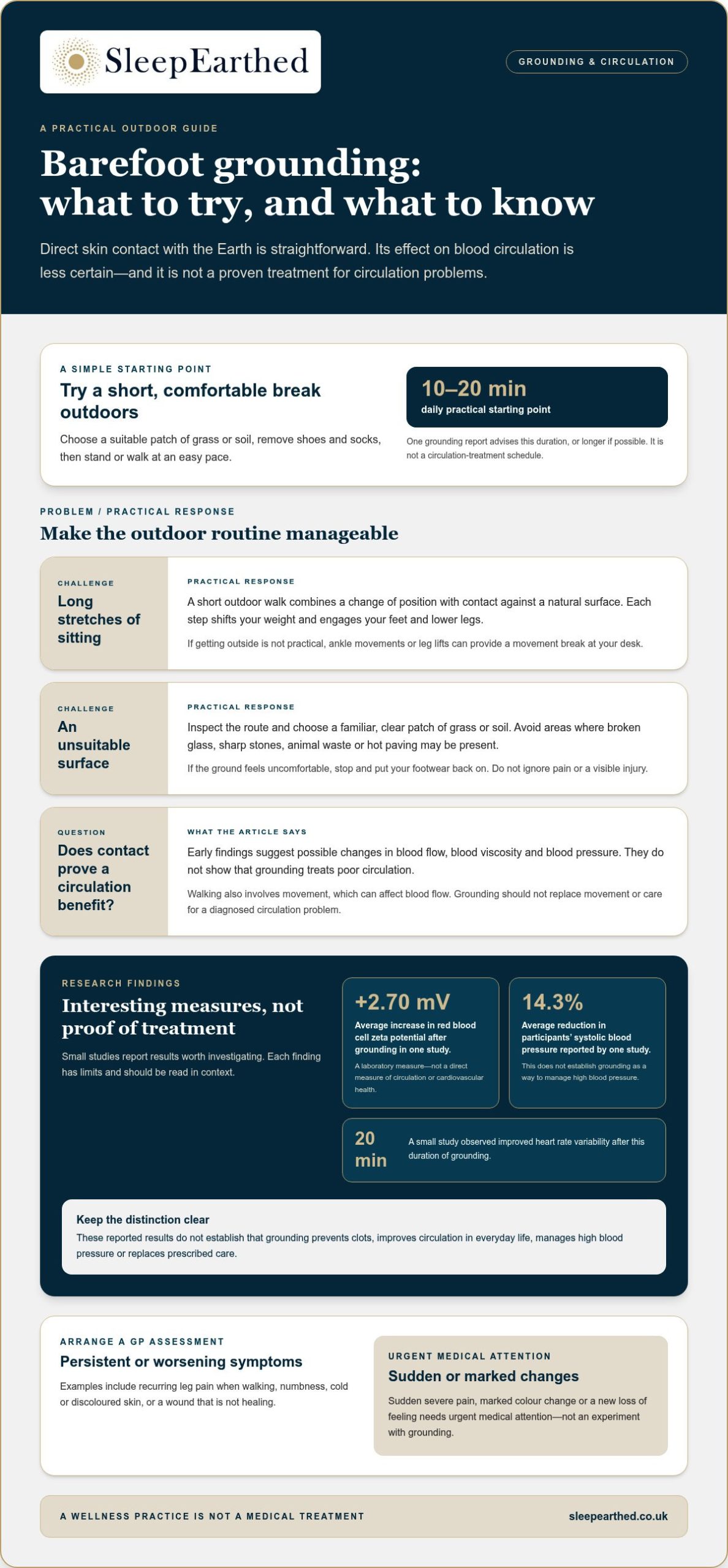
Barefoot contact with the Earth is straightforward; its effect on blood circulation is less certain. Grounding means making direct contact with the Earth, such as walking barefoot on grass. The idea behind grounding for better circulation is that this contact, or an indoor grounding mat, may influence blood flow and inflammation. However, it is not a proven way to improve circulation.
It’s understandable to look for simple ways to support healthy circulation, especially when claims about earthing can sound convincing. This guide explains what grounding involves, what small studies have reported about circulation and inflammation, and how barefoot contact differs from using a mat or conductive bedding indoors. You’ll also find practical ways to consider these methods alongside everyday movement, helping you distinguish a plausible wellness practice from a medical treatment.
Key Takeaways
- Understand what grounding means and how direct contact with the Earth differs from using an indoor mat or sheet.
- Learn what early findings about blood viscosity and circulation can, and can’t, tell you.
- See how inflammation is discussed in grounding research, and why those findings need careful interpretation.
- Compare practical ways to try barefoot contact outdoors with indoor grounding options.
- Discover how grounding and earthing are used as terms, and where fitted earthing bed sheets may fit into an at-home routine.
1. How Does Grounding Affect Blood Circulation?
Grounding for better circulation is a proposed benefit, not an established treatment for cardiovascular disease. Early studies suggest possible changes in blood flow, blood viscosity and blood pressure, but the findings don’t show that grounding can treat poor circulation. It’s important to distinguish these early results from care that addresses a diagnosed cause.
Blood viscosity describes how thick blood is and how readily it flows. In one study, participants who did yoga with grounding mats had lower blood viscosity than participants who did yoga without them. This raises a question about whether grounding affects circulation, but it doesn’t establish that a mat prevents clots or improves circulation in everyday life. Yoga itself involves movement, which can affect blood flow, so interpret the result in context.
Another proposed mechanism involves red blood cell zeta potential, a measure related to how cells behave in suspension. A study cited in the available findings reported an average increase of 2.70 millivolts after grounding. This is a laboratory measure, not a direct measure of a person’s circulation or ability to avoid cardiovascular illness. One study also reported an average 14.3% reduction in participants’ systolic blood pressure after grounding. A separate small study found lower blood pressure. These results are interesting, but they don’t establish grounding as a way to manage high blood pressure or replace prescribed care.
What treatments are proven to improve circulation? Treatment depends on the cause. Clinicians may recommend prescribed medicines or procedures for specific vascular conditions, while regular movement can help avoid long periods of sitting still. Grounding shouldn’t replace a treatment plan for a diagnosed circulation problem.
Is grounding safe with blood thinners? Don’t stop or change a prescribed blood thinner because you’re trying grounding. If you take anticoagulants, discuss any change to your routine with your GP or pharmacist, especially if you have bleeding concerns or a diagnosed cardiovascular condition.
When should poor circulation symptoms be assessed by a GP in the UK? Arrange a GP assessment for persistent or worsening symptoms, such as recurring leg pain when walking, numbness, cold or discoloured skin, or a wound that isn’t healing. Sudden severe pain, marked colour change or new loss of feeling needs urgent medical attention, not an experiment with grounding.
2. Barefoot contact with natural surfaces
Grounding outdoors means making direct skin contact with the Earth. Walking barefoot on grass is one example; standing on soil or lying on a lawn are others. Shoes and socks come between your skin and the surface, so they don’t provide the same direct contact. A grounding practice can be as simple as taking off your shoes and standing on a natural surface for a short break.
For a manageable routine, one grounding report advises trying 10 to 20 minutes daily, or longer if possible. Choose a comfortable patch of grass or soil, remove your footwear, and stand or walk at an easy pace. The duration is a practical starting point, not a circulation treatment schedule. A small study observed improved heart rate variability after 20 minutes of grounding, which gives one specific example of a measure researchers have examined.
Walking barefoot also involves ordinary movement: each step shifts your weight and engages your feet and lower legs. That’s different from standing still, so consider what you want from the break. If you spend much of the day seated, a short outdoor walk combines a change of position with contact against a natural surface. At a desk, ankle movements or leg lifts can provide a movement break when getting outside isn’t practical.
Before walking barefoot, look closely at the route. Choose a familiar, clear surface and avoid places where broken glass, sharp stones, animal waste or hot paving may be present. Grass in a private garden or a clear patch of soil can be easier to inspect than an unfamiliar path. If the surface feels uncomfortable, stop and put your footwear back on. Barefoot walking shouldn’t mean ignoring pain or a visible injury.
A lunchtime grounding break can fit around work without turning the practice into a long outing. Set aside 10 minutes, find a suitable outdoor spot, then walk slowly or stand barefoot if the ground is safe and comfortable. You can also use that pause to move your ankles rather than remaining seated. That small routine makes the activity straightforward to repeat on working days.
Natural contact and indoor grounding mats are different approaches. Barefoot contact uses the ground itself; a mat provides an indoor surface designed for grounding. Neither should replace movement or care for diagnosed circulation problems. Treat outdoor grounding as a practical wellness activity, and use walking, standing and regular changes of position to break up long stretches of sitting.
3. What Is The Relationship Between Grounding and Inflammation?
Inflammation is part of the human body’s response to injury or irritation. It can involve warmth, swelling, redness or discomfort around an affected area. Grounding is discussed as a way of influencing this response through direct contact with the Earth. The proposed explanation involves an electrical connection, but that explanation should be kept separate from what a study actually measured.
One study found that blood concentrations of indicators of inflammation decreased more in participants who grounded than in those who did not. This compares groups; it doesn’t prove that grounding treats an inflammatory condition. Nor does the finding identify which condition could benefit or show that everyone experiences the same change. It gives researchers a result to investigate, rather than clinical instructions for treating inflammation.
That distinction matters for wound healing. Inflammation can be part of the body’s response to an injury, while healing involves more than changes in inflammation indicators. A difference in blood markers doesn’t show that a cut closes faster, infection is prevented or damaged tissue repairs more effectively. For example, a scrape that becomes increasingly painful or looks infected needs appropriate medical attention, not grounding as a substitute for wound care.
Discomfort is another outcome sometimes discussed alongside grounding. One participant in a grounding study began to feel pain subside after 30 minutes. That is an individual observation, not a general pain-relief timeframe or evidence that grounding treats the cause of pain. A sore ankle after a twist, for instance, can have a different cause from ongoing joint discomfort, even if both involve inflammation.
The word “electrical” can make the proposed mechanism sound more certain than it is. Grounding explanations describe direct contact with the Earth as allowing the body to absorb electrons. This is a proposed account of how grounding could affect the human body, not a demonstrated treatment mechanism. The study finding about inflammation indicators doesn’t, by itself, prove that this electrical explanation caused the difference.
To interpret the findings practically, separate the measured outcome from the claim being made. The measured outcome was a greater decrease in certain blood indicators among grounded participants. Claims about quicker healing, less pain or treatment of inflammatory disease go beyond that result. Keeping these points distinct helps make sense of emerging studies without dismissing their findings or overstating their meaning.
If you’re tracking discomfort, note where it occurs, what activity came before it and whether it changes over time. For example, record whether a sore foot follows a long walk or appears without an obvious trigger. This provides a clearer picture than relying on grounding alone to interpret inflammation or pain.
4. Grounding mats and sheets
Indoor grounding mats and sheets offer an alternative to standing barefoot outside. A mat can sit beneath your feet while you work or practise yoga. A sheet provides a conductive surface during sleep. In both cases, the intended function is to connect the body with the Earth through conductive material and a connection point.
Some indoor mats use a wire connected to the earth terminal of a standard electrical socket. This is intended to provide a path to the Earth, rather than supply household electrical current through the mat. The connection matters: simply placing a mat on a desk or floor doesn’t create an earth connection. Follow the product instructions for positioning and connection.
For a desk setup, place the mat where your bare feet can rest comfortably while seated. A desk pad gives you a similar option for your hands or forearms. These arrangements can make indoor grounding part of a working routine, but they don’t replace getting up, walking or changing position. A mat supports contact; it doesn’t make prolonged sitting active.
Materials and connection methods differ. Carbon-infused earthing mats are one type; these mats rely on sweat to connect to the Earth. Contact can therefore depend on skin and material meeting as intended. Other grounding products use a wire connection. The product’s design determines how it functions, so don’t assume every mat or device works the same way.
Grounding sheets are designed for contact during sleep. One study compared sleep using conductive bed sheets connected to the Earth with a sham-grounded control group. It reported reductions in cortisol and improvements in sleep architecture, mood and pain among those using the connected sheets. These findings concern the outcomes measured in that study. They don’t establish that a sheet treats disease, changes immune function or improves circulation for everyone.
Grounding mats have also been used during movement. In one study, participants did yoga on mats for an hour. The reported comparison found lower blood viscosity among participants using grounding mats than among those who did not. Yoga involves movement as well as mat contact, so the finding doesn’t prove that grounding alone caused the difference or that a mat prevents cardiovascular disease.
Consider the setting before choosing a format. A mat may suit brief contact at a desk or during yoga; a sheet is intended for contact in bed. Keep the connection and intended use clear, and don’t treat a grounding device as a substitute for prescribed care. These options are best understood as ways to arrange indoor contact, not as established treatments for circulation or other conditions.
5. Grounding and earthing: definitions and differences
In wellness writing, “grounding” and “earthing” usually mean the same practice: direct contact between the body and the Earth. Walking barefoot on grass is one example; using an indoor conductive sheet is another. In the UK, “earthing” is a familiar term for this practice, while “grounding” is also widely used. The wording may differ, but the basic idea remains contact with the Earth.
What is grounding or earthing, and how is it claimed to improve circulation? It means making direct contact with the Earth, either outdoors or through an indoor conductive product. Supporters suggest that this contact may influence blood flow by changing how blood cells behave or affecting inflammation, but these proposed effects are not established treatments for circulation problems.
The terms have other meanings in technical contexts, too. In electrical discussions, “grounding” or “earthing” can describe connecting equipment to the Earth. That differs from the wellness practice of placing bare skin on grass or using a conductive sheet. For example, a yoga mat used for exercise isn’t automatically an earthing mat; its purpose and connection determine how it functions.
Some explanations describe the Earth’s direct-current energy as moving across its crust and through plants, animals and people. In this account, direct contact is thought to let the human body absorb electrons. This is a proposed explanation of the practice, not proof that the body needs extra electrons or that contact changes circulation. Separating the proposed mechanism from measured outcomes makes reports easier to interpret.
Read claims about blood flow in the context of the study. A report on grounding may describe a change in a particular measure, such as blood viscosity, but that doesn’t automatically show that people experience better circulation in daily life. Nor does the result establish that earthing prevents disease or replaces medical treatment. A measurement, a proposed explanation and a health outcome are different kinds of evidence.
For a practical distinction, ask what contact is being used and what claim is being made. Bare feet on a lawn provide direct outdoor contact; a connected sheet provides an indoor route. Neither description alone proves a cardiovascular benefit. If you’re exploring the practice, explore indoor earthing options and keep claims about circulation separate from established medical care.
Sleep Earthed: UK Sized Fitted Earthing Bed Sheets
Sleep Earthed offers UK Sized Fitted Earthing Bed Sheets for people interested in indoor earthing during sleep. They provide a way to explore conductive contact in bed rather than relying on barefoot contact outdoors. Earthing Pillow Cases, an Earthing Half Sheet and a Recovery Sleeping Bag offer other options for different sleeping arrangements.
These products are for trying an earthing practice, not treating poor circulation or replacing medical care. If you’re considering an indoor option, think about which format best suits your bed and routine, then follow its product instructions. Explore Sleep Earthed’s earthing options at sleepearthed.co.uk.
Choose a practical next step for your routine
If you’re exploring grounding for better circulation, focus on a routine that fits comfortably into daily life. You might prefer occasional barefoot contact outdoors or a way to explore earthing at home. Keep movement and any relevant healthcare advice in mind; grounding is a wellness practice, not a proven treatment for circulation problems.
For indoor use, Sleep Earthed offers UK Sized Fitted Earthing Bed Sheets, Earthing Pillow Cases and an Earthing Half Sheet. The right format depends on how you’d like to incorporate conductive contact into your sleep routine. Consider which option suits your setup, and keep expectations grounded in what the available evidence can support.
If you’d like to explore these options, contact Sleep Earthed. A considered, manageable next step can help you decide whether an earthing routine feels right for you.
Frequently Asked Questions
What Is Grounding?
Grounding is a wellness practice also commonly called earthing. Here, it means contact with the Earth, rather than the electrical engineering use of “grounding” for equipment. For example, someone might use the term for contact outdoors or through a conductive indoor product. The word alone doesn’t tell you which method is involved, so look at the activity being described.
How Can You Build Grounding Into Daily Life?
Choose a repeatable moment, such as a break after lunch or time spent relaxing at home. If you go outdoors, pick a clean, comfortable surface and check it before removing your shoes. If you stay inside, build a grounding product into a routine you already follow, such as sitting at your desk. Keep ordinary movement in the plan too; grounding isn’t a substitute for changing position.
How Does Grounding Affect Blood Circulation?
Researchers have explored whether grounding relates to measures associated with circulation, including blood viscosity and blood pressure. These measures describe particular aspects of the body’s response; they don’t, by themselves, show that someone’s circulation has improved in daily life. When assessing a wellness claim, distinguish a change recorded during a study from evidence that the practice treats a diagnosed vascular condition.
How Does It Work?
Grounding products are designed to create a conductive route between the person using them and the Earth. With an indoor product, the material and its earth connection form part of that route; simply placing an ordinary mat beneath your feet doesn’t make it a grounding device. The proposed explanation involves electrical contact, but the intended connection shouldn’t be mistaken for proof of a health effect.
How can earthing boost circulation for office workers while at their desk?
Earthing at a desk may provide a way to practise indoor contact, but it shouldn’t be described as a proven circulation boost. For a useful workday routine, pair any mat with regular breaks from sitting. Stand, walk to collect a drink or move your ankles while seated. A mat changes the surface beneath your feet; movement changes your posture and engages your legs.
What Is The Relationship Between Grounding and Inflammation?
Some grounding research has examined blood indicators associated with inflammation, but these measurements don’t establish a treatment for inflammatory illness. Inflammation can have different causes, and grounding doesn’t identify what’s behind a person’s symptoms. For example, persistent swelling or pain deserves attention as a health concern, rather than being interpreted as evidence that grounding is working or inflammation has resolved.
Why is Poor Circulation a Problem?
Circulation carries blood around the body, helping deliver oxygen and nutrients to tissues and transport waste products away. If blood supply is reduced, affected areas may not function as they normally would. The significance depends on where the problem is and what’s causing it. A wellness practice cannot establish the cause, so consider ongoing symptoms separately from any grounding routine.
Does grounding improve blood circulation according to clinical studies?
Clinical research has reported early findings involving circulation-related measures, but it hasn’t established grounding as a treatment for poor circulation. Study results about a measure or a small group don’t automatically demonstrate a dependable benefit for patients. For now, it’s more accurate to describe grounding as a wellness practice under investigation, not a replacement for assessment or care for a diagnosed condition.