
 90 Day’s To Better Zzz’s Guarantee T&C apply


Grounding, also called earthing, means connecting the body with the Earth’s electrical charge, through direct contact or a conductive product. People report benefits of sleeping grounded, including better sleep and less discomfort, but these are possible effects, not established treatments.
It’s understandable to wonder whether sleeping on a grounding sheet could make a difference, especially when claims about sleep and wellbeing can sound stronger than the evidence. Reported effects vary, and grounding isn’t a replacement for medical care or advice.
This guide explains what grounding means, which sleep and health effects have been reported, and what to consider before using a grounding sheet. It also covers practical safety concerns, including electrical risks, so you can weigh the claims carefully and decide whether this approach feels right for you.
Key Takeaways
- Grounding connects the body with the Earth’s electrical charge, but the research into indoor earthing is still limited.
- Some small studies have reported effects on blood pressure, cortisol, heart rate variability and inflammation; these findings don’t establish grounding as a treatment.
- Sleep and discomfort improvements have been reported, though experiences vary and the evidence is preliminary.
- Understand how conductive sheets and other grounding products work before deciding whether one suits your sleep routine.
- Avoid using grounding products during thunderstorms, when they may pose an electrocution risk.
Are Grounding Sheets Safe to Sleep on?
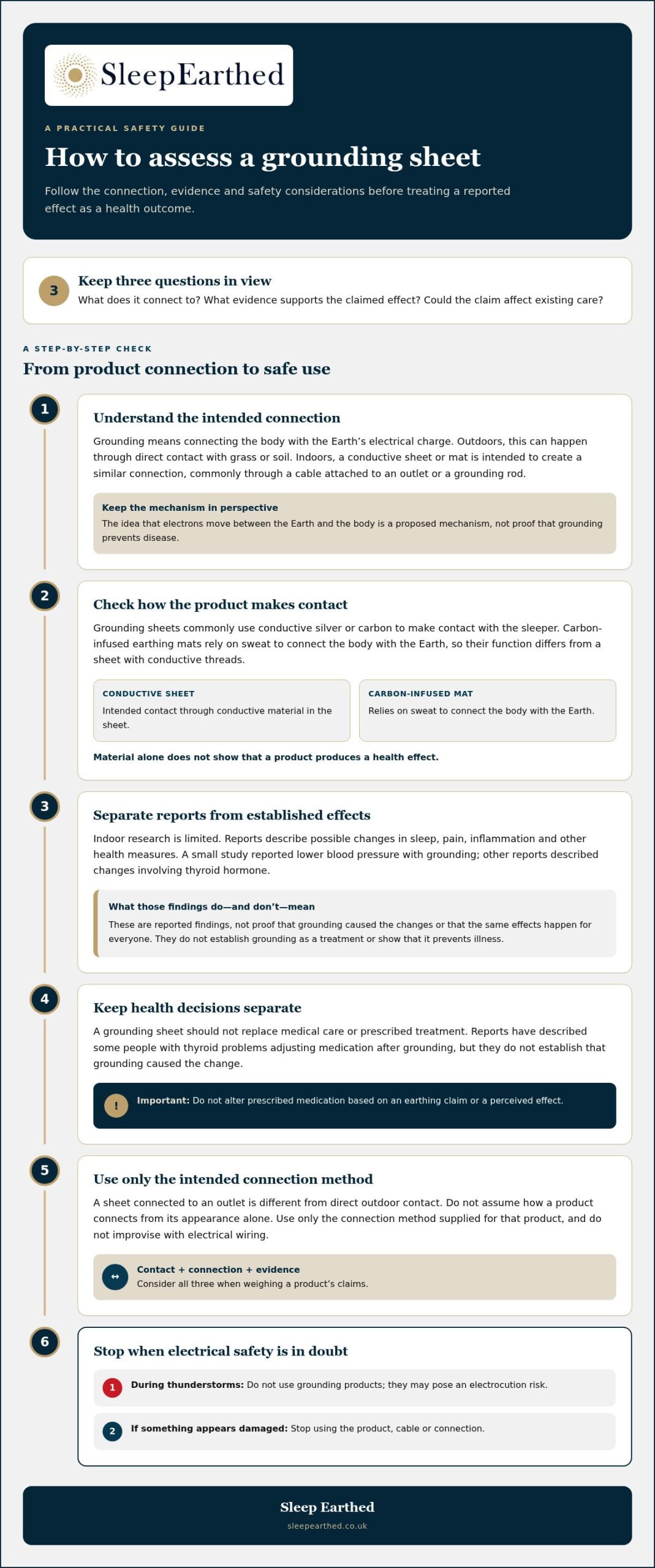
Grounding, also called earthing, means connecting the body with the Earth’s electrical charge. Outdoors, this can happen through direct contact with grass or soil. Indoors, a conductive sheet or mat is intended to create a similar connection, commonly through a cable attached to an outlet or a grounding rod. The idea is to let electrons move between the Earth and the body. That proposed mechanism is a hypothesis, not proof that grounding prevents disease.
Grounding sheets use conductive materials, commonly silver or carbon, to make contact with the sleeper. Some carbon-infused earthing mats rely on sweat to connect the body with the Earth, so their function differs from that of a sheet with conductive threads. The material alone doesn’t show that a product produces a health effect. Contact, connection and the quality of the evidence all matter when assessing claims about the benefits of sleeping grounded.
What does indoor research show? Reports have described possible changes in sleep, pain, inflammation and other health measures. One report found that earthing at night affected thyroid hormone levels. Another said some people with thyroid problems had to adjust their medication after grounding. These reports warrant caution, but they don’t establish that grounding caused the changes or that the same effects occur for everyone.
That distinction matters because a reported effect isn’t the same as a demonstrated treatment. Small studies can offer useful early observations, but their design, participant numbers, comparison groups and repeatability affect how confidently results can be applied. The research described here doesn’t establish that an earthing sheet can treat a disease, replace prescribed care or prevent illness. A claim about better sleep should also be considered separately from a claim about changing a medical condition.
Safety depends on the product’s electrical connection as well as its conductive material. A sheet connected to an outlet is different from direct outdoor contact, so don’t assume the intended connection from appearance alone. Use only the connection method supplied for the product, and don’t improvise with electrical wiring. Grounding products shouldn’t be used during a thunderstorm because they can pose an electrocution risk.
For a practical assessment, separate three questions: what the product connects to, what evidence supports the claimed effect, and whether a health claim could affect existing care. A conductive sheet may provide a route intended to connect the sleeper with the Earth, but that mechanism doesn’t prove a health outcome. Consider claims about sleep or disease in light of the limited indoor research, and take reports involving thyroid medication seriously.
Potential effects on muscle damage and blood pressure
Could grounding affect muscle recovery? The proposed explanation is that contact with the Earth may influence processes linked with inflammation, but this doesn’t establish that it repairs exercise-related muscle damage. Soreness after walking or training can have several causes, including effort and recovery time. A grounding session shouldn’t be treated as a substitute for rest, suitable activity or clinical care for persistent pain.
Blood pressure has been examined in a small study, which found that grounding helped lower it. That is a reported finding, not proof that grounding controls hypertension or works consistently. Blood pressure can be affected by factors such as activity, stress and health conditions, so one result can’t show which factor explains a change. Don’t alter prescribed medication based on an earthing claim.
Energy and mood are also part of the discussion. Some research has explored whether grounding may be associated with changes in stress, but this does not establish a predictable effect. This finding suggests an area for further study, rather than a predictable boost in energy. People may believe they feel calmer after a new bedtime routine, but that experience alone can’t establish the cause.
Sleep quality may influence how energetic someone feels the next day, yet the reported grounding research doesn’t prove that a sheet improves sleep for everyone. A study involving people with Alzheimer’s disease found help with sleep, while reports from other users describe subtle changes within the first few nights. These observations differ in scope and don’t show that grounding treats Alzheimer’s disease or prevents infection.
Separate possible effects by asking what was measured. Blood pressure is a measurable outcome; feeling rested is a personal experience; muscle damage requires evidence beyond a general claim about recovery. A study’s design and participants also affect how far its findings can be applied. These distinctions make it easier to assess a headline without turning an early result into a health promise.
For a cautious approach, keep normal recovery habits in place and note changes without attributing every good or difficult night to grounding. If you monitor blood pressure, use the same method and conditions each time, rather than comparing readings taken after different activities. Don’t stop treatment or change medication because of a perceived effect. These steps help keep observations separate from medical decisions.
Electrical safety matters alongside health claims. Grounding products shouldn’t be used during a thunderstorm because they can pose an electrocution risk. Follow the product’s intended connection method, and don’t improvise with an outlet or other electrical connection. If a product, cable or connection appears damaged, stop using it. A possible effect on stress or soreness doesn’t outweigh basic precautions.
Possible effects on cortisol, sleep, HRV and inflammation
Some grounding research examines body measures that change naturally over time. One study associated nighttime grounding with lower cortisol levels and closer alignment with the natural 24-hour circadian rhythm. Cortisol follows a daily pattern, so timing matters when interpreting a single measurement. This finding suggests a possible relationship, but doesn’t show that grounding devices reset sleep rhythms or produce the same effect for everyone.
Heart rate variability, or HRV, describes changes in the timing between heartbeats. A small study found improvements in HRV after 20 minutes of grounding. That result concerns a measured response, not a direct diagnosis of stress or cardiovascular health. HRV can also vary with activity and other lifestyle factors, so one reading cannot establish that a device caused a lasting change.
Inflammation and blood flow have also been explored. A pilot study examined whether one hour of contact with the Earth’s surface through grounding affected inflammation and blood flow. Separately, a study of 21 people with diabetes found that one hour of grounding per day for one month accelerated wound healing. These are different outcomes; a wound-healing observation doesn’t prove that grounding treats inflammation generally.
Blood viscosity has been studied as another factor related to circulation. In one study, participants who did yoga for an hour and used grounding mats had lower blood viscosity. Because yoga and grounding were combined, the finding doesn’t isolate the mat’s contribution. Blood-pressure findings discussed earlier concern a separate measurement, so they shouldn’t be treated as proof of improved blood flow.
What do these findings mean for sleep? Cortisol timing and HRV relate to body rhythms, but neither measure alone demonstrates better sleep quality. A change in a laboratory measure isn’t automatically a noticeable improvement in how rested someone feels. Sleep also depends on ordinary lifestyle factors, such as routine and the sleep environment, which grounding research doesn’t remove from consideration.
Keep these safety points in view. Grounding mats and other grounding devices may pose a risk of electrical shock, and grounding products shouldn’t be used during a thunderstorm. Follow the product’s intended connection method rather than adapting an outlet or cable. If you have a medical condition or use prescribed treatment, don’t use a possible effect on cortisol, HRV or inflammation as a reason to change your care.
Reported sleep and discomfort benefits
Sleep reports range from subtle changes within the first few nights to improvements people describe after consistent use. More noticeable, lasting changes are typically cited after 2-4 weeks. Those timeframes describe reported experiences, not a schedule that guarantees results. A night’s sleep can also be affected by routine, discomfort, stress and the sleeping environment, so keep those factors in view when noticing changes.
Pain reports are similarly varied. In one grounding study, a participant began to feel pain subside after 30 minutes. That example records one person’s experience, not a reliable measure of how quickly grounding affects discomfort. It also doesn’t explain the cause of the pain. Persistent or worsening pain still needs appropriate medical attention rather than relying on an earthing practice alone.
Mood has been examined separately from sleep and pain. One study found that an hour of grounding therapy seemed to improve participants’ moods. A better mood may matter to someone experiencing stress or anxiety, but a single reported effect doesn’t establish grounding as a treatment for either condition. Notice whether mood changes alongside sleep or daily routine, rather than assuming one caused the other.
Walking barefoot offers a different way to explore grounding outdoors. One recommendation is resting bare feet on grass, sand or soil for 30 minutes daily. Barefoot contact is a practical example of the idea behind earthing, but it doesn’t mean a walk is suitable everywhere. Uneven ground can increase the risk of tripping and falling, so choose a clear, comfortable surface.
A quasi-experimental study examined grounding among 20 preterm infants. It found that one hour of grounding per day for 30 days reduced the duration of acute respiratory infections. This result concerns a specific group and setting. It doesn’t show that grounding prevents infection in the general population or that it strengthens everyone’s immune response.
These studies examine different outcomes, including sleep, pain, mood and infection duration. Their findings shouldn’t be combined into one broad promise of improved health. For example, a mood observation after an hour cannot demonstrate better sleep over several weeks. It’s best to assess the evidence outcome by outcome, considering who took part and what researchers measured.
If you try walking barefoot, choose level ground and stop if it feels uncomfortable. To observe sleep at home, note bedtime, waking and discomfort over the same period, rather than relying on your memory of a single night. This simple comparison can help distinguish a personal pattern from an isolated good or poor night, without treating your notes as medical evidence.
Safety and electrical grounding concerns
Some grounding products connect through a UK mains earth socket; others use a grounding rod. Follow the connection method intended for the specific product, rather than adapting a plug or cable. Electrical safety matters because grounding mats and other devices may pose a risk of electric shock.
Health and Safety Concerns
Health and safety concerns include electrical risks and the limits of grounding claims. Grounding may help some people feel positive effects, but it shouldn’t replace medical care or prescribed treatment. For example, a reported change in muscle discomfort doesn’t prove grounding treats an injury. Keep the practice separate from decisions about medication or care.
Grounding Sheet Safety
Grounding sheet safety depends on using the sheet and its connection as intended. Conductive materials provide a route for contact, but they don’t make every connection automatically safe. Avoid improvised wiring, and stop using a sheet if its cable or connection appears damaged. These simple precautions matter whether you use a sheet or grounding mats.
Thunderstorms call for a clear precaution: don’t use grounding products during a storm, because they can pose an electrocution risk. This applies to grounding devices connected indoors as well as other grounding products. If a storm begins while you’re using one, stop and disconnect it according to its instructions. A possible benefit isn’t worth taking an avoidable electrical risk.
Outdoor grounding has different practical hazards. Walking barefoot on uneven ground can increase the chance of tripping and falling. Choose a clear, even surface if you practise barefoot contact, and avoid places where stones or hidden obstacles could injure your feet. This is particularly relevant if balance or foot sensitivity already affects your walking.
Keep expected effects in proportion to the evidence. A sheet may be part of a bedtime routine, but reported changes in sleep or discomfort don’t establish that it can prevent disease. If you’re managing a medical condition, don’t treat grounding as a replacement for established care. A personal experience and a proven medical effect are not the same.
For safer use, read the product’s connection instructions before setting it up, use only its intended connection method, and avoid use during thunderstorms. Those steps give you a practical basis for deciding whether the routine suits your home. Explore grounding-sheet safety guidance before choosing how to add grounding to your sleep routine.
Sleep Earthed: UK Sized Fitted Earthing Bed Sheets
Sleep Earthed offers UK Sized Fitted Earthing Bed Sheets for people who want to include an earthing product in their bedtime routine. An Earthing Pillow Case or Earthing Half Sheet offers another format, depending on where you prefer conductive contact while resting. These products provide a practical way to explore the approach discussed here, without treating reported effects as guaranteed health outcomes.
Consider which area of your bed you want the product to cover, then follow its connection instructions. If you’re curious about using earthing at home, explore the options and choose the format that best fits your routine.
For more information, contact Sleep Earthed or visit sleepearthed.co.uk.
Choose a grounded approach that fits your routine
Before trying grounding, decide what you want to learn from the experience. You might be exploring whether a different bedtime setup feels comfortable, or simply looking for a new part of your sleep routine. Being clear about your aim makes it easier to judge whether the approach suits you, without expecting one product or practice to resolve several concerns at once.
If you’re weighing the potential benefits of sleeping grounded, keep your expectations practical and your health decisions separate. A grounding routine can sit alongside ordinary sleep habits, not replace care or justify changing prescribed treatment. The most useful next step is one that feels manageable, fits your bedroom and lets you make an informed choice.
For questions about grounding products or choosing a suitable option, contact Sleep Earthed. Take your time, follow the product guidance and choose what feels right for your routine.
Frequently Asked Questions
What Is Grounding?
Grounding is the practice of connecting your body with the Earth’s electrical charge, either through direct contact or a conductive product. For example, bare skin touching grass outdoors creates direct contact; a conductive sheet is intended to provide an indoor connection. The word describes the contact or connection, not a proven medical result. It’s useful to keep that distinction clear when weighing wellbeing claims.
Can grounding support stress management?
Grounding has been explored in relation to stress, but it shouldn’t be treated as an established stress-management therapy. A quiet bedtime routine may feel calming in its own right, whether or not it includes an earthing product. If you try grounding, notice how it fits alongside familiar habits such as a regular wind-down routine. Don’t replace support or treatment for ongoing anxiety with grounding alone.
How Does It Work?
Grounding products use conductive material to create a route between the body and an Earth connection. The proposed explanation is that electrons can move between the Earth and the body through that contact. This mechanism is a hypothesis behind earthing claims; it doesn’t itself demonstrate a health effect. A product’s connection method matters, so follow its instructions rather than improvising with a cable or socket.
How long before I notice changes from sleeping grounded?
Some people describe subtle differences within a few nights, while more lasting changes are commonly cited after 2-4 weeks of consistent use. These are reported timeframes, not a schedule that predicts an individual response. If you’re trying a new sleep routine, note bedtime, waking and how rested you feel. Comparing similar nights is more useful than judging the experience from one unusually good or poor night.
What Is Earthing and Is It Beneficial?
Earthing is another term for grounding: contact with the Earth, directly or through a conductive product. Possible benefits have been reported for sleep, discomfort and other measures, but reports don’t establish earthing as a treatment for disease. Whether it feels worthwhile may depend on your aim, comfort and routine. Keep medical care separate, and don’t use an earthing practice as a reason to change prescribed treatment.
What is grounding or earthing while sleeping?
Sleeping grounded means using conductive bedding intended to connect your body with the Earth while you rest. The practical difference from daytime grounding is that contact can continue as part of your ordinary night-time routine. Before using a product, understand how it connects and follow its supplied instructions. That helps distinguish an intended setup from an improvised electrical connection.
What benefits of sleeping grounded are claimed?
Claims include better sleep, reduced discomfort and possible changes in stress-related or circulation measures. These claims come from different kinds of reports and studies, so they shouldn’t be treated as one established effect. A personal observation, such as waking feeling more rested, matters to the person experiencing it, but doesn’t show that grounding caused the change or will have the same effect for others.
Is there scientific evidence that grounding improves sleep?
There is some early research and reported experience, but the evidence doesn’t establish grounding as a reliable sleep treatment. A study involving people with Alzheimer’s disease reported help with sleep, while other reports describe individual experiences. These findings differ in participants and context. They may prompt further research, but they don’t show that grounding treats sleep disorders or should replace established medical care.