
 90 Day’s To Better Zzz’s Guarantee T&C apply

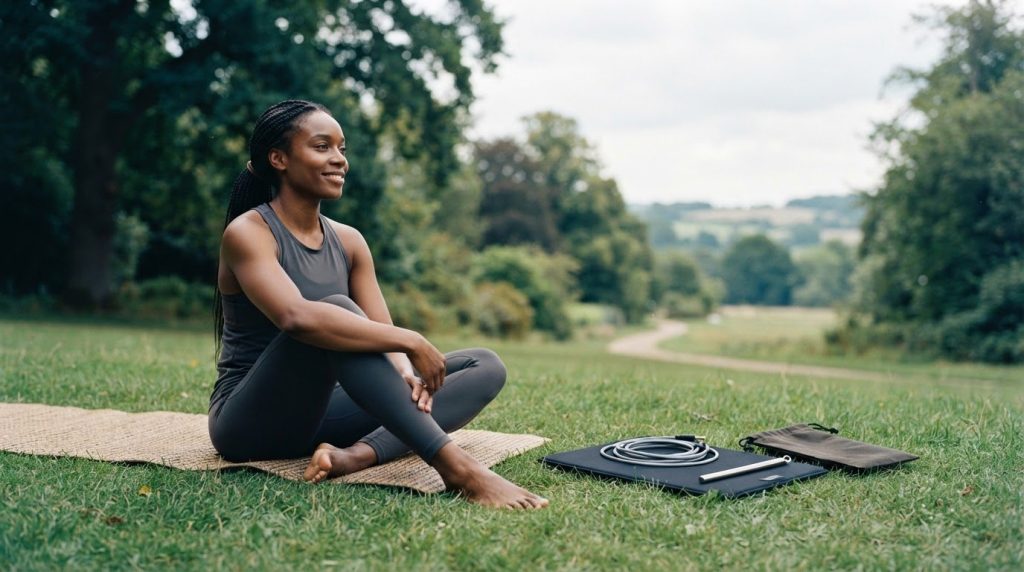
The best portable grounding solutions for athletes depend on where you’ll use them: some connect to a grounded outlet, while others can connect directly to the earth. Walking barefoot on natural ground is another option, with 10-30 minutes suggested. The key is choosing a connection and routine that suit your training and travel.
It’s understandable to look for simple ways to build recovery time into a busy training schedule. Grounding devices use conductive materials to connect the body with the earth, but they should not be treated as a proven shortcut to better performance. This guide explains how portable grounding solutions for athletes work, what to consider when choosing a device, and how outdoor connections might fit into a routine. It also explores the available research, so you can weigh the evidence and make an informed, practical choice.
Key Takeaways
- Choose a connection that suits where you’ll use the device: a grounded outlet or, where appropriate, a rod connected directly to the earth.
- For outdoor sessions, consider the ground surface, your connection method and how easily the setup fits your training routine.
- Build a routine around practical moments, such as time outdoors after training or a grounded surface while resting.
- Compare devices by their connection method, materials and portability, rather than assuming every design works the same way.
- Read the athletic research with care: study findings can help frame questions, but they don’t establish grounding as a guaranteed performance or recovery aid.
Grounding rod for outdoor connection
A grounding rod provides an outdoor connection when a properly earthed mains outlet isn’t available. A typical kit described here includes a 0.3-m stainless steel rod and a 12-m cord. The rod is placed in the ground, and the cord connects it to compatible grounding equipment. This creates a direct earth connection rather than relying on a building outlet.
Before setting up, choose a stable outdoor spot where the rod can be placed securely. Route the cord away from running paths, walkways and moving equipment. For example, an athlete recovering beside a training field should position the connection away from the team’s route. A cord across a busy area can become a trip hazard, so the location matters as much as portability.
Can you ground outdoors without equipment? Yes. Walking barefoot on grass, soil, sand or stone is an equipment-free option; a suggested session is 10-30 minutes. After arriving in a new country, an athlete might choose 15-20 minutes on a suitable natural surface. Sitting or lying with exposed skin touching the ground is another way to make contact. Sea swimming or swimming in a natural body of water is also described as an equipment-free option.
UK electrical safety standards and regulations don’t provide a single blanket approval for every grounding product. IEC 61230 covers complete portable earthing and short-circuiting systems, whilst IEC 61138 addresses flexible cables used with that equipment. Those identifiers describe electrical work equipment standards, not proof of an athlete-focused product’s recovery benefits.
What are the risks or contraindications of grounding products for athletes? Practical concerns include a poorly placed rod, a cord across a route, or damaged equipment. Keep the setup clear of training activity, inspect the cord and connections, and follow the product instructions. A grounding band needs to touch bare skin; wearing it over clothing interrupts the intended connection.
Outdoor earthing can also offer a quiet pause after training, away from screens, stadium lights and noise. For instance, an athlete could sit on grass after a session and use the time to unwind. Treat the rod as a way to establish an earth connection, not as a performance measure. A simple routine works best when the location, cord route and contact method suit the surroundings.
Building a consistent grounding routine
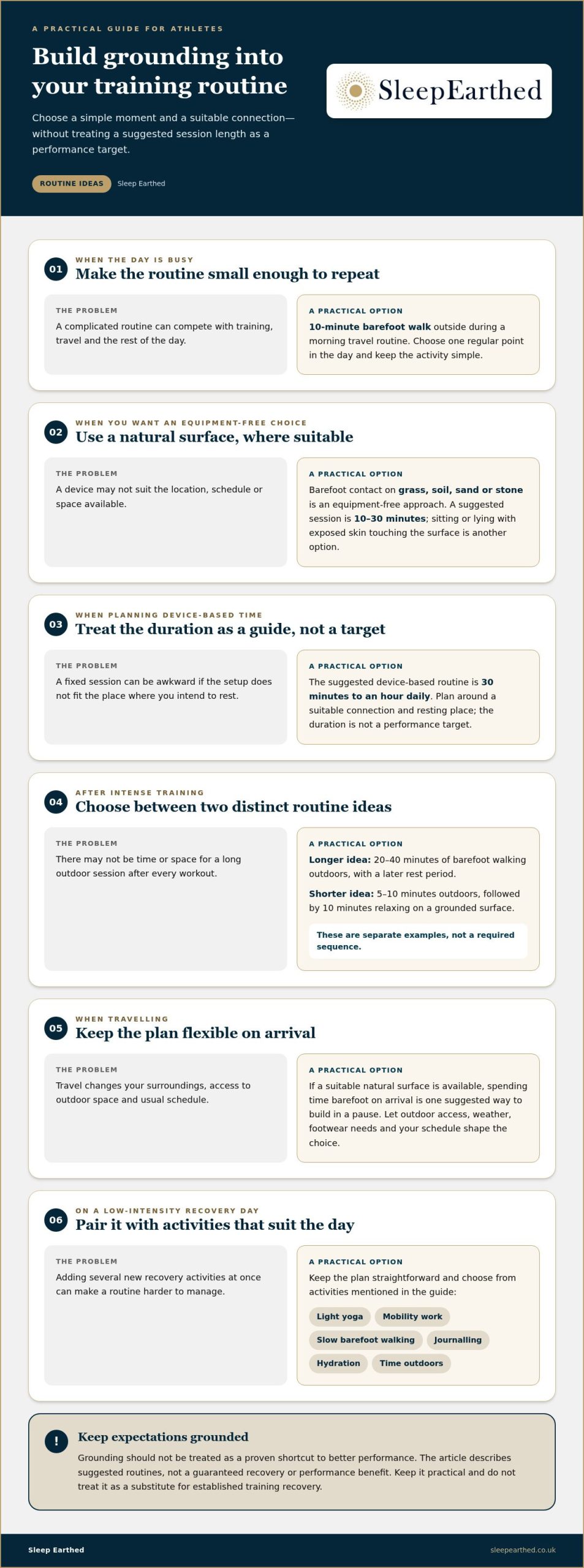
A routine is easier to maintain when it fits around training rather than competing with it. One approach is a 10-minute barefoot walk outside during a morning travel routine. Another is to set aside portable earthing time after training, when the athlete is already changing pace and settling down. Choose a regular point in the day, then keep the activity simple enough to repeat.
For an equipment-free option, walking barefoot on grass, soil, sand or stone is suggested for 10-30 minutes. Sitting or lying with exposed skin touching the surface is another way to make contact. The useful choice depends on the location and the athlete’s schedule: a short walk near accommodation can be more practical than finding a quiet place to lie down.
For a device-based routine, the suggested use is 30 minutes to an hour daily. Treat that length as a planning guide, not a performance target. A portable device needs a suitable connection, and its setup should fit the place where you intend to rest. For example, someone travelling for competition could plan a session in their room, rather than trying to carry equipment onto a training ground.
After intense training, one suggested routine pairs 20-40 minutes of barefoot walking outdoors with a later rest period. A separate example begins with 5-10 minutes outdoors, followed by 10 minutes relaxing on a grounded surface. These are distinct routine ideas, not a required sequence. An athlete can select the format that suits the session and available space.
On a low-intensity recovery day, grounding can sit alongside light yoga, mobility work, slow barefoot walking, journalling, hydration and time outdoors. For instance, an athlete could take a slow walk, then do mobility work before writing a short training note. Giving each activity a clear purpose makes it easier to see whether the routine suits the day.
Travel can disrupt an athlete’s usual schedule and surroundings. After arriving, spending time barefoot on a natural surface is one suggested way to build a pause into the day. Some recovery specialists recommend grounding shortly after landing as part of travel recovery. Keep the routine flexible: outdoor access, weather, footwear needs and the athlete’s schedule all affect what is practical.
Consistency doesn’t require adding grounding to every recovery method at once. Pick one repeatable moment, such as a morning walk or post-training rest, and use the same connection method each time. If you use a device, include its electrical connection in the routine and keep the setup tidy. This creates a manageable practice without treating grounding as a substitute for established training recovery.
Carrying cases and additional features
A carrying case can be useful when training involves travel between a hotel, track and recovery space. A travel grounding kit may come in an organic natural cotton bag, keeping its contents together between sessions. Before packing, place the cord and any contact component neatly inside rather than winding them tightly around other equipment. This makes the setup easier to find and helps prevent loose parts snagging on clothing.
Check what the case needs to hold before choosing how to carry a device. A rod connection, for example, may include a rod and cord, while a compact contact item may need less space. Keep conductive parts separate from damp kit and sharp training equipment. After a session, let wet items dry before packing them away, so the case doesn’t trap moisture against the equipment.
Added features should serve a clear purpose. A case can make transport more organised, but it doesn’t create an earth connection or change how the device works. For instance, a pouch with separate compartments may help prevent a cord tangling around a contact surface. Focus on practical details you’ll use, such as secure storage and easy access, rather than decorative extras.
Static control is a separate technical context from an athlete’s recovery routine. Electrostatic charging normally generates electrical current in the micro-amp range. A theoretical resistance of 1 meg-ohm to true earth is commonly cited as sufficient to dissipate static electricity. These figures describe static dissipation, not evidence that a portable grounding product improves athletic recovery.
International standards also have specific scopes. IEC-61340-5-1 is relevant to personnel grounding in an ESD Protected Area. IEC-61340-1-5 addresses personnel foot-grounding options in that context. These standards concern electrostatic discharge control, so their mention alone doesn’t establish a performance benefit for athletes or make every travel device suitable for every use.
Think through a typical travel day before choosing a carrying format. An athlete arriving at a venue could store a device with recovery clothing, then set it up only in a suitable resting area. Keep cords out of walkways and make sure the contact surface remains accessible. If the kit has several parts, take a moment after use to return each one to its place.
For portable grounding solutions for athletes, portability means more than a light case. The connection method, included parts and place of use all matter. A compact bag may suit a simple travel routine, while a setup with a rod and cord needs space for those components. Match the case to the equipment and journey, and distinguish claims about static control from claims about recovery.
Choosing a portable grounding device
Start with the connection method, then consider material, portability and where you’ll use the device. The right choice should fit your routine without being mistaken for a substitute for established recovery practices.
Available Grounding Products for Athletes
Portable grounding products include bands, mats, pads and sheets. Some connect to an earthed outlet, while others connect directly to the earth. The format matters because it determines where you can use the product and how your body makes contact.
A band is worn against bare skin, while a mat or pad provides a surface for resting. A sheet is designed for a bed, and an outdoor rod kit offers another connection option. For travelling athletes, compare the parts required with the space available in your kit.
UK Costs of Portable Grounding Products
In the UK, the cost depends on the product type, materials and included connection components. A simple contact item and a setup with a separate rod and cord have different parts to consider.
Compare like with like: note whether the device includes a connection lead and whether it suits your intended outlet or outdoor use. This helps you assess the complete setup rather than focusing on the device alone.
How do these products compare with compression, massage and other recovery tools? They offer a different approach, creating an earth connection rather than applying pressure or massage. They should not be treated as proven replacements for recovery methods in an athlete’s training plan.
How do you use and maintain a portable grounding mat safely? Use it on a stable, dry surface, follow its instructions, and keep cords clear of walkways. Check the mat, cable and connection for visible damage before use, then store them clean and dry.
Connection suitability is central to choosing a device. Some products connect to a grounded outlet; others connect directly to the earth. A two-pin socket cannot provide the required grounding connection, so an outdoor rod may be relevant instead. Choose a method that suits the place you’ll use the product, rather than assuming every UK socket or travel room is suitable.
Material and contact design also affect everyday use. A band needs bare-skin contact, while a mat needs a surface where you can rest comfortably. Contact requirements can vary by product, so check its instructions and consider whether the design suits your session and conditions.
Protection starts with sensible placement and careful handling. Keep equipment away from moving training activity, and don’t use damaged leads or connectors. A mat can be one part of a recovery routine, but evidence for grounding’s athletic effects remains limited. Choose a device for its practical connection and use, not on the promise of faster recovery.
Grounding research and evidence
Research on grounding needs careful reading, especially for athletes weighing recovery claims. Look at the participants, grounding method, comparison group and measured outcomes. These details show what a study actually tested and whether its setting resembles an athlete’s training environment.
One reported protocol involved 22 healthy undergraduate students. One study examined sleep with a grounded sheet after downhill running. That design asks about post-exercise recovery in a specific setting. It doesn’t, by itself, tell an athlete what to expect from a portable device during ordinary training.
The measurements matter, too. In this research, assessments included countermovement jump relative peak power and concentric peak velocity, plus relative peak force from an isometric mid-thigh pull. These measures relate to strength and power testing. They don’t cover every aspect of recovery, such as an athlete’s daily training experience or how a routine fits around travel.
A separate five-week intervention involved thirty Division II track and field athletes, divided among grounding sheets, grounding pads and a control group. This three-group design allows comparisons between different practices, but the participant group and duration define the study’s scope. A result in one athletic environment should be interpreted in that context, not treated as a rule for every sport.
To assess whether a finding is useful, first identify the measured outcome and the comparison being made. Then consider whether the participants, training demands and device match your situation. For example, a study using a pad may not answer questions about an outdoor rod connection. Different contact methods and settings affect what the research can reasonably tell you.
Grounding research also needs to distinguish an electrical connection from a health claim. A device may be designed to connect the body with the earth, but that mechanism alone doesn’t establish a recovery effect. Resistance and electrical measurements describe connection properties; they are not direct measures of athletic performance. Keep these categories distinct when assessing claims.
Research into athletes points to the need for further investigation of long-term effects, physiological mechanisms and applications in performance, training and rehabilitation. For now, read each study as evidence about its own method and participants. This helps athletes distinguish between a grounding practice they may choose to try and a recovery benefit that research has yet to establish broadly.
Sleep Earthed: UK Sized Fitted Earthing Bed Sheets
Sleep Earthed offers UK Sized Fitted Earthing Bed Sheets for athletes considering an earthing connection during sleep. The fitted sheet covers a bed and is made with conductive silver threads in organic cotton. It offers a different setting from a portable outdoor session, making it relevant if you want to explore grounding while resting overnight.
For other bed arrangements, Earthing Pillow Cases and an Earthing Half Sheet provide alternatives. The Earthing Recovery Bag is another option. These products do not establish that grounding improves athletic recovery, so consider them as part of your personal routine rather than as a performance treatment.
If you’d like to explore which option fits your routine, contact Sleep Earthed.
Choose a grounding approach that fits your next training block
Your next step is to decide what a grounding routine would look like in practice. For portable grounding solutions for athletes, focus on the setting, connection method and whether the routine fits naturally around training and rest. Keeping those priorities clear can help you choose thoughtfully without expecting a device to replace the recovery habits already supporting your programme.
If you’re exploring an at-home option, Sleep Earthed offers UK Sized Fitted Earthing Bed Sheets, Earthing Pillow Cases and an Earthing Half Sheet. These provide ways to include an earthing connection during rest, rather than carrying an outdoor setup between sessions. You can take the next step at your own pace: contact Sleep Earthed with your questions. A considered choice is a good place to begin.
Frequently Asked Questions
What Is Grounding and Why Do Athletes Care?
Grounding, also called earthing, means making contact with the earth directly or through a conductive device. Athletes may be interested because they’re exploring additional ways to structure rest and recovery. The proposed connection is not the same as compression, massage or mobility work, and it shouldn’t be treated as a substitute for them. Consider grounding as a personal practice, rather than assuming it will improve performance.
How Can I Practice Earthing While Travelling?
You can plan an earthing session around a natural surface or a device suited to use at your accommodation. For example, after a journey, identify a suitable outdoor space for direct contact, or pack a compact device whose connection method suits your destination. Keep the equipment with your travel essentials, and avoid setting it up where people might trip over cables. Choose the approach that works for your plans.
What are portable earthing devices (PEDs)?
Portable earthing devices, or PEDs, are conductive products designed to connect a person to the earth. Depending on their design, they may connect through an outlet or directly to the ground. The term describes a broad category, not one standard product or guaranteed outcome. Before using a PED, understand its connection method and intended setting, then follow the supplied instructions.
What are portable grounding solutions for busy lives?
Portable options can make a grounding practice easier to fit around work, training and travel, but the simplest choice may be no device at all. An athlete taking a short outdoor break could choose direct contact with a suitable natural surface. Someone resting indoors may prefer a device designed for that setting. Decide where the practice will happen first, then choose an option that fits without disrupting your day.
How do portable grounding mats and wearable grounding products work?
These products use conductive material to connect the body with the earth. A mat provides a contact surface, while a wearable product sits against the skin. Carbon-infused earthing mats are one design. Compare the intended contact method and setting, and read the product instructions before use, since connection methods differ between products.
Is there scientific evidence that grounding improves athletic recovery or performance?
Research has examined grounding in athletic contexts, but it doesn’t establish a reliable performance or recovery benefit for every athlete. Study methods, participants and measured outcomes differ, so one result cannot answer every practical question. Treat claims carefully and distinguish evidence about an electrical connection from evidence of a physical outcome. Grounding should not replace an athlete’s established training, rest or recovery plan.
Which portable grounding products are best for travel and outdoor use?
The suitable product depends on where you’ll use it and how you’ll connect it. For outdoor settings, a rod-based option is designed to connect directly with the earth; for indoor rest, a product made for a bed or resting surface may suit better. Consider the parts you need to carry, where you’ll store them, and whether the setup suits your planned environment.
How can athletes ground themselves outdoors without buying a product?
Athletes can make direct contact with a natural surface by walking barefoot or sitting with exposed skin touching the ground. Choose a clean, stable area, such as grass or sand, and look for hazards like sharp objects, rough stones or hot surfaces before removing footwear. A quiet outdoor break can also provide space away from training noise. Stop if the surface feels uncomfortable or unsafe.