
 90 Day’s To Better Zzz’s Guarantee T&C apply


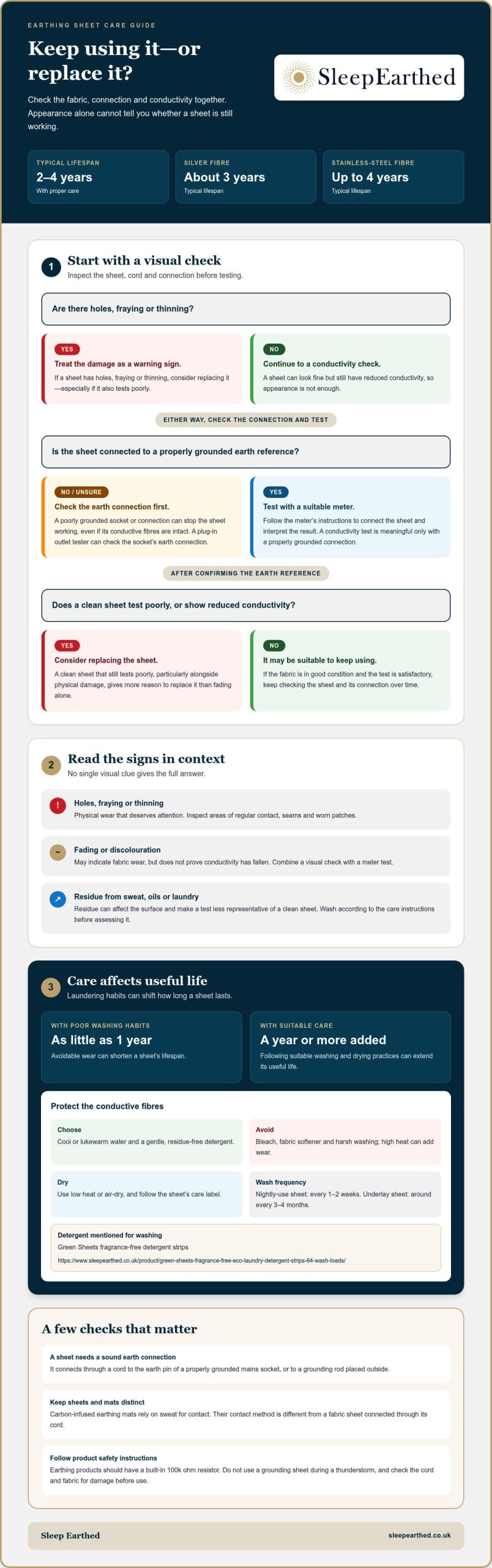
A well-cared-for earthing sheet typically lasts 2 to 4 years. The answer to how long do earthing sheets last depends partly on the conductive fibre: silver-fibre sheets usually last about 3 years, while stainless-steel-fibre sheets can last up to 4 years. A sheet may look fine but still have reduced conductivity, so appearance alone can’t tell you whether it’s working.
It’s understandable to wonder whether a sheet that’s been used and washed regularly is still making a good connection. A conductivity test can help assess its function, while holes, fraying or thinning can signal wear. Fading alone doesn’t necessarily mean the sheet has stopped working.
Here, we explain how to test a sheet, what can affect its useful life and how to care for conductive fibres when washing and drying. You’ll also learn why the earth connection matters, so you can decide whether to keep using your sheet or replace it.
Key Takeaways
- Use a conductivity test to assess whether your sheet still works, and inspect the fabric for holes, fraying or thinning.
- With proper care, grounding sheets typically last 2 to 4 years; the conductive fibre and how the sheet is maintained both matter.
- Protect conductive fibres by washing in cool or lukewarm water with a gentle detergent, avoiding bleach and fabric softener, and drying on low heat or air-drying.
- For washing, use Green Sheets.
- Regular checks can help you spot changes in conductivity or fabric condition before deciding whether it’s time for a replacement.
How can I test if my grounding sheet is still working?
A meter can help you assess whether an earthing sheet remains conductive, but inspect the fabric and connection too. A test is meaningful only when the sheet has a properly grounded connection.
Earthing sheets are commonly made from cotton or polyester woven with conductive fibres, such as silver or stainless steel. The base fabric provides the sleeping surface, while the conductive threads carry the connection through the sheet. Carbon-infused earthing mats work differently: they rely on sweat for contact, so their method shouldn’t be used to test a fabric sheet.
Use a meter designed for earthing products and follow its instructions for connecting the sheet and checking conductivity. A voltmeter can be used to assess whether a sheet is working, but interpret the reading according to the meter’s guidance. If the socket or other earth connection isn’t properly grounded, the sheet may not work even if its conductive fibres are intact.
- Check the sheet, its cord and connection for visible damage before testing.
- Connect the meter as its instructions describe, making sure the sheet has an earth reference.
- Interpret the result using the meter’s guidance, rather than relying on appearance alone.
Sweat, oils and conductivity
Sweat and body oils can build up where skin meets the sheet, leaving residue around its conductive fibres. That matters because residue from skin products or laundry can affect the surface and make a test less representative of a clean sheet. Wash according to the care instructions, using a gentle, residue-free detergent without fabric softener. For washing, Green Sheets fragrance-free detergent strips are an option.
Signs of reduced conductivity
Reduced conductivity may mean a sheet needs replacing; holes, fraying and thinning are physical warning signs. Inspect areas that receive regular contact, including seams and worn patches. Fading or discolouration can indicate wear, but doesn’t prove conductivity has fallen, so combine a visual check with a meter test.
Silver-threaded sheets can be affected by wear and care, so check their performance rather than relying on appearance alone. Bleach, fabric softener, lotions and oils can also affect silver or leave residues, so avoid them when caring for a silver-threaded sheet. High heat and harsh washing can add wear, so follow the sheet’s care instructions. If a clean sheet still tests poorly or has holes or fraying, these signs matter more than colour alone.
Typical lifespan of grounding sheets
Most grounding sheets last 2 to 4 years when cared for properly. Fibre type and laundering habits influence whether a sheet reaches the shorter or longer end of that range.
Silver-fibre sheets usually last about 3 years, while stainless-steel-fibre sheets typically last up to 4 years. Fitted cotton sheets woven with silver threads generally last about 3 years. Poor washing habits and other avoidable wear can shorten a sheet’s lifespan to 1 year. Following suitable washing and drying practices can add a year or more, so fabric care matters as much as the material itself.
Fading or discolouration may indicate fabric wear, but doesn’t directly show whether conductivity has fallen. Consider the fibre type, fabric condition, care history and test result together. A worn-looking surface doesn’t always mean the sheet has stopped working, but holes, fraying or thinning need attention.
Earthing sheets connect through a cord to the earth pin of a properly grounded mains socket, or to a grounding rod placed outside. The sheet won’t work without a properly grounded connection. A plug-in outlet tester can check the socket’s earth connection before you attach the sheet. Even an intact sheet needs a sound connection to earth.
For safety, earthing products should have a built-in 100k ohm resistor to protect against potential earth faults and prevent electric shock. Don’t use a grounding sheet during a thunderstorm, because lightning could travel through the wiring. Follow the product’s instructions and check the cord and fabric for damage before use.
Earthing sheets are commonly used for seven to nine hours each night, often as part of normal time in bed. Carbon-infused grounding mats use a different contact method, relying on sweat to connect to earth. Keep that distinction in mind when comparing a mat with a sheet that connects through its cord.
What does an earthing sheet cost in the UK, and does a guarantee cover replacement? Prices depend on the sheet’s material and size, so compare like with like rather than using an expected lifespan as a price guide. Replacement cover depends on the guarantee’s terms; an expected lifespan alone doesn’t show whether wear or reduced conductivity qualifies.
Use the estimate as a guide, not a fixed expiry date. If the sheet is in good condition, test its conductivity and connection. If the fabric is damaged or the test indicates reduced conductivity, consider replacing it.
Washing and caring for an earthing sheet
Regular washing removes sweat and body oils, but harsh detergents and heat can wear conductive fibres. A gentle routine helps protect the sheet, whether it’s cotton, fitted bedding or another fabric. Follow the care label, as construction and materials can differ.
For a sheet used nightly, washing every 1-2 weeks is recommended to remove oils and residue. An underlay sheet needs less frequent cleaning, around every 3-4 months. If the sheet feels less fresh between washes, check its care instructions before changing the schedule. It can be washed with other bedding, provided the load and detergent suit the sheet.
Choose a gentle, residue-free detergent. Fabric softener can leave a coating on the fibres, whilst bleach can damage conductive materials. Avoid detergents containing bleach, and keep lotions or oils away from the sleeping surface where possible. For a suitable washing option, use Green Sheets fragrance-free detergent strips.
A simple washing routine helps prevent avoidable wear:
- Check the care label and remove any detachable cord as instructed.
- Wash in cool or lukewarm water with a gentle detergent.
- Skip bleach and fabric softener, even if they’re part of your normal bedding routine.
- Wash the sheet with compatible bedding, avoiding a crowded drum that could cause excess friction.
Air-dry the sheet or tumble-dry it on a low heat setting. High heat can stress conductive fibres and the surrounding fabric. Don’t use a hot setting just to speed up drying after a late wash. Make sure the sheet is fully dry before putting it back on the bed, and check for fraying or thinning as you handle it.
Silver threads need particular care because bleach, oils and fabric-softener residue can tarnish or coat them. A mild wash protects the thread better than strong products designed to whiten cotton or add softness. If your fitted sheet has elasticated corners, avoid pulling sharply on them when taking it off or replacing it.
After washing, check the surface and seams before making the bed. A clean sheet should feel free of detergent residue; lingering fragrance or a coated feel may indicate deposits left by the rinse. Adjust the detergent amount and follow the washing instructions next time, rather than adding softener to mask the feel.
Careful washing can’t prevent every kind of wear, but it avoids common sources of unnecessary strain. Keep the sheet away from bleach and high heat, follow its care label and use a gentle detergent.
How often should earthing sheets be tested for conductivity?
Check conductivity periodically, and test again if the sheet, cord or earth connection changes. There’s no single schedule for every household: consider how often the sheet is used and washed, whether it shows visible wear and whether it has been moved to another socket. Testing consistently makes it easier to notice changes than relying on how the fabric feels.
Take a baseline reading when the sheet is new or newly set up. Use a meter intended for earthing products and follow its instructions for connecting the sheet. Record the date, connection used and result. Later, repeat the test under the same conditions. A reading from a different socket or connection may not be a fair comparison.
Test again after changes that could affect the result, such as reconnecting the cord, moving the sheet to another bed or changing the socket. If the sheet has been washed, let it dry fully before testing, then follow the meter’s instructions. A change in reading may come from the connection as well as the sheet, so inspect both before drawing conclusions.
- Look over the fabric for holes, fraying or thinning.
- Check that the cord is attached correctly and has no visible damage.
- Confirm the socket connection has a working earth, using a suitable outlet tester.
- Test the sheet with the same meter and connection arrangement as before.
- Write down the reading and any changes made to the setup.
This approach helps distinguish a fabric problem from a connection problem. If a reading changes after you move the sheet, test the original setup again where practical. If the result remains different, inspect the sheet and cord closely. A voltmeter can be used to assess whether a sheet is working, but follow the meter’s instructions to interpret its reading.
Visual checks and conductivity tests answer different questions. A sheet may look intact while its conductivity has reduced; fading alone doesn’t prove it has stopped working. Consider the meter result alongside the fabric and connection condition. Repeated poor readings, especially with thinning or fraying, are a stronger reason to consider replacement than a colour change by itself.
Make periodic testing part of ordinary bedding care rather than waiting for an obvious change. Keep test records with the sheet’s care information, and repeat the same checks when wear appears or the setup changes. This helps show whether a reading reflects the sheet, its cord or the earth connection.
How long do different earthing sheet brands guarantee their products for?
Guarantee periods and coverage vary between earthing-sheet brands, so distinguish a comfort guarantee from a durability warranty. A promise about feeling better during a trial doesn’t automatically mean the sheet will be replaced if its conductive fibres wear. Compare the written terms for the specific sheet instead of treating its expected lifespan as a guarantee period.
One example is a 90-day better-sleep guarantee. That describes a sleep-related promise, not a stated product-life estimate or automatic cover for replacement. Check the guarantee’s conditions, including what outcome it refers to and what steps are required to use it. Don’t assume it covers holes, ordinary wear, reduced conductivity or damage unless those points appear in the terms.
For a clear comparison, look for these details in each brand’s written policy:
- Duration: note the exact period and when it begins, such as the purchase date or delivery.
- Coverage: distinguish a comfort promise from a fault or replacement warranty.
- Exclusions: check how washing, misuse, accidental damage and normal wear are treated.
- Evidence: see whether the process asks for proof of purchase, photographs or a conductivity test.
- Remedy: identify whether the stated option is repair, replacement, refund or another outcome.
These points matter because a sheet can remain within its typical lifespan after a guarantee ends. Conversely, a sheet may develop a problem during a guarantee period, but the written terms determine whether it’s covered. Keep the receipt, care instructions and test readings together so you can describe the sheet’s condition and history clearly.
Don’t compare a “better sleep” guarantee directly with a materials warranty. They cover different things. A trial promise may focus on the customer’s experience, while product coverage may relate to a fault in the sheet or its construction. The word “guarantee” alone doesn’t explain what applies. Read the full terms and check whether they cover the sheet, its cord or both.
Before buying, note the guarantee period and exact remedy offered. If you already own a sheet, read its terms before assuming reduced conductivity means replacement. A meter reading, photographs of visible damage and washing records can help you describe what has changed. These records are useful, but they don’t replace the policy’s stated conditions.
To compare coverage with confidence, review the guarantee information alongside the sheet’s care guidance. That makes it easier to tell what relates to sleep experience and what relates to product condition, without confusing either promise with the sheet’s expected working life.
Replacement isn’t automatic; coverage depends on the brand’s written terms and stated remedy.
Sleep Earthed: UK Sized Fitted Earthing Bed Sheets
Sleep Earthed offers UK Sized Fitted Earthing Bed Sheets for readers looking for a replacement or bedding suited to a UK-sized bed. The sheets combine conductive silver threads with organic cotton. Follow the care instructions to help protect the conductive material over time.
For a different format, Sleep Earthed also offers Earthing Pillow Cases, an Earthing Half Sheet and an Earthing Recovery Bag. Choose the option that suits how you plan to use it, then follow its connection and care instructions as part of your regular checks.
If you’re ready to explore the available options, visit sleepearthed.co.uk.
Choose a practical next step for your bed
Knowing how long earthing sheets last can help with planning, but your next step depends on what you need from your bedding. If you’re considering a change, think about what isn’t working with your current setup and what would better suit your routine.
Keeping that priority in mind makes it easier to compare options and decide whether to continue using your current sheet or explore another arrangement. There’s no need to rush the decision.
If you’d like help choosing a suitable option, contact Sleep Earthed for help. Take the next step at your own pace.
Frequently Asked Questions
How long do earthing sheets typically last?
Earthing sheets are generally used for several years, but there’s no fixed expiry date for every sheet. Treat the expected lifespan as a planning guide, not a deadline. Keep the purchase date and care instructions together, then assess the sheet’s actual condition over time. This helps avoid replacing a working sheet solely because it has reached a particular age.
What affects the lifespan of an earthing sheet?
How a sheet is fitted, handled and stored can affect how well it holds up. Repeatedly pulling an elasticated corner sharply while making the bed, for example, can strain that area. Avoid folding or storing the sheet with its cord trapped under heavy bedding. Follow the specific care label, as instructions can differ according to the sheet’s construction and materials.
How can you tell when an earthing sheet needs replacing?
Consider replacing the sheet if it no longer gives a reliable conductivity result after you’ve checked the connection and followed the meter instructions. Before deciding, make sure the test setup follows the meter’s guidance and that the sheet is fully dry. Record the result and any setup changes. This can help distinguish a persistent issue from a one-off testing problem.
How do you wash and care for an earthing sheet without damaging its conductivity?
Follow the sheet’s care label and use a detergent intended for gentle, residue-free washing. Green Sheets fragrance-free detergent strips are one option for washing earthing bedding. Use them as directed and avoid fabric conditioner. After washing, let the sheet dry fully before reconnecting it. Following the care instructions gives you a consistent routine without extra products to soften or scent the fabric.
Do earthing sheets lose conductivity over time or after washing?
Conductivity can change as a sheet is used, but one wash doesn’t automatically mean it has stopped working. If a reading differs after laundering, first make sure the sheet is fully dry and the testing arrangement is unchanged. Comparisons are most useful when you use the same meter and connection method. Record the result and date to provide a clear reference for later checks.
What are earthing sheets made from, and how durable are the materials?
Many sheets combine a textile base, such as cotton or polyester, with conductive threads woven into the fabric. When comparing a particular sheet, check the product description for its base material and conductive component, then follow the care instructions for that construction. This is more useful than assuming all earthing sheets respond the same way to washing, handling or everyday use.