
 90 Day’s To Better Zzz’s Guarantee T&C apply
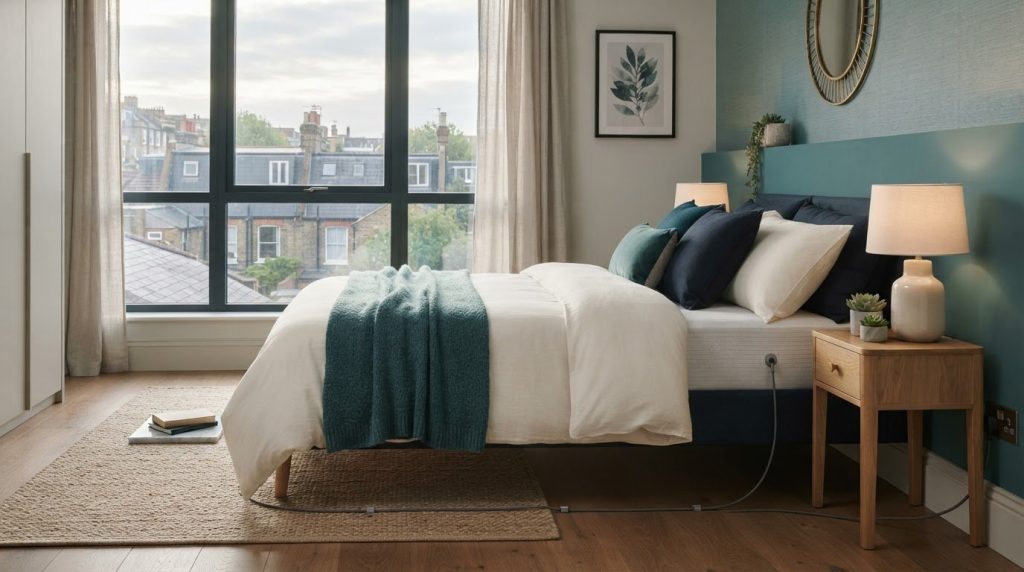
Earthing Sheets for Flat Living: A Practical UK Guide
Living above ground doesn’t automatically rule out earthing. If you’re considering a grounding sheet for apartment living, the key question isn’t whether you have a garden; it’s how the sheet connects to the earth indoors. It can be hard to compare setups when plugs, leads, mats and grounding rods are described in different ways.
An indoor sheet connects by a lead to the earth pin of a properly earthed UK socket. The socket provides an earth connection, not power to the sheet, so the condition of your home’s wiring matters. Your floor level alone doesn’t determine whether the setup is suitable.
This guide explains what to consider before choosing an indoor setup, then compares fitted sheets with other options for your home and routine. Use the practical checks to assess how a sheet might fit your bed, room and expectations.
Key Takeaways
- A grounding sheet for apartment living may suit you if you want an overnight option that fits into your usual bedding routine.
- Compare fitted sheets with mats and outdoor contact by considering your routine and where you can comfortably use each option.
- Carbon-infused earthing mats rely on sweat to connect to the earth, so consider whether that type of contact suits your intended use.
- Before choosing a setup, think through bed placement, access to the intended connection and the routines of anyone sharing your home.
- Choose based on practical fit and personal preference, not an expectation of guaranteed sleep or health outcomes.
Can a grounding sheet work in apartment living? Start with the practical question
Does living above ground level rule out indoor earthing? Not necessarily. A grounding sheet for apartment living is bedding with conductive threads designed to connect the sleeper to the earth. Whether it suits your flat depends less on which floor you’re on and more on the sheet’s intended connection and how well it fits your sleeping routine.
That practical question is separate from claims about sleep, pain or other health outcomes. Understanding how a setup connects can help you make an informed choice, but conductive threads don’t guarantee a particular result.
For a neutral review of how a grounding sheet is discussed in practice, this video offers one person’s perspective:
What does “grounding” mean when you live above ground?
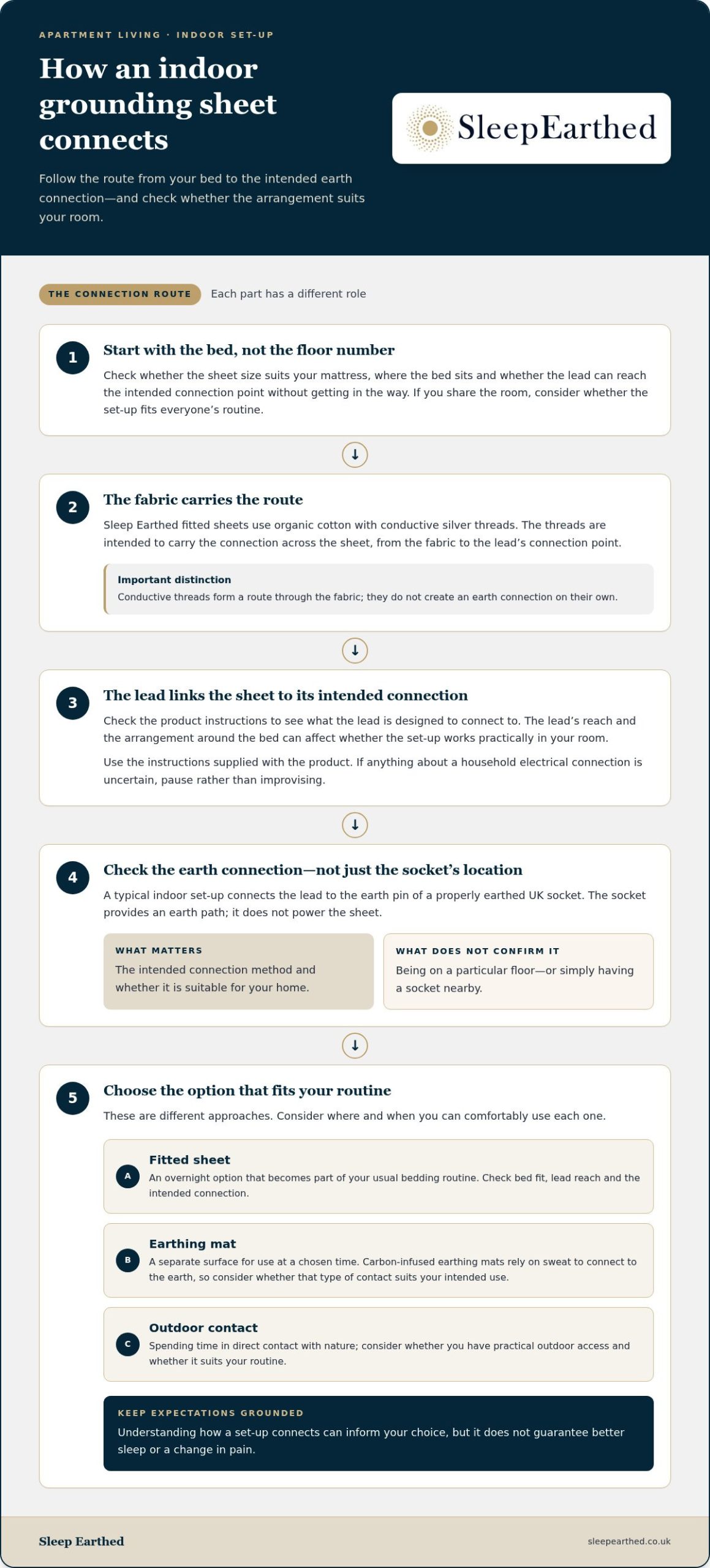
In everyday terms, grounding means creating an electrical connection between the conductive part of the sheet and the earth. In a typical indoor setup, a connection lead links the sheet to the earth pin of a properly earthed UK socket. The socket provides an earth path; it isn’t there to power the sheet. Being several floors up doesn’t, by itself, prevent that connection.
This electrical meaning is different from feeling grounded in a broader sense, such as feeling calm, settled or connected with nature. Those feelings can matter to personal wellbeing, but they don’t establish an electrical connection. For technical background on the terminology and purpose of earthing, see the Earthing system overview.
Keep connection claims distinct from health claims. An earthing sheet is designed as a conductive bedding option; that description alone can’t tell you whether you’ll sleep better or experience a change in pain. Sleep Earthed’s fitted sheets use organic cotton with conductive silver threads. When comparing options, consider the material, setup and practical fit alongside your expectations.
What an apartment resident should establish first
Start with your bedroom, not the floor number. Consider whether the sheet size suits your mattress, where the bed sits and whether the lead can reach the product’s intended connection point without getting in the way. If you share the room, think about whether the arrangement will work for everyone and fit your usual bedtime routine.
Indoor connection options can include a suitable earthed socket. Some setups use a grounding rod to connect with earth outside, which may be less straightforward in a flat without practical outdoor access. These are different approaches, not interchangeable assumptions. The right one depends on the product and your home.
Before settling on an option, identify what the product is intended to connect to and whether that connection suits your room. The complete grounding and earthing guide explains the foundational terminology, helping you compare setups without confusing an electrical connection with a general sense of wellbeing.
How an indoor grounding sheet connects to the earth
Once you’ve decided an indoor option could suit your room, consider how the connection is intended to work. The sheet is one part of the arrangement, and the connection lead is another. The bed’s position and the floor you live on don’t, by themselves, show whether a suitable connection is available.
What conductive silver threads do in an earthing sheet
In a Sleep Earthed sheet, conductive silver threads are woven into organic cotton. They’re intended to carry the connection across the sheet, linking the fabric you lie on to the lead’s connection point. In simple terms, the threads form a conductive route through the fabric; they don’t create an earth connection on their own.
This distinction helps when comparing materials. The fabric’s conductive element and the way the sheet connects are related, but they aren’t the same thing. A sheet can contain conductive threads, yet the overall setup still depends on using the connection method intended for that product. For a closer look at the fabric, Sleep Earthed explains conductive silver thread sheets.
Why the connection method matters indoors
A connection lead provides the route between the sheet and the intended earth connection. That’s why the method matters independently of your flat’s floor level. Check what the product is designed to connect to and whether that connection is suitable in your home. Don’t assume every socket or building provides a suitable connection simply because it’s indoors.
Keep the product’s instructions close at hand. They explain the connection method for that particular sheet and help you avoid making assumptions about a socket, lead or other component. If anything about a household electrical connection seems uncertain, pause rather than improvising. This article isn’t a substitute for assessing your wiring or providing electrical advice.
For example, if the bed is across the room from the intended connection point, the lead’s reach and the arrangement around the bed may affect whether the setup is practical. If the socket is nearby, that still doesn’t establish that it’s suitable. Use the product instructions to guide you, rather than relying on room layout alone.
Sleep Earthed’s grounding sheet setup guide covers the setup details. Read it alongside the instructions supplied with your product, and arrange the connection lead so it fits your normal bedtime routine. If you’re comparing bedding options, you can also explore UK-sized fitted earthing sheets from Sleep Earthed.
Grounding sheet, earthing mat or outdoor contact: which suits apartment life?
There isn’t one option that suits every flat or routine. A fitted sheet makes earthing part of your bed setup, a mat is a separate surface for use at a chosen time, and outdoor contact means spending time in direct contact with natural ground. Compare where and how you’d use each rather than assuming they’re interchangeable.
| Option | Routine and setting | Practical consideration |
|---|---|---|
| Fitted earthing sheet | Overnight, as part of the bed | Needs to suit your mattress and have access to its intended connection |
| Earthing mat | Used separately at a chosen time and place indoors | Requires a suitable surface and the product’s intended connection method |
| Outdoor contact | Time spent outside in direct contact with natural ground | Depends on having accessible ground and making time to go outdoors |
When a fitted earthing sheet may suit your routine
If you want an overnight bedding-based option, a fitted sheet can be a natural fit: it becomes part of the bed rather than a separate surface you bring out for a session. Check that the UK-sized fitted sheet is appropriate for your bed, then consider whether its connection arrangement works in your room. Bed position and your usual routine matter as much as the floor you live on.
That’s the main appeal of a grounding sheet for apartment living: it may fit into a routine you already follow, provided the product’s intended connection is practical for your home. A wider look at indoor earthing solutions can help you compare bedding with other indoor approaches.
How mats and outdoor contact differ from bedding
A mat is a distinct surface, not a replacement fitted across the bed. You choose where to use it and how it fits into your routine. Carbon-infused earthing mats rely on sweat to connect to the earth, so consider whether that type of contact suits your intended use. As with bedding, follow the particular product’s instructions rather than assuming all mats work in the same way.
Outdoor contact is different again. It involves going outside and having direct contact with natural ground. This may appeal if you enjoy being outdoors, but it can be less convenient in a flat without easy access to a garden or other suitable space. It isn’t the same as an indoor connection, nor should it be treated as a medical treatment or a guaranteed route to better sleep.
Think about the routine you’re most likely to maintain. If overnight use feels simplest, explore Sleep Earthed fitted sheets. If you prefer a separate surface or time outdoors, weigh those options against your space and habits.
How to assess a grounding sheet setup in a rented or shared apartment
A little planning can show whether a grounding sheet for apartment living will fit your bedroom and household routine. This isn’t an installation guide: follow the instructions supplied with your product for its connection method, and don’t modify sockets or wiring. Instead, work through these practical checks before deciding where the sheet will go.
A simple pre-use checklist for apartment residents
- Check the bed and bedding. Confirm the sheet size suits your bed, then consider how it will sit alongside your existing bedding. In a shared room, make sure the arrangement is comfortable for everyone using the bed.
- Look at bed placement. Note where the bed is in relation to the product’s intended connection point. If the lead would be awkward to position, consider whether a different bed arrangement would make the setup easier to manage.
- Read the product instructions. Understand the intended connection method before use. Don’t assume a socket or connection point is suitable just because it’s nearby, and don’t improvise if the instructions don’t match your setup.
- Think about household routines. In a shared flat, consider who uses the room, where people walk and whether pets might tug or become caught on a lead. Plan a tidy position that keeps the sleeping area comfortable and avoids creating a trip hazard.
These checks are especially useful in a rented home, where you may want a setup that fits the room as it is, without changes to the property. If the bed is moved, furniture is rearranged or someone else shares the space, revisit the lead’s position and make sure it remains tidy and consistent with the product instructions.
What to do if the setup does not seem to connect
If you’re unsure whether the setup is working, pause and check the product instructions and the connection points described there. Look for a simple mismatch, such as a lead that isn’t connected as directed. Avoid dismantling or altering a socket, testing wiring yourself or guessing what might be happening inside the building. If the instructions don’t resolve your question, use the earthing sheet troubleshooting guide for product-specific next steps.
Once the setup is arranged as directed, consider whether it works day to day. Is the lead positioned neatly? Does the sheet suit the bed? Can everyone use the room comfortably? A practical arrangement should fit the household, not add avoidable hassle to bedtime. If you’re choosing a fitted option, explore Sleep Earthed fitted earthing sheets with your bed size and room layout in mind.
Choosing an apartment-friendly grounding sheet with realistic expectations
A good choice starts with how you’ll use the product, not with a promise about what you’ll feel. A fitted sheet brings the conductive surface into your bed routine, while a separate mat may suit someone who prefers a dedicated spot for use at another time. Both involve practical considerations, including the intended connection and how comfortably the option fits your space.
Product features describe how an item is designed, not a guaranteed sleep or health outcome. Personal experiences vary, and a sheet can’t promise that you’ll sleep better or experience a change in pain. This distinction makes it easier to choose based on the routine an option offers, rather than expecting a result no product feature can ensure.
Questions to consider before choosing a sheet
Before deciding, consider the details that will shape everyday use. These questions can help you compare options without overcomplicating the choice:
- Does a fitted sheet suit your bed and preferred nightly routine, or would a separate mat fit your living space better?
- Can you arrange the product as directed, with its intended connection practical for your bedroom?
- Have you read the product instructions and understood the setup before use?
- Have you reviewed the stated guarantee terms, including what the better-sleep guarantee covers?
Sleep Earthed offers UK-sized fitted earthing sheets made with organic cotton and conductive silver threads, along with a 90-day better-sleep guarantee. Read the terms before deciding, and treat the guarantee as having defined conditions, not as a promise of a medical benefit or particular health result.
A measured next step with Sleep Earthed
If an overnight bedding option seems like the best match, check how the sheet’s size and intended connection fit your bed and room. If you’d rather use a separate surface, compare that format with your available space and routine. Practical fit matters: an option you can set up and use comfortably is more likely to feel manageable than one that creates extra friction at bedtime.
For a grounding sheet for apartment living, weigh how bedding fits your routine against the connection arrangement and your personal preference. Sleep Earthed offers fitted sheets alongside related earthing accessories, so you can explore the available formats with those considerations in mind. Start with what suits your home.
Explore Sleep Earthed earthing sheets and consider which option best fits your bed and routine.
Choose the setup that feels right for your home
A practical next step is to picture your usual bedtime routine and decide whether bedding-based earthing would fit comfortably into it. For a grounding sheet for apartment living, choose an option that suits your bed, space and connection arrangements, with realistic expectations about what it can and can’t promise.
Sleep Earthed offers UK-sized fitted earthing sheets made from organic cotton with conductive silver threads. Consider how this bedding format fits your room and routine, and review the product details before deciding. A considered choice is more useful than buying in expectation of a particular health outcome.
If a fitted sheet seems like a sensible match for your routine, browse the available options and related products at your own pace. Explore Sleep Earthed earthing sheets and take the next step when you’re ready.
Frequently Asked Questions
Can I use a grounding sheet in a flat on an upper floor?
Yes, an upper-floor flat isn’t automatically unsuitable. The important point is whether the particular sheet can be connected as its instructions specify. A balcony or a window near the bed doesn’t necessarily provide the connection a product is designed for. Check the instructions for your sheet rather than judging by height, and remember that a suitable setup can’t predict how you’ll feel or sleep.
Do grounding sheets need to be connected to a wall socket?
Not every earthing sheet uses the same connection method, so follow the instructions supplied for your specific product. Don’t assume that a nearby socket is suitable or that every building provides the connection the sheet requires. For Sleep Earthed bedding, use its setup guidance to understand the intended connection. If you’re uncertain about an electrical fitting, don’t modify it or try to resolve the issue by altering the socket.
Can I use a grounding sheet in a rented apartment?
Renting doesn’t automatically rule out using a grounding sheet. Consider whether it fits your bed and whether you can use its intended connection without changing the property. In a furnished flat, check that the mattress and bedding arrangement work with the sheet before setting it up. Keep any lead tidy, and use the product as instructed rather than making alterations to electrical fittings.
Is a grounding sheet better than an earthing mat for apartment living?
Neither is automatically better; the right format depends on how you want to use it. A sheet is incorporated into the bed, whereas a mat is a separate surface you can place where it suits your routine. They offer different ways to fit an earthing product into daily life, so compare each with your preferences and available space. Follow the instructions for the specific product you choose rather than treating sheets and mats as interchangeable.
Can I use a grounding sheet without a garden or balcony?
Yes, not having a garden or balcony doesn’t by itself prevent you from considering an indoor sheet. Outdoor contact is a separate activity, not a requirement for bedding designed for indoor use. If you’re comparing a grounding sheet for apartment living, focus on whether the sheet’s stated connection method suits your home and whether it works with your bedroom routine. A nearby outdoor space alone doesn’t determine indoor suitability.
What should I do if my grounding sheet does not seem to connect?
Start with the instructions for your exact sheet and check that its connection points are arranged as described. Don’t open or alter a socket, or guess at the cause based on the building’s wiring. If you use a meter, interpret its reading only according to that meter’s instructions, since results can vary by device. Sleep Earthed offers a Test Meter; follow its instructions and use the product’s troubleshooting guidance before changing anything.
Will a grounding sheet improve my sleep in an apartment?
There’s no way to promise that a grounding sheet will improve your sleep, whether you live in a flat or elsewhere. People’s experiences differ, and someone else’s account can’t predict yours. Consider the sheet for its intended bedding and connection purpose, rather than buying it expecting a particular health result. If sleep problems persist or concern you, speak with a qualified health professional for advice about your circumstances.