
 90 Day’s To Better Zzz’s Guarantee T&C apply


Could your bed connect to the earth without using mains electricity? If you’re wondering how to ground your bed in a UK home, you may have questions about socket safety, silver-thread sheets and how to tell whether the setup is connected. The basic arrangement is straightforward: conductive bedding connects through a cord to an earth connection, not to the live or neutral supply.
This guide takes you through the setup, from choosing a sheet that fits your mattress to connecting it and checking conductivity with the Sleep Earthed Test Meter. You’ll also find practical guidance on the UK earth connection, fabric care and what research can and can’t tell us about sleep and recovery. Earthing isn’t a guaranteed fix for poor sleep or morning stiffness, but understanding the equipment and its limits can help you set it up and care for it with confidence.
Key Takeaways
- Understand how an earthing sheet creates a conductive connection between your body and the earth.
- Learn how to ground your bed with a UK-sized fitted sheet, a connection cord and a suitable UK earthing plug.
- See how organic cotton and conductive silver threads combine in a bedding option for night-time grounding.
- Find out how the Sleep Earthed Test Meter can help you check your setup’s conductivity.
- Keep silver-thread bedding in good condition with careful washing and Green Sheets.
Understanding the Basics: What Does It Mean to Ground Your Bed?
Bed grounding means creating a conductive path between your body and the earth while you rest. Conductive bedding connects through a cord to an earth connection, rather than drawing power from the live and neutral parts of the mains supply. The aim is a physical connection, not to electrify the bed. When learning how to ground your bed, it helps to distinguish this setup from broader claims about its effects on health.
For a visual introduction to the idea, watch this video:
The Science of Sleep and Electrons
Grounding is the physical connection of the body to the earth’s natural electric charge. In explanations of earthing, free electrons from the earth are proposed to move along a conductive path and neutralise positive charges in the body. This is a proposed mechanism, not an established account of how the body works. Conductive silver threads provide a pathway through the bedding; they don’t generate electricity. Small, preliminary studies have explored possible links between grounding, sleep, cortisol and the nervous system, but the findings don’t establish grounding as a treatment or guarantee better rest.
Night-time offers the opportunity for longer contact, with the sheet against your skin while you’re in bed. That sustained contact is one reason people choose bedding for grounding instead of relying on brief contact with the ground outdoors. The wider concept of earthing also has critics, so it’s sensible to separate the physical connection from claims about its effects.
Why Grounding Indoors Is Essential in the UK
At home, carpets, wooden floors, raised beds and other materials can separate bare skin from the ground. Concrete doesn’t always behave in the same way, but a floor isn’t a dependable substitute for a deliberate conductive connection. Earthing bedding bridges that indoor gap: Sleep Earthed sheets combine organic cotton with conductive silver threads, connecting the contact surface to an earth point through a cord.
Claims that “dirty electricity” or electromagnetic fields (EMFs) harm ungrounded sleepers, or that grounding bedding shields you from them, shouldn’t be treated as proven facts. The practical purpose is narrower: to establish a conductive route to earth using the bedding and an appropriate earth connection. With that in mind, you can consider the equipment and connection steps in the next section.
Choosing Your Equipment: UK Sized Fitted Earthing Bed Sheets
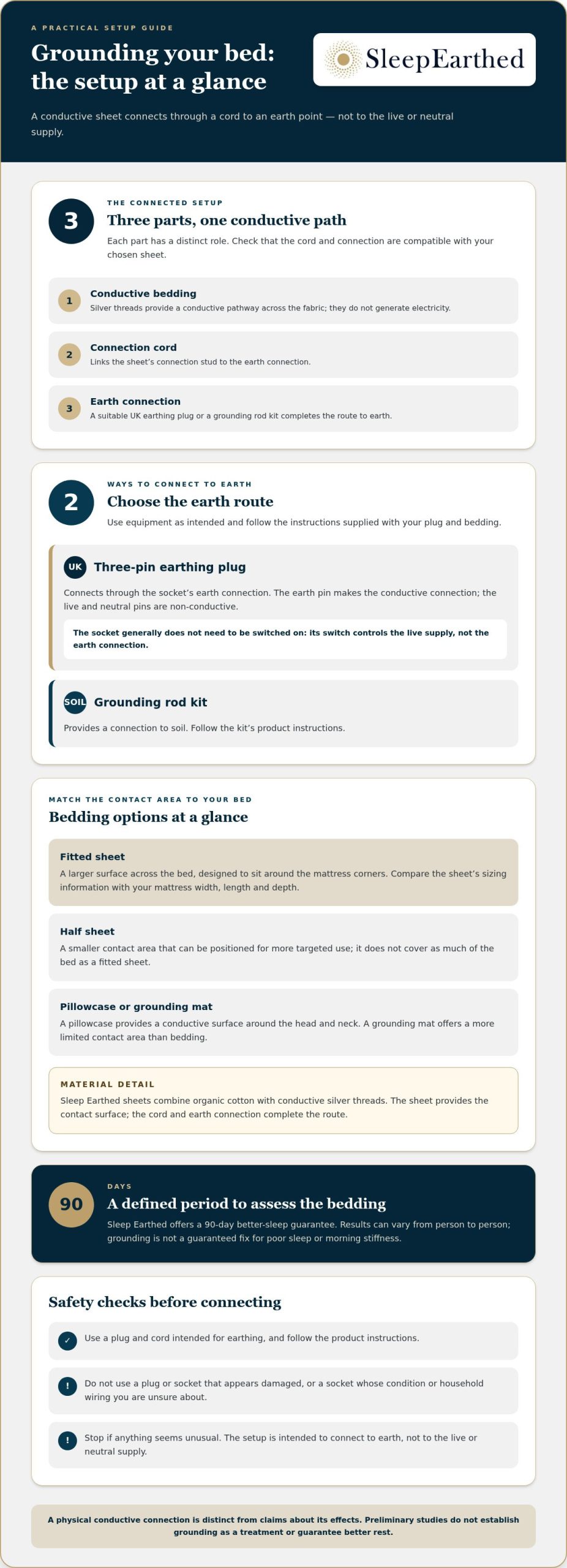
Start with your mattress. A fitted sheet sized for a UK mattress is designed to sit around its corners and stay in place as you move during the night. A half sheet gives you a smaller contact area and can suit more targeted use, but it won’t cover as much of the bed as a fitted sheet. Compare your mattress width, length and depth with the sheet’s sizing information to choose a fit that sits securely.
Material matters as well. Sleep Earthed bedding combines organic cotton with conductive silver threads, pairing a familiar fabric with a conductive surface. To ground your bed, each part of the setup has a separate job: the sheet provides the contact area, the cord connects to the sheet’s stud, and the earthing plug links the cord to the socket’s earth connection. Check that the cord and connection are compatible with the sheet you choose.
The Role of Conductive Silver Threads
Silver threads are incorporated into the fabric to create conductive pathways across the sheet. Their placement and condition matter because the sheet needs to conduct between the area of contact and its connection stud. A grounding mat gives you a more limited contact area, while bedding can provide a broader surface during sleep. Compare the products’ construction and care requirements, rather than assuming one option will always last longer. For more on fabric choices, read the organic cotton versus regular cotton grounding sheet guide.
Targeted Grounding with Pillowcases and Accessories
An earthing pillowcase provides a conductive surface around the head and neck, while an earthing half sheet gives you a smaller area to position where you want contact. A full fitted sheet is a straightforward option if you prefer a larger surface across the bed. Sleep Earthed also offers a 90-day better-sleep guarantee, giving you a defined period to assess the bedding as part of your routine. Results can vary from person to person.
For a practical starting point, explore Sleep Earthed fitted earthing sheets and choose a size that matches your mattress. You can also read the UK guide to grounding and earthing for more context on bedding and other options.
Establishing the Connection: UK Plug vs Grounding Rod Kit
Once you’ve chosen your bedding, decide how to connect it to earth. A purpose-made UK earthing plug uses the socket’s earth connection, while a grounding rod kit provides a connection to soil. Sleep Earthed offers a Grounding Rod Kit alongside earthing bedding. Whichever method you use, follow its product instructions and don’t treat it as a substitute for sound household wiring.
Using the UK Three-Pin Earth Connection
Many earthing plugs are designed so the earth pin makes the conductive connection, while the live and neutral pins are non-conductive. Follow the instructions supplied with your specific plug and bedding, and use equipment intended for earthing. The socket switch controls the live supply, not the earth connection, so the socket generally doesn’t need to be switched on for an earthing product to connect to earth.
A correctly made earthing plug is designed to connect the bedding to earth, not to the live or neutral supply. However, damaged or unsuitable equipment and incorrectly wired sockets can create risks. Don’t use a plug or socket that appears damaged, and stop if anything seems unusual. Don’t use a socket if you’re unsure about its condition or the home’s wiring; having a qualified domestic electrician check your system (such as polegateelectricals81.godaddysites.com) can ensure your sockets and earth paths are completely sound.
How to Connect the Plug
- Check that the plug and connection cord are compatible with your earthing sheet.
- With the socket switched off, insert the plug as directed by its instructions.
- Connect the cord to the sheet’s stud, then follow the product guidance for checking the connection.
The socket’s earth terminal is part of the home’s earthing system. It isn’t a separate “clean” connection guaranteed to be free from electrical noise, and a socket’s presence alone doesn’t prove that it is correctly wired. A Sleep Earthed Test Meter can help you check conductivity through the setup, but it doesn’t replace caution about questionable wiring.
When to Consider a Grounding Rod Kit
A rod provides a route to the soil outside, which may suit you if you prefer not to connect through a socket. An older property or sensitive electrical equipment doesn’t automatically make a rod the better or safer option. Use a Grounding Rod Kit only as directed for that kit. Don’t improvise the rod placement or route the cable through a window or wall. If the instructions don’t make the setup clear, pause rather than guessing.
To compare the available bedding and connection options, explore Sleep Earthed grounding options. The next section takes you through connecting the equipment at the bed.
Step-by-Step Guide: How to Ground Your Bed Correctly
Set up the bed by checking each connection in turn before you use it. Follow the instructions supplied with your Sleep Earthed sheet, cord and chosen earth connection, as fittings can differ between products.
- Fit the sheet. Place it on the mattress as you would a fitted sheet, with the conductive surface facing upwards. Keep the connection stud accessible and smooth out the fabric.
- Attach the cord. Push the cord connector onto the sheet’s stud until it clicks securely into place. Leave enough slack for movement, so the cord doesn’t pull on the stud.
- Connect to earth. Attach the other end of the cord to the compatible UK earthing plug or Grounding Rod Kit, following the instructions for that connection. If using a socket, connect as directed to the earth connection, not the live supply.
- Check conductivity. Use the Sleep Earthed Test Meter according to its instructions. If the reading doesn’t indicate conductivity, check that the cord is attached at both ends and the sheet’s stud is secure, then test again.
Testing Your Connection for Peace of Mind
A visual check can show whether the cord is connected, but it can’t confirm that the conductive path is working. The Sleep Earthed Test Meter gives you a way to check conductivity through the setup. Use it as directed for your sheet and connection. If the result is unexpected, recheck the fittings and test again rather than assuming the sheet is faulty. For more detail, follow the grounding sheet setup guide.
Skin Contact and Nightwear
For direct contact, let an area of bare skin rest on the conductive surface, such as your feet, lower legs or back. Thick pyjamas create a layer between your skin and the sheet, so they may reduce direct contact. Thin clothing may still allow a connection, but don’t assume body moisture is needed or that it guarantees conductivity. Start with a comfortable position and a good area of contact. You don’t need to stay perfectly still or cover the whole sheet with your body.
Ready to put the steps into practice? Explore Sleep Earthed earthing bedding and its compatible connection options.
Maintaining Your Grounded Bed: Care and Longevity
Care affects comfort and can affect conductivity. Body oils and sweat can build up on the sheet, while detergent residue may leave a film on the fabric. Silver can also oxidise over time. Regular, gentle washing helps remove oils and residue, while harsh laundry products and high heat can be hard on conductive threads.
Washing Silver-Infused Bedding Correctly
For Sleep Earthed products, use Green Sheets fragrance-free eco laundry detergent strips. Wash the bedding at 40°C on a gentle cycle. Leave out bleach, fabric softener and “Oxi” products, which can damage or coat conductive fibres. Avoid detergents containing oils or whitening agents, too.
After washing, air dry the sheet or tumble dry it on a low heat. Keep it away from direct contact with hot radiators, where concentrated heat can affect the fabric and its silver threads. Follow any care instructions supplied with your bedding if they differ, and avoid rough handling or unnecessary strain on the connection stud.
Troubleshooting and Product Lifespan
If you’re unsure whether the sheet is conducting, check the setup with the Sleep Earthed Test Meter and follow its instructions. A poor reading doesn’t automatically mean the sheet has reached the end of its life. First, check that the cord is attached at both ends, the stud is secure, and the contact area is clean and dry. Correct any loose connections or buildup, then retest.
There’s no single lifespan that applies to every silver-thread sheet. How long it remains conductive can depend on how often it’s used and washed, how it’s cared for, and whether the conductive threads have been exposed to damaging products or heat. Use the meter rather than appearance alone to assess conductivity. If results remain unexpected after checking the connections and care routine, review the product guidance.
For a broader look at the evidence and common claims, read the guide to earthing sheet science. Consistent, gentle care is a practical part of how to ground your bed night after night, helping you keep the bedding clean and the connection easier to check.
Make Your Bed a More Grounded Place to Rest
Grounding your bed comes down to a few practical choices: choose bedding that fits your UK mattress, connect it using a suitable earthing plug or rod, and check conductivity with a dedicated test meter. For direct contact, let your skin rest on the conductive surface where comfortable. Gentle care helps keep the silver-thread fabric in good condition.
If you’re ready to put what you’ve learned about how to ground your bed into practice, Sleep Earthed UK-sized fitted sheets combine organic cotton with conductive silver threads. They also come with a 90-day better-sleep guarantee, giving you time to assess how the bedding fits into your routine without treating results as guaranteed.
Explore UK-sized fitted earthing bed sheets and take a considered first step towards a more grounded sleep environment. A clear setup and simple care routine can help you feel confident as you begin.
Frequently Asked Questions
Is it safe to ground my bed using a UK wall socket?
A purpose-made earthing plug can be used with a correctly functioning earth connection, but don’t assume every socket is suitable. The plug should connect the bedding to earth, not to the live supply. Follow the instructions for your earthing product, and don’t use damaged equipment or a socket you’re unsure about. A Sleep Earthed Test Meter can help you check conductivity through the setup.
Can I use a multi-plug adapter or extension lead with my earthing sheet?
Use a direct wall socket unless the instructions for your specific earthing plug explicitly allow an adapter or extension lead. Additional connections can make the setup harder to assess, and a lead doesn’t prove that a socket’s earth is sound. Don’t modify the plug or use a damaged adapter. If you’re uncertain about the socket or household wiring, don’t use it for grounding.
Do I need to be completely naked to benefit from a grounding sheet?
No. You don’t need to sleep naked, though direct skin contact with the conductive surface is the clearest way to make contact. You might rest your feet, legs or back on the sheet, depending on its position. Thick nightwear creates a barrier between skin and fabric, so consider lighter clothing if comfortable. Follow the sheet’s instructions, and remember that contact alone can’t guarantee a particular sleep or health outcome.
Will my grounding sheet still work if I use a mattress protector underneath it?
A protector beneath the earthing sheet won’t necessarily prevent the sheet from connecting to its earth lead, but it can affect contact if it sits between your body and the conductive surface. For direct skin contact, place the earthing sheet above the protector, with its conductive side facing upwards. Keep the connection stud accessible, then follow the product guidance and use a test meter to check the setup.
How often should I wash my earthing bedding to keep it conductive?
Wash it regularly to remove body oils and sweat that can build up on the conductive surface. How often depends on use, but washing every one to two weeks is a practical starting point. Follow the care instructions, and avoid bleach, fabric softener and “Oxi” products. Sleep Earthed recommends Green Sheets fragrance-free eco laundry detergent strips for its products.
What happens if my house doesn’t have a reliable earth connection?
Can I use an electric blanket with a grounding sheet?
Don’t assume an electric blanket and grounding sheet can be used together. Their electrical designs and instructions differ, so read the guidance supplied with both products before combining them. If either set of instructions advises against simultaneous use or doesn’t address it, use them separately rather than guessing. Keep cords and connections arranged as directed, and don’t use equipment that is damaged or showing signs of wear.
Do grounding sheets lose their effectiveness over time?
They can lose conductivity over time. Silver threads may be affected by washing, detergent residue, body oils and general wear, so appearance alone isn’t a reliable guide. Follow the care instructions and check the connection with a Sleep Earthed Test Meter if performance is uncertain. There isn’t one guaranteed lifespan for every sheet; use, washing and care all matter. If the reading changes, inspect the setup and fabric.