
 90 Day’s To Better Zzz’s Guarantee T&C apply


The main grounding sheet safety concerns are electrical: plug-in products can pose an electrocution risk during thunderstorms, and faulty wiring can cause electric shock. Don’t use a plug-in product during a thunderstorm, and use an outlet checker to check that the socket is properly grounded. These precautions are a sensible starting point.
It’s understandable to wonder whether a sheet connected to electrical earth could cause harm, or whether tingling is a reason to stop. This guide covers practical risks and ways to use a grounding sheet more cautiously, without overstating its effects.
You’ll learn what to consider about sheet materials and connections, how washing and sweat can affect conductivity, and what to do if you notice tingling. We’ll also cover when people who are pregnant or have allergies, immune system problems, existing nerve damage or foot issues should speak with a doctor before trying grounding.
Key Takeaways
- Use an outlet checker to check that a socket is properly grounded before connecting a plug-in sheet.
- Put plug-in grounding products away during thunderstorms, and remember that faulty wiring can create a shock risk.
- Learn how conductive materials and connections work, and what washing and sweat may mean for a sheet’s conductivity over time.
- If you notice tingling, find out what to consider and when it’s sensible to stop using the sheet.
- Speak with a doctor before trying grounding if you’re pregnant or have allergies, immune system problems, existing nerve damage or foot issues.
Are there any potential risks of grounding?
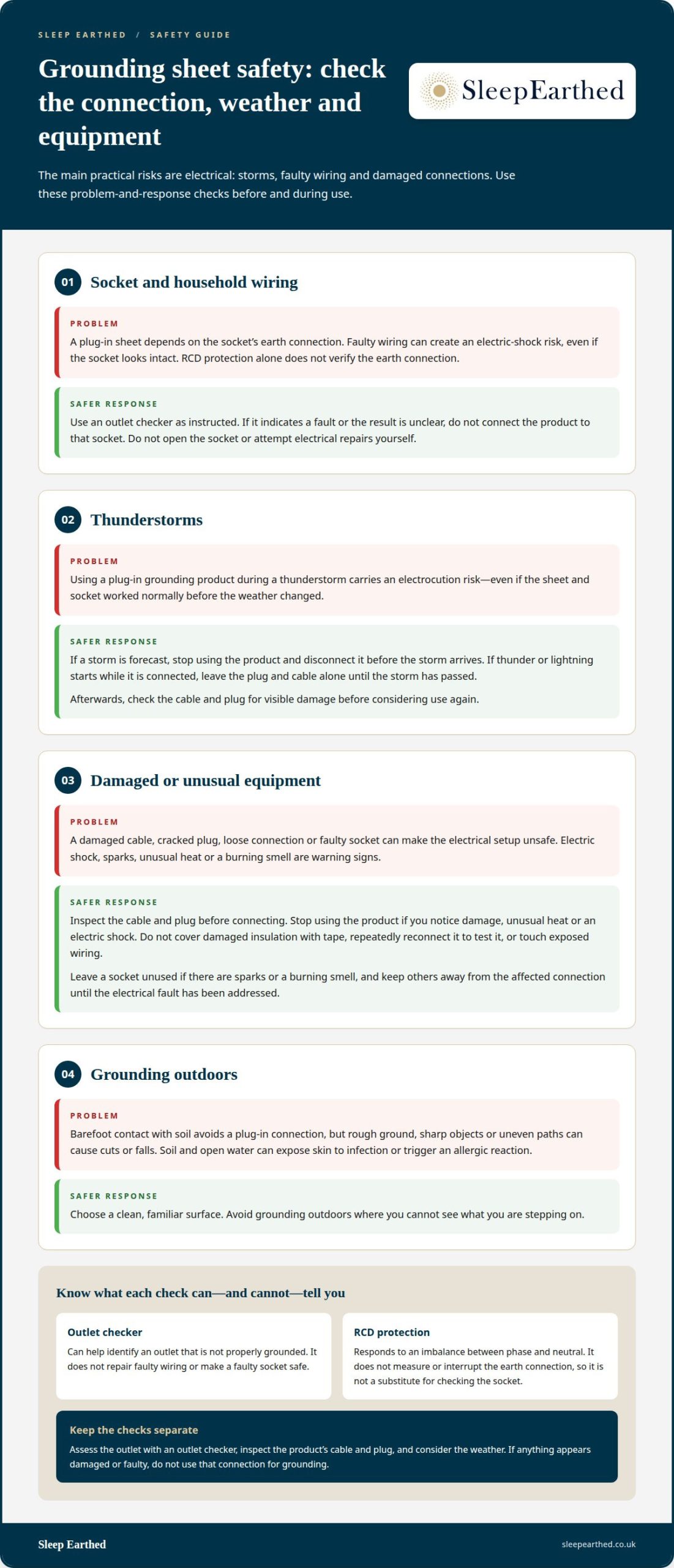
The main grounding sheet safety concerns involve the electrical connection, household wiring and storms. A grounding sheet uses an earth connection, so the socket and wiring matter. A TN-S earthing system and RCD protection don’t, on their own, show that a particular socket is correctly wired or suitable for a grounding product.
An RCD responds to an imbalance between phase and neutral. It doesn’t measure or interrupt the earth connection, so don’t treat RCD protection as a substitute for checking the socket. If a grounding product plugs into the mains, check that the outlet is properly grounded before use.
Use an outlet checker as instructed. It can help identify an outlet that isn’t properly grounded. If the checker indicates a fault or gives an unclear result, don’t connect the product to that socket. A plug-in earth connection depends on the outlet, so pay attention to a damaged cable, loose socket or faulty wiring. Don’t open the socket or attempt electrical repairs yourself.
Consider these practical steps before connecting a plug-in product:
- Check the socket with an outlet checker, following the checker’s instructions.
- Don’t use the socket for grounding if the checker indicates a problem.
- Inspect the product’s cable and plug for visible damage before connecting it.
- Stop using the product if you notice damage, unusual heat or an electric shock.
Not every grounding method uses a wall socket. Barefoot contact with soil, for example, avoids a plug-in connection but brings other practical risks. Rough ground, sharp objects or uneven paths can cause cuts or falls. Soil and open water can expose skin to infection or trigger an allergic reaction. Choose a clean, familiar surface and avoid grounding outdoors where you can’t see what you’re stepping on.
When considering grounding sheet safety concerns, check the socket and product connection separately. Use an outlet checker to assess the outlet’s grounding, and don’t rely on RCD protection alone. A checker doesn’t repair faulty wiring, and an RCD doesn’t verify the earth connection. If the socket or cable looks damaged, don’t use it for grounding until the electrical issue has been assessed. Keep the decision practical: check the connection, stop if something seems wrong, and don’t improvise repairs.
Electrocution risks during thunderstorms
One grounding sheet safety concern is the electrical connection during a thunderstorm. Don’t use plug-in grounding products while a storm is underway because of the electrocution risk. This applies even if the sheet and socket worked normally before the weather changed. A familiar setup doesn’t remove the risk posed by storm conditions.
If a storm is forecast, stop using the product and disconnect it before the storm arrives. If thunder or lightning begins while it’s connected, don’t reach for the plug or cable. Leave the product alone until the storm has passed, then consider using it again only if the equipment appears undamaged. This gives you a clear action without handling the connection during the storm.
Faulty wiring creates a separate electric shock risk. A grounding product connected to a socket with faulty wiring may expose someone to shock, even if the socket looks intact. Don’t open the socket, alter wiring or attempt electrical repairs yourself. If you suspect a fault, don’t use that connection for grounding. An outlet checker can help assess grounding, but it won’t repair wiring or make a faulty socket safe.
Before using a plug-in product, keep these practical steps in mind:
- Disconnect the product before a forecast storm begins.
- If thunder or lightning starts while it’s connected, leave the plug and cable alone.
- After the storm passes, inspect the cable and plug for visible damage.
- Don’t use a socket if you suspect faulty wiring or notice damage.
Check the cable and plug in normal conditions, too. Fraying, a cracked plug or a loose connection can indicate damage. Don’t cover damaged insulation with tape or keep using the product because the sheet still appears to work. The electrical connection matters, so don’t use a damaged component or repeatedly reconnect it to test it.
An electric shock is a reason to stop using the setup, not to investigate by plugging it in again. Don’t touch exposed wiring. Sparks, unusual heat or a burning smell are also reasons to leave the socket unused. Keep others away from the affected connection until the electrical fault has been addressed. These precautions apply whether the problem is with the product’s cable or the wall socket.
For grounding sheet safety concerns, treat storm conditions and wiring as separate checks. A calm day doesn’t rule out a faulty socket, and an apparently sound cable doesn’t remove the risk of a thunderstorm. Before use, consider the weather and check the connection for visible damage. If a storm is underway or you suspect damaged wiring or equipment, leave the product disconnected. Resume use only after the storm has passed and there’s no visible damage or suspected fault.
Grounding sheet materials and connections
A grounding or earthing sheet is fabric with conductive material woven or incorporated into it. A cable connects that material to an earth connection, allowing the sheet to provide a conductive path between the user and earth. It isn’t a power supply, and its operation depends on the sheet and connection being intact.
In the UK, electrical safety considerations include the plug-in connection and its components, as well as the home’s wiring. The fabric alone can’t establish that an electrical connection is safe, and a sheet can’t correct faulty household wiring.
No single certification mark, on its own, proves that every part of a grounding setup is safe. Look for product documentation that clearly describes the conductive material, cable, connection method and protective components. Don’t treat a general safety claim as proof that a socket is correctly wired.
Connection designs can differ. Some grounding sheets are reported to use a 100k Ohm resistor, while cables or plug adapters commonly contain a 1 megohm series resistor. Another reported connection has a recovery fuse marked x 250 RF030 instead of a resistor. These examples aren’t interchangeable specifications, so identify the components supplied with the particular sheet rather than assuming every design uses the same arrangement.
Before use, examine the cable, plug and sheet connection point. Stop if you see fraying, a cracked plug, a loose join or other damage. Follow the product’s instructions for attaching the cable, positioning the sheet and connecting it to earth. Don’t substitute a cable or adapter with a different component just because its connector fits.
Contact between skin and conductive material can affect how the connection works. One mattress-pad maker recommends having only one layer between the body and the pad to maximise conductivity. That recommendation applies to that product, not necessarily to every sheet. Follow the instructions for your sheet, and consider how clothing, bedding and the position of the conductive surface affect contact.
Silver threads can oxidise over time through exposure to washing and sweat, potentially reducing conductivity. Care for the sheet according to its instructions, and don’t assume its appearance shows whether its conductive properties are unchanged. Wear, residue build-up and care practices can all affect performance.
For a practical check, inspect the material and connection, read the supplied documentation, and use an outlet checker for a plug-in connection. This helps distinguish the sheet’s materials from the safety of the household socket, which are separate parts of the setup.
Tingling sensations and when to stop grounding
Tingling while using a grounding sheet doesn’t prove that grounding is working. Treat it as a sensation to assess, not a result to pursue. Note where you feel it, when it begins, and whether it stops when you move away from the sheet. These details can help you describe what happened if you need medical advice.
Stop using the sheet if tingling starts, especially if it’s uncomfortable, gets stronger or returns each time you reconnect. Move away from the conductive surface and disconnect the product when it’s safe to do so. Don’t keep using it to see whether the sensation passes or intensifies.
After stopping, consider the immediate setup. Check whether the sheet is damp, the connection is loose or the cable shows visible damage. Don’t handle or disconnect a plug-in product during a thunderstorm. If you find a damaged cable or plug, leave the product unused rather than attempting a repair.
Tingling can have different explanations, and its timing alone can’t identify the cause. Note whether it began only after contact with the sheet or whether you felt it beforehand. Record any other changes and whether the sensation continued after you stopped. Don’t assume a particular feeling indicates a specific electrical or health effect.
Some guidance suggests trying grounding for 10 to 20 minutes a day. That short period can help you notice how you respond without making a long session your starting point. Stop sooner if tingling or discomfort begins. The suggested duration isn’t a reason to continue through an unpleasant sensation.
- Stop the session as soon as tingling feels uncomfortable or intensifies.
- Note when it started, where you felt it, and whether it continued afterwards.
- Inspect the sheet and cable only when it’s safe, and don’t use damaged components.
- Don’t restart simply to test whether the same sensation returns.
If tingling continues after you stop, recurs when you aren’t using the sheet, or concerns you, speak with a doctor. Seek advice sooner if you also notice changes in sensation or movement. A doctor can consider the timing, affected area and your health history. Those details are more useful than treating tingling as a sign that the sheet is effective.
Keep the distinction clear: a brief trial, such as 10 to 20 minutes, is a way to observe your response, not a target to meet. A comfortable session doesn’t prove a health benefit, and an uncomfortable one isn’t something to push through. Stopping, recording what happened, and seeking medical advice when symptoms persist are practical next steps.
Who should consult a doctor before grounding
Speak with a doctor before trying grounding if you’re pregnant or have allergies, immune system problems, existing nerve damage or foot issues. These circumstances can affect what’s appropriate for your health, so explain the type of grounding you’re considering and how you plan to use it.
For example, mention whether you plan to use a sheet connected to an outlet or another grounding method. Describe any known allergy, changes in sensation, immune condition or foot problem. These details help your doctor consider your circumstances instead of treating grounding as a one-size-fits-all choice.
Can grounding sheets interfere with pacemakers or other medical devices? Don’t assume they’re compatible. Discuss the sheet and its electrical connection with your doctor before use, taking into account the device type and your individual circumstances.
Prepare a few clear points before speaking with your doctor:
- Name any existing condition, including nerve damage or an immune system problem.
- Explain whether you’re pregnant or have a known allergy.
- Describe foot issues, such as reduced sensation or a current problem affecting your feet.
- Show how the grounding sheet connects, and explain where you plan to use it.
- Mention any pacemaker or other medical device you use.
Foot issues and nerve damage deserve particular attention before barefoot grounding. Reduced sensation, for example, could make it harder to notice discomfort from a rough surface. If your feet are affected, describe the problem to your doctor before choosing a method that involves direct contact with the ground.
Allergies matter, too. If you’ve reacted to fabrics or other materials before, explain what caused the reaction and where it appeared. This gives your doctor a practical starting point for discussing contact with a sheet. Don’t ignore a new rash or other reaction after use. Stop and seek medical advice about the symptom.
If you have an immune system problem, tell your doctor about the condition and the grounding method you’re considering. If you’re pregnant, raise the question before starting rather than relying on general advice meant for someone else. Your health history, symptoms and intended setup are useful details to share.
If you already have medical advice about a condition, include it in the discussion. Ask whether the proposed sheet and connection are suitable for you, and what symptoms should prompt you to stop. If you have a pacemaker or another medical device, make that the first point, not an afterthought. Keep any instructions you receive in mind before using a grounding sheet.
Once you’ve considered these health questions, you can explore UK-sized fitted earthing sheets as one available format.
Sleep Earthed: UK Sized Fitted Earthing Bed Sheets
Sleep Earthed offers UK Sized Fitted Earthing Bed Sheets for readers who have considered the safety steps and want a fitted option. The range also includes Earthing Pillow Cases, an Earthing Half Sheet and an Earthing Recovery Bag, giving you different formats to consider for your routine.
Choose a sheet only after considering whether its connection and your intended setup suit your circumstances. If you have a medical condition, use a pacemaker or another medical device, or have experienced persistent tingling, speak with a doctor before grounding. A bed sheet won’t replace medical advice or resolve an electrical fault in your home.
For details about Sleep Earthed’s earthing sheets, visit sleepearthed.co.uk.
Choose your next step with confidence
Let your comfort and circumstances guide your next step. If questions about grounding sheet safety remain, pause and decide what information would help you make an informed choice. You might discuss a health concern with your doctor or consider which sheet format fits your usual sleeping arrangement.
Sleep Earthed offers UK Sized Fitted Earthing Bed Sheets, Earthing Pillow Cases and an Earthing Half Sheet. Each format may suit a different routine. Choosing a product is a personal decision, so take the time you need.
If you’d like to ask about the available options, contact Sleep Earthed with your questions. A clear question is a good place to start, and you can take the next step at your own pace.
Frequently Asked Questions
What safety risks are associated with grounding sheets?
The main risks relate to the electrical connection, damaged components, thunderstorms and skin contact. A worn cable or faulty socket can create a shock risk, while conductive fabric may irritate sensitive skin. Outdoor grounding carries different hazards, such as cuts from rough ground or reactions to soil and water. Consider your method, inspect its components and stop if you notice damage or discomfort.
Can grounding sheets cause electric shock or electrical burns?
Electric shock is possible if a grounding product is connected to faulty wiring or has damaged electrical components. The available information doesn’t establish a specific risk of electrical burns, so don’t assume every tingling sensation means a burn or electrical injury. If you experience a shock, stop using the setup and seek appropriate medical advice, particularly if you have pain, visible injury or ongoing symptoms.
How can you test a grounding sheet and its outlet connection safely?
Follow the sheet’s instructions and use a compatible test meter to check its conductive connection. Check the wall socket separately with an outlet checker, as testing the sheet doesn’t confirm the socket’s condition. Don’t dismantle the plug, cable or socket, and don’t test a visibly damaged product. If either check indicates a problem, leave the setup unused rather than trying to repair it yourself.
Are grounding sheets safe to use during thunderstorms?
No. Don’t use a grounding sheet connected to a wall socket during a thunderstorm, because plug-in grounding products carry an electrocution risk in those conditions. If a storm is approaching, disconnect the product beforehand. If thunder or lightning starts while it’s connected, avoid handling the plug or cable until the storm has passed. Postpone outdoor grounding during storms, too.
Do grounding sheets have proven health benefits or risks, according to clinical evidence?
Some small studies have reported changes after grounding, including a heart-rate-variability finding after 20 minutes and improved alignment of cortisol with its natural 24-hour rhythm. Those reports don’t, by themselves, establish reliable health benefits for grounding sheets. Treat claims about sleep, pain or recovery carefully, and don’t use a sheet instead of medical care or prescribed treatment. Ask a clinician about health decisions related to your condition.
What precautions should people with medical conditions take before using a grounding sheet?
Speak with a doctor before starting if you’re pregnant or have allergies, immune system problems, existing nerve damage or foot issues. Explain whether you’re considering a plug-in sheet or another method, and mention symptoms such as reduced sensation or a skin reaction. If you use a pacemaker or another medical device, discuss compatibility with your doctor before use rather than relying on general product descriptions.