
 90 Day’s To Better Zzz’s Guarantee T&C apply

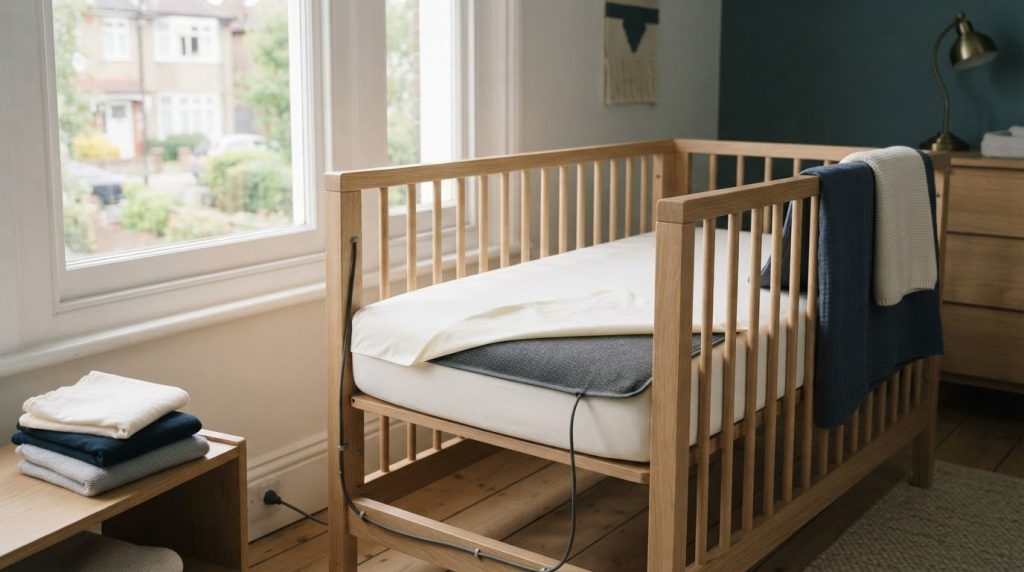
A baby’s sleep set-up deserves extra care. Whether earthing sheets are safe for babies depends on the material, placement and cord routing. Keep any cord secured well away from the sleeping area to reduce the risk of strangulation.
It’s understandable to scrutinise anything that touches delicate infant skin or sits near a cot. Earthing products connect conductive fabric to earth, so their cords and placement matter as much as the material.
This guide explains what to consider about materials, cords, sleep positioning and claims about nervous-system regulation. It also explains why a grounding mat may be placed beneath the cot sheet without direct contact, and how to assess earthing products without compromising a safe sleep environment.
Key Takeaways
- Prioritise a baby’s sleep set-up and keep any earthing cord secured well away from the sleeping area.
- Choose materials with delicate infant skin in mind, and consider how conductive fabric sits against the skin.
- A grounding mat may be positioned beneath the cot sheet without needing direct contact with the baby.
- Separate claims about sleep or nervous-system effects from practical safety considerations.
- Learn how UK-sized fitted sheets and other Sleep Earthed options relate to the questions covered in the article.
Are Grounding Sheets Safe for Babies?
Grounding sheets connect conductive material to earth through a cord and grounded outlet or rod. For babies, placement, material and cord routing matter more than claims about grounding benefits.
Placement in cribs and shared sleep spaces
A grounding mat or sheet adds conductive material to a baby’s sleep space. Its position matters: it must not disrupt a safe, clear sleeping surface. One suggested arrangement places a grounding mat beneath the cot sheet, without direct contact with the baby. A regular sheet can sit over the mat if the surface remains flat and secure.
Carbon-infused earthing mats work differently from conductive fabric sheets: they rely on sweat to connect the body to earth. A dry barrier or extra sheet may affect that intended contact. Don’t assume every mat works the same way. In a shared sleep space, avoid loose material that could bunch around the baby or alter the sleep surface.
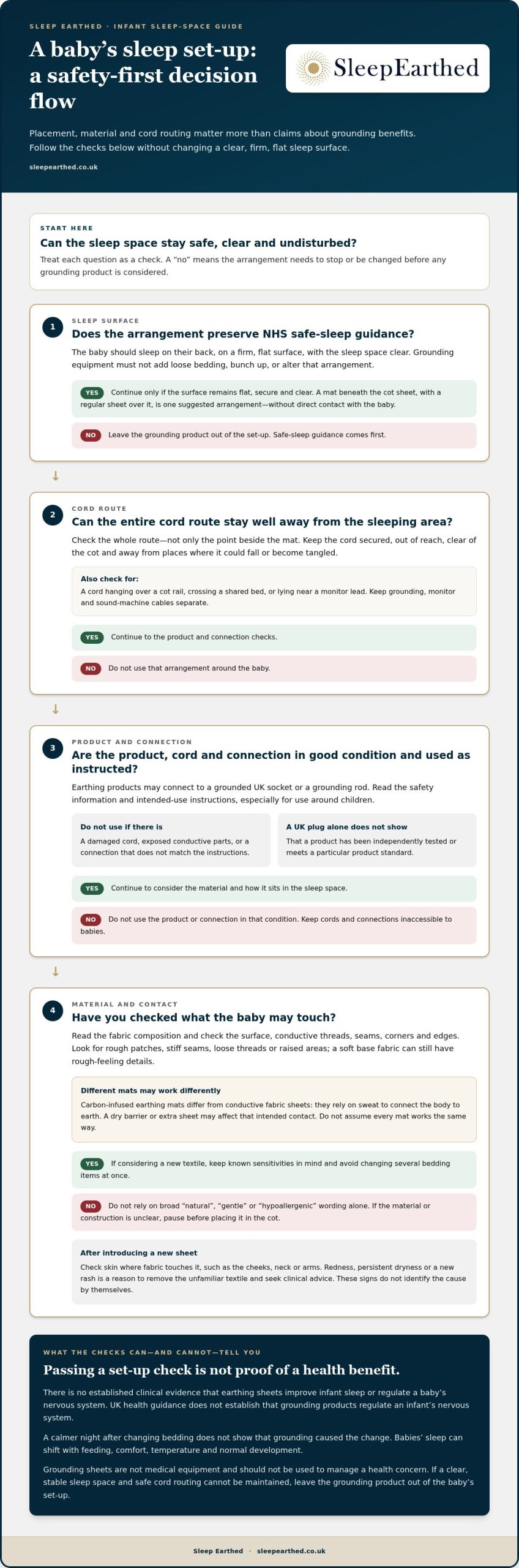
The NHS advises placing babies on their backs to sleep, on a firm, flat surface, with the sleep space clear. Grounding equipment must not change that arrangement or introduce loose bedding. Safe-sleep guidance comes first; consider a mat only if it can remain securely positioned.
Cord routing and strangulation risks
A grounding cord connects the conductive sheet or mat to a grounded outlet or rod. For an infant, secure the cord well away from the sleeping area to reduce strangulation risk. Keep it out of reach, clear of the cot and away from places where it could fall or become tangled.
Check the whole route, not just the point beside the mat. A cord hanging over a cot rail, crossing a shared bed or lying near a monitor lead adds avoidable clutter. Keep grounding, monitor and sound-machine cables separate. If the cord cannot stay clear of the sleep space, don’t use that arrangement around the baby.
Electrical safety, standards and infant guidance
Earthing products may connect to a grounded UK socket or a grounding rod. A UK plug alone doesn’t show that a product has been independently tested or meets a particular product standard. Read the safety information and intended-use instructions, especially for use around children. UK health guidance does not establish that grounding products regulate an infant’s nervous system.
Electrical safety depends on product design, condition and connection. Don’t use damaged cords, exposed conductive parts or connections that don’t match the instructions. A fault or unsuitable connection can create shock or burn risks, so keep cords and connections inaccessible to babies. Grounding sheets are not medical equipment and should not be used to manage a health concern.
Grounding describes an electrical connection, not proof of suitability for infants. Prioritise NHS safe-sleep advice, a stable surface and a clear sleep space. If those conditions cannot be maintained, leave the grounding product out of the baby’s sleep set-up.
Materials for delicate infant skin
Fabric choice matters when a baby’s skin rests against bedding for long periods. Hypoallergenic materials are recommended for delicate infant skin, but that label alone doesn’t describe every part of a sheet. Check the fabric composition, surface feel and whether conductive threads are woven through it. A soft base fabric can still feel rough if raised threads or seams rub against the skin.
Read the material information before placing any conductive textile in a cot. Look for a clear description of the main fabric and conductive element, rather than relying on broad phrases such as “natural” or “gentle”. For example, check whether the sheet contains cotton and whether conductive threads are part of the fabric. This helps you understand what will touch the baby and what may feel different from ordinary bedding.
Construction matters too. Run your hand over the sheet and check for stiff seams, loose threads, rough patches or raised edges. Inspect the corners and any area where conductive material meets ordinary fabric. A baby moving against a seam may experience repeated rubbing, even when the main fabric feels smooth. A well-fitting layer should also lie flat, without folds that create extra contact points.
Keep the baby’s existing skin sensitivities in mind. If a particular textile, finish or detergent has caused irritation before, introducing another material makes it harder to identify the trigger. Avoid changing several bedding items at once. For instance, changing both a sheet and a sleep garment makes it less clear which item caused a reaction. Familiar bedding offers a useful comparison when assessing a new fabric.
After introducing any new sheet, check the skin where fabric touches it, such as the cheeks, neck or arms. Redness, persistent dryness or a new rash can be a reason to remove the unfamiliar textile and seek clinical advice. These signs don’t identify the cause by themselves, but they are a practical reason to pause and consider the material, fit and contact points.
Conductive silver threads can change the texture compared with plain cotton. Notice that difference before use, especially where a baby’s skin presses against the fabric. Hypoallergenic wording doesn’t guarantee that every infant will tolerate every textile. Consider the label, stitching and baby’s known sensitivities together. Those material details provide a more useful assessment than a product description alone.
Potential effects on infant sleep and nervous-system regulation
Claims about sleep and nervous-system regulation need careful interpretation when they concern babies. A calmer night after changing bedding doesn’t show that grounding caused the change. Babies’ sleep can shift alongside feeding, comfort, temperature and normal development, making a single bedtime experience difficult to interpret.
There is no established clinical evidence that earthing sheets improve infant sleep or regulate a baby’s nervous system. Studies or personal reports involving adults cannot establish the same effects in babies. An infant-specific claim would need evidence gathered from babies, using appropriate methods and outcomes.
Sleep is observable; nervous-system regulation is a broader biological claim. A parent might notice fewer wake-ups, for example, but that observation doesn’t reveal why they happened. It cannot show that electrical contact changed the baby’s nervous system. The change could coincide with altered routines, feeding patterns or room conditions.
Keep the distinction clear when reading product descriptions. “May support relaxation” is not the same as evidence that a sheet treats unsettled sleep. Likewise, an explanation of contact with the earth describes how a grounding product is intended to work. It doesn’t, by itself, demonstrate a benefit for an infant.
If you’re considering a grounding product, note what actually changes. Keep the baby’s usual bedtime routine and sleep environment consistent rather than introducing several new items together. For example, changing the sheet, sleepwear and sound machine at once makes it harder to connect a change in settling with any one factor. This comparison won’t prove a medical effect, but it can help you describe patterns clearly.
Don’t use a grounding sheet to address persistent waking, feeding difficulty or unusual behaviour. Those concerns deserve attention in their own right, not the assumption that grounding will resolve them. A sheet also shouldn’t replace familiar settling routines, a comfortable room or established safe-sleep practices. Separate practical bedding choices from claims about treatment or development.
For a useful assessment, ask what outcome is being claimed, how it was measured and whether babies were included. A claim about adult comfort doesn’t answer a question about infant sleep, and a parent’s experience doesn’t establish a general effect. Until infant-specific evidence supports a benefit, treat nervous-system claims as unproven and make sleep decisions around the baby’s needs and safe-sleep guidance.
Routing cords away from babies
An earthing cord links a conductive sheet or mat to a grounded outlet or rod. Around a baby, its route matters because a loose cord can enter the sleeping space. Secure its full length away from the cot or shared bed, not just the plug end. If no route keeps it clear, leave the grounding product out of the baby’s sleep set-up.
Start by tracing the cord from the mat to its connection point. Check where it passes the cot, bedside furniture, doorways and walking routes. A cord loop beside a cot rail could become reachable as the baby moves or grows. Keep the cord outside the sleep area; don’t drape it over rails or tuck a loose length beside the mattress.
Choose a route that stays in place during ordinary room use. For example, don’t run the cord across the floor beside the cot, where a foot could catch it or pull it towards the bed. Avoid trapping it beneath a cot leg, door or heavy furniture. Pressure or repeated movement could damage the covering, while a moving cord could shift into reach.
- Keep the cord’s whole route outside the cot and shared sleep surface.
- Secure slack away from the baby, rather than leaving loops hanging.
- Keep it clear of doorways, floor-level walkways and moving furniture.
- Inspect the cord and connection for visible damage before use.
Baby monitors and sound machines add more cables to the same area. Keep each lead separate, so moving a monitor doesn’t pull the grounding cord towards the cot. Don’t bundle loose leads beside the mattress or route them over a cot rail. Put powered equipment and its cables beyond the baby’s reach, with no loose lengths entering the sleep space.
In a co-sleeping arrangement, check the route again whenever the bed or furniture changes position. A cord that stayed clear beside a cot could cross the bed after a bedside table moves. Check for slack after changing bedding, repositioning a monitor or moving the sleep surface. Small changes can alter where a cord hangs.
Before each use, look from the baby’s sleeping position and follow the cord back to its source. Make sure it can’t be pulled into the sleep space, loop around the cot or become trapped under furniture. The key safety point is straightforward: an infant’s sleep area should remain free of grounding cords. If that cannot be achieved, don’t use the product there.
What do UK health experts say about grounding sheets for infants?
UK safe-sleep advice focuses on a baby’s sleeping position and environment. The NHS recommends placing babies on their backs, on a firm, flat surface, with the sleep space clear. This guidance helps families assess bedding choices. It does not establish that grounding sheets improve infant sleep or nervous-system regulation.
Separate recognised safe-sleep advice from claims about grounding. Saying that conductive fabric connects to earth describes a product’s intended function, not evidence of a health effect. A baby settling after a bedding change, for example, doesn’t show that grounding caused it. Sleep patterns can vary for several reasons.
Clinical evidence needs to match the group and outcome being discussed. Adult research or personal accounts cannot establish an effect in babies. To support an infant sleep claim, evidence would need to examine infants and measure relevant outcomes. Without that, claims about calmer sleep or nervous-system regulation should not be treated as established clinical advice.
Parents can use a few questions to assess health claims:
- Does the claim concern babies, or adults?
- Was sleep measured, or described from personal experience?
- Does the evidence examine grounding itself, rather than several changes together?
- Is the claim about comfort, or about treating a health concern?
These distinctions matter in practical situations. If a product description links grounding with better sleep, ask what evidence supports that specific claim. If it mentions nervous-system regulation, look for infant-focused evidence rather than relying on an explanation of electrical connection alone. A technical description explains how a sheet is designed to work, not what it does medically.
UK health guidance remains the starting point for decisions about an infant’s sleep space. Keep NHS advice on back-sleeping and a clear, firm, flat surface separate from any product claim. Grounding equipment should not displace that guidance, add loose bedding or become a treatment plan for unsettled sleep. Persistent concerns about a baby’s sleep or health deserve attention in their own right.
The useful conclusion is measured: safe-sleep recommendations offer practical advice about the sleep environment, while grounding claims require their own evidence. A parent can assess a product’s fabric, placement and cord route without assuming it will change sleep. For infants, this distinction keeps bedding decisions grounded in practical safety rather than unproven health promises.
The page also reports that some users experience relief from chronic pain after using grounding sheets in as little as 3-4 days. That account concerns users’ reported experience; it does not specify infants or demonstrate a change in infant sleep. It should therefore be kept separate from decisions about a baby’s sleeping space.
For parents, the report is not a reason to introduce a sheet for a medical purpose or assume a baby would experience the same result. Any bedding choice still needs to fit the safe-sleep environment, and concerns about an infant should be considered independently of reports of pain relief.
Sleep Earthed: UK Sized Fitted Earthing Bed Sheets
Sleep Earthed offers UK Sized Fitted Earthing Bed Sheets for readers exploring earthing bedding. The considerations in this guide still come first: choose suitable materials, preserve a safe sleep space and keep cords away from babies. A product connection does not establish a sleep or health benefit for infants.
If you’re considering earthing bedding for your own sleep set-up, fitted sheets, an Earthing Half Sheet and Earthing Pillow Cases are options to explore. Keep any product’s intended use separate from decisions about a baby’s cot or shared sleep space, and don’t compromise safe cord routing.
For more about the available bedding, visit Sleep Earthed.
Choose the next step with your baby’s sleep space in mind
Whether earthing sheets are safe for babies depends on the whole set-up, not just the fabric. Consider whether the material suits your baby, whether the sleep space remains appropriate and whether every cord can stay out of reach. If those conditions cannot be maintained, prioritise the baby’s sleep environment instead.
If you’re exploring earthing bedding for your own use, Sleep Earthed offers UK Sized Fitted Earthing Bed Sheets, Earthing Pillow Cases and an Earthing Half Sheet. Keep that decision separate from claims about infant sleep or nervous-system effects. These products aren’t a substitute for safe-sleep guidance or medical advice.
For product information and help understanding the bedding options, contact Sleep Earthed about your questions. Take your time, put your baby’s sleep needs first, and choose the arrangement that feels practical for your household.
Frequently Asked Questions
Are earthing or grounding sheets safe for babies?
Whether earthing sheets are safe for babies depends on their materials, placement and cord arrangement. Keep the baby’s sleep space clear and follow established safe-sleep guidance. Secure a grounding cord away from the cot or shared sleep surface, since a loose cord can create a strangulation risk. If you can’t keep the cord away from the baby, don’t use the product in that sleep space.
Do earthing sheets affect a baby’s sleep, health or development?
There’s no established evidence that earthing sheets improve a baby’s sleep, health or development. A change in settling after new bedding is introduced doesn’t show that grounding caused it. Babies’ sleep can change for several reasons, including routine and comfort. Treat claims about nervous-system regulation as unproven, and don’t use a grounding product to manage a health concern or replace appropriate care.
What materials and chemicals are used in baby earthing sheets?
Materials vary between products, so read the fabric label and product information before use. Some earthing bedding uses cotton with conductive silver threads; that describes the textile, not every finish or treatment. Look for clear details about the fibres and any stated finishes, especially if your baby has known sensitivities. A “hypoallergenic” description alone doesn’t identify the materials or guarantee that every baby will tolerate them.
Can a baby sleep directly on an earthing sheet, or should it go under the mattress?
A suggested arrangement places a grounding mat beneath the cot sheet, without direct contact. This differs from placing the mat under the mattress, which isn’t the arrangement described here. Keep the sleep surface firm, flat and clear, with the usual fitted sheet lying securely. Don’t add loose layers or let the mat create folds, gaps or bunching around the baby’s sleeping area.