
 90 Day’s To Better Zzz’s Guarantee T&C apply

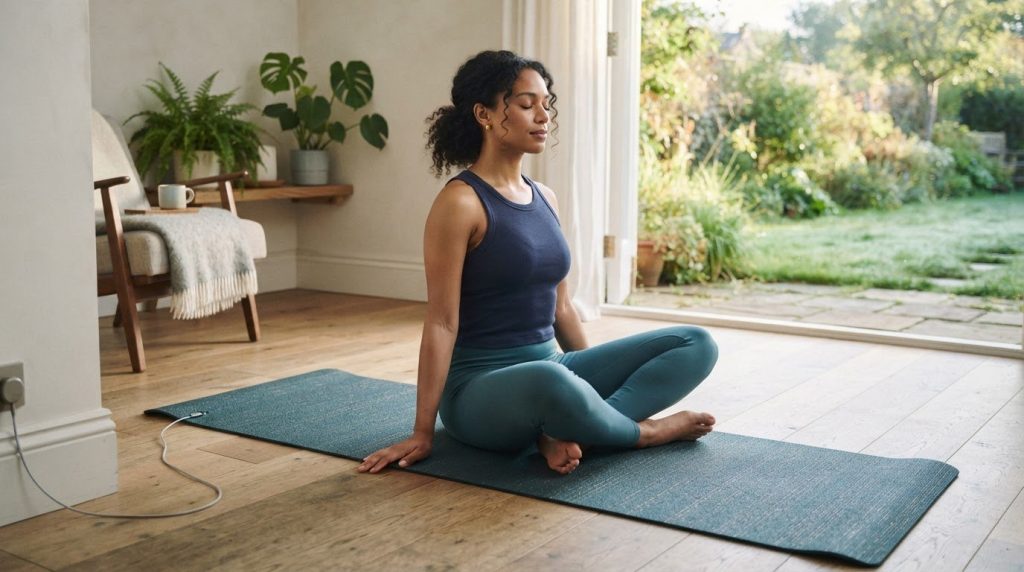
A grounding yoga mat isn’t the same as practising barefoot on grass. The grounding yoga mat benefits people hope for are associated with a conductive connection to the earth, but a mat connects differently from direct skin contact with natural ground. The key distinction is that one uses a grounded outlet or grounding rod, while the other means touching the earth itself.
It’s easy to blur the ideas: both are described as “grounding”, and both can feature in a yoga or relaxation routine. But they don’t work in the same way, and a mat’s electrical connection doesn’t prove a particular wellbeing effect.
This guide explains what earthing means, how grounding mats differ from natural surfaces, and how electrical grounding compares with skin contact with the earth. You’ll also learn what to consider when deciding whether a grounding mat suits your practice, without mistaking a conductive connection for a medical treatment.
Key Takeaways
- Earthing means direct skin contact with the earth; a mat creates a conductive connection through a different route.
- Separate the proposed wellbeing effects of grounding from established medical care, and view claims with care.
- Understand how plug-in mats and grounding rods connect, and why proper electrical grounding matters.
- Compare a conductive yoga mat with an ordinary mat or grounding sheet by considering how and where you plan to use it.
- Material, conductivity and contact with the body all affect how a grounding mat is intended to work.
Grounding mats: can they boost your wellbeing?
Grounding mats aim to connect your body with the earth’s electrical potential through a conductive surface. That connection is different from the balance, strength and focus developed during yoga.
Intended operation of grounding mats
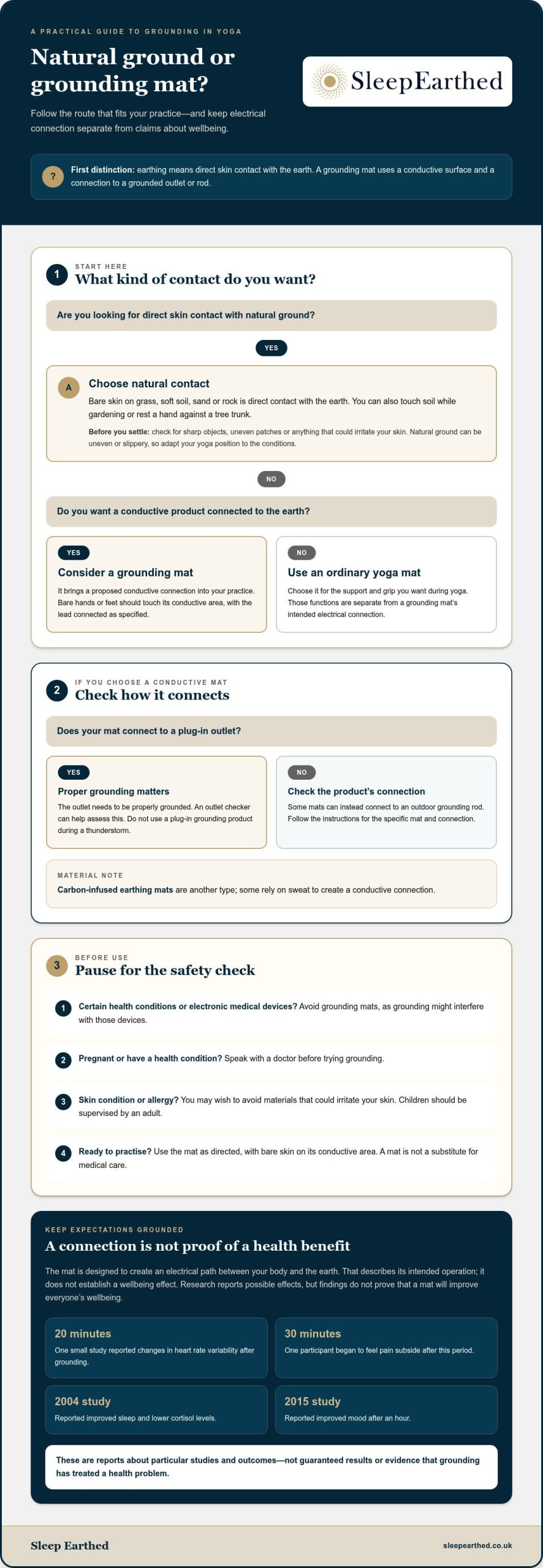
A grounding mat uses conductive material and a connection to a grounded outlet or rod to create an electrical path between your body and the earth. Contact with the surface is intended to let charge move along that path. This describes how the product is designed to work, but doesn’t establish a health benefit. Carbon-infused earthing mats are another type; some rely on sweat to create a conductive connection.
Grounding mats in yoga practice
A grounding yoga mat brings this proposed conductive connection into a familiar exercise space. You can use it for poses such as standing balance work or seated breathing, with your hands or feet touching the mat. Unlike walking barefoot on grass, though, you’re in contact with a manufactured surface, not natural ground. Any potential grounding yoga mat benefits are separate from yoga’s movement, breathwork and concentration.
Using a grounding mat
Use the mat as directed, with bare skin on its conductive area and the lead connected as specified. If it plugs into an outlet, the outlet needs to be properly grounded; an outlet checker can help assess this. Some mats can instead connect to an outdoor grounding rod. Don’t use a plug-in grounding product during a thunderstorm. Remember that the mat’s intended electrical connection is separate from the support and grip of an ordinary yoga mat.
People with certain health conditions or electronic medical devices should avoid grounding mats because grounding might interfere with those devices. If you’re pregnant or have a health condition, speak with a doctor before trying grounding. If you have skin conditions or allergies, you may wish to avoid materials that could irritate your skin. Children should be supervised by an adult, as they may be more sensitive to allergens or irritants. A mat isn’t a substitute for medical care.
Research on grounding mats
Research reports describe possible effects, but findings don’t prove that a mat will improve everyone’s wellbeing. One small study reported changes in heart rate variability after 20 minutes of grounding. Another participant began to feel pain subside after 30 minutes. A 2004 study reported improved sleep and lower cortisol levels, while a 2015 study reported improved mood after an hour.
These findings relate to particular studies and outcomes, not a guaranteed result from yoga practice. Notice how you feel during and after a session, but don’t take that as evidence that grounding has treated a health problem. Keep practising yoga for its movement and focus, and seek medical care for health concerns.
Earthing and direct skin contact with the earth
Earthing, also called grounding, means direct skin contact with the earth, such as bare feet on grass, sand or rock. A conductive mat provides a different route, so the terms overlap, but the experience isn’t identical.
Grounding versus earthing
In everyday use, “grounding” and “earthing” often describe the same idea: connecting your body directly with natural ground. Walking barefoot across a lawn is a simple example. For conductive products, “grounding” can also mean an electrical connection through a grounded outlet or rod. The distinction matters: bare skin on soil is direct contact, while a product uses a conductive surface and connection.
What direct contact involves
Grass, soft soil, sand and rock all offer surfaces for skin contact. Each feels different: cool grass beneath your feet is unlike warm sand or a smooth stone under your palm. For a mindful pause, notice those sensations rather than expecting a particular effect. Before sitting or lying down, check the area for sharp objects, uneven patches or anything that could irritate your skin.
Walking barefoot is one option, but you can also make contact with your hands. Gardening without gloves lets you feel soil as you work, while resting your palm against a tree trunk brings you into contact with bark. These examples involve direct contact with the earth or natural materials, not an electrically connected mat. Choose a place where the ground feels comfortable and suits your activity.
Natural connection options in different settings
You don’t need a particular landscape to explore direct contact. In a garden, try standing on grass or touching soil while planting. At a beach, sit where your bare feet can rest on sand. In a park or woodland, a clear patch of ground offers another option. Conditions vary with weather and location, so the surface’s temperature, dampness and texture will shape the experience.
For a moment of gentle attention, touch a tree and notice the bark’s texture, temperature and colour. During meditation, hold a smooth stone and focus on how it feels in your hand. These are sensory practices; they don’t establish that earthing improves health or energy levels. They can simply bring your attention to your surroundings.
Earthing alongside exercise
Yoga outdoors can combine movement with direct contact when your bare hands or feet rest on grass, dirt or sand. A standing pose on uneven ground calls for attention to balance, while seated breathing gives you time to notice the surface beneath you. Natural ground may be uneven or slippery, so adapt your position to the conditions. The exercise is still yoga; contact with the earth is an additional part of the setting.
Whether you’re in a garden, on a beach or on a woodland path, the practical choice depends on the available surface and your comfort. Direct skin contact is what distinguishes natural earthing from using a conductive product indoors.
Grounding products and electrical grounding
A grounding product uses a conductive surface and an electrical connection, rather than bare feet on grass. Its lead may connect to an outlet’s ground port or to a grounding rod. This route is intended to connect the user with the earth’s electrical potential. It doesn’t mean the mat is powered like an electric appliance. Knowing the product’s connection method helps distinguish electrical grounding from simply standing barefoot outdoors.
How the connection is made
Follow the product instructions for its specific cable and connection. Some grounding products connect through the grounded port of a three-prong outlet; others use a grounding rod. Mats often have a wire leading to an outlet’s ground port. Before using a plug-in product, check the outlet’s grounding with an outlet checker. An outlet’s shape alone doesn’t show that its grounding is working correctly.
A grounding rod offers another connection point when the product instructions allow it. The rod connects the product directly to the earth, rather than through an outlet. The two methods aren’t interchangeable unless the instructions say so. For example, don’t adapt a cable or connect it to an outlet opening other than the designated ground port. The product’s intended pathway depends on the correct connection at both ends.
Electrical safety and practical limits
There’s a safety consideration beyond making the connection. Grounding mats may draw current from nearby electrical sources that aren’t grounded, which could create an electric shock risk. Keep this in mind around electrical equipment, and use the mat only as instructed. Don’t use a plug-in grounding product during a thunderstorm. If the setup involves electrical work or an outlet you’re unsure about, don’t improvise a connection.
These cautions don’t mean the product should be treated like a powered appliance. They mean its route to ground matters. An outlet checker assesses the outlet’s grounding, while a grounding rod provides a separate earth connection. Neither makes a mat a substitute for safe electrical installation. The practical steps are simple: identify the intended connection, use the specified port or rod, and avoid use during a thunderstorm.
Electrical connection versus health claims
Electrical grounding describes a connection, not a medical outcome. Some people believe grounding has positive health benefits, including effects on immune function, but an electrical pathway alone doesn’t demonstrate those effects. A barefoot walk on grass also differs from using a connected mat: the first involves direct skin contact with natural ground, while the second relies on a product and its electrical connection. Keep these distinctions clear when weighing wellbeing claims.
In short, the connection method is the practical decision point. Follow the product directions, use a properly grounded outlet or suitable grounding rod, and don’t treat a conductive surface as proof of health benefits.
How do grounding yoga mats compare with ordinary yoga mats and grounding sheets?
An ordinary yoga mat provides a practice surface; a grounding yoga mat is intended to provide that surface along with a conductive connection. For example, you might choose an ordinary mat for grip and cushioning during a standing sequence. A grounding version adds a connection, so using it involves more than placing it on the floor. Neither type changes the yoga poses themselves, and the mat alone doesn’t establish a wellbeing effect.
During a lunge or balance pose, the practical differences are the mat’s feel, support and how it suits your movements. A yoga mat should match the way you practise, whether you kneel, stand or sit. A grounding version also needs skin contact with its conductive area and the connection described in its instructions. These are separate considerations: comfort helps you practise, while conductivity relates to the mat’s intended earthing function.
A grounding sheet is designed for a different setting. Rather than lying beneath your hands or feet during a flow, you use a sheet on a bed and make contact while resting. A yoga mat goes on the floor for movement; a sheet stays in the sleeping space. Both are conductive products, but their size, placement and typical use differ. Choose according to whether you want a conductive surface for yoga or rest.
The difference also affects how you maintain contact. In a pose with hands and feet on the floor, only the body parts touching the mat meet its surface. On a bed, contact with a sheet depends on how you lie and which areas of skin touch it. Neither example means your whole body is continuously connected. In both cases, the product’s intended connection and instructions matter alongside the contact itself.
One study of people doing yoga lasted one hour and compared participants who used grounding mats with those who did not. That comparison helps frame the question, but one study doesn’t show that every grounding mat produces the same result. Nor does it mean ordinary and grounding yoga mats are equivalent. The clearest distinction is their intended function: one supports yoga practice, while the other adds a conductive connection.
To compare options, start with your main use. For floor-based yoga, consider whether the mat suits your poses and whether you can comfortably contact its conductive area. For sleep, a grounding sheet is designed for the bed, not a movement routine. Then consider the intended connection and follow the product instructions. Separating these practical questions helps you assess grounding yoga mat benefits without confusing a conductive feature with yoga’s own movement and exercise.
What materials, conductivity, and features should you look for in a grounding yoga mat?
Start with the mat’s materials and intended conductive pathway. A yoga surface needs to suit poses such as kneeling, standing and seated stretches. For grounding, the material also needs to conduct and connect as the instructions describe. These are distinct functions, so consider comfort and construction alongside the claimed electrical function.
Material descriptions can help narrow your options. Look for a mat described as PVC-free and latex-free, with non-toxic materials such as thermoplastic elastomer or closed-cell foam. These are materials suggested for grounding yoga mats. A product label won’t tell you how the mat feels during a downward-facing dog or seated pose, so consider its grip and cushioning for your practice too.
Conductivity is another key feature. A grounding mat needs a conductive component and a connection route, not just a particular colour or texture. Product instructions should explain where the cable attaches and how the mat connects to an outlet’s ground port or a grounding rod. If the instructions describe only the surface, you can’t infer the connection method from its appearance.
Carbon-infused earthing mats are one type to understand before choosing. They rely on sweat to connect with the earth, so the intended connection depends on contact with the mat’s surface. You can’t judge conductivity by the material’s look or feel. Consider how the contact requirements fit your yoga routine, especially if your hands or feet don’t touch the same areas throughout a sequence.
Read the product information for details that affect practical use. Check which parts of the mat are conductive, where your skin should make contact, and which connection method is intended. A pose with bare feet on the mat differs from a seated stretch with just one hand touching it. These examples help you judge whether the conductive area suits the way you actually practise.
- Materials: Look for PVC-free, latex-free construction and named materials such as thermoplastic elastomer or closed-cell foam.
- Conductive area: Find out which part of the surface provides conductivity and where your body needs to touch.
- Connection: Read whether the mat connects through an outlet’s ground port or a grounding rod.
- Yoga use: Consider whether the surface feels suitable for your standing, seated and kneeling poses.
A clear description of the materials and connection helps you compare mats beyond their appearance. It also keeps the practical questions in focus: will the surface suit your poses, and can you use its conductive pathway as directed?
Sleep Earthed: UK Sized Fitted Earthing Bed Sheets
Sleep Earthed offers UK Sized Fitted Earthing Bed Sheets for people who want to explore earthing while resting rather than during yoga. The fitted-sheet format is made for a bed, while Earthing Pillow Cases and an Earthing Half Sheet offer other ways to add a conductive surface to your sleep space. An Earthing Recovery Bag is another option for rest.
These products are a natural next step if you’re interested in conductive contact beyond your yoga practice. They serve a different purpose from a mat: you use them while resting, not moving through poses. As with any earthing product, follow its instructions for the intended connection and use. For help choosing an option for your routine, contact Sleep Earthed.
Choose the next step that suits your practice
Let your routine guide what you explore next. If you want a conductive surface for movement, consider how it fits your poses and practice space. If you’re interested in earthing while resting instead, Sleep Earthed offers UK Sized Fitted Earthing Bed Sheets, Earthing Pillow Cases and an Earthing Half Sheet.
The grounding yoga mat benefits you’re curious about are best considered alongside practical details: where you’ll use a conductive product, how it connects and whether it suits your routine. There’s no need to change everything at once. Start with the setting that feels most relevant, and choose a product designed for that use.
For questions about Sleep Earthed’s earthing products, get in touch with Sleep Earthed. A considered next step can help you explore the options with confidence and find what fits your practice.
Frequently Asked Questions
What Is Grounding?
Grounding describes connecting the body with the earth, either through direct contact or a conductive product. For example, bare feet on a lawn connect you with natural ground, while a mat uses its conductive surface and intended connection. The word can also describe electrical grounding, so consider the context. In discussions of wellbeing, claims about grounding should be distinguished from established medical treatment.
How Does It Work?
A grounding product is designed to create a conductive pathway between the body and the earth. Its conductive area, cable and connection point are parts of that pathway. For example, someone practising a seated pose might keep their feet in contact with the mat’s conductive section. This proposed mechanism doesn’t by itself demonstrate a health effect, so distinguish how the product is designed from what research has established.
How to Set Up a Safe and Effective Practice Space with a Grounding Yoga Mat?
Choose a stable, dry floor with enough room to move, then lay the mat flat and follow its connection instructions. If it connects to an outlet, check the socket’s grounding with an outlet checker. Position cables so they won’t catch your feet during transitions. Avoid plug-in grounding products during thunderstorms, and don’t use a mat if you have an electronic medical device or a health condition that could make grounding unsuitable.
Is there any solid research on grounding mats?
Research has reported possible changes in measures such as sleep, mood and heart rate variability, but the findings don’t establish a reliable result for every user. Study size, methods and outcomes all matter when judging confidence in a finding. Treat reported effects as areas for further investigation, not proof that a mat treats a condition. Grounding products shouldn’t replace medical care or advice.
What Are the Initial Steps to Start Using a Grounding Yoga Mat?
Begin by deciding whether you’ll practise indoors or outdoors, then read the mat’s directions before connecting it. For a first yoga session, choose a brief 10-15-minute practice with familiar movements, such as seated breathing and standing poses. Notice whether the surface suits your balance and contact points. If tracking pain, record it consistently on a 1 to 10 scale, rather than relying on memory alone.
What Is Earthing?
Earthing is another term for direct skin contact with the earth, such as bare feet on sand or a hand touching soil. For a mindful pause, notice the feel of the ground beneath your feet during a garden visit. A connected indoor product is sometimes described as earthing too, but contact is through a manufactured conductive surface rather than directly with natural ground.
What is a grounding yoga mat and how does it work?
A grounding yoga mat combines a yoga surface with conductive material. It’s intended to connect through a cable to a grounded outlet or, where the product instructions allow, a grounding rod. The connection method matters: the mat’s appearance alone doesn’t show how it should connect. Check the instructions for cable placement and where your skin should touch the conductive area.
What benefits of grounding yoga mats are supported by scientific evidence?
Current findings report possible effects, but they don’t establish that grounding mats reliably improve health for everyone. Some studies have examined sleep, mood, pain or heart-rate measures; those outcomes aren’t proof of treatment. The evidence also doesn’t show that a yoga mat’s conductive feature improves yoga’s physical benefits. Use a mat for practice only as directed, and seek clinical care for medical concerns.