
 90 Day’s To Better Zzz’s Guarantee T&C apply

How to Get More Restorative Sleep: Practical Steps for Better Rest
What if waking refreshed matters more than chasing a perfect deep-sleep score? If you allow enough time for sleep but still start the day tired, it’s understandable to wonder how to get more restorative sleep, and whether one stage of the night holds the answer.
Deep sleep matters, but it isn’t the whole story. REM sleep also plays a part, and how you feel during the day can be a more useful guide than a sleep-stage score alone. You don’t need to overhaul your routine all at once: start by looking for patterns and making one manageable change.
This guide explains what restorative sleep means, what might be getting in its way and which practical habits you could try first. You’ll learn how to review your sleep schedule, evening routine and bedroom environment, and how to notice changes in your daytime energy and mood. It also covers when persistent tiredness or disrupted sleep may be a reason to speak with a health professional.
Key Takeaways
- Restorative rest depends on more than deep sleep. REM sleep, sleep continuity and your body clock also shape the night.
- A full night in bed may still leave you tired, and wearable sleep-stage scores are estimates rather than diagnoses.
- Explore how to get more restorative sleep by changing one habit at a time and noticing how you feel during the day.
- Build a comfortable, repeatable sleep setup without expecting any single change to guarantee better rest.
- Sleep Earthed fitted sheets are available in UK sizes and feature organic cotton and conductive silver threads.
What Does Restorative Sleep Mean, and Why Can You Wake Up Tired?
You can spend what seems like a full night in bed, hear the alarm and still feel as though you’ve barely rested. That mismatch can be frustrating, but it doesn’t automatically mean something is wrong. Sleep duration is only one part of the picture. How much sleep you get, how often it’s interrupted, the stages you pass through and how you feel when awake all matter in different ways.
Restorative sleep is sleep that supports physical and mental recovery. It isn’t a single stage or a score to reach. Deep sleep and REM sleep have different roles, while steady, uninterrupted rest gives the body and brain a chance to move through their normal processes. For an accessible overview of the physiology of sleep and its restorative effects, explore how sleep involves more than one stage.
For another perspective, this video discusses REM sleep:
Is restorative sleep the same as deep sleep?
No. Deep sleep, also called slow-wave sleep, is one part of the night, not a synonym for all restorative sleep. REM sleep is another stage, associated with important brain functions such as memory and learning. Sleep moves through different stages rather than one uniform stretch, and their pattern changes as the night progresses. There’s no simple rule that deliberately increasing one stage will automatically make you feel better the next day.
What might waking unrefreshed tell you?
Consider how you function after getting up, not just how long you think you slept. Can you concentrate, stay alert and manage your usual activities, or are you struggling with sleepiness? Those details add useful context to an estimate of your sleep duration. A wearable may offer clues about patterns, but its sleep-stage readings are estimates, not a direct measure of how restored you feel.
Sleep continuity matters, too. Brief awakenings may be easy to forget, yet repeated interruptions can leave the night feeling less settled. A shifted bedtime or wake time can also put you out of step with your usual routine. One tired morning isn’t enough to establish a sleep disorder. Look for patterns over time instead of judging the whole night by a single reading or a difficult start to the day.
Feeling restored is a daytime experience; a wearable’s sleep-stage score is only an estimate. If you’re considering how to get more restorative sleep, begin by noticing the relationship between your nights and your days. Make a simple note of bedtime, wake time, any interruptions you remember and your daytime alertness. This can help you see whether tired mornings are occasional or becoming a persistent pattern.
How Deep Sleep, REM Sleep, and Your Body Clock Shape Rest
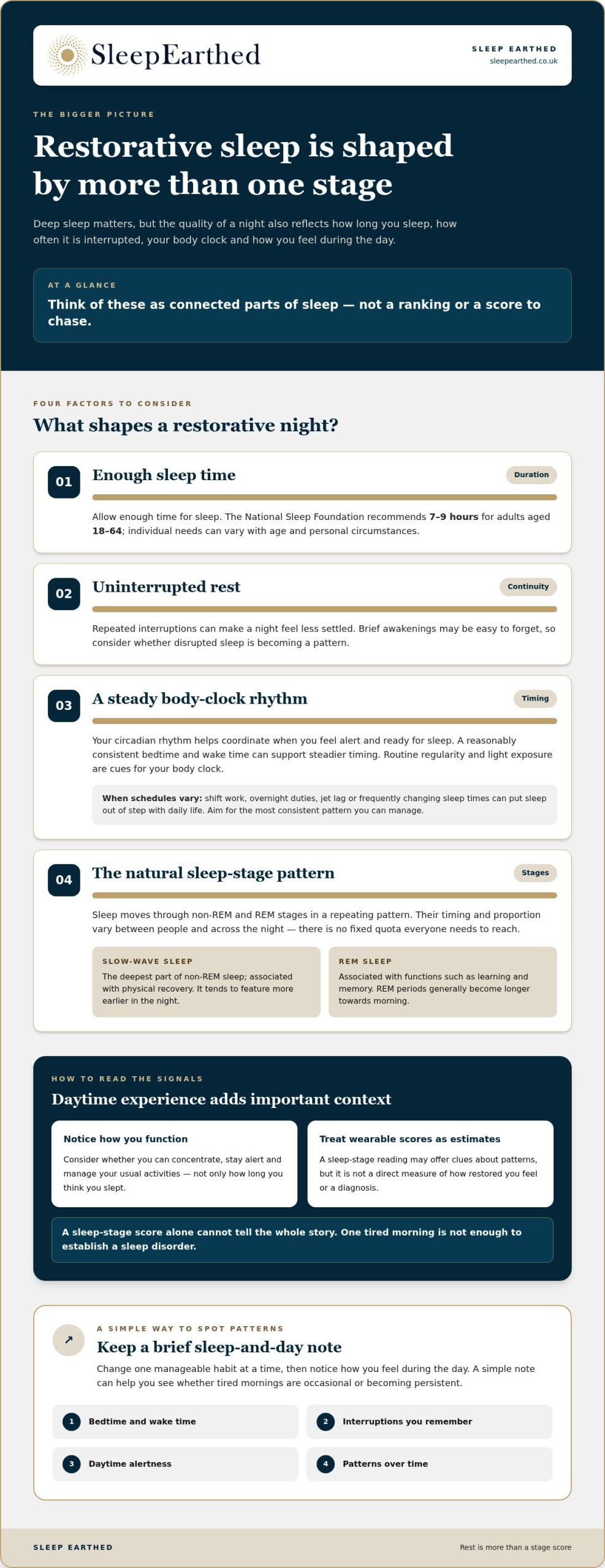
Sleep isn’t a single, uninterrupted state. Across the night, your brain and body move through non-REM sleep and REM sleep in a repeating pattern. Non-REM includes lighter sleep and slow-wave sleep, the deepest part of the cycle. The pattern shifts as the night goes on, so there isn’t one fixed quota of each stage that everyone needs to reach.
Sleep quality reflects the combination of sufficient duration, continuity, a well-timed body clock and the natural progression through non-REM and REM sleep, not one stage in isolation. That’s why a sleep-stage estimate alone can’t tell the whole story. Trying to consciously control a particular stage is unlikely to be a useful starting point.
What happens during slow-wave and REM sleep?
During slow-wave sleep, brain activity slows and it can be harder to wake. This stage is associated with physical recovery, though a tracker cannot tell you exactly how well your body has recovered. REM stands for rapid eye movement. Brain activity becomes more active, and this stage is associated with functions such as learning and memory. Both are normal parts of sleep, but their timing and proportion vary between people and across the night.
Sleep cycles repeat, but they aren’t identical copies. Slow-wave sleep tends to feature more earlier in the night, while REM periods generally become longer towards morning. If you wake early or your night is interrupted, you may experience a different pattern. You can’t diagnose a problem by comparing your night with someone else’s or by trying to boost a single stage.
Why does sleep timing matter?
Your circadian rhythm is your internal body clock. It helps coordinate when you feel alert and when your body is ready for sleep, using cues such as the regularity of your daily routine and light exposure. Keeping a reasonably consistent wake time and bedtime can support this timing. It won’t guarantee unbroken sleep, but it gives your body a steadier pattern to work with.
Shift work, overnight duties, jet lag or frequently changing sleep schedules can put sleep timing out of step with the demands of daily life. If your timetable varies, aim for the most consistent pattern you can manage rather than blaming yourself for not following an ideal routine. Individual sleep needs differ, too. The National Sleep Foundation recommends 7-9 hours for adults aged 18-64, but the amount that suits you may depend on age and personal circumstances.
So, how to get more restorative sleep isn’t simply a matter of chasing more deep sleep or REM. Consider the full pattern: whether you allow enough time, whether your sleep is often disrupted and whether your schedule gives your body clock a reliable rhythm. For a comfortable bedtime environment, Sleep Earthed offers fitted earthing sheets as one optional part of your setup, not a treatment or a guarantee of better sleep.
Why You May Not Feel Rested: Common Disruptions and Misleading Sleep Scores
A restless night can follow a late coffee, a noisy bedroom or a stressful day, but it’s rarely helpful to assume one cause explains every difficult morning. Sleep can be affected by a mix of habits, surroundings, timing and health. Look for patterns over several nights rather than judging yourself by one poor night or a number on a screen.
Which everyday factors can interrupt restorative sleep?
Start by noting what changed. Caffeine later in the day may make it harder for some people to settle, whilst alcohol can affect sleep quality even if it initially makes you feel sleepy. Late work, stimulating screen use or worrying thoughts can also leave you alert at bedtime. An inconsistent bedtime, shift work or travel may make it harder to keep a regular sleep rhythm.
Your room matters as well. Light, noise, an uncomfortable temperature, interruptions from other people or pets, and general discomfort can disturb sleep. These influences vary between individuals, so treat them as possibilities to explore rather than certain causes. For example, if you sleep poorly after a late coffee on several occasions, its timing may be worth adjusting. A single restless night after coffee doesn’t prove it was responsible.
Wearables can help you notice broad trends, such as changes in estimated sleep duration, but they infer sleep stages from signals such as movement and heart rate. They don’t directly measure every stage, and a sleep-stage score can’t diagnose a sleep disorder. If your device suggests little deep sleep but you feel well during the day, don’t treat the score alone as a medical finding. Likewise, a reassuring score shouldn’t dismiss persistent symptoms.
When should ongoing tiredness be discussed with a GP?
An occasional tired morning after a late night or a disrupted schedule is different from a recurring problem that affects your daily life. Consider speaking to your GP if tiredness persists, you repeatedly wake through the night or daytime sleepiness makes it difficult to function. Loud snoring, pauses in breathing noticed by someone else, or waking with gasping or choking are also reasons to seek clinical advice. These signs don’t establish a diagnosis, but they’re useful to discuss.
Before an appointment, keep brief notes for a couple of weeks if you can. Record roughly when you went to bed and woke, how often you remember waking, any obvious changes such as caffeine or shift patterns, and how alert you felt during the day. Include concerns about snoring or gasping, especially if someone has witnessed them. This can give your GP a clearer picture than a tracker score alone.
For general information, read the NHS guidance on insomnia and when to seek help, then speak with your GP for advice based on your circumstances. Don’t stop or change prescribed medicines on your own; discuss possible effects with a health professional. Understanding possible disruptions is a practical first step in working out how to get more restorative sleep, without treating every difficult night as a disorder.
How to Get More Restorative Sleep: A Practical Routine
If your sleep feels unpredictable, changing everything at once can make it difficult to tell what’s helping. Start with a simple order: anchor your day with a steady wake time, review daytime habits, then create a calmer transition into bed. Choose an approach that fits your working hours, caring responsibilities and energy levels. A workable routine is more useful than a perfect one you can’t keep.
Try these first steps:
- Choose a regular wake time. Keep it as consistent as your schedule allows, including after a difficult night. If shift work or other commitments make that impractical, aim for a pattern that is realistic for you.
- Review one daytime variable. Notice whether caffeine timing, naps or activity levels appear to affect your nights. Consider getting some daylight and movement during the day, adjusting them to suit your circumstances.
- Shape a gentler evening. Set aside time to move from busy tasks to quieter activities, and make the bedroom comfortable for sleep.
Build a wind-down routine that feels realistic
A wind-down routine doesn’t need to be elaborate or completely screen-free to be worthwhile. Try repeating a small cue that tells you the day is slowing down: read a few pages, do a gentle relaxation exercise or prepare tomorrow’s essentials so they’re not on your mind in bed. If one activity feels like another task, choose something simpler. Keep the parts that feel calming and let go of the rest.
Adjust daytime habits without making sleep another pressure
Look for a schedule you can repeat rather than forcing an early bedtime that doesn’t suit you. If you suspect caffeine, late naps or low daytime activity are affecting your rest, change one factor and observe what happens. These are possibilities to test, not universal causes or cures. The aim is a routine that supports your life, not a new set of rules to worry about.
Give one realistic adjustment a fair trial over several weeks, while keeping brief notes on your sleep and how you feel during the day. You might record your wake time, the change you’re testing and your daytime alertness or mood. Avoid adding several new habits at once, otherwise it’s harder to see which changes, if any, seem useful. Progress can mean feeling more able to manage the day, even if every night isn’t perfect.
Start with a steady wake time, test one daytime habit, then add a calming evening cue and notice how your days feel. Keep your sleep environment comfortable, too. Consider whether light, noise or room temperature needs attention, and make adjustments that suit you. These steps can support a more consistent routine, but they can’t guarantee a particular sleep stage or outcome.
If comfortable bedding is part of the setup you’re building, you can explore Sleep Earthed fitted earthing sheets as an optional addition to your bedroom. They’re one part of a bedtime environment, not a substitute for healthy routines or professional advice when sleep problems persist.
Creating a Comfortable Sleep Setup: Where Sleep Earthed Fits
A comfortable bedroom can make it easier to follow a steady bedtime routine, but no sheet, mattress or room arrangement can guarantee restorative sleep. Treat your setup as one part of the picture, alongside habits such as keeping a suitable schedule and winding down in a way that feels manageable. If your bedding feels uncomfortable or doesn’t suit you, changing it may be a practical comfort choice, not a treatment for waking tired.
Could earthing bedding be part of your bedtime setup?
Sleep Earthed fitted earthing bed sheets are available in UK sizes and feature organic cotton and conductive silver threads. These are product details, not evidence that the sheets treat sleep problems or change how restorative your sleep is. Choosing earthing bedding is a personal decision about your sleep environment. It shouldn’t replace established sleep habits or medical advice when symptoms persist.
If you’d like to consider the subject further, the article Do Earthing Sheets Work? Science vs Fiction in 2026 explores the claims and evidence around earthing sheets. Keep product information separate from general sleep guidance, and choose bedding based on what suits your preferences and bedroom.
Sleep Earthed offers a 90-day better-sleep guarantee. This is the company’s stated guarantee, not a promise of a particular health outcome or a substitute for assessment of ongoing sleep concerns.
What is a sensible next step if sleep still feels unrefreshing?
Keep noting your sleep patterns and how you feel during the day, especially if tiredness continues or you notice repeated waking, loud snoring or gasping. As covered earlier, a GP can assess persistent or concerning symptoms; bedding or a sleep tracker can’t provide that assessment. Continue with practical habits that suit your life, and treat comfort choices as additions rather than replacements.
There’s no need to rebuild your bedroom all at once. If you’re exploring how to get more restorative sleep, first consider what would make your existing setup more comfortable and repeatable. You might focus on bedding, room conditions or your evening routine, then observe whether the change feels helpful over time. Avoid judging success by a single night or a device’s estimate of sleep stages.
If fitted earthing bedding feels like a suitable personal comfort choice, explore Sleep Earthed fitted sheets as one option for your sleep setup. They can sit alongside a consistent routine, but they aren’t a medical treatment and can’t guarantee that you’ll wake feeling refreshed.
Make Your Next Sleep Step Small and Steady
Better rest doesn’t have to begin with a complete bedroom or routine overhaul. Choose one change that feels manageable, give it time and pay attention to how you feel during the day. That keeps your focus on what matters in daily life, rather than trying to achieve a perfect night or a particular sleep-stage score.
If you’re still considering how to get more restorative sleep, let comfort be one part of the decision, not the whole plan. Keep practical habits that suit your schedule, and speak with your GP if tiredness or disrupted sleep continues to concern you. There’s no need to solve everything at once; a thoughtful next step is enough.
Explore the Sleep Earthed range of fitted earthing sheets to find a bedding option for your sleep setup. Choose what suits your preferences and give your routine room to develop.
Frequently Asked Questions
How many hours of sleep do adults need to feel rested?
Sleep needs vary, so the same number of hours won’t leave everyone feeling equally rested. Consider your usual sleep duration alongside how alert and able you feel during the day. If you regularly feel exhausted despite allowing enough time for sleep, note when it happens and how it affects your daily activities. Rather than simply extending time in bed, discuss the ongoing pattern with your GP.
Can a sleep tracker tell me whether my sleep is restorative?
No. A tracker estimates sleep stages and can help you spot trends, but it can’t directly measure how refreshed you feel or diagnose a sleep disorder. Compare its records over time with a brief note about your daytime energy, rather than judging yourself by one night’s score. If tracking makes you anxious, take a break from checking it and seek clinical advice if symptoms persist.
Can a nap make up for poor sleep at night?
A nap may ease sleepiness temporarily, but it doesn’t necessarily address repeated disruption at night. Its effect can depend on the person and timing: a late nap, for instance, may make it harder to fall asleep at your usual bedtime. If you nap, notice whether you feel more alert afterwards and whether it affects that night’s sleep. Ongoing tiredness is worth discussing with your GP.
Does exercise help you get more restorative sleep?
Regular physical activity can be part of a healthy routine, though its effect on sleep differs from person to person. Start with an activity that feels manageable, such as a walk, and notice whether the timing or intensity seems to affect your evening. Exercise isn’t a replacement for clinical advice if you have persistent sleep problems, unusual breathing during sleep or significant daytime tiredness. Choose movement you can keep up comfortably.
When should I speak to a GP about waking tired?
Consider speaking to your GP if tiredness persists, affects daily life, or comes with repeated waking, loud snoring or gasping during sleep. Beforehand, jot down roughly when you sleep and wake, how you feel during the day and any symptoms someone else has noticed. These details can help you describe the pattern clearly. Your GP can assess possible causes and advise whether further assessment or support may be appropriate.