
 90 Day’s To Better Zzz’s Guarantee T&C apply

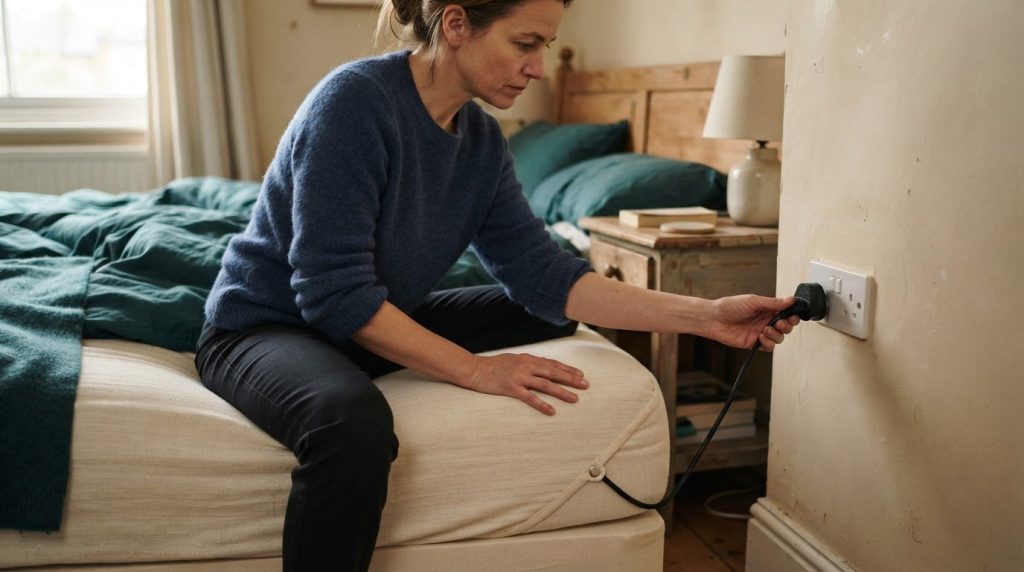
A grounding sheet isn’t expected to cause electrocution in normal circumstances, but faulty wiring or a damaged connection can create a shock risk. Whether you can get an electric shock from a grounding sheet depends on the condition of its cord and the electrical earth it connects to. A brief zap can have more than one possible cause, so pay attention to whether it recurs or becomes stronger.
It’s understandable to be cautious when a product connects to household wiring. A grounding sheet connects through the earth pin, not the live or neutral pins, but the setup still depends on sound wiring and a properly grounded outlet.
This guide explains how grounding sheets connect to your home’s electrical earth, what can affect shock risk, and what to do if you notice tingling or repeated shocks. It also covers why thunderstorms call for extra care and when it’s sensible to unplug the sheet.
Key Takeaways
- A plug-in grounding sheet connects to the outlet’s earth pin, not its live or neutral pins; a properly grounded outlet and sound wiring matter.
- A brief zap may be static discharge, but stop using the sheet if shocks are frequent or stronger and have the cord and connection assessed.
- Unplug plug-in grounding products during electrical storms, as lightning can create a surge risk.
- Keep chargers, power cords and lamps away from the bed if you notice tingling or buzzing during use.
- Sleep Earthed offers UK Sized Fitted Earthing Bed Sheets, Earthing Pillow Cases, an Earthing Half Sheet and an Earthing Recovery Bag.
Is there any real science behind grounding sheets?
Grounding sheets connect a conductive surface to the Earth, but that electrical mechanism is separate from claims about healing. Safety depends on the sheet, cord, protective components and household ground working as intended.
Evidence on grounding safety
Electrical grounding provides a path for charge to move between a person and the Earth, rather than building up on the body. This explains what a grounding sheet is designed to do, but does not by itself prove claims about healing or other health benefits.
The practical distinction is between an electrical explanation and evidence for health outcomes. A conductive connection describes how charge may move; claims of improved sleep or recovery need evidence about those outcomes. A small zap does not demonstrate a healing effect.
Grounding sheet electrical safety
Electrical safety depends on the complete connection, not just the fabric. Unlike standard bedding, a grounding sheet adds a cord and an earth connection, giving you extra components to inspect. Neither the comparison nor the bedding alone establishes whether a particular product or outlet is safe.
For UK use, consider the whole setup: sheet, cord, plug, safety resistor and household earth. Product documentation should identify relevant safety tests for the complete product and its electrical parts. Testing the fabric alone would not establish that the cord is sound or that the outlet has a proper earth connection.
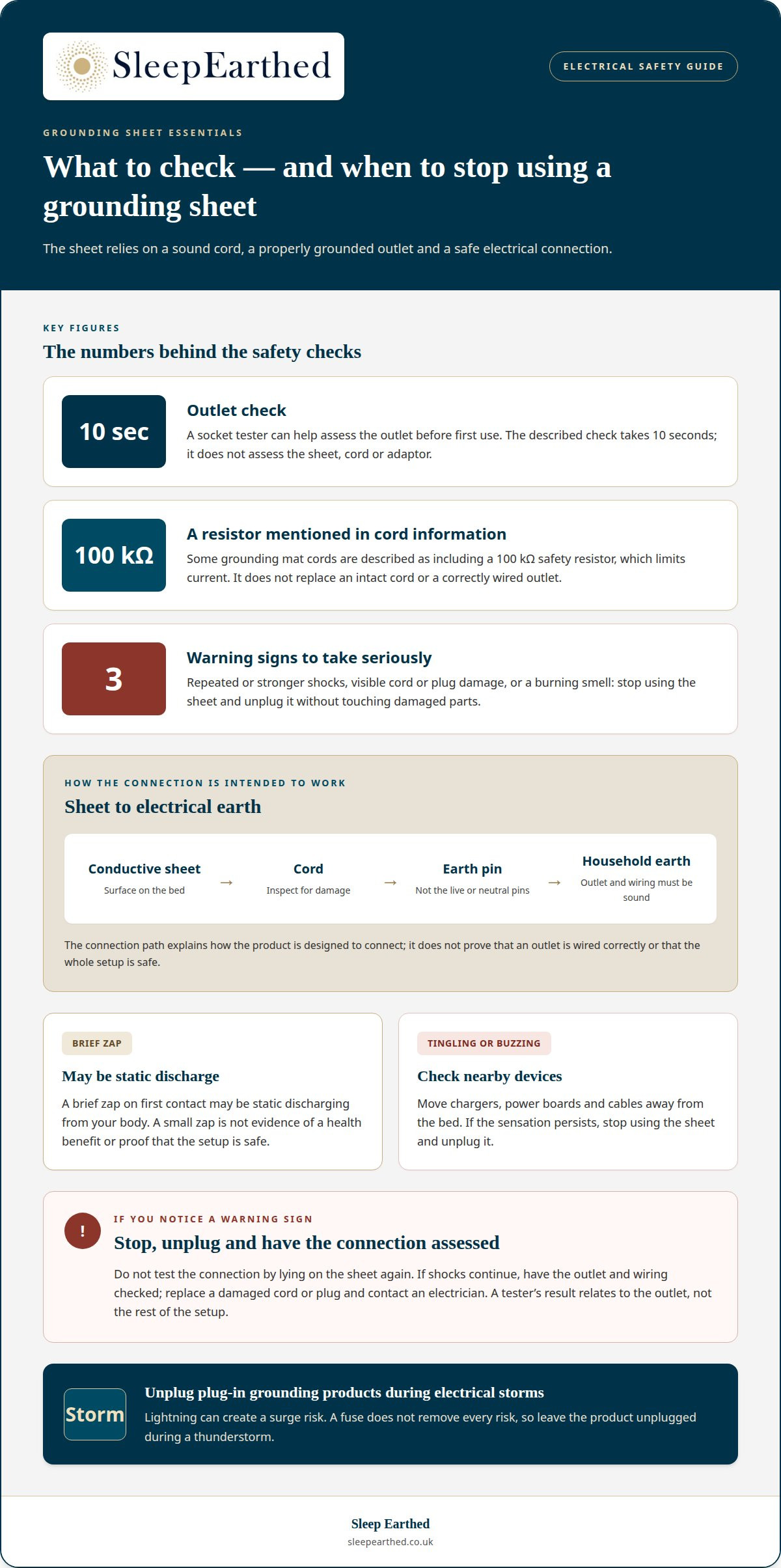
Some grounding-product cords include a resistor, a component that limits current. The research information describes a 100k ohm safety resistor in legitimate grounding mat cords. A resistor is not a substitute for an intact cord, suitable adaptor or correctly wired outlet, and its presence alone cannot certify the whole setup.
A fuse and a resistor serve different purposes. A fuse is intended to interrupt fault current when its operating conditions are met; a resistor limits current through the grounding connection. Neither makes damaged wiring safe or removes the need for a sound earth connection.
Stop using the sheet if you feel repeated or stronger shocks, see damage to the cord or plug, or notice a burning smell. Unplug it without touching damaged parts. If the shocks continue, replace the damaged cord or plug and contact an electrician. Don’t test the connection by lying on the sheet again.
A brief zap on first contact may be static discharging from your body, rather than current flowing into it. Frequent or intensifying sensations are different: stop using the sheet and treat them as a possible fault. This distinction helps you respond without assuming the sensation is harmless static or proof of a safe connection.
Common Concerns: Are Grounding Sheets Dangerous?
A grounding sheet connects through a cord to household electrical earth or to a dedicated outdoor grounding rod. The outlet and wiring matter because the sheet relies on the earth connection, not just its conductive fabric.
Connections to outlets and earth
A plug-in grounding sheet uses a cord to connect its conductive surface to the home’s electrical earth. Its plug connects to the earth pin, not the live or neutral pins, so the intended route is to earth rather than the active supply. This explains how the setup works, but doesn’t establish that an outlet is wired correctly.
Some setups connect an adaptor with a fuse to a dedicated outdoor grounding rod instead. In either arrangement, the earth connection is the important part: a loose cord, damaged adaptor or faulty wiring can interrupt the intended path. Earthing describes this electrical connection; it does not, by itself, prove claims about health or inflammation.
Grounding cords and electrical devices
The cord links the sheet to the plug, so damage or a poor connection can affect the setup. Keep the cord clear of sharp edges and don’t use it if the insulation is split or the plug is loose. If you feel tingling or buzzing, also check whether chargers, power boards or other cables are nearby.
Check that the outlet is properly grounded before using a plug-in product. A socket tester can help assess the outlet before first use; the described check takes 10 seconds. A tester’s result relates to that outlet, not the condition of the sheet, cord or adaptor, so inspect those parts separately.
Faulty household wiring can create a shock risk with an indoor grounding product. If a tester indicates a problem, or the outlet feels loose, stop using that connection rather than relying on the sheet’s adaptor. A tester does not repair wiring or make a faulty outlet safe.
If mild tingling or buzzing starts near electrical devices, move chargers, power boards and cables away from the bed. If the sensation persists, stop using the sheet and unplug it. Frequent or stronger shocks call for checking the outlet and wiring, not assuming the sensation is part of grounding. The connection needs a sound route from sheet to earth.
Using plug-in grounding products during thunderstorms
Electrical storms call for a separate precaution: unplug plug-in grounding products during a thunderstorm. Lightning can affect an electrical connection even if the sheet itself appears undamaged.
Potential causes of shocks
A shock or unusual sensation can have different causes, including faulty wiring, a damaged cord or a lightning-related surge. Lightning during a storm can pose risks to plug-in grounding products. A fuse doesn’t remove every risk, so unplug the product during electrical storms.
Storms can also bring power interruptions or surges that affect household electrical devices. If you notice a shock, don’t assume the grounding product is working correctly just because it connects to earth. Stop using it and leave it unplugged during the storm, particularly if the cord or plug looks damaged.
Tingling sensations during use
Tingling is a sensation some people notice during the first 20-30 minutes of contact, particularly in the first few days or weeks of regular use. A mild sensation can have more than one cause, including nearby electrical devices or static. The timing and strength matter: brief tingling differs from repeated, stronger shocks.
If tingling or buzzing starts, move chargers, power boards and cables away from the bed. If it continues, stop using the product and unplug it. Don’t wait for a thunderstorm to pass before acting on a strong or repeated shock; treat it as a possible electrical fault.
Grounding mats and other products
Plug-in grounding mats, patches, blankets and sheets can all rely on an earth connection. The product’s shape doesn’t change the storm precaution: unplug plug-in versions during electrical storms. A product connected to a dedicated outdoor grounding rod uses a different route from a wall outlet, but remains a grounding connection exposed to its electrical surroundings.
Alternative grounding methods don’t require a plug-in connection, but they aren’t interchangeable with a sheet or mat. Cotton bedding, for example, may reduce static build-up, but it doesn’t provide an earth connection. Focus on the product’s actual connection method rather than assuming every item described as grounding works the same way.
Before a storm, unplug the grounding product from the outlet and leave it disconnected until the electrical storm has passed. Don’t reconnect it during active lightning, even if the bedding feels normal. If shocks or buzzing occurred before the storm, keep the product unplugged afterwards and address the cord, plug or household connection before using it again.
Electric shock and electrocution risks
Yes, you can get an electric shock from a grounding sheet if a fault affects its cord, plug or electrical connection. Electrocution isn’t expected in normal circumstances, but repeated or stronger shocks need prompt attention.
Electric shock risks
An electric shock is current passing through the body; a small zap can instead be static charge discharging at the sheet’s surface. The difference matters: static may cause a brief snap, while a faulty connection can produce repeated or stronger sensations.
Keep power cords, chargers and lamps at least 30 cm from the bed. If you feel a mild tingle, move nearby devices away and unplug them. Wait 5 minutes before checking whether the sensation changes. If shocks continue or grow stronger, stop using the sheet and replace its cord or adaptor.
Electrocution risks
Electrocution means death caused by electric current, rather than the brief sensation commonly called a shock. Grounding sheets aren’t expected to cause electrocution under normal circumstances, but faulty wiring or damaged parts can create an electrical hazard.
A home’s earth connection carries much less voltage and energy than an active outlet, but that doesn’t make a fault safe. Don’t lie on the sheet to test it again. Unplug it and avoid damaged parts. If stronger or frequent shocks persist after replacing a damaged cord or plug, contact an electrician.
Before lying down, briefly touch the grounded area of the sheet. This can release static charge from your body, including positive or negative charge built up through contact with clothing or bedding. A single small zap at that moment is usually static discharging, not current flowing into you. Repeated zaps are different and call for stopping use.
Nearby electrical equipment can also affect sensations. Chargers, lamps and power boards beside the bed create a practical reason to keep cables away from the sheet. If tingling begins, unplug nearby electronics, wait 5 minutes, then notice whether it changes. Don’t continue using the sheet if sensations persist or become stronger.
A socket tester can help identify an outlet problem, but it doesn’t assess every part of the sheet, cord or plug. Electrical safety is also separate from medical or wellness claims: a sensation doesn’t prove a health benefit or an effect on the immune system. Treat electrical symptoms separately, and seek medical help for an injury or ongoing physical symptoms.
How grounding sheets connect to a home’s electrical ground
A grounding sheet uses a conductive surface and cord to connect your body with the Earth’s electrical ground. The route may run through a wall outlet’s earth pin or a dedicated outdoor grounding rod.
With a plug-in setup, a cord links the sheet to a plug inserted into a standard wall outlet. The connection uses the earth pin, not the live or neutral pins. This explains the intended route: the sheet connects to earth rather than drawing power from the active supply. Its safety still depends on an intact cord and a properly grounded outlet.
Think of the connection as a route with several parts: the conductive sheet, its cord, the plug and the home’s earth wiring. If a part is damaged or the outlet’s earth connection is faulty, the route may not work as intended. A plug that fits the socket does not show, by itself, that the earth connection is sound.
Some grounding setups connect to a dedicated outdoor grounding rod instead of a household outlet. A cord links the sheet to that rod, providing a separate route to the Earth. This is a different connection method, not a reason to assume every installation is correct. The rod, cord and contact points remain part of the overall setup.
The sheet’s conductive area provides the contact surface for the person using it. The intended connection is made when skin touches that surface, or through a suitable layer that still allows contact. This differs from walking barefoot outdoors, where your feet touch the ground directly. The idea of contact with the Earth is shared, but the route differs.
It’s easy to assume that any grounded-looking plug guarantees a safe connection. In practice, the outlet’s wiring and the product’s cord and plug all matter. A socket tester can assess an outlet, but it doesn’t inspect the sheet or its lead. Treat every component as part of the route rather than relying on one check to cover everything.
For a plug-in product, unplug it during electrical storms and stop using it if the cord or plug is damaged. If a shock or repeated tingling occurs, don’t keep using the sheet to test the connection. The key point is simple: a grounding sheet connects to earth through a conductive route, and every part of that route needs to be sound.
Sleep Earthed: UK Sized Fitted Earthing Bed Sheets
Sleep Earthed offers UK Sized Fitted Earthing Bed Sheets for people looking for an earthing option for their bed. The range also includes Earthing Pillow Cases, an Earthing Half Sheet and an Earthing Recovery Bag, so you can consider the format that suits your sleeping setup.
Whichever style you choose, the electrical connection still depends on a sound outlet or grounding arrangement. A sheet can’t correct faulty household wiring, so stop using it if you experience repeated or stronger shocks and address the electrical issue first.
If you’re ready to explore the available bedding options, visit sleepearthed.co.uk.
Make your next step a considered one
If you’re still weighing up whether you can get an electric shock from a grounding sheet, focus on the setup you’ll use, not just the bedding. Knowing whether it connects through a household outlet or a grounding rod helps you make an informed choice and recognise when an electrical concern needs attention before use.
Sleep Earthed offers UK Sized Fitted Earthing Bed Sheets, Earthing Pillow Cases and an Earthing Half Sheet. Consider which format suits your bed and how you intend to connect it. If you have questions about the available bedding options, contact Sleep Earthed with your questions.
Taking time to understand the connection is a sensible part of choosing earthing bedding. Explore the available options at your own pace.
Frequently Asked Questions
Are there any negative effects of grounding sheets?
Some people report mild sensations when they first use grounding products, including tingling. Reported mild side effects can last from a few days to a week. A sensation alone doesn’t establish its cause. Note when it starts and whether it changes, and stop using the product if you experience repeated or stronger shocks. Don’t treat discomfort as proof that a product is producing a healing effect.
Are Grounding Sheets Safe for Everyone?
Grounding sheets aren’t necessarily suitable for everyone. People who are pregnant, have allergies, immune system problems, existing nerve damage or foot issues are advised to check with a doctor before starting. This matters particularly if reduced sensation makes it harder to notice heat, irritation or injury. Whatever your health, don’t use a plug-in sheet with a damaged cord or suspect outlet.
What Is Grounding?
Grounding, also called earthing, means connecting the human body with the Earth’s electrical charge. It can happen through direct contact, such as walking barefoot on grass, or through a conductive product connected to earth. These are different ways of making contact, not proof of a medical effect. Walking barefoot outdoors can also expose your feet to injury, infection or allergic reactions, particularly on unfamiliar ground.
How Does It Work?
A grounding sheet uses conductive material as a contact surface, then a cord links it to an earth connection. Sleep Earthed’s product information describes silver threads in organic cotton and connection through the ground pin of a three-pin UK socket; the sheet doesn’t use electricity. For the intended connection, your body must contact the conductive area, so a thick insulating layer can affect contact.
Is It Dangerous?
Electrocution isn’t expected from a grounding sheet under normal circumstances, but an electrical fault can make the setup unsafe. A damaged lead, faulty plug or problem with household wiring changes the situation. Don’t keep using a sheet to see whether a shock happens again. Disconnect it if you notice repeated or stronger shocks, and treat an electrical fault separately from any claimed wellness benefit.
What electrical faults can make a grounding sheet unsafe?
A faulty earth connection, damaged insulation, loose plug or faulty adaptor can compromise the setup. For example, a cord with split outer covering may expose internal wiring, while a socket can look normal despite an earthing problem. Don’t handle exposed wires or try to repair a plug yourself. Stop using the product and have persistent outlet or wiring faults assessed by an electrician.
Can grounding sheets cause shocks during a lightning storm?
A lightning strike can create a surge that may arc across a grounding sheet adaptor’s fuse. Unplug plug-in grounding products during electrical storms rather than relying on the fuse as complete protection. Keep the sheet disconnected while lightning is active, even if the bedding appears undamaged. Once the storm has passed, inspect the cord and adaptor before using the product again, and don’t reconnect visibly damaged parts.
How can you check whether a UK socket is properly earthed?
Use a socket tester designed to assess the outlet, following its instructions; the described test takes 10 seconds before first use. A tester can indicate an earthing problem, but it doesn’t inspect the sheet, cord or adaptor. If the result signals a fault, or the socket is loose or damaged, don’t connect a grounding product to it. Have a qualified electrician assess suspected wiring problems.