
 90 Day’s To Better Zzz’s Guarantee T&C apply

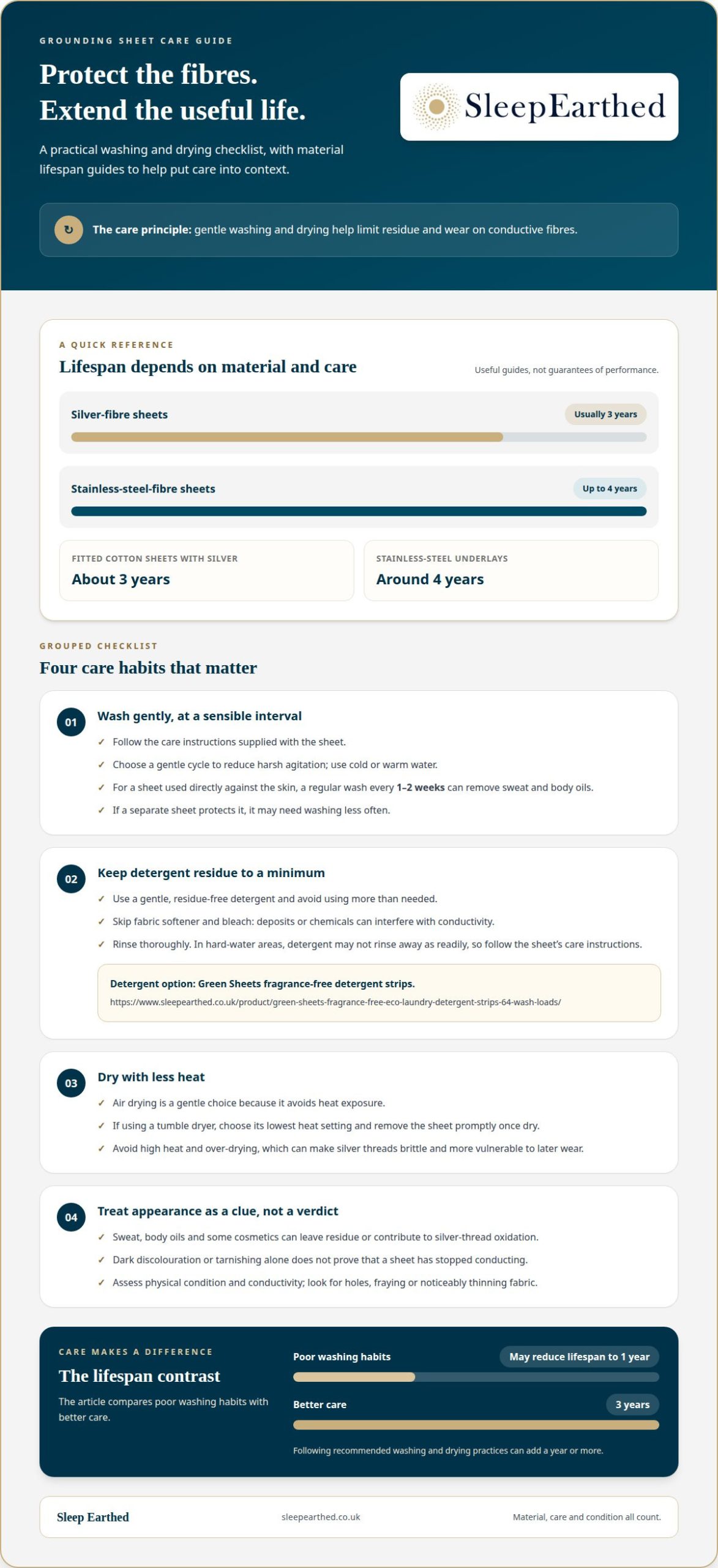
A grounding sheet’s lifespan depends more on its material and care than on a fixed expiry date. If you’re wondering what the lifespan of a grounding sheet is, silver-fibre versions usually last 3 years, while stainless-steel-fibre sheets typically last up to 4 years. These are useful guides, but sweat, body oils, washing habits and everyday wear all affect how long a sheet stays in good condition.
It’s reasonable to expect a sheet used night after night to show signs of wear eventually. Conductive fibres need gentle care, and visible thinning, fraying or holes can be more telling than age alone. Colour changes may look concerning, but they don’t necessarily mean a sheet has stopped working.
In this guide, we explain what affects a grounding sheet’s lifespan, how to care for conductive silver threads, and which signs may mean it is time to replace a sheet. Use its physical condition and a conductivity check, rather than age or colour alone, to assess it.
Key Takeaways
- Material type and exposure to sweat and body oils both influence how long conductive fibres remain effective.
- Gentle care can help protect conductive threads; the right washing and drying approach matters.
- Look for holes, fraying and thinning, and assess conductivity rather than relying on colour alone.
- Carbon-infused earthing mats rely on sweat to connect to the earth, so their use differs from conductive-fibre sheets.
- Use the article’s material comparisons and wear signs to judge when a sheet may need replacing.
Effects of sweat and body oils on conductive fibres
Yes, grounding sheets can lose conductivity over time as conductive fibres wear or become coated with residue. Silver-fibre sheets usually last around 3 years, while stainless-steel-fibre sheets typically last up to 4 years.
Sweat and body oil effects
Sweat and body oils can build up where skin touches conductive fibres, leaving a film that interferes with contact. This matters because a sheet used directly against the skin receives more frequent exposure than one covered by another layer.
For example, a person who sweats heavily overnight may leave more residue on the sleeping surface than someone who sweats less. That doesn’t mean the sheet has reached the end of its useful life; it means surface build-up and fibre wear are worth distinguishing. The material also matters: silver threads can tarnish, while stainless-steel fibres have a different expected lifespan.
Residue, tarnishing and conductivity
Detergent residue can coat conductive threads, while silver tarnishing is a surface change associated with oxidation. Either may affect how the fabric looks or feels, but appearance alone cannot tell you whether the sheet remains conductive.
Dark discolouration can result from oxidation linked to skin acids or sulphur-containing cosmetics. It isn’t, by itself, proof that a sheet no longer conducts. Use a gentle, residue-free detergent and avoid fabric softeners and harsh chemicals, which can interfere with conductivity. For washing, Green Sheets fragrance-free detergent strips are an option.
Water hardness can also affect how much mineral residue remains on fabric after washing. In a hard-water area, detergent may not rinse away as readily, so follow the sheet’s care instructions and avoid using more detergent than needed. A residue-free surface helps prevent an extra layer from sitting over the conductive fibres.
Material gives a useful lifespan guide, not a guarantee of performance. Silver-fibre sheets usually last 3 years; stainless-steel-fibre sheets typically last up to 4 years, and stainless-steel underlays usually last around 4 years. Fitted cotton sheets containing silver generally last about 3 years. Proper care can help preserve the conductive threads, while frequent skin contact, residue and fabric wear can affect their condition.
Assess a sheet’s material, physical condition and care history together. Discolouration, detergent residue or frequent exposure to sweat may be reasons to inspect it, but they do not prove the conductive fibres have failed. A conductivity test and the fabric’s condition are more useful than colour alone.
Care practices to protect silver fibres and extend sheet effectiveness
Proper care helps limit the residue and fibre wear that can affect an earthing sheet’s effectiveness. Silver threads need gentler treatment than a standard cotton sheet because harsh washing and drying can weaken conductive materials.
Start with the care instructions supplied with the sheet. A gentle cycle reduces harsh agitation, while cold or warm water helps avoid accelerating fibre breakdown. A regular wash every 1-2 weeks can remove sweat and body oils from a sheet used directly against the skin. If the sheet is protected by a separate sheet, it may need washing less often.
Choose a gentle, residue-free detergent, and skip fabric softener and bleach. These products can leave deposits or chemicals on the fibres, interfering with conductivity. Green Sheets fragrance-free detergent strips are one option for washing. Follow the product’s directions, and avoid using more detergent than needed.
Body oils, sweat and some cosmetics can contribute to silver-thread oxidation. This surface change may darken the fabric, but colour alone doesn’t show whether the sheet still conducts. Rinsing away detergent thoroughly and washing away skin residue helps keep deposits from building up around the threads. Sulphur-containing cosmetics may also contribute to dark discolouration.
Drying matters too. Air drying is a gentle choice because it avoids heat exposure. If you use a tumble dryer, select its lowest heat setting and remove the sheet promptly once dry. High heat and over-drying can make silver threads brittle, leaving them more vulnerable to wear during later washes.
Sheets with silver threads in cotton combine conductive fibres with a fabric base that needs ordinary, careful laundering. Stainless-steel-fibre sheets use a different conductive material and typically last up to 4 years, compared with about 3 years for silver-fibre sheets. Those estimates are not a reason to wash either material harshly; proper care helps protect the threads in both.
Care can make a measurable difference: poor washing habits may reduce a sheet’s lifespan to 1 year, compared with 3 years with better care. Following recommended washing and drying practices can add a year or more. Treating the sheet gently is therefore a practical part of keeping its conductive fibres in usable condition.
Signs grounding sheets need replacing
Yes, a grounding sheet can lose conductivity if its conductive materials become worn or damaged. A Sleep Earthed Test Meter is designed to check sheet conductivity, helping you assess performance alongside the fabric’s physical condition.
Start with a visual inspection. Check the cotton surface, seams and areas that receive the most pressure, such as the centre of a fitted sheet. Holes, fraying or noticeably thinning fabric can indicate wear that affects the conductive threads. A small surface mark is different from a hole that exposes damaged or broken fibres.
These signs help guide your decision:
- Holes or fraying: Inspect damaged areas for broken threads or fabric that continues to pull apart.
- Thinning: Compare high-contact areas with less-used edges; uneven wear can reveal where fibres are weakening.
- Loss of conductivity: Test the sheet with a continuity tester or multimeter, following the device’s instructions.
- Fading or discolouration: Note changes in colour, but don’t treat them alone as proof of failure.
Interpret colour changes carefully. Fading or discolouration can accompany general wear, but it does not directly show whether the sheet still conducts. Darkening may also result from oxidation or residue. Treat appearance as a reason to inspect further, not as a replacement test on its own.
For a conductivity check, use a continuity tester or multimeter to assess the electrical path between the outlet and the sheet surface. A break in that path suggests the sheet may no longer conduct as intended. Take readings consistently and follow the meter’s instructions; the result is more useful alongside the sheet’s physical condition than on its own.
Replacing a sheet makes sense when visible damage is substantial or conductivity has been lost. For example, a fitted cotton sheet with a tear across a worn sleeping area deserves closer attention than one with slight colour change and intact fibres. A chemical or detergent residue may affect a reading, so consider whether surface build-up could be contributing before judging a sheet solely by one result.
Age provides context, not a verdict. Silver-fibre sheets usually last around 3 years, while stainless-steel-fibre sheets typically last up to 4 years. A sheet can need replacing earlier if it develops holes or stops conducting; careful handling may extend its useful life. Assess its material, wear and conductivity together, rather than relying on a calendar date or colour alone.
Durability of carbon-infused earthing mats
Carbon-infused earthing mats differ from sheets woven with conductive fibres. They rely on sweat to connect to the earth, so their use and care differ from cotton sheets containing silver threads.
A mat’s durability depends on its materials, frequency of use, environment and maintenance. Used intensively every day, a grounding mat may last between 1 and 5 years. Used occasionally and cared for properly, it may last 5 years or more. These ranges show why one lifespan figure cannot describe every mat.
Use pattern matters. A mat used daily experiences more repeated contact and handling than one brought out occasionally. Its surroundings matter too: moisture, extreme temperatures and chemical substances can degrade mat materials over time. Following the mat manufacturer’s cleaning and storage instructions can help prolong its lifespan.
Carbon-infused mats work differently from cotton sheets with silver thread. Mats and sheets may differ in how their conductive materials are incorporated, so their use and care should follow product-specific instructions. That difference affects how each is used and maintained. For instance, a mat used during frequent sessions may face more contact and handling than a fitted sheet used in bed.
Care also means avoiding unnecessary strain. Keep the mat away from conditions that can damage its materials, and don’t use chemical substances unless its instructions allow them. After use, store it as directed rather than leaving it exposed to heat or damp. These habits support durability without assuming that every mat responds identically.
For context, silver-fibre sheets usually last around 3 years, while stainless-steel-fibre sheets typically last up to 4 years. Those figures apply to sheets made with those conductive materials, not to carbon-infused mats. A material comparison is useful only when it reflects the product’s construction and typical use.
For fabric sheets, use non-bio eco detergent or Green Company Laundry Strips, and avoid fabric conditioner, bleach, Oxi-based products, strong fragrances and whitening powders. Mat cleaning depends on its own materials and instructions. Frequent use alone does not prove that a mat needs replacing.
Assess a carbon-infused mat by how often it’s used, its surroundings and whether it has been stored and cleaned as directed. The expected range is broad because those factors vary. A fabric sheet and a mat shouldn’t be judged by the same lifespan estimate or care routine.
Factors that shorten sheet lifespan
Conductive sheets wear faster when fibres face repeated stress from washing, heat, moisture or chemicals. Silver-based sheets can lose significant conductivity within 6 to 12 months because of oxidation, so care and exposure matter alongside the material’s expected lifespan.
Washing can either remove residue or add strain. Harsh agitation puts extra stress on conductive threads, while bleach and fabric softener can interfere with conductivity. Use a gentle cycle and a residue-free detergent, following the sheet’s care instructions. Green Sheets fragrance-free detergent strips are one option for washing: Green Sheets detergent strips.
Heat is another avoidable source of wear. High dryer temperatures can damage conductive threads, and over-drying can leave silver fibres brittle. Air drying avoids dryer heat; if you tumble dry, choose the lowest setting and remove the sheet as soon as it’s dry. Direct contact with a hot radiator can also expose fabric to unnecessary heat.
Moisture and body residue affect the material in different ways. Sweat and skin oils can build up where the body contacts a sheet, while moisture can contribute to deterioration over time. Cosmetics containing sulphur may also contribute to darkening through oxidation. Discolouration alone doesn’t prove conductivity has failed, but it can prompt a closer inspection.
Storage and cleaning affect a sheet’s condition over time. Follow the washing guidance, use non-bio eco detergent or Green Company Laundry Strips, and avoid products that can damage the silver threads or leave residue. Allow the sheet to dry fully before storing it.
A sheet used every night may be washed more often than one used occasionally, but daily use does not automatically mean it will wear out quickly. Keep to the care guidance and inspect the fabric. Holes, thinning or a failed conductivity check are more useful signs than frequency of use alone.
Material affects the baseline: silver-fibre sheets usually last around 3 years, while stainless-steel-fibre sheets typically last up to 4 years. Poor washing habits can reduce a sheet’s lifespan to 1 year, compared with 3 years with better care. Gentle washing, suitable drying and avoiding harsh chemicals help protect the threads, but can’t prevent ordinary wear indefinitely.
If you’re choosing a sheet for regular use, compare its material and care needs with your routine. Explore UK-sized fitted earthing sheets and consider how you’ll wash and dry them before making your choice.
Sleep Earthed: UK Sized Fitted Earthing Bed Sheets
Sleep Earthed offers UK Sized Fitted Earthing Bed Sheets for readers considering a replacement or choosing a sheet for their bed. If you prefer a different setup, the range also includes Earthing Pillow Cases, an Earthing Half Sheet and an Earthing Recovery Bag.
Use the material and care guidance above to make a considered choice: regular gentle washing and careful drying help protect conductive fibres, while holes, thinning or loss of conductivity can signal that a sheet needs replacing. Choosing a format that suits how you sleep can make it easier to use and care for consistently.
To explore the available options or ask Sleep Earthed a question, visit sleepearthed.co.uk.
Choose the option that suits your sleep routine
If you’re asking what the lifespan of a grounding sheet means for your own routine, consider more than its expected years of use. Think about how you sleep, which bedding format feels practical, and whether you’re comfortable caring for conductive fabric. That can help you choose a setup you’ll use consistently, rather than focusing on a lifespan estimate alone.
Sleep Earthed offers UK Sized Fitted Earthing Bed Sheets, Earthing Pillow Cases and an Earthing Half Sheet. Each provides a different way to incorporate earthing into your bedding, so consider which arrangement makes sense for your bed and habits. There’s no need to rush the decision; a considered choice is a better starting point.
For help exploring the options, contact Sleep Earthed. With a suitable format and thoughtful care, you can make a confident next step.
Frequently Asked Questions
How Long Do Different Grounding Sheet Materials Last?
Silver-fibre grounding sheets usually last about 3 years; stainless-steel-fibre sheets typically last up to 4 years. Stainless-steel underlays usually last around 4 years, while fitted cotton sheets with silver generally last about 3 years. Treat these as material-based estimates, not expiry dates. Check the fabric description or care label first, so you compare your sheet with the right material category.
Does a Warranty Tell You Anything About Lifespan?
A warranty explains what its terms cover, but it doesn’t automatically promise conductivity for the same period. Some premium grounding sheets are stated to have a 3-year warranty against manufacturing defects. Read the warranty document for its coverage and exclusions. Don’t assume normal wear, washing damage or a change in conductivity is covered simply because the sheet is still within a stated warranty period.
Does washing a grounding sheet reduce its lifespan?
Washing doesn’t automatically shorten a sheet’s life; rough treatment and unsuitable products can contribute to wear. Follow the care instructions, wash at 40°C and choose non-bio eco detergent. Avoid fabric conditioner, bleach, Oxi-based products, strong fragrances and whitening powders. Green Sheets detergent strips are one suitable option for washing; use them according to their instructions to help avoid residue on conductive threads.
How do I know when my grounding sheet needs replacing?
Consider replacing a sheet if it has substantial holes, persistent thinning or a failed conductivity check. The Sleep Earthed Test Meter helps you assess conductivity; follow its instructions and consider the result alongside the fabric’s condition. If residue may be present, follow the care guidance before drawing a conclusion. Fading alone is not a reliable reason to discard a sheet.
How to maintain a grounding sheet for optimal performance?
Use the care routine suited to the sheet’s material and construction. For Sleep Earthed sheets, the guidance is to wash at 40°C with non-bio eco detergent, weekly or at most every two weeks. Avoid products that can leave unwanted residues, and follow the drying instructions supplied with the sheet. Store it clean and dry, rather than folded away while damp, to care for its fabric and conductive threads.
What Determines How Long a Grounding Sheet Lasts?
Material, use, skin contact, washing and storage all influence how long a sheet remains in good condition. A sheet used nightly and washed often has a different routine from an underlay protected by another layer. Heat, moisture and chemical substances can also affect conductive materials. For a useful comparison, consider the sheet’s fibre type alongside how it is used and cared for, rather than age alone.
How long do grounding sheets typically last?
Grounding sheets generally last around 2 to 4 years, depending on their material and maintenance. Silver-fibre sheets commonly sit near the shorter end of that range, while stainless-steel-fibre sheets may last longer. These figures describe typical expectations, not a fixed replacement schedule. A well-kept sheet may remain serviceable as it ages, while damage or loss of conductivity can make replacement sensible sooner.
What is the expected lifespan of a grounding sheet with regular use?
With regular use, a silver-fibre sheet generally lasts about 3 years, while a stainless-steel-fibre sheet typically lasts up to 4 years. Nightly contact and repeated washing make appropriate care particularly relevant. If you use the sheet often, keep an eye on its fabric and conductive performance as part of normal bedding care. Replace it based on condition and conductivity, not simply because it has reached an estimated age.